A city is not completed when it opens. It begins.
Asia and the Middle East are building cities at a scale rarely seen in modern history. New districts, transport systems and cultural institutions are appearing with extraordinary speed. The deeper test will arrive later: whether these places can develop memory, economic diversity and a public life strong enough to outlast the ambition of their construction.
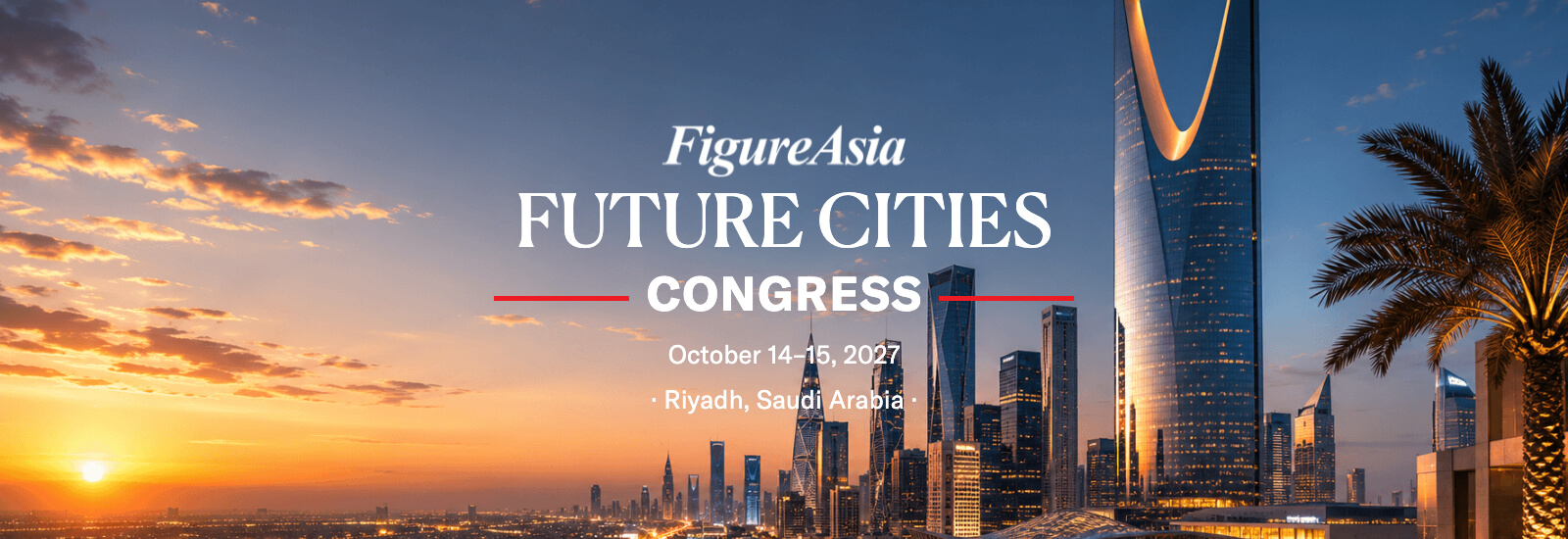
FigureAsia Future Cities Congress brings the disciplines of urban creation into one agenda. It is concerned not only with what can be built, but with what should endure once architecture becomes neighbourhood and investment becomes civic inheritance.
The future city will not be judged by the perfection of its rendering, but by the quality of ordinary life inside it.
Building Beyond the Rendering
Large urban projects are often divided into separate conversations about finance, architecture, technology, mobility and sustainability. Citizens experience none of those separately. They experience time, distance, safety, opportunity, belonging and the daily consequences of whether systems were designed to work together.
The Congress will examine urban delivery as an integrated institution—from capital structure and infrastructure sequencing to governance, culture and the stewardship required after the opening ceremony.
Why Riyadh
Riyadh is undertaking one of the world’s most visible metropolitan transformations. Its scale makes the city a compelling setting, but its real relevance lies in the questions it raises about pace, identity, public value and the management of long-term change.
Convening here allows participants to examine ambition close at hand—neither to celebrate scale uncritically nor to dismiss it, but to understand the disciplines that can turn transformation into a functioning city.
Questions Before the Room
Capital With a Civic Horizon
Financing, phasing and governance structures that protect long-term public value.
The Everyday Metropolis
Mobility, density, housing and the systems that determine how people experience time.
Resilience by Design
Energy, water, heat and the infrastructure required for cities built under climate pressure.
Culture in the Masterplan
How heritage, institutions and public life give new districts identity beyond architecture.
The Congress
Participants will include city leaders, developers, architects, engineers, infrastructure operators, sovereign and institutional investors, technology companies and cultural institutions.
The two-day programme combines keynote interviews, project briefings and specialist roundtables. It is designed to connect the people who imagine cities with those responsible for financing, operating and inhabiting them.
The Long Life of a City
Buildings announce an era. Streets, institutions and communities decide whether that era becomes a home. The future belongs to cities designed with sufficient humility to be completed by the people who live in them.