BioNTech began 2026 with €16.8 billion in cash and securities, a financial position created by the global success of its Covid-19 vaccine. It also reported first-quarter revenue of €118.1 million and a net loss of €531.9 million, figures that show how far current spending runs ahead of the company's post-pandemic commercial base. Across the year, BioNTech expects results from six late-stage oncology studies and plans to repurchase as much as $1 billion of shares.
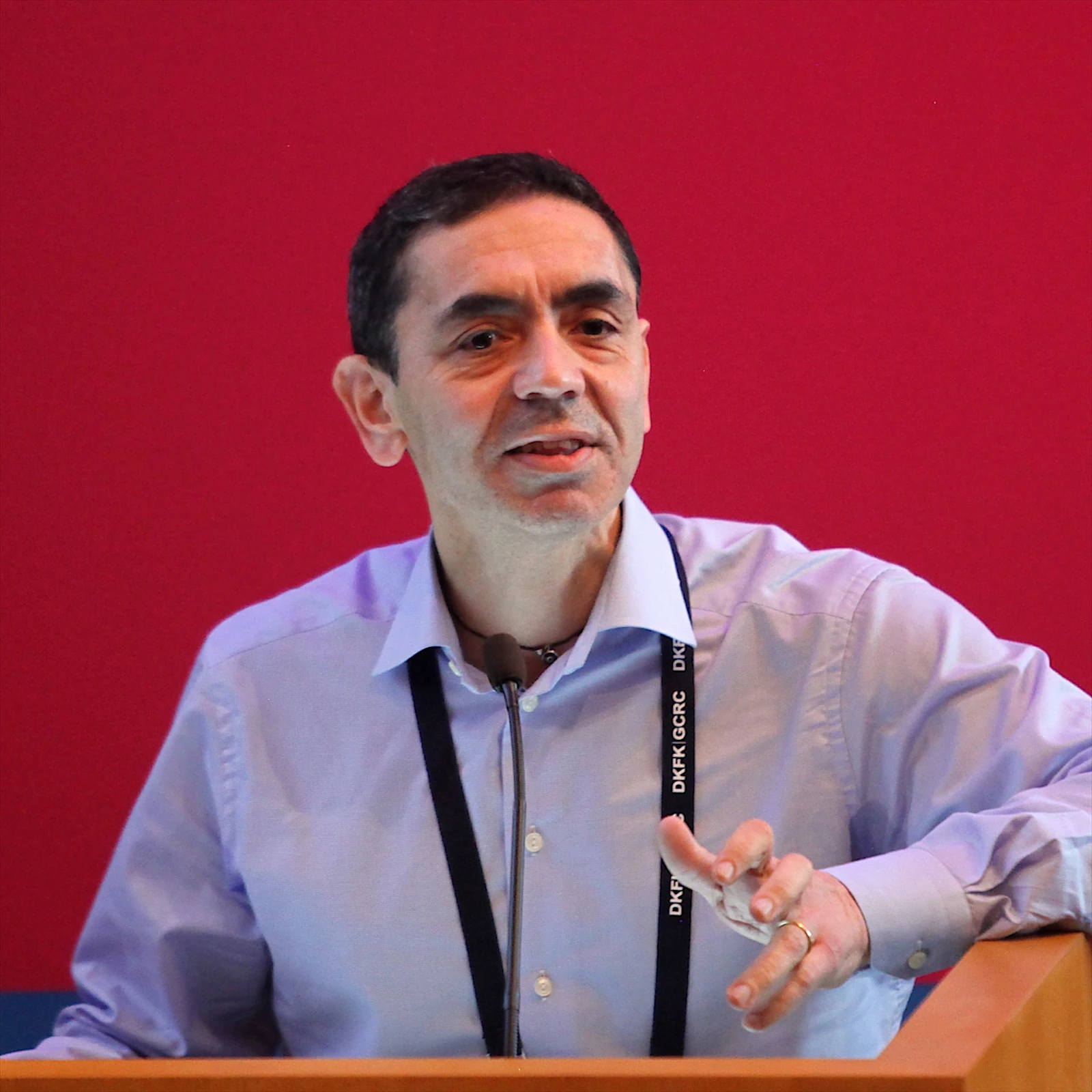
For Ugur Sahin, the co-founder, chief executive and physician-scientist, this is a decisive interval. The pandemic gave BioNTech the capital to build a broad cancer portfolio across messenger RNA, antibodies, cell therapies and combinations. The company now needs clinical evidence strong enough to determine where that capital should concentrate. A large balance sheet extends the runway; it does not remove the obligation to choose.
Sahin's next leadership test is to convert a collection of scientifically plausible programmes into a coherent commercial business. Six late-stage readouts can create several paths, but they can also expose weak assumptions quickly. BioNTech must respond to the data with discipline, accelerating programmes that can change treatment and ending or narrowing those that cannot.
The pandemic created strategic time
Few biotechnology companies have had the opportunity BioNTech received. Its partnership with Pfizer turned mRNA vaccine science into a product used across the world and generated an extraordinary inflow of cash. That money allowed the company to expand research, manufacturing, clinical trials and external collaborations without relying on repeated equity financing.
The strategic value of the windfall was time. Drug development is slow and uncertain, particularly in cancer, where promising early signals can fail in larger controlled studies. BioNTech could fund several approaches and wait for evidence rather than select one technology prematurely. It could also build capabilities that smaller biotechnology groups normally borrow from partners.
Time can become a liability if it encourages permanent breadth. Each platform requires specialist teams, manufacturing and clinical infrastructure. A portfolio becomes difficult to manage when every programme has a scientific rationale but few have a clear route to commercial scale. The first-quarter loss illustrates the cost of maintaining that breadth while vaccine revenue has normalised.
Sahin must now turn financial abundance into scarcity of attention. The strongest companies do not ask only whether a programme can work. They ask whether it can improve the standard of care enough to win adoption, whether they possess an advantage and whether the expected return justifies the capital and years required.
Six readouts can reshape the portfolio
Late-stage trials carry more weight than early studies because they compare treatments in larger populations against established care. Positive results can support regulatory filings and commercial planning. Negative results can remove years of expected value. Six such readouts in one year create both opportunity and concentration risk.
BioNTech should judge each result across several dimensions: overall and progression-free survival, response durability, safety, patient selection and performance against current alternatives. Statistical significance is necessary but not always sufficient. A treatment has to offer a clinically meaningful improvement that oncologists can use in practice.
The competitive benchmark can move while a trial runs. Cancer drug development is crowded, and new standards arrive quickly. A programme designed years earlier may produce a positive result yet enter a market already served by effective therapies. Sahin's teams must interpret data in the context patients and physicians will face at launch.
Readouts also inform the value of the underlying platforms. If several medicines built on a common technology produce consistent benefit, BioNTech can invest with greater confidence in follow-on assets. If results vary sharply, the company should avoid claiming platform validation where the evidence supports only a single molecule.
Oncology requires commercial focus
BioNTech was founded around the idea that a patient's immune system can be directed against cancer. Its work includes personalised vaccines, off-the-shelf mRNA candidates, bispecific antibodies and other immune-modulating approaches. Scientifically, these technologies can be complementary. Commercially, the company has to decide which combinations it can develop and sell effectively.
Personalised treatment may require tumour sequencing, rapid manufacturing and co-ordination with hospitals. Antibody medicines follow more established production and distribution models but compete in dense markets. Cell therapies can generate profound responses and difficult logistics. Each approach calls for different capabilities and capital.
Sahin's scientific instinct has been to assemble combinations that address multiple mechanisms of tumour escape. This may improve clinical outcomes, but it can complicate trials and pricing. When several agents are used together, regulators and payers want to understand the contribution of each component. Manufacturing and supply become more demanding.
A coherent strategy should identify a limited set of cancers and treatment settings where BioNTech has a clear biological and operational advantage. Broad platform research can continue, but late-stage spending and commercial preparation should reflect priorities. A company cannot launch every modality with equal strength at once.
Cash allocation is part of scientific strategy
The planned share repurchase of up to $1 billion signals that BioNTech views part of its capital as available to return to shareholders. With €16.8 billion in cash and securities, the buyback does not threaten near-term research funding. It does, however, make capital allocation more visible.
BioNTech has four main uses for cash: internal research, late-stage development and launches, acquisitions or partnerships, and returns to shareholders. The first three can create future medicines but carry different risk. Internal research preserves control, transactions can add speed or capability, and partnerships share cost while giving up economics.
Sahin should resist using the balance sheet merely to increase the apparent scale of the pipeline. Acquisitions are most valuable when they add a capability BioNTech can exploit better than another owner or provide an asset that fits its clinical strategy. Paying a high price for fashionable science can turn strategic patience into financial pressure.
Cash also provides resilience if readouts disappoint. The company can continue funding the strongest programmes without emergency financing. Investors should value that option, but they will increasingly ask what level of cash is genuinely required. Clear thresholds for investment and return will help preserve trust.
Partnerships must create more than funding
BioNTech's vaccine partnership with Pfizer showed the value of combining complementary capabilities. BioNTech supplied mRNA expertise and rapid development, while Pfizer contributed global trial, manufacturing and distribution scale. The arrangement became one of the industry's most consequential collaborations.
Oncology partnerships should be judged by the same practical standard. A partner can contribute a complementary medicine, market access, regulatory experience or commercial infrastructure. The partnership should increase probability of success or speed enough to justify shared economics and governance complexity.
Large alliances can also create dependency. Priorities may change, decision-making can slow and responsibility may become blurred. BioNTech needs internal leaders capable of managing programmes across corporate boundaries and protecting scientific clarity. Contracts cannot substitute for aligned incentives.
Asia is relevant here as both a clinical and commercial region. Large patient populations and rapidly developing biotechnology ecosystems create opportunities for trials, licensing and co-development. BioNTech must maintain consistent standards and retain control over critical data and manufacturing quality while adapting to local regulation.
The operating base must outlive vaccine royalties
Covid-19 vaccine demand has not disappeared, but it is smaller and more seasonal than during the pandemic. Revenue depends on public-health recommendations, variant updates, procurement and the competitive market. BioNTech can continue to improve the vaccine and earn cash from its partnership, yet it should not plan the oncology business around a return to emergency-level sales.
The first-quarter revenue and loss make this transition visible. Research intensity is appropriate for a company approaching major data, but expenses cannot rise indefinitely without new products. Successful oncology trials will bring their own costs: regulatory work, manufacturing, medical affairs and commercial teams must be built before revenue arrives.
Sahin needs an operating structure that can expand behind positive data and contract after negative results. Fixed infrastructure should be reserved for capabilities central to the strategy. Other functions can be partnered or scaled in stages. The objective is not to minimise spending; it is to keep spending responsive to evidence.
Long-term margins will differ from those of the Covid vaccine. Cancer products may have high prices, but development, selling and post-approval study costs are significant. BioNTech should set expectations around the economics of a diversified oncology company rather than benchmark every future product against an exceptional pandemic event.
Clinical evidence will decide BioNTech's second act
BioNTech's scientific ambition remains compelling. The immune system can recognise and attack cancer, and advances in sequencing, protein design and manufacturing are creating tools that did not exist when Sahin began this work. The company has talent, partnerships and capital few peers can match.
Those resources raise the standard. Six late-stage readouts should not lead to six equally enthusiastic narratives. They should produce a hierarchy of evidence and a corresponding reallocation of capital. Strong results deserve rapid, focused execution. Ambiguous results require careful analysis. Failure should lead to closure when the biological case no longer supports further spending.
Investors should watch how quickly management makes those choices, how much new spending follows positive data and whether commercial preparation is concentrated in areas of advantage. They should also examine the cash balance after buybacks and transactions, not simply celebrate its size.
Ugur Sahin has given BioNTech an unusually long runway from one of modern medicine's most important achievements. The next phase is not about preserving every option. It is about using evidence to choose the right ones. If the six readouts establish a focused set of cancer franchises, the pandemic windfall will have financed a durable second company. If they do not, the size of the runway will only measure how long the decision was deferred.