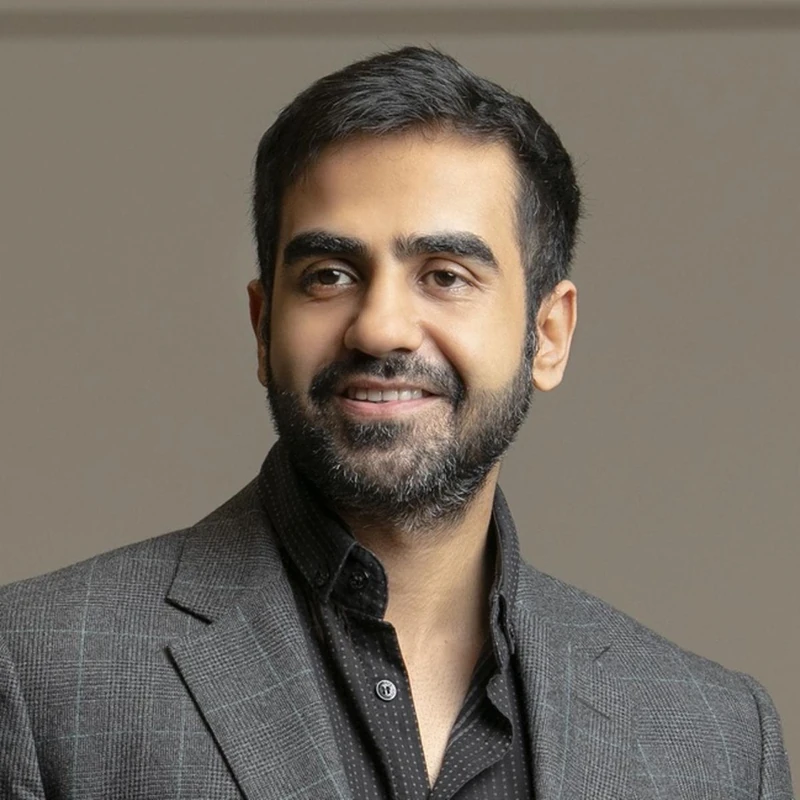

Arvind Krishna chose an unusual way to explain a disappointing quarter. Eight days before IBM’s scheduled earnings call in July 2026, he released selected preliminary results and described what had gone wrong. Revenue had risen only 1 per cent. Software growth had slowed to 5 per cent, consulting was flat and infrastructure fell 7 per cent.
The weakness was not presented as a statistical inconvenience. IBM had expected the mainframe cycle to moderate, but the decline was worse than planned. Customers shifted capital spending towards servers, storage and memory as shortages threatened price increases. Large software transactions slipped. Cybersecurity concerns distracted buyers. The company, Krishna acknowledged, had not adapted quickly enough.
The admission was unusually direct for a company that has spent decades perfecting the managed language of corporate durability. It was also revealing. Krishna has transformed IBM more decisively than any chief executive since the company left personal computers and commodity servers behind. He separated the low-growth managed-infrastructure business now called Kyndryl, built strategy around Red Hat and repositioned IBM as a software-led enterprise platform for hybrid cloud and artificial intelligence.
By 2025, the argument appeared to be working. IBM generated $67.5 billion in revenue, growing 6 per cent at constant currency. Software expanded 9 per cent, the highest annual growth rate the company had recorded, and represented about 45 per cent of revenue. Free cash flow reached $14.7 billion, its strongest level in more than a decade. The cumulative book of business associated with generative AI exceeded $12.5 billion.
Yet the second-quarter shortfall exposed the central tension inside Krishna’s IBM. The company is more focused, more profitable and more relevant to enterprise technology than it was when he became chief executive in 2020. It is also still shaped by the mainframe product cycle, the timing of large consulting and software deals and the complexity of selling an integrated portfolio to cautious institutions.
Krishna has responded to that complexity by buying more strategic software. IBM completed the $6.4 billion acquisition of HashiCorp in 2025 and spent $11 billion in cash to acquire Confluent in March 2026. Red Hat, HashiCorp and Confluent now give IBM an unusually broad position across application platforms, infrastructure automation and real-time enterprise data.
The portfolio has architectural logic. Red Hat lets applications run across public clouds, private infrastructure and IBM systems. HashiCorp provisions and secures the underlying environment. Confluent moves governed data between applications and AI agents. Watsonx provides models, orchestration and governance. IBM Consulting helps clients put the pieces into production.
But an architecture on a strategy slide is not yet a growth system. Confluent has increased IBM’s debt, HashiCorp must continue to accelerate under a much larger owner and consulting must convert AI interest into revenue rather than an expanding backlog. The mainframe must remain a source of cash and customer access without dictating the company’s quarterly tempo.
Krishna has rebuilt IBM around software. His next test is whether the AI portfolio can grow fast enough to outrun the old hardware clock.
The technologist chose focus over corporate completeness
Krishna is an IBM lifer, but not a caretaker. He joined the company in 1990 after studying electrical engineering at the Indian Institute of Technology Kanpur and completing a doctorate at the University of Illinois. His career moved through systems, data, wireless networking, security, cloud and research before he became chief executive.
That technical range matters because IBM’s problem was never a shortage of invention. The company’s laboratories produced foundational work across computing, materials, artificial intelligence and semiconductors. Its difficulty was converting scientific advantage into businesses that could grow fast enough to offset declining legacy operations.
Krishna had confronted that problem before reaching the top job. As head of IBM Research, he oversaw work in AI, quantum computing, blockchain and nanotechnology. In cloud and cognitive software, he helped reorganise products around hybrid infrastructure. Most consequentially, he was the principal architect of IBM’s $34 billion acquisition of Red Hat in 2019.
The Red Hat deal represented an admission and a strategy. IBM had failed to become a hyperscale public-cloud leader. Amazon Web Services, Microsoft and Google possessed larger infrastructure footprints, stronger developer momentum and the capital to keep expanding. Trying to meet them through a conventional IBM cloud would have consumed enormous investment without changing the competitive hierarchy.
Krishna chose a different position. Most large enterprises would not move everything to one public cloud. Banks, governments, manufacturers and healthcare groups would keep sensitive workloads on private systems, use multiple cloud providers and modernise old applications gradually. They needed a common layer across that mixed estate.
Red Hat OpenShift could provide that layer through containers, Kubernetes and an open-source ecosystem. IBM would not need to own every data centre if it could help customers run software consistently across them. The strategy turned IBM’s installed base and infrastructure history from an apparent liability into an argument for hybrid cloud.
When Krishna became chief executive in April 2020, he organised the company around that conviction. He was willing to make IBM smaller to improve the growth and margin profile of what remained. The separation of Kyndryl in November 2021 removed a vast managed-infrastructure services operation whose revenue was substantial but declining and labour-intensive.
The move ended an era in which IBM presented breadth itself as strength. Krishna’s version of the company would be narrower but more coherent: software, consulting and mission-critical infrastructure tied together by hybrid cloud and AI.
Kyndryl made the income statement smaller and the strategy clearer
Spinning off Kyndryl was the least glamorous and perhaps most necessary part of the transformation. Managed infrastructure had connected IBM to thousands of important customers, but long contracts, declining legacy estates and labour costs constrained growth. The business could generate cash while making the whole company appear structurally stagnant.
As a separate company, Kyndryl gained freedom to work with a wider set of technology partners. IBM gained a cleaner operating model and the ability to allocate capital towards software. The separation also reduced headline revenue, making the quality rather than the size of sales the relevant measure.
IBM produced about $77 billion of revenue in 2019, before Krishna became chief executive and before Kyndryl was removed. The 2025 total was $67.5 billion, but the comparison conceals the strategic change. The later business contained a larger proportion of recurring software, higher margins and less capital-intensive service delivery.
Free cash flow shows the improvement more clearly. IBM generated $11.2 billion in 2023, $12.7 billion in 2024 and $14.7 billion in 2025. Operating pre-tax margin rose from about 17 per cent to 19 per cent over the same period. Productivity initiatives have produced roughly $4.5 billion of cumulative savings since 2023, with another $1 billion targeted in 2026.
This is the financial engine behind Krishna’s acquisition strategy. IBM can fund research, maintain its dividend and buy software companies because the portfolio produces dependable cash. The company returned $6.3 billion to shareholders through dividends in 2025 while spending $8.3 billion on research and development and closing ten acquisitions.
There is, however, a limit to what focus can achieve through subtraction. Once the slower businesses have been separated and internal costs reduced, growth must come from products customers buy in greater volume. Productivity expands margins; it does not create a software franchise.
The second-quarter disappointment matters for that reason. IBM can no longer attribute weak growth to an unfocused corporate structure inherited from the past. The portfolio now reflects Krishna’s choices. Red Hat, HashiCorp, Confluent, watsonx, consulting and the mainframe are the system he designed.
Clarity raises accountability. A more focused IBM is easier to understand and harder to excuse.
Red Hat remains the operating system of Krishna’s IBM
Red Hat is the foundation on which almost every part of the strategy rests. OpenShift gives IBM a platform for applications that can operate across competing clouds and on-premises systems. Red Hat Enterprise Linux provides a stable commercial layer across a vast installed base. Ansible automates configuration and operational tasks.
The value is not merely product revenue. Red Hat makes IBM relevant wherever the customer chooses to run. A bank can use Amazon infrastructure, Microsoft services, its own mainframe and a private cloud while retaining a common application environment. IBM can then sell automation, data, security, consulting and infrastructure around that architecture.
Red Hat revenue grew 10 per cent at constant currency in the first quarter of 2026 and accelerated to 11 per cent in the preliminary second-quarter figures. OpenShift has become a $2 billion annual recurring revenue business. Virtualisation products have signed more than $600 million of contracts since the beginning of 2024 as customers consider alternatives to incumbent platforms.
These are strong results, but they also show why IBM needs the newer acquisitions. Red Hat can provide the application platform; it does not control every step required to operate a modern enterprise estate. Infrastructure must be provisioned, secrets managed, data moved, agents governed and old applications modernised.
Krishna’s ambition is to turn Red Hat from a successful acquisition into the centre of a wider commercial system. Each new product should make OpenShift more valuable, while OpenShift gives IBM a route to distribute the rest of the portfolio. More than 80 per cent of IBM revenue comes from clients that transact across software, consulting and infrastructure, giving the company a large base for cross-segment expansion.
The risk is that Red Hat’s open culture becomes subordinated to IBM’s desire for integration. Customers adopted Red Hat partly because it worked across vendors and resisted lock-in. If IBM turns openness into a narrow path towards its own software, the strategic advantage weakens.
Krishna has generally preserved Red Hat’s identity and partner orientation. That discipline becomes harder as the number and cost of acquisitions rise. IBM must make the portfolio work together without making each product feel like an extension of corporate account planning.
The hybrid-cloud strategy succeeds when customers use IBM because it increases their freedom of infrastructure choice. It fails if integration becomes another form of dependency.
IBM’s AI position is built around control, not model supremacy
IBM is not competing to produce the largest general-purpose model or build the largest public AI cloud. Krishna has positioned the company around the problems that begin after an enterprise decides to use artificial intelligence: where models run, which data they can access, how agents are governed, how old applications are connected and who remains accountable for the result.
This is a less spectacular market than frontier-model development and potentially a more durable one. Large enterprises rarely adopt technology in a clean environment. Their data is distributed across decades of systems. Regulations restrict where information can move. Different business units use different clouds. Core transactions still run on mainframes because reliability matters more than architectural fashion.
Watsonx is intended to orchestrate that complexity. IBM offers models but also allows customers to use models from partners and competitors. The platform manages data, governance and agent workflows across environments. The commercial argument is that enterprises want choice at the model layer and control at the operating layer.
The cumulative generative-AI book of business surpassed $12.5 billion by the end of 2025, rising from more than $2 billion in mid-2024. The measure combines software transactions, new software-as-a-service annual contract value and consulting signings connected to specific AI offerings. It shows commercial engagement, though it is not the same as recognised revenue or annual recurring revenue.
That distinction is important. A rapidly expanding book of business can contain multi-year consulting commitments and transactions that flow through the income statement over time. IBM must demonstrate that AI demand creates sustained software growth rather than chiefly enlarging a services backlog.
The company’s strongest differentiation may be governance. Banks, governments and regulated industries cannot allow autonomous agents to operate without audit, identity controls and defined authority. IBM’s history in security, transaction systems and compliance gives it credibility where the cost of an incorrect automated action is high.
Sovereignty adds another advantage. Enterprises and nations increasingly want AI workloads that remain inside a jurisdiction, run on infrastructure they control and cannot be interrupted by geopolitical pressure. IBM’s Sovereign Core and hybrid deployment model are designed for that demand.
The market is also crowded. Microsoft can connect AI to Office, Azure, GitHub and an enormous developer ecosystem. Amazon controls infrastructure and enterprise data services. Google possesses leading models, cloud infrastructure and data technology. Oracle, SAP, ServiceNow and Salesforce embed AI into applications where business workflows already live.
IBM cannot win through a generic promise of trusted enterprise AI. It must make heterogeneous systems work together more effectively than companies that own a larger portion of the technology stack. Integration is the product.
Confluent is the $11 billion test of the data strategy
Confluent is Krishna’s largest capital-allocation decision as chief executive. IBM paid $11 billion in cash for the data-streaming company, completing the transaction in March 2026. The deal added more than 6,500 customers, including about 40 per cent of the Fortune 500, and technology built around Apache Kafka.
The strategic rationale is strong. Artificial-intelligence systems need more than data stored in a warehouse. Agents and applications must respond to events as they occur: a payment, a shipment, a change in inventory, a security alert or a machine failure. Confluent moves and governs those streams across applications and environments.
For IBM, data in motion connects the portfolio. Confluent can feed live information into watsonx, link applications through webMethods and MQ, and move events between Red Hat environments, public clouds and IBM Z. Consulting can redesign workflows around the stream rather than repeatedly moving data through batch processes.
The acquisition also extends IBM’s open-source lineage. Kafka is a widely adopted technology with a large ecosystem, much as Linux and Kubernetes provided the foundation for Red Hat and Terraform did for HashiCorp. Krishna is using acquisitions to own commercial platforms around open technologies that enterprises need but do not want to operate alone.
The price requires more than architectural fit. Confluent was acquired with available cash, and IBM invested $10.5 billion in acquisitions during the first quarter. Total debt ended March at $66.4 billion, including $12.8 billion associated with the financing business, up $5.1 billion from year-end.
Management expects Confluent to be accretive to adjusted earnings before interest, tax, depreciation and amortisation in the first full year and to free cash flow in the second. For 2026, IBM anticipated roughly $600 million of dilution from stock-based compensation and interest expense, with additional pressure because the transaction closed earlier than initially expected.
The early operational signs are positive. Confluent contributed to 16 per cent growth in IBM’s Data category during the first quarter, and Krishna said the business performed strongly in the second. Day-one integrations were announced across watsonx.data, MQ, webMethods and IBM Z.
But distribution alone does not justify $11 billion. IBM must accelerate Confluent without weakening its relationships with Amazon, Google, Microsoft, Snowflake and other partners. Customers value the platform because it can move data across a mixed technology estate. It becomes less valuable if they perceive it as an IBM-specific route.
Krishna must also avoid the classic integration trap: cost synergies arrive quickly while product synergies remain indefinitely promised. Confluent will be a successful acquisition when live data produces more Red Hat, automation, watsonx and consulting revenue—and when those IBM products make Confluent more competitive on its own merits.
HashiCorp shows the model, but not yet the full answer
HashiCorp provides a smaller and more advanced example of the integration thesis. IBM completed the $6.4 billion acquisition in February 2025, adding Terraform for infrastructure provisioning and Vault for secrets and identity management, among other products.
The tools address a practical consequence of hybrid cloud. Running across several clouds and private systems increases choice but also multiplies configuration, credentials and policy. Infrastructure must be created consistently, access controlled and costs managed. HashiCorp supplies the control plane for that work.
In its first year under IBM, HashiCorp recorded its strongest bookings, benefiting from IBM’s global sales reach, and reached adjusted profitability faster than expected. The result supports Krishna’s belief that IBM can acquire a respected developer platform, preserve its product relevance and improve commercial scale.
HashiCorp also illustrates the organisational challenge. Terraform, Red Hat Ansible and IBM’s broader automation portfolio occupy related territory. Customers need clear distinctions and interoperability, not overlapping products explained through account-team diagrams. The more comprehensive IBM becomes, the more precisely it must define each component.
Confluent raises the same issue in data. IBM already owns Db2, watsonx.data, MQ, DataStax, webMethods and a wide range of integration technologies. Real-time streaming can connect them, but only if the architecture is simplified for customers. A broad catalogue is not a platform by itself.
Krishna’s best acquisitions have given IBM communities and control points it could not build quickly enough on its own. Red Hat brought open-source developers and the hybrid application layer. HashiCorp brought infrastructure workflow. Confluent brings event streams.
The next stage is less about owning more layers than making the existing ones intelligible. IBM’s historic instinct has been to answer enterprise complexity with a larger portfolio. Krishna’s strategy requires the opposite experience: sophisticated technology hidden behind a clearer operating model.
Consulting is both the distribution advantage and the growth bottleneck
IBM Consulting is supposed to convert the portfolio into business outcomes. Software companies can sell tools; IBM can redesign a bank’s transaction process, modernise a manufacturer’s applications and implement governance across a government’s mixed infrastructure. That domain knowledge is difficult for pure software vendors to reproduce.
Generative AI now represents about 30 per cent of the consulting backlog. Signings continued to grow in the first half of 2026, led by application and data transformations. The demand shows that customers understand AI as an operating-model project rather than a software licence alone.
Revenue has been less dynamic. Consulting was flat at constant currency in 2025, grew only 1 per cent in the first quarter of 2026 and was flat in the preliminary second-quarter results. The gap between signings and recognised revenue can reflect project timing, but it also raises a question about how quickly interest becomes scalable economics.
Krishna wants consulting to become more asset-led. Reusable software, agents and delivery platforms should allow IBM to complete projects faster and with fewer manual hours. Internally, the company says its own developer system has improved productivity substantially, while automation across finance, human resources, sales and technology operations has contributed to billions of dollars of savings.
This creates a productive form of cannibalisation. If AI allows IBM to deliver the same transformation with fewer people, traditional services revenue may grow more slowly even as margins and customer value improve. The company must price outcomes and intellectual property rather than labour effort, or productivity gains will be competed away.
Consulting also carries execution risk. Large projects require coordination across countries, technologies and client organisations. Sales cycles can slip at quarter-end. The latest shortfall included numerous large deals that did not close on schedule, precisely the type of timing dependence a software-led model is meant to reduce.
The strategic promise is a flywheel: consulting identifies a client problem, IBM software solves part of it, infrastructure runs critical workloads and successful implementation creates further demand. The financial danger is a loop in which services are required to make complex products usable, limiting software scalability.
Krishna must prove that consulting accelerates the adoption of IBM platforms without becoming the permanent integration layer holding them together.
The mainframe still sets part of the corporate clock
IBM Z is often described as legacy infrastructure by people who underestimate what the machines do. Mainframes process enormous volumes of banking, payment, insurance, airline and government transactions with levels of availability and security that are difficult to reproduce. Customers modernise around them because replacing them can introduce more risk than value.
The z17 cycle demonstrated the franchise’s continuing strength. IBM Z revenue rose 48 per cent at constant currency in the first quarter of 2026 after a powerful launch. Customers were attracted by capacity, encryption, resilience and the ability to run AI inference close to transactional data rather than moving sensitive information elsewhere.
Mainframe economics reach beyond hardware. Transaction Processing software, storage, support, consulting and financing all benefit when customers install a new system and increase capacity. The cycle creates some of IBM’s most profitable revenue.
It also creates volatility inside a company presented as software-led. In the second quarter, Z performance fell short of IBM’s expectations, and the associated Transaction Processing software weakened. Infrastructure revenue declined 7 per cent even though distributed systems had their best reported performance, rising 37 per cent as customers secured servers, storage and memory.
The contradiction is subtle. Mainframe customers are among IBM’s most durable and valuable relationships. The platform gives IBM access to mission-critical data, a route for AI modernisation and a high-margin annuity. Yet the timing of new generations can still influence company-wide growth enough to surprise investors.
Krishna is trying to turn Z from an isolated proprietary system into part of the hybrid architecture. Red Hat software, watsonx assistants, Confluent streams and modern APIs can connect mainframe transactions to new applications. The Spyre accelerator allows AI inference to run directly against transaction flows.
If successful, the mainframe becomes a differentiated control point rather than a cyclical hardware franchise. More AI use can increase processing demand and software revenue between product launches. Modernisation becomes expansion, not migration away.
The latest quarter shows that this transition is incomplete. IBM is a software company that still keeps time partly through hardware.
The second-quarter miss was a test of execution, not strategy
Krishna offered several external explanations for the preliminary second-quarter shortfall, but he did not hide behind them. Customers redirected capital towards supply-constrained servers, storage and memory before expected price increases. Fast-moving cybersecurity concerns absorbed management attention. Large purchases shifted across quarter boundaries.
These conditions were real and, for IBM, uncomfortably relevant. The company sells software intended to help clients govern complexity, automate operations and respond to security risk. It should be better positioned than most vendors to understand changes in enterprise priorities.
The failure was commercial adaptation. IBM’s sales teams did not move quickly enough when customer budgets changed, and large deals were not restructured or completed in time. Software growth of 5 per cent was well below the 10 per cent-plus full-year expectation management had outlined in April.
Red Hat, HashiCorp and Confluent continued to perform well, suggesting that the core strategic assets retained demand. The weakness was concentrated in Z and Transaction Processing, but total company growth slowed because those businesses still matter greatly.
The episode should not invalidate six years of transformation. One quarter can be distorted by procurement timing, especially in enterprise technology. IBM continued to expand operating pre-tax margin and generated $4.8 billion of free cash flow in the first half.
It does, however, challenge the claim of portfolio durability. A truly integrated model should be able to compensate when one part of the system slows. Strong distributed infrastructure should create software and consulting opportunity. Cybersecurity urgency should increase demand for governance and automation rather than simply delay transactions.
Krishna’s response will matter more than the miss itself. If transactions close in subsequent quarters and software reaccelerates, the disclosure will look like disciplined candour. If growth remains weak, the quarter will mark the point at which acquisition momentum and mainframe strength stopped disguising slower organic execution.
Cash flow gives Krishna room, but debt narrows it
IBM’s financial transformation has created strategic freedom. Free cash flow of $14.7 billion in 2025 allowed the company to fund research, maintain a dividend paid without interruption for more than a century and pursue acquisitions without abandoning its investment-grade profile.
Krishna has used that freedom aggressively. Red Hat was financed before his tenure as chief executive but remains his defining strategic decision. HashiCorp and Confluent added more than $17 billion of announced transaction value. Smaller acquisitions have expanded consulting, data, automation, security and application modernisation.
Confluent changes the balance. IBM ended the first quarter with $11.8 billion of cash and securities and $66.4 billion of debt. Part of that debt supports customer financing and is backed by receivables, but the overall capital structure leaves less room for another transformative cash purchase.
The company is absorbing acquisition-related compensation, amortisation and interest while continuing to promise margin expansion. Productivity savings are expected to offset much of the near-term dilution. This creates a demanding equation: IBM must cut internal cost quickly enough to protect earnings without weakening the engineering, sales and integration work required to make the acquisitions succeed.
Cost discipline can improve the denominator of return on invested capital. Revenue synergies determine the numerator. Confluent must expand through IBM’s customer base, HashiCorp must continue growing and watsonx must create demand across the software portfolio.
The dividend adds another constraint. IBM returned $6.3 billion to shareholders in 2025 and increased the quarterly payment again in 2026. The record is culturally important and attractive to investors, but it commits a large share of annual cash before acquisitions and debt reduction.
Krishna has earned credibility through higher cash generation and margin expansion. The next phase requires proving that capital deployed into software produces organic growth rather than a recurring need to buy it.
Quantum is the long-duration option inside a disciplined company
While Krishna focuses the commercial portfolio, he has preserved IBM’s appetite for foundational research. Quantum computing is the clearest example. The company aims to deliver a large-scale fault-tolerant system by 2029 and is investing across processors, software, error correction, manufacturing and an ecosystem of research partners.
IBM has committed more than $10 billion to quantum over five years and announced plans for a dedicated quantum wafer foundry supported by government incentives and company capital. The investment is significant for a business whose near-term revenue remains limited.
The strategic logic resembles IBM’s best historical work. Quantum may eventually solve classes of scientific, materials, optimisation and pharmaceutical problems that classical systems cannot address efficiently. Owning the hardware, software and integration layer could give IBM an important position when the technology becomes commercially useful.
The financial tension is equally familiar. IBM has often invented technologies whose economic value was captured elsewhere or arrived later than expected. Quantum spending must produce milestones that customers and partners can verify, not only research prestige.
Krishna’s technical background makes him unusually willing to fund a long-duration platform while investors focus on quarterly software growth. That willingness is valuable. It also increases the importance of execution in the existing business: Red Hat, Confluent and the mainframe must generate the cash that allows IBM to keep the option alive.
Quantum does not need to justify today’s valuation through immediate revenue. It needs to remain a disciplined scientific programme with a credible path from research to systems. Krishna’s legacy may ultimately depend on whether he can run both clocks at once—the quarterly rhythm of enterprise software and the decade-long cadence of fundamental computing.
An Indian-trained engineer is repositioning an American institution
Krishna’s career links two important sources of IBM’s identity. He was trained as an engineer in India before joining the American research and corporate system. He then spent more than three decades inside one company, moving between science, product management, acquisitions and executive leadership.
That path gives him a useful perspective on enterprise technology. IBM serves institutions in more than 175 countries, while much of its engineering and consulting talent is distributed globally. Indian technologists are central to software development, service delivery and customer transformation across the company.
At the same time, sovereign AI and geopolitical fragmentation are changing the assumptions of global delivery. Governments want local control over data, models and critical infrastructure. Companies need technology that can operate across jurisdictions without exposing sensitive systems to an external political decision.
IBM’s hybrid strategy is well suited to that environment. Customers can run software on premises, in a domestic cloud or across global providers. OpenShift reduces dependence on one infrastructure company. Mainframes keep critical transactions inside controlled systems. Watsonx governance can apply policy across models.
Asia presents a particularly varied market. Japanese banks, Indian conglomerates, Singaporean financial institutions, South Korean manufacturers and Southeast Asian governments possess different infrastructure histories and regulatory requirements. IBM’s advantage is not a single cloud region or consumer ecosystem; it is the ability to modernise around systems that cannot be replaced at once.
Krishna must turn that complexity into repeatable software rather than bespoke services. The global opportunity is large precisely because enterprises are heterogeneous. The commercial model improves when IBM can address that heterogeneity through products and platforms, not an ever-expanding number of consultants.
His own career demonstrates the value of combining technical depth with institutional patience. The company now needs that combination at scale.
The portfolio has to become a system
Arvind Krishna has made IBM a more credible technology company. He chose hybrid cloud when public-cloud imitation offered little strategic advantage. He separated Kyndryl, increased the software mix, expanded margins and restored growth. Red Hat has become a durable platform, free cash flow has risen and IBM has secured a practical position in enterprise AI.
He has also assembled the most consequential version of that strategy. HashiCorp controls infrastructure workflow. Confluent moves real-time data. Watsonx orchestrates models and agents. IBM Z runs transactions that institutions cannot interrupt. Consulting carries the architecture into operating processes.
The pieces are sufficient. The question is whether they compound.
The preliminary second-quarter results are useful because they remove any temptation to declare the transformation complete. Software can still miss. Mainframe timing can still affect the wider company. Consulting signings can rise while revenue remains flat. Customers can value IBM’s portfolio and still delay the contract.
Krishna now has to produce growth that is less dependent on product cycles and quarter-end execution. Confluent should make watsonx more useful; watsonx should create more Confluent demand. HashiCorp should deepen Red Hat adoption. Consulting should accelerate software revenue while becoming more productive itself. Z should gain workload through AI rather than merely await the next hardware generation.
If that system works, IBM will occupy a distinctive position. It will not be the largest cloud, model company or consultancy. It will be the enterprise control layer that allows institutions to use all of them without surrendering data, governance or existing infrastructure.
If the connections remain commercial rather than technical, IBM will continue to report a portfolio of individually credible businesses whose growth rates fail to add up to the strategic promise. Acquisitions will enlarge software revenue without changing the company’s underlying tempo.
Krishna’s transformation has given IBM clarity, cash and relevance. The latest miss has given it something equally valuable: a precise measure of what remains unfinished.
The old IBM sold customers an integrated answer to almost every technology problem. Krishna’s IBM must do something more difficult. It must make a diverse, open ecosystem feel coherent without pretending to own it all.