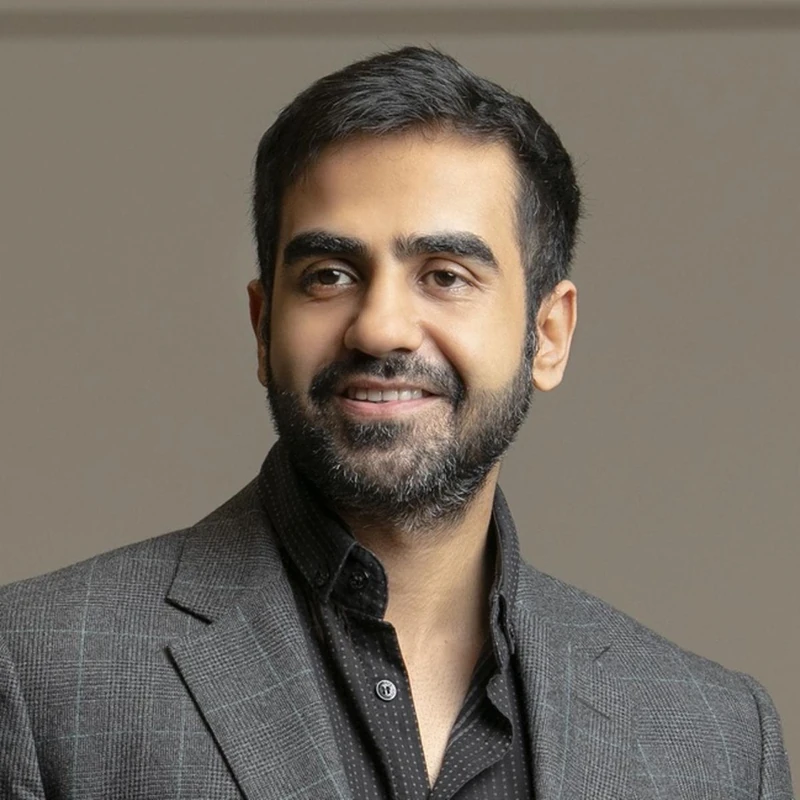
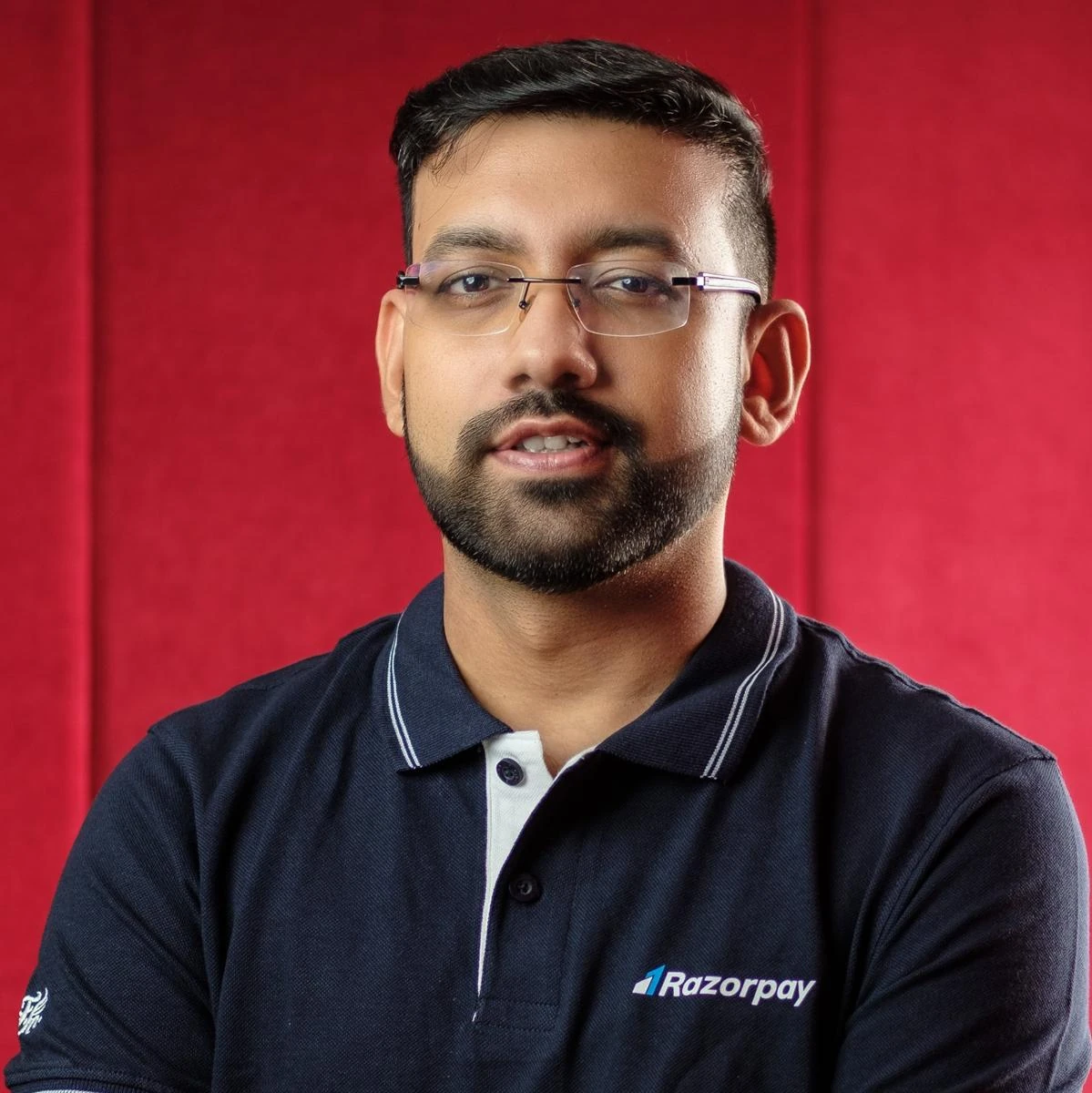
Shashank Kumar has reached the point at which visibility is no longer the scarce resource. The harder asset is evidence that Razorpay's attempt to use routing, passkeys and infrastructure software to reduce failed transactions across India's increasingly complex payment stack can survive scale, scrutiny and a less forgiving cost of capital. That is the operating question around Razorpay in July 2026, and it is more consequential than the ranking, title or private-market enthusiasm attached to the person leading it.
The latest evidence is concrete: the company said device-based authentication could cut OTP-related failures by 35 per cent and lift transaction success towards 95 per cent in supported flows. The result changes the standard of judgement. An early breakthrough can be explained by speed, novelty or a favourable market. A durable institution must explain where value is created, who pays for it, what the hidden costs are and why a competitor with more capital cannot reproduce the advantage.
This is why Shashank Kumar's next phase should be read as a business story rather than a biography. The choices now concern allocation: of money, technical attention, organisational authority and reputation. Each choice can strengthen the operating system around Razorpay; each can also reveal that the first success depended on conditions that will not repeat.
The strategy behind the next move
The strategic turn is Razorpay's attempt to use routing, passkeys and infrastructure software to reduce failed transactions across India's increasingly complex payment stack. It asks the organisation to do more than extend a familiar product. It changes the unit of value, the customer promise or the institution's relationship with the market. That expansion can enlarge the addressable opportunity, but it also adds interfaces at which execution can fail.
Leadership under these conditions is partly an exercise in subtraction. Shashank Kumar must decide which adjacent opportunities reinforce the core and which merely borrow its credibility. A young platform can look diversified when it is actually accumulating exceptions, bespoke commitments and management load. The discipline is to make new activity strengthen the same capabilities rather than create a loose portfolio of ambitions.
The strongest case for the strategy is that the original advantage has become distribution. Customers, partners, audiences or public institutions already know where to find Razorpay. Distribution lowers the cost of introducing the next product or programme. Yet it can also disguise weakness: existing users may try something once without changing behaviour, paying more or entrusting the organisation with more important work.
Where the economics become visible
The financial test is sharper. a few percentage points of higher success can create meaningful merchant value, but Razorpay must capture part of that value while funding redundancy, security and round-the-clock operations. The figure that matters is therefore not the loudest growth number. It is the relationship between incremental revenue or public value and the full cost required to produce it.
Capital can postpone that reckoning. It can fund capacity before demand, subsidise adoption, recruit scarce talent and absorb mistakes. Used well, that is the purpose of patient finance. Used poorly, it creates an organisation that interprets spending as progress and scale as proof. Shashank Kumar's task is to identify the investments that compound and stop treating every expanding line item as strategic inevitability.
There is also a balance-sheet dimension even where the institution is not conventionally financed. Long contracts, infrastructure, reputation, training and specialised teams are forms of committed capital. They reduce flexibility. A credible operating plan makes those commitments visible and ties them to milestones that can be observed before the entire strategy is either celebrated or written off.
Measurement is the defence against narrative drift. Razorpay needs a small set of operating indicators that connect adoption to value, value to revenue or public benefit, and that benefit to cash or institutional capacity. Vanity measures are especially dangerous after a breakthrough because they normally keep rising even when customer quality falls. Shashank Kumar should be willing to disclose which metric would cause the organisation to slow investment, redesign the offer or withdraw from a market.
Asia as an operating test
Asia is not a decorative paragraph in this story. India's UPI scale and diverse banking connections create failure modes that are relevant to other fast-digitising Asian payment systems. That makes the region a source of demand, talent, operating complexity and competitive pressure at the same time.
The regional opportunity is often described through population or growth. Those measures are insufficient. Asian markets differ in income, regulation, language, infrastructure and the power of incumbents. A model that works in one dense city, one enterprise segment or one consumer culture may fail a few borders away. Expansion must therefore preserve a common economic engine while allowing local execution to differ.
The reverse flow matters as well. Capability developed in Asia can become globally valuable when it solves for cost, reliability and constraint rather than simply for scale. Shashank Kumar has an opportunity to make regional operating knowledge part of the product. Doing so requires senior authority in the region, not a distant sales layer asked to translate decisions made elsewhere.
Local partnerships can shorten that learning cycle, although they bring their own governance problem. Distributors, sponsors, public agencies and strategic investors may open doors while also shaping priorities. The relationship is productive when incentives and accountability are explicit. It becomes fragile when access substitutes for customer evidence. Razorpay should be able to explain which capabilities remain controlled, which are shared and how local partners participate in the economics created.
The case against easy confidence
The sceptical case begins with optimising conversion without equally strong fraud and dispute controls can move losses rather than eliminate them. None of these concerns automatically invalidates the strategy. Together they explain why the next stage will be won through controls and operating detail rather than announcement cadence.
Competition will attack the profitable layer first. Rivals do not need to reproduce the whole institution; they can isolate the feature, customer group or geography that carries the best economics. That leaves Razorpay supporting the expensive system while others skim the attractive demand. Integration is an advantage only when customers value the combination enough to pay for it or remain because switching would destroy genuine utility.
Regulation should be treated as product design. Rules governing data, labour, safety, competition, capital or public accountability increasingly determine what can be sold and at what cost. An organisation that builds compliance after growth will accumulate exceptions. One that designs evidence, audit and redress into operations can turn trust into a barrier that less disciplined competitors struggle to cross.
A useful stress test is to remove the most favourable assumption. Demand may grow more slowly, financing may cost more, a partner may leave or a regulator may narrow the field. The question is whether the core proposition still earns the right to exist. If the answer depends on every optimistic forecast arriving together, Shashank Kumar has built a scenario rather than a strategy. Resilience comes from optionality, not from lowering the standard after conditions change.
Building authority beyond the founder
Shashank Kumar's age or speed of ascent can attract attention, but neither is a management system. The institution now needs authority that travels beyond the founder or principal: executives who can reject attractive distractions, technical and financial leaders who share the same definitions of quality, and a board or public oversight structure capable of testing claims before the market does.
This does not mean replacing conviction with committee process. It means separating reversible product bets from decisions that expose the whole enterprise. The former should move quickly. The latter require evidence, dissent and a named owner. Fast organisations often fail not because they take risks, but because they cannot later reconstruct who understood the risk and why it was accepted.
The cultural challenge is to preserve the candour of an early team after external success changes incentives. Employees and partners become less willing to surface bad news when the leader's public identity is tied to momentum. Shashank Kumar will learn more from the quality of internal contradiction than from another round of admiration. That is especially true when the operating facts lag the public narrative.
Succession is relevant long before a departure is planned. A durable organisation must continue making high-quality decisions when Shashank Kumar is absent from a room, focused on another crisis or eventually doing a different job. Delegation therefore has to include context and consequence, not only tasks. The clearest evidence of mature leadership will be a bench of people whose authority is visible to customers and colleagues and whose judgement does not require constant founder validation.
The result that matters
The next proof is specific: demonstrate that improved success rates hold across banks, devices and peak periods while producing measurable retention and software revenue. That result would connect the strategic claim to an operating outcome and make the case less dependent on personality, favourable comparisons or abundant capital.
If Shashank Kumar delivers it, the significance will extend beyond Razorpay. It will show that a new generation of Asian or Asian-origin leadership can convert early authority into institutional durability. If the evidence does not arrive, the first breakthrough will remain real, but it will look more like a moment captured than a system built.