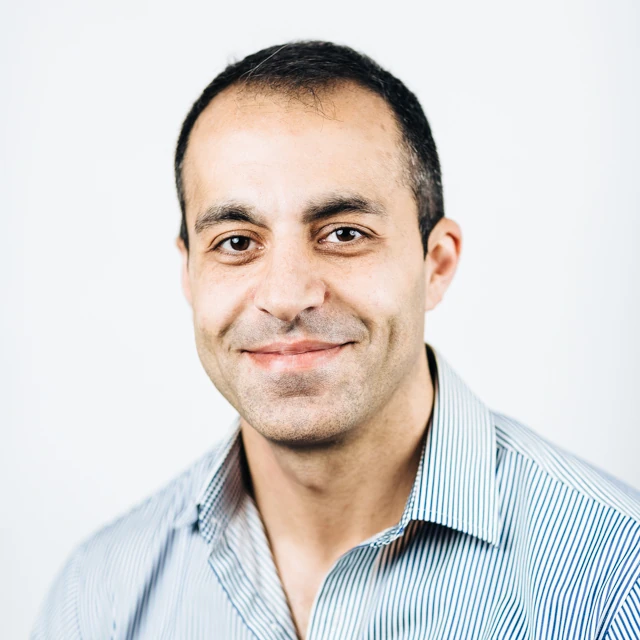
Ali Ghodsi begins the second half of 2026 with a combination few private technology leaders have ever controlled: exceptional growth, a vast capital base and permission to challenge several software categories at once. Databricks crossed a $5.4 billion annual revenue run-rate after growing more than 65 per cent in its fourth quarter. It also completed financing of roughly $5 billion in equity at a $134 billion valuation and added about $2 billion of debt capacity. The company remained cash-flow positive over the preceding year and reported net retention above 140 per cent. Those figures make Databricks more than an AI beneficiary. They place it among the companies trying to define the enterprise stack that follows cloud software.
Ghodsi, a co-founder and the chief executive, has built that position by repeatedly widening the company’s mandate. Databricks commercialised Apache Spark, helped establish the lakehouse as a bridge between data lakes and warehouses, added machine learning and governance, and then moved into generative AI through products and acquisitions. In 2026, the portfolio reaches into transactional databases, conversational analysis, agent development, data engineering, business intelligence and model operations. The strategy is not modest. Databricks wants data and AI applications to share one governed foundation rather than be assembled from separate systems.
Capital changes the standard
The new financing gives Ghodsi freedom to invest through market cycles, acquire scarce technology and provide employee liquidity without being forced into a public listing on an external timetable. It also increases the burden of proof. A $134 billion private valuation embeds expectations of sustained high growth and a much larger future market. Databricks can no longer be assessed only as a fast-growing infrastructure vendor. It must show that its expansion across categories produces stronger customer economics and a more defensible platform rather than a collection of expensive ambitions.
That distinction matters because capital can hide strategic weakness for a long time. Generous funding can support overlapping products, duplicated teams and pricing that wins workloads without establishing attractive lifetime value. Ghodsi needs to allocate the balance sheet with the discipline of a mature public company even while preserving the urgency of a private challenger. The most important uses of capital will be those that deepen shared architecture, accelerate adoption and remove friction across the platform. Growth purchased through disconnected products would make integration harder and weaken the very consolidation story Databricks sells.
The company has identified Lakebase and Genie as priority investments. Lakebase extends Databricks into serverless PostgreSQL for applications and agents, while Genie allows employees to interact with enterprise data through natural language. The pairing reveals the end state Ghodsi is pursuing. Databricks does not want to analyse information only after an operational system produces it. It wants applications to generate data on the platform, agents to use that data under common governance, and business users to receive answers or trigger actions through a conversational interface.
Removing the wall between systems
Enterprise technology has long separated operational databases from analytical platforms. Transactions occur in one system; data is copied, transformed and loaded into another for reporting and modelling. That architecture creates delay, duplicated storage, brittle pipelines and inconsistent policy. Lakebase is intended to narrow that divide by bringing a PostgreSQL-compatible operational database into the Databricks environment. For AI agents, which need both real-time state and historical context, the ability to work across these modes with one governance layer could be particularly valuable.
The commercial opportunity is considerable, but the engineering standard is unforgiving. Transactional databases must offer predictable latency, availability, recovery and compatibility. Customers will not move mission-critical applications because a platform diagram is elegant. They will test failure behaviour, regional coverage, tooling and operational support. Databricks has credibility in large-scale analytics, yet database buyers measure trust over years. Ghodsi must resist using the company’s growth to rush customers across a maturity gap. Adoption will compound only if early workloads prove dependable.
Genie faces a different challenge: semantic reliability. Allowing a business user to question data in natural language can expand the addressable audience far beyond engineers and analysts. But a fluent answer can still be wrong if definitions, joins or business context are unclear. Unity Catalog and the platform’s metadata can help establish governed meaning, while monitoring and evaluation can show how an agent reached a result. Ghodsi’s team must make that trust visible to non-technical users. Adoption will stall if every answer still requires an expert to reconstruct the query.
Openness is both moat and constraint
Databricks was built around open-source technologies, and that heritage remains central to its competitive identity. Delta Lake, Apache Spark and an increasingly open catalogue ecosystem allow customers to avoid confining data to a proprietary warehouse. Openness draws developers and partners, lowers adoption barriers and gives enterprises leverage across clouds. It also means Databricks cannot rely on file formats alone for lock-in. The company has to create superior management, performance, governance and developer experiences around assets customers can access from other engines.
This is a more demanding but potentially more durable model. If Databricks becomes the best place to govern and operate open data, it can win workload share without requiring customers to surrender optionality. The risk is that hyperscalers or rival platforms support the same standards and bundle adjacent services. Ghodsi therefore needs to keep Databricks neutral enough to span clouds while deepening partnerships with Amazon Web Services, Microsoft Azure and Google Cloud. Each provider is simultaneously a distributor, infrastructure supplier and competitor.
Competition with Snowflake is only one part of the landscape. Databricks also encounters cloud databases, model platforms, observability vendors, business intelligence tools and specialist agent frameworks. Its answer is consolidation. Customers can reduce integration work by running more of the lifecycle on one platform. Yet consolidation creates a product-design problem: different users need different interfaces. A data engineer, application developer, analyst and risk officer should experience one control plane without being forced into one overloaded workspace. Ghodsi must make breadth feel coherent.
Growth quality matters more than velocity
A revenue run-rate above $5.4 billion and growth beyond 65 per cent are exceptional. The next leadership measure is the quality beneath those figures. Net retention above 140 per cent indicates that existing customers are expanding rapidly, but Databricks must understand whether that expansion is diversified across durable workloads or concentrated in a smaller number of compute-intensive projects. AI experimentation can produce bursts of consumption that do not repeat. Production applications, governance and core data engineering should provide a steadier base.
Ghodsi also has to turn scale into operating leverage. Databricks has said it is cash-flow positive, an important signal for a private company funding aggressive product development. Still, model inference, cloud infrastructure, sales expansion and acquisitions can absorb large amounts of capital. Pricing must reflect customer value while remaining clear across a widening portfolio. If buyers cannot predict costs, the platform may invite the same optimisation pressure that affected earlier cloud services. Transparency and workload efficiency are strategic sales tools, not finance details.
Remaining private gives Ghodsi strategic optionality, but it does not remove the need for public-company standards. Customers making long commitments want visibility into stability, governance and investment capacity. Employees holding equity need credible liquidity, while new investors expect eventual returns. Consistent financial reporting, disciplined controls and an independent leadership bench can strengthen trust before any future listing decision. The timetable matters less than demonstrating that scale has produced institutional maturity.
The company’s culture is another asset under strain. Databricks emerged from academic research and open-source engineering, but it now serves large regulated enterprises and operates at a scale that requires consistent execution. Ghodsi needs to preserve technical candour while building repeatable enterprise sales, security and support systems. A founder can accelerate decisions, yet the organisation must not depend on his presence for every product boundary or major customer issue. Leadership depth will matter as much as the next architectural idea.
Asia will test platform adaptability
For Asian enterprises, Databricks addresses an appealing combination of needs. Banks want governed AI without moving sensitive data indiscriminately. Manufacturers need to connect operational information, supply chains and predictive systems. Digital companies want to build agents and applications on fast-growing data estates. Governments and telecommunications groups face sovereignty and resilience requirements across jurisdictions. The region can therefore reward a platform that combines open architecture with central policy.
It can also expose gaps. Data localisation, language, cloud availability, partner skill and sector regulation differ sharply among Japan, India, Southeast Asia, Korea and the Gulf. Databricks needs regional engineering and solution depth, not only global reference accounts. Ghodsi, who was born in Iran and raised in Sweden before building his career in the United States, embodies an internationally mobile technology story. The company’s commercial success will depend on translating that global identity into local operating credibility.
Ghodsi has already proved that Databricks can create a category, attract capital and grow at remarkable speed. The 2026 test is whether multiple new categories reinforce one another. Lakebase should create fresh operational data, Unity Catalog should govern it, Genie should make it accessible, and agent tools should turn it into action. If each layer increases the value of the others, Databricks can compound into an enterprise operating platform. If integration lags, breadth will become complexity and capital will magnify it. Ghodsi’s next achievement must therefore be coherence at scale.