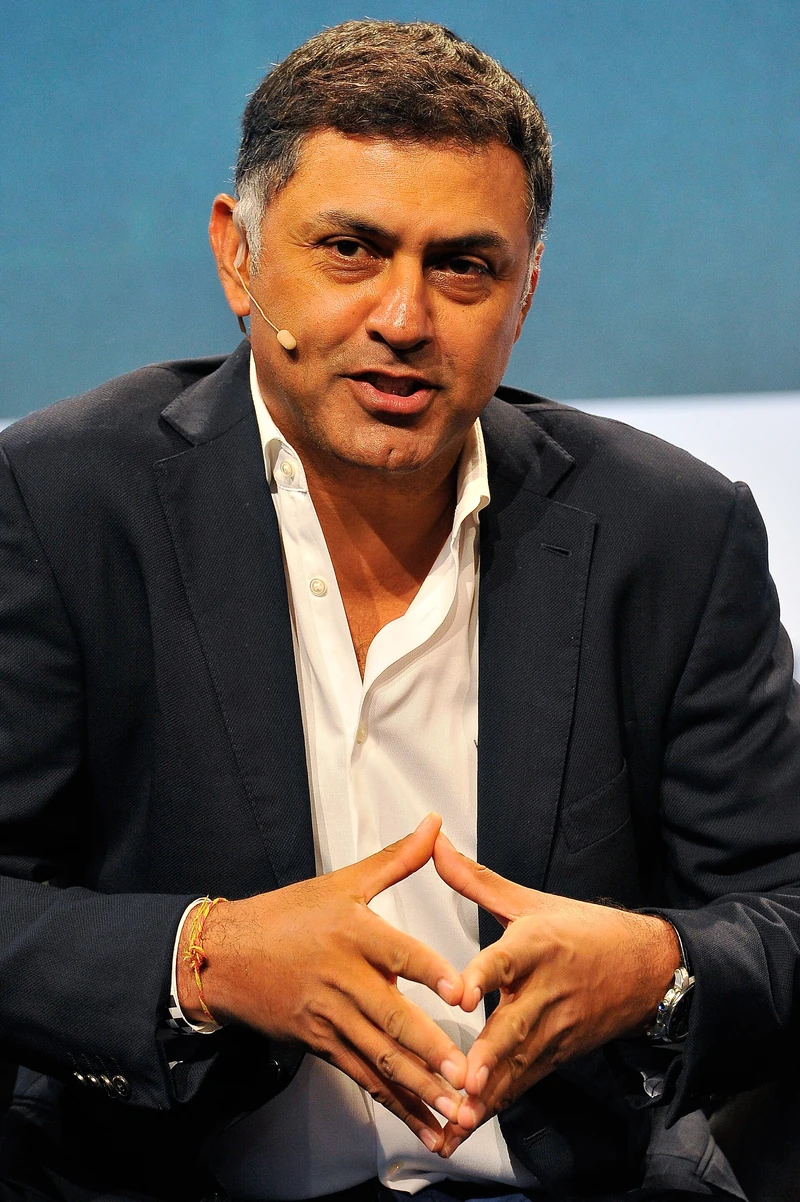

Ameera Shah has moved one step away from Metropolis Healthcare's daily machinery just as the company has become harder to manage. A professional managing director now runs operations, while Shah, reappointed in March 2026 as executive chairperson and whole-time director, concentrates on governance, capital allocation, acquisitions, talent and culture. The redesign is sensible. It also makes the results of Metropolis's recent dealmaking the clearest measure of her leadership.
Metropolis completed three acquisitions across northern India between March and June 2025: Core Diagnostics in Delhi NCR, Scientific Pathology in Agra and Dr Ahuja's Pathology and Imaging Centre in Dehradun. The assets extend geography, add consumer relationships and deepen high-end oncology and genomics capability. In FY26, group revenue rose 23.6 per cent to Rs1,645.8 crore and reported EBITDA increased 31.7 per cent to Rs400.8 crore, a 24.4 per cent margin.
The performance is strong, but it blends organic execution with purchased revenue. Metropolis's underlying business grew 13.7 per cent to Rs1,509.6 crore, while organic EBITDA rose 20.4 per cent to Rs391.6 crore and the margin expanded to 25.9 per cent. Acquired businesses contributed roughly 8 per cent of annual group revenue. Shah must now close the gap between adding sales and creating value: integration should lift the acquired operations towards the network's quality, productivity and cash returns without damaging the local franchises Metropolis bought.
Core changes the clinical mix
The Rs246.8 crore purchase of Core Diagnostics is the strategic centre of the expansion. Metropolis paid 55 per cent in cash and 45 per cent through an equity swap for a business that recorded Rs110 crore of FY24 revenue. Core operated across about 200 Indian cities, served more than 6,000 specialist prescribers and offered over 1,300 high-end tests, with a strong focus on cancer. Its revenue had grown at about 22 per cent annually over the preceding three years.
This is more than geographic bolt-on growth. Routine pathology is vulnerable to price competition because collection is easy to replicate and customers can compare packages. Specialised cancer diagnostics require scientific expertise, pathologist relationships, validated assays, tissue handling and credible turnaround times. They can command higher value per test and create deeper links with hospitals and oncologists. As cancer incidence and precision treatment expand, testing increasingly determines which therapy a patient receives.
The opportunity comes with a different risk profile. Specialised volumes can be less predictable, reagent costs higher and technology cycles shorter. Tests must be continuously validated as biomarkers and treatment guidelines change. A failed quality process in oncology carries consequences far beyond a delayed routine blood result. Metropolis needs to integrate Core's commercial reach and laboratory capacity while protecting its clinical independence and accreditation standards.
The transaction price also needs context. At more than twice Core's FY24 revenue, the purchase assumes continued growth and strategic synergies. Cash funding creates an immediate return hurdle, while the share component dilutes existing owners. Metropolis should disclose acquired revenue, margin progression and integration costs for long enough to let investors judge whether the premium was earned. Folding the numbers into group growth too quickly would conceal the very capital-allocation outcome Shah is responsible for.
Local brands versus network economics
Scientific Pathology and Dr Ahuja's offer a different kind of value: established consumer trust in cities where national diagnostic chains have less dominance. Diagnostics is unusually local. Patients may follow a doctor recommendation, a familiar collection centre or a laboratory known for reliable service. Buying that trust can be faster than building it, especially in northern markets where Metropolis historically had less density.
The economic case depends on what changes after acquisition. Samples can be routed to regional or central laboratories with unused capacity. Procurement can be pooled; technology and customer systems can be shared. Metropolis has said future expansion will rely more on collection centres than on building laboratories, a capital-light approach that should improve utilisation and margins. A dense collection network also shortens travel for patients and increases the range of tests that can be sent to specialised hubs.
Too much centralisation can weaken service. Longer transport routes may affect turnaround and sample integrity. Local doctors expect access to pathologists, not only a national call centre. Rebranding can discard recognition for which Metropolis paid. The company should integrate quality, technology and purchasing first, while deciding brand architecture market by market. Synergy is valuable only if it preserves the referral relationships that generated the acquired revenue.
FY26 suggests operating leverage is emerging. In the March quarter, group revenue rose 23 per cent to about Rs425 crore and EBITDA reached Rs108 crore, a 25.4 per cent margin. Organic patient volume increased 9.3 per cent and revenue per patient rose about 5 per cent. That balance is healthier than growth driven mainly by price. It also makes the acquired operations' trajectory more important: they should eventually approach, rather than dilute, the productivity of the established network.
A chairperson's capital discipline
Shah's transition from managing director to executive chairperson in May 2024 was designed to separate strategic oversight from daily execution. Surendran Chemmenkotil became managing director in June 2025 after serving as chief executive. The arrangement can create useful tension. Management is accountable for volumes, turnaround and costs; the chairperson is accountable for where capital is deployed and whether incentives support long-term returns.
That division needs disciplined board practice because Shah remains a promoter and whole-time director. A powerful executive chair can accidentally blur authority, leaving the managing director responsible for results without control over decisions. The board should define approval thresholds for acquisitions, hiring and investment, then allow management to execute. Shah's contribution is most valuable when she challenges assumptions and protects culture, not when a second operating chain forms around her office.
Her reappointment through March 2031 gives Metropolis leadership continuity during integration. It also places succession and institutionalisation on the agenda. The company that Shah helped build from a single laboratory into a listed national chain should not depend on one individual for every major transaction or relationship. A durable acquisition capability requires teams that can source, value, integrate and, when necessary, reject deals.
Diagnostics consolidation can encourage overpayment because high-quality local laboratories are scarce. Strategic buyers value geographical fit; private equity values platform potential; hospital groups may want captive testing. Shah should resist using Metropolis's market valuation as a permanent acquisition currency. Returns should be assessed against the cash cost, dilution and management effort, not only whether a deal increases earnings per share in its first year.
Competition attacks both ends of the model
Metropolis competes with national chains such as Dr Lal PathLabs and Thyrocare, hospital laboratories, regional specialists and digital platforms that aggregate home collection. Entry into basic testing is relatively easy; building trusted scale is not. Online competitors can discount common panels and acquire customers through convenience, while hospitals control high-value samples generated inside their own facilities. Metropolis needs a proposition that spans accessibility and scientific depth.
Its digital channel has become more important, contributing around a quarter of revenue over a three-year period according to management. Technology can lower booking friction, coordinate home collection and support targeted preventive programmes. Yet digital revenue is not automatically better revenue. Customer-acquisition spending, discounts and last-mile collection can compress margins. The value of a consumer data platform lies in repeat testing and clinically appropriate engagement, not message volume.
Preventive testing offers growth but invites scrutiny. Packages can encourage earlier detection, though poorly designed panels create false positives and unnecessary follow-up. A diagnostics leader should distinguish evidence-based screening from retail excess. That is both a clinical obligation and a defence of brand trust. As India's regulators and consumers pay more attention to healthcare claims, quality of recommendation may matter as much as quality of analysis.
Specialised testing provides a stronger moat, but innovation is expensive. Genomics, molecular oncology and companion diagnostics require equipment, bioinformatics and skilled interpretation. Some tests may remain low-volume for years. Metropolis should avoid confusing a long test menu with a profitable portfolio. Investment should follow clinical demand, reimbursement and partnerships with specialists, with underused assays reviewed rather than retained for prestige.
India's scale opportunity carries an access question
India's diagnostic market remains fragmented, leaving national chains a long runway to consolidate. Rising chronic disease, insurance, preventive awareness and oncology treatment support demand. Collection-centre expansion can extend high-quality testing beyond major cities without replicating full laboratories. Metropolis's northern acquisitions help correct a regional imbalance and create a network that can move specialised samples efficiently.
Affordability remains a limit. Much testing is paid out of pocket, and household budgets do not rise as quickly as the cost of advanced science. Scale should lower procurement and processing expense, but shareholders will also expect margin growth. Shah's strategic challenge is to share enough efficiency with patients to increase volumes while retaining enough to fund innovation. Relentless premiumisation would narrow the accessible market and invite lower-cost competitors.
Quality is the bridge between those objectives. Accurate results prevent repeat tests, misdirected treatment and wasted clinical time. Accreditation, proficiency testing and transparent error management are economic assets, even when their returns do not appear as a separate line item. Integrating acquired laboratories under consistent standards can therefore create value that a simple cost-cutting programme cannot.
By the end of FY27, Shah should be able to show how much of Metropolis's growth is organic, what margin the acquired businesses generate and how much cash remains after integration and capital expenditure. Core should deepen oncology relationships, the northern brands should expand collection density, and management authority should be demonstrably institutional rather than personal. FY26 proved that Metropolis can buy growth without sacrificing group margin. The next year must prove that Shah bought assets capable of compounding on their own.