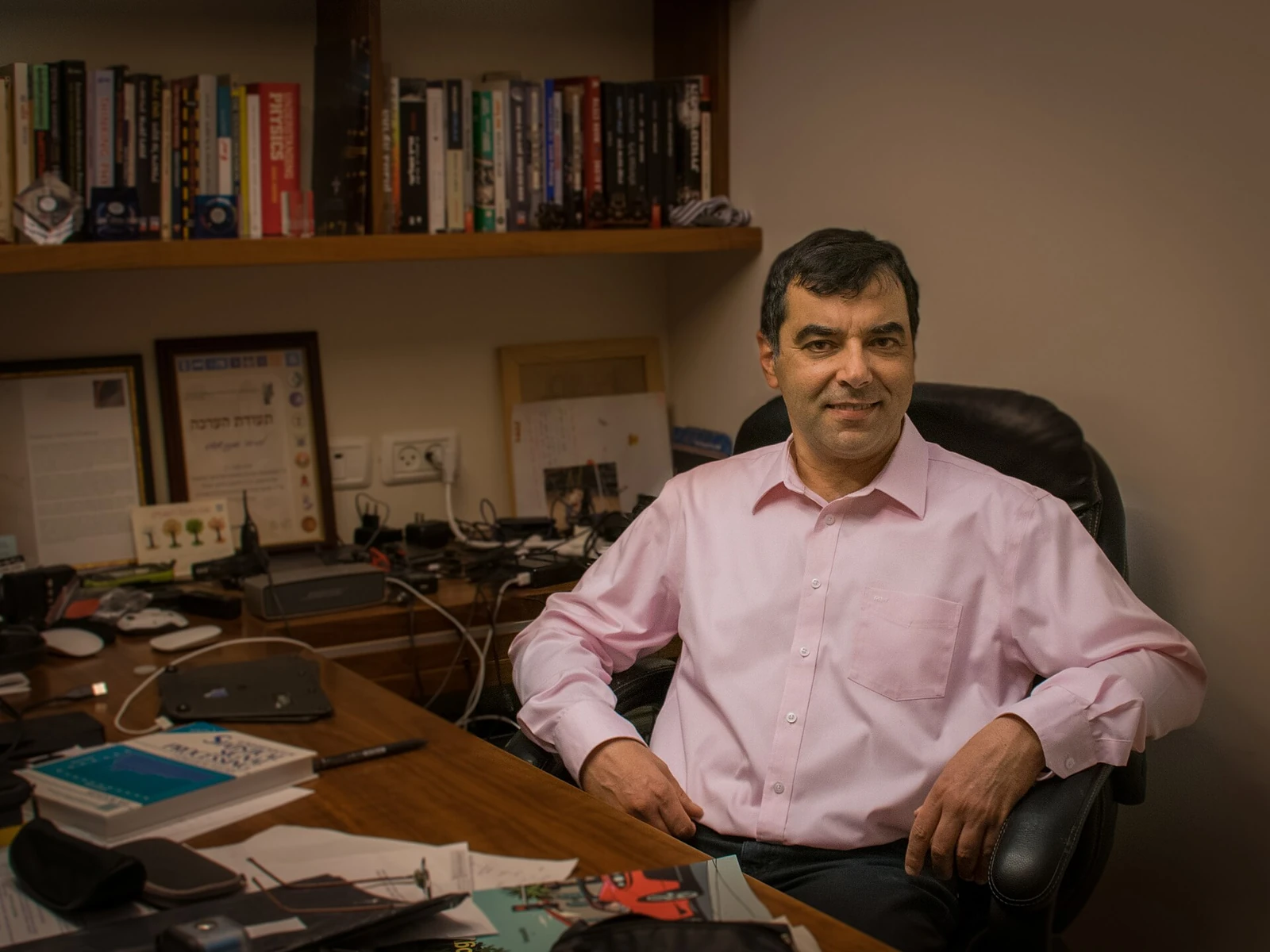
Amnon Shashua has spent more than two decades arguing that visual intelligence can make machines understand the road. In 2026, he is broadening that proposition from vehicles to physical AI. Mobileye reported first-quarter revenue of $558 million, 27% above the prior year, and generated $75 million of operating cash flow. At the same time, it recorded a $3.79 billion goodwill impairment connected with Intel’s earlier acquisition and moved to buy Mentee Robotics, a humanoid robotics company co-founded by Shashua. The contrast is striking: a recovering automotive franchise is being asked to support a new technological frontier while accounting recognises that past expectations were too high.
Mobileye’s core remains advanced driver-assistance systems. Its EyeQ chips and perception software are installed across large volumes of vehicles, giving the company data, manufacturer relationships and safety experience that new entrants cannot acquire quickly. The inventory correction that hurt results demonstrated the weakness of dependence on automotive production cycles and tiered supply chains. Recovery is welcome, but carmakers are becoming more demanding about cost, control and road maps. Chinese suppliers are advancing rapidly, and some manufacturers want to build more software internally.
Shashua’s strategic answer is a ladder of capability: base driver assistance, more advanced SuperVision systems, chauffeur-like autonomy and eventually driverless services. The architecture aims to reuse perception, mapping and safety frameworks across levels. That can create scale, but each rung has different economics and liability. A camera-based assistance product sold in millions is not the same business as operating a robotaxi in a limited city. Mobileye must prevent the elegance of its technical narrative from obscuring commercial differences.
The automotive core must remain the funding engine
The first priority is predictable execution with carmakers. Design wins can take years to enter production and revenue arrives over a model’s life. Mobileye needs programmes that meet cost, performance and regulatory requirements despite changing vehicle schedules. Its work with Volkswagen and Mahindra shows the breadth of opportunity, from mass-market assistance to advanced autonomous platforms. Shashua should disclose milestones that connect announced partnerships to production volumes, giving investors a clearer view of timing and concentration.
SuperVision is strategically important because it can increase content per vehicle before fully autonomous systems are ready. Drivers still retain responsibility, making human-machine communication critical. The system must state its limits clearly and monitor attention without creating false confidence. Marketing language can become a safety risk if consumers misunderstand capability. Mobileye’s reputation will depend on disciplined claims and transparent learning from incidents, even when legal frameworks do not require full disclosure.
Mapping provides another advantage. Road Experience Management uses data gathered from vehicles to maintain a detailed model of roads. The scale can improve performance across markets, but it raises privacy, sovereignty and data-transfer questions. Governments may require local storage or restrict high-definition mapping. Mobileye must design regional governance rather than assume one global dataset. The best technical map is commercially useless if carmakers cannot deploy it lawfully.
Mentee turns a research relationship into a governance test
The acquisition of Mentee Robotics brings a different challenge because Shashua helped create both companies. Physical intelligence for humanoid robots may benefit from Mobileye’s work in perception, planning and efficient computing. Robots operating in warehouses or industrial settings could become a large market. Yet strategic fit does not remove the need for independent governance. The board must demonstrate that valuation, alternatives and conflicts were examined rigorously, especially when the founder is central to both sides.
Mobileye’s net cash outlay and the reduction in financial resources matter because robotics will require sustained investment. Humanoid hardware is expensive, supply chains are immature and useful autonomy in unstructured environments remains difficult. A demonstration can be impressive without establishing reliability, safety or unit economics. Shashua should define narrow commercial tasks where Mentee can prove value, such as repetitive handling in controlled facilities, before promising general-purpose capability. Each deployment should produce evidence about uptime and human supervision.
There is also a talent-allocation risk. The same researchers and executives may be attracted to the newer, more imaginative problem while automotive customers need attention to production detail. Mobileye should establish clear budgets, reporting lines and technical interfaces. Shared research can be encouraged without allowing Mentee to consume resources invisibly. If the robotics business deserves significant capital, its progress should be reported separately enough for investors to evaluate it.
Robotaxis require patient, city-by-city proof
Insurance will be an important commercial signal. If underwriters can price Mobileye-equipped vehicles or autonomous fleets more favourably based on transparent evidence, the system gains economic validation beyond manufacturer enthusiasm. The company should collaborate without allowing insurers to define safety solely through claim history, which may take years to become statistically meaningful.
Autonomous mobility has repeatedly advanced more slowly than industry forecasts. The difficulty is not only perception; it is handling rare events, weather, road behaviour, maintenance and regulation at acceptable cost. Mobileye’s planned robotaxi deployments with automotive partners can validate its stack, but the company should resist measuring success by the number of announcements. Paid rides, intervention rates, fleet uptime and operating cost provide stronger evidence.
Its safety philosophy, including formal models for responsible behaviour, can differentiate the company if regulators and independent experts can examine assumptions. Mathematical structure does not eliminate judgement about acceptable risk. Shashua should support common reporting standards across the industry so performance can be compared. A provider confident in its system has an interest in replacing promotional claims with measurable safety cases.
Partnerships are unavoidable because Mobileye does not manufacture complete vehicles or operate every fleet. That asset-light position preserves capital but divides responsibility. Contracts must specify who maintains sensors, updates software, monitors vehicles and responds to incidents. Customers should not face a chain of companies pointing at one another. Shashua’s leadership must extend beyond technology into an operating model for shared accountability.
Intel’s shadow cannot define the next chapter
Regulatory architecture is moving at different speeds. Europe has detailed vehicle-safety rules, the United States relies on a mixture of federal and state oversight, and China combines rapid deployment with local data requirements. Mobileye should design evidence packages that can travel across regimes without defaulting to the lowest standard. A common internal safety baseline can reduce duplication and give carmakers confidence when they launch the same platform in several markets.
Supply-chain resilience matters as well. EyeQ chips depend on advanced fabrication and automotive-grade packaging, while sensors and compute systems face geopolitical concentration. Shashua should secure multiple manufacturing routes where feasible, hold appropriate inventory and be candid about dependencies. Efficiency cannot come at the expense of a production interruption that delays customer vehicles for months.
Talent is another constraint. Israel’s technology sector operates amid security and political uncertainty, and Mobileye competes globally for AI engineers. The company should strengthen international research links while preserving the collaborative density of its Jerusalem base. Employees need clarity about the purpose of Mentee and how careers can develop across automotive and robotics without creating an internal hierarchy of glamorous and routine work.
The goodwill impairment is non-cash, but it symbolises the gap between the expectations surrounding Intel’s purchase and Mobileye’s present market value. Shashua cannot reverse the accounting history. He can improve credibility through capital allocation and disclosure. The authorised share repurchase may signal confidence, yet buybacks compete with automotive investment and the Mentee acquisition. Management should explain why each use of cash offers the best risk-adjusted return.
Mobileye’s relationship with Intel still affects perception, ownership and strategic flexibility. The company needs to operate for all carmakers and computing partners without appearing constrained by its parent. Governance should protect minority shareholders and allow management to choose technology based on product requirements. Over time, clearer independence could improve trust, but the immediate priority is performance rather than speculation about ownership.
Competition will test every layer. Nvidia offers powerful centralised computing and a broad AI ecosystem. Qualcomm combines automotive connectivity and processing. Chinese companies have local data, fast vehicle programmes and price advantages. Tesla and several carmakers pursue vertically integrated approaches. Mobileye’s case rests on efficient chips, proven perception, modularity and a safety framework that manufacturers can adopt without surrendering the entire vehicle architecture. Shashua must keep that proposition open enough for customers that want differentiation.
He is one of the rare chief executives with the technical authority to shape an AI field and the commercial responsibility to deliver quarterly results. That combination created Mobileye’s distinctive ambition. It can also encourage concentration around the founder’s judgement. The board and senior team need the confidence to challenge timing, capital and conflicts without diluting research intensity. A company building systems for safety-critical decisions should apply the same principle internally: redundancy improves resilience.
The next twelve to twenty-four months will determine whether Mobileye’s recovery becomes durable and whether physical AI is a coherent extension or an expensive distraction. Shashua must convert design wins into production, demonstrate SuperVision’s value, progress robotaxi programmes and give Mentee a focused route to commercial proof. The opportunity is to create a perception and planning platform that works wherever machines move through the human world. The risk is stretching that vision across too many horizons before the core has fully regained momentum. Protecting the engine while funding the leap is Shashua’s defining leadership test.