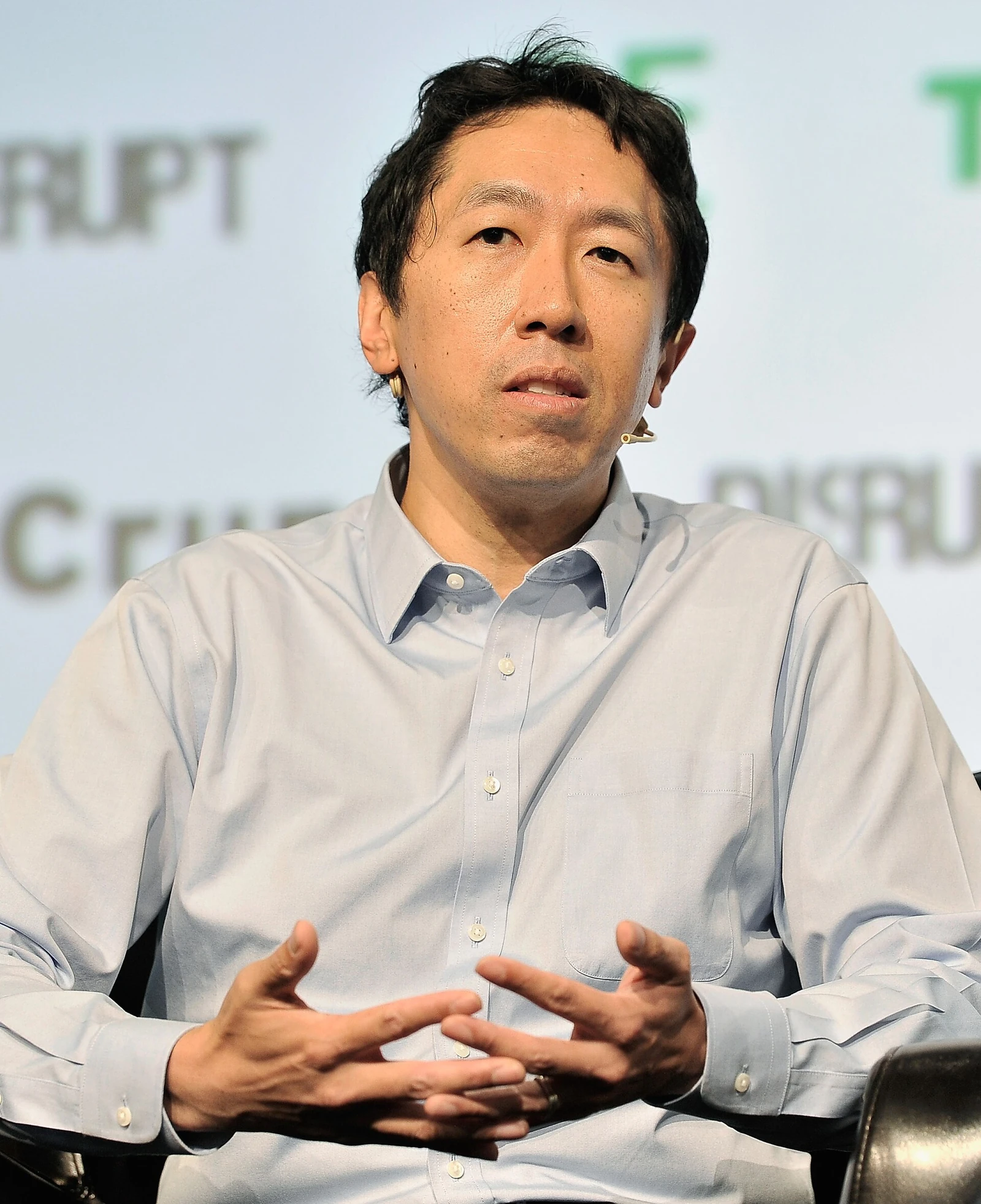
Andrew Ng has spent much of the artificial-intelligence boom arguing that value will not belong only to the companies training the largest models. In 2026, he is turning that argument into an operating system. DeepLearning.AI teaches millions of people how to build with new tools. AI Fund takes selected problems, pairs them with engineers and prospective chief executives, and tries to form companies in roughly three months. LandingAI sells document-processing software. Coursera provides another global education channel. The parts create a loop between training, product ideas, talent and capital.
The centre of that loop is now AI Fund, a venture studio backed by more than $370 million. Its proposition differs from conventional venture capital. The studio may arrive with a problem already researched, a prototype and early customer feedback. An engineer-in-residence works full-time for 12 weeks to test whether a product deserves to become a company and, if it does, may become its chief executive. AI Fund joins as a minority co-founder and investor while continuing to provide technical, recruiting and operational support.
This is Ng's business answer to rapidly improving models. When the underlying technology changes every few months, a company that spends a year assembling a team and writing a plan may launch into an obsolete market. A studio can discard weak ideas earlier, reuse engineering methods across a portfolio and take advantage of falling development costs. The model is attractive. It is not yet proven at the scale implied by Ng's influence.
Education as distribution
Ng's distinctive asset is not a secret algorithm. It is access to builders. DeepLearning.AI says more than seven million people use its learning ecosystem, and its catalogue has expanded from foundational machine learning into agents, evaluation, model context, voice systems and multi-agent development. In late 2025 it introduced a paid Pro membership combining more than 150 programmes with laboratories, assessments and certificates while keeping course videos free to view.
The freemium structure does several jobs. It preserves broad reach, creates recurring subscription potential and provides a constantly refreshed picture of what developers want to learn. New courses can be produced around technologies from cloud providers, model laboratories and software companies. Conferences add an in-person layer: the 2026 AI Developer event in San Francisco brought together builders from large platforms and emerging infrastructure groups.
For AI Fund, that community is a talent and demand signal. Engineers who understand current tools can be recruited into experiments. Course enrolment and developer questions reveal where tooling remains difficult. Portfolio companies can reach technically literate early users. Corporate partners can bring industry problems that do not fit a generic chatbot. The relationship is more useful than a conventional mailing list because the audience is already practising the relevant skills.
There is a commercial tension, however. Education rewards breadth, accessibility and frequent updates. Venture creation requires concentration, proprietary insight and patient support. What makes an excellent short course may be a feature rather than a company. A workflow that appears difficult today may be absorbed into a model provider's product next quarter. Ng's organisations must share insight without turning students into a captive sales funnel or allowing portfolio priorities to distort educational judgment.
A factory for application companies
AI Fund's portfolio spans skills verification, retail optimisation, healthcare, public services, supply chains, personal computing and workplace productivity. Workhelix focuses on identifying where generative AI can improve jobs and business processes. Workera assesses and verifies skills. LandingAI has shifted from its manufacturing-vision origins towards intelligent document processing, including work offered through cloud marketplaces and a 2026 collaboration with Snowflake for energy-sector operations. Other ventures address emergency response, government access and specialised industry tasks.
The breadth reflects Ng's long-standing thesis that artificial intelligence resembles a general-purpose technology: thousands of valuable applications will be built by teams with domain knowledge rather than by one universal system. The studio supplies model and product expertise; founders and corporate partners supply the operational problem. AI Fund lists partners including Mitsubishi Corporation, Mitsui, Nikkei and AES, giving it routes into energy, supply chains and media that a purely technical incubator would struggle to acquire.
The method also acknowledges a stubborn fact about enterprise AI. A model demonstration is easy; a reliable workflow is not. Applications need access to current data, evaluation against business-specific errors, permissions, auditability and integration with existing systems. They must continue working when a model changes or a provider alters pricing. Ng has repeatedly emphasised disciplined error analysis and evaluation. The commercial opportunity lies in turning those practices into software and services that customers will pay to retain.
His own 2026 experiments make the point. Context Hub was designed to give coding agents accurate application-programming-interface documentation, addressing the gap between a model's general coding ability and the current details needed to produce working software. AI Andrew, an assistant shaped around Ng's communication style, combines retrieval, multiple models, guardrails, memory and offline improvement loops. Ng publicly acknowledged that it could still invent experiences and give advice he would question. The admission is important: personality and trust are products that require continual evaluation, not a one-off instruction.
The moat problem
Speed does not automatically create defensibility. Foundation-model companies increasingly bundle retrieval, agent orchestration, voice, memory and evaluation. Cloud providers can subsidise adjacent tools to increase computing consumption. Open-source projects can reproduce a popular workflow quickly. If a studio-backed company depends on one provider's interface, a price change or native feature can compress its margin.
Ng's best defence is domain depth. A retailer may pay for a system that understands promotion, assortment and inventory economics rather than for a generic agent. A hospital or government agency requires compliance, traceability and deployment support. An industrial customer values a model trained around its documents, failure modes and operating constraints. Data accumulated through use can improve the product, although privacy and customer ownership limit how broadly those data can be pooled.
Distribution is another defence. DeepLearning.AI can reach builders, while corporate partners can supply customers. Ng serves as a director of Amazon, a role he has held since April 2024, and remains chairman and co-founder of Coursera, founder of DeepLearning.AI, managing general partner of AI Fund, managing partner of AI Aspire and executive chairman of LandingAI. Those positions create an exceptional view across cloud infrastructure, education, advice and applications.
They also create governance demands. Each organisation has different shareholders and commercial partners. Amazon Web Services competes with other clouds that work with DeepLearning.AI and portfolio companies. Coursera competes for learners while Ng's own education company offers subscriptions and certificates. AI Aspire advises on strategy that may overlap with investment opportunities. Formal conflict controls, clear data boundaries and transparent role allocation are necessary if the ecosystem is to be an advantage rather than a collection of perceived preferences.
Asia as a company-building market
Asia is central to Ng's network for reasons beyond his earlier leadership of Baidu's artificial-intelligence group. The region combines deep technical talent, enormous mobile populations and industries where specialised applications can create measurable gains. Japanese corporate partners give AI Fund access to established businesses with complex supply chains. India offers engineering talent and a large market for education, healthcare and public-service software. Southeast Asian companies often operate across languages and fragmented systems, conditions that reward adaptable application layers.
But the region also exposes the weakness of importing Silicon Valley products unchanged. Data-residency rules, local-language performance, procurement practices and labour economics vary widely. An agent that saves expensive professional time in the United States may have a weaker payback where wages are lower, unless it also raises quality, expands access or creates new revenue. Healthcare and financial applications face local licensing and accountability regimes. Corporate partners may accelerate market entry, but they can also lengthen product cycles through bespoke requirements.
Ng's emphasis on smaller teams and inexpensive experimentation suits these markets. Falling model costs allow a founder in Bengaluru, Singapore or Tokyo to test an idea without owning large computing infrastructure. DeepLearning.AI's online reach reduces the training barrier. Yet successful localisation requires decision-making authority near customers, not merely translation. AI Fund's challenge is to build companies whose product and governance are regional by design while preserving the efficiency of a shared studio.
Capital needs evidence
AI Fund discloses the amount of capital backing it but not aggregate portfolio revenue, valuation, realised returns or failure rates. That is normal for a private venture organisation, but it limits external assessment. A long company list can signal productive experimentation or diffuse attention. Acquisitions of portfolio companies are useful outcomes, yet the studio model ultimately needs enough large winners to offset the experiments that do not form companies and the ventures that remain small.
The economics deserve scrutiny because the studio provides more than money. Research, prototyping, engineering, recruitment and weekly involvement consume operating resources. Its minority co-founder stakes must capture sufficient upside to pay for that support. At the same time, taking too much ownership could weaken founder incentives. The 12-week process reduces initial waste, but durable enterprise sales and regulated deployment still take years.
Ng's influence helps at formation. His reputation attracts engineers, partners and attention. It cannot substitute for independent leadership after a company is created. The strongest validation of the model will be chief executives who build distribution and culture without depending on Ng's personal platform, and products whose renewal rates survive a change in the underlying model.
The frontier race rewards capital, chips and benchmark gains. Ng has chosen the more fragmented contest of making artificial intelligence useful inside thousands of specific activities. His ecosystem is well designed for that opportunity: education expands the builder base, the studio accelerates formation, corporate partners supply problems and specialist companies pursue adoption. The missing evidence is financial. By the end of this cycle, AI Fund must show that rapid experiments have become compounding businesses, not simply an efficient way to produce the next generation of experiments.