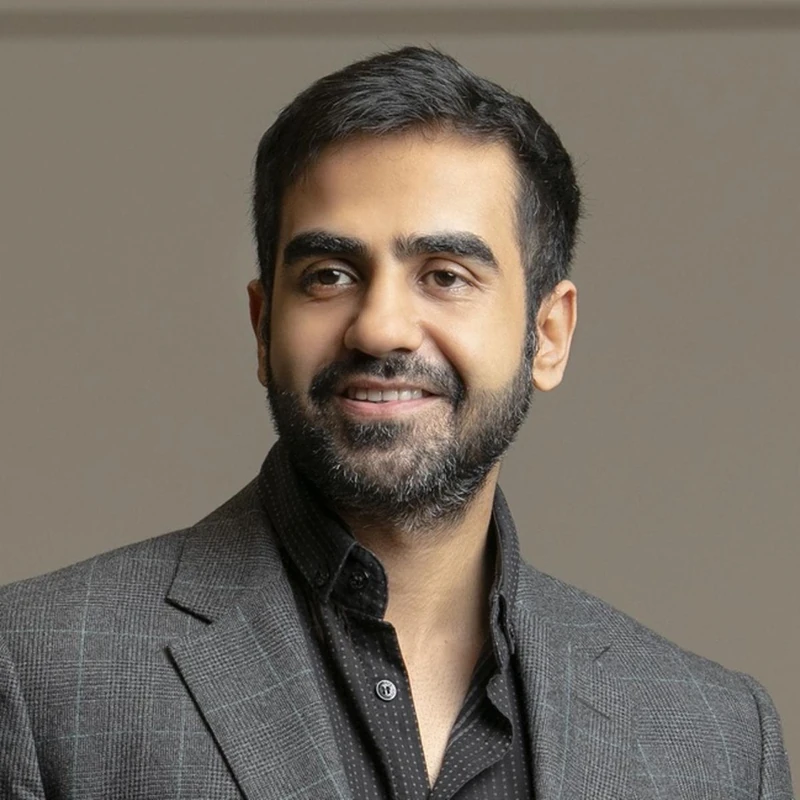
Anthony Tan enters the second half of 2026 with something Grab spent years trying to obtain: evidence that scale can produce profit. The Southeast Asian platform reported its first full-year net profit for 2025 and followed it with stronger operating momentum in early 2026. First-quarter adjusted EBITDA rose 46% to $154 million, while management projected annual revenue of $4.04 billion to $4.10 billion and adjusted EBITDA of $700 million to $720 million. The figures matter because they change the burden of proof. Tan no longer has to argue that a superapp may one day become economically coherent. He has to show that today’s profitability can survive expansion into lending, banking, grocery, advertising and new markets.
Grab’s history explains why that distinction is important. The company grew from ride-hailing into a regional operating system for everyday transactions, building a network of drivers, merchants and consumers across countries that differ sharply in income, regulation and infrastructure. Capital once appeared abundant enough to subsidise each side of that network. The post-listing correction exposed the cost of that approach. Investors demanded lower incentives, tighter overheads and a path to cash generation. Tan responded by narrowing priorities and improving unit economics without abandoning the platform thesis. The result is a more credible business, but also one with less room for strategic indulgence.
Mobility remains the economic anchor. It is a service with repeat demand, local density and operational complexity that discourages casual competitors. Yet the category is constrained by driver supply, traffic, regulation and consumer sensitivity to price. The simplest route to faster growth would be heavier subsidies, but that would weaken the discipline Grab has worked to establish. Tan’s better route is productivity: improving driver utilisation, matching, mapping, safety and pricing so that each hour on the platform produces more value. Artificial intelligence can help, but only if its gains are shared sufficiently with drivers and riders. A platform that optimises every transaction for itself will eventually damage the supply that makes the marketplace work.
Finance can deepen the network or magnify its risks
Digital financial services are the most consequential part of Grab’s next phase. Payments make the app easier to use, deposits lower funding costs and lending can turn transaction data into a profitable balance-sheet business. Through its banking interests, including Superbank in Indonesia, Grab is moving closer to the regulated core of regional finance. Consolidation can make the segment’s growth more visible, but it also brings credit quality, capital and governance onto the group’s main scorecard. A failed delivery costs a meal; a poorly underwritten loan can damage a household and compound across thousands of borrowers.
Tan therefore has to resist a seductive interpretation of data. Knowing how often a merchant sells or a driver works can improve underwriting, but behavioural information is not a substitute for a credit cycle. Southeast Asia’s small businesses are exposed to food inflation, weather, tourism, currency movements and informal competition. The platform sees more of their daily activity than a conventional bank might, yet it must still price for recession and fraud. Responsible growth requires conservative loss assumptions, transparent collections and clear separation between commercial incentives and credit decisions.
The strategic logic remains strong. A merchant that uses Grab for orders, payments, advertising and working capital is easier to retain and more valuable to serve. A driver with deposits, insurance and financing can obtain services that traditional institutions may not tailor to irregular income. Consumers gain a consistent way to transact across a fragmented region. But deeper integration also increases dependence. Regulators will ask whether users have genuine choice, how data moves among services and whether algorithms discriminate. Tan’s financial-services legacy will be determined as much by governance as by growth.
Acquisitions must earn their place in the platform
Grab’s proposed purchase of foodpanda’s Taiwan business and its agreement to acquire restaurant technology company Stash illustrate a more acquisitive posture. Each deal can extend density or merchant capability, but neither should be judged by announced scale alone. Taiwan adds a sophisticated market with established habits and capable rivals. Stash can give restaurants more control of customer relationships beyond marketplace orders. Integration will require local product decisions, technology migration and careful treatment of workers and merchants. A company that spent the last several years simplifying itself cannot allow acquisitions to rebuild complexity faster than earnings.
The Taiwan transaction also raises a familiar competition question. Delivery markets tend towards local concentration because more orders improve courier utilisation and restaurant selection. That efficiency can benefit consumers, yet excessive concentration can weaken bargaining power for merchants and workers. Tan must make a public-interest case through service quality, sustainable fees and continued innovation. Regulatory approval is not the end of that obligation. The combined business will be watched for evidence that greater density lowers costs rather than merely enlarging the platform’s take.
Advertising is a less capital-intensive opportunity. Grab sits near moments of purchase and can help merchants reach customers who are ready to order or travel. That makes sponsored placement valuable, but it can also degrade discovery if payment overwhelms relevance. Smaller merchants may feel compelled to buy visibility simply to preserve previous order volumes. The long-term advantage will come from tools that demonstrate incremental sales and allow merchants to manage their own customers, not from turning every screen into an auction. Trust is the scarce asset in a platform where Grab participates in the transaction and sells influence over it.
A regional company cannot be run as one uniform market
The board should treat the coming expansion as a test of governance as well as management. Clear limits on related-party activity, acquisition valuation and financial risk will help ensure that founder conviction remains an asset as the balance sheet becomes more complex.
Southeast Asia’s diversity is Grab’s moat and its management challenge. Singapore supports premium services and stringent financial oversight. Indonesia offers enormous scale but requires local partnerships and sensitivity to affordability. Vietnam, Thailand, Malaysia and the Philippines have different transport patterns, labour rules and competitive structures. Tan’s Malaysian roots and Singapore base symbolise the regional ambition, but execution depends on leaders who understand each city. Central technology should create leverage while local teams retain authority over regulation, supply and culture.
Governments are becoming more assertive about platform labour. Drivers value flexibility, but many also seek predictable earnings, insurance and representation. Classifying every demand for protection as a threat to the model would be shortsighted. Grab can use its data and scale to design portable benefits, safety programmes and transparent income statements that smaller operators cannot match. Such measures cost money, yet they can stabilise supply and give the company a licence to operate. Tan needs a labour compact that reflects the platform’s maturity rather than the assumptions of a young start-up.
Competition is also changing. GoTo remains a powerful Indonesian ecosystem. Food and commerce specialists can focus on a narrower customer problem. Banks, wallets and telecommunications groups contest the financial relationship. Autonomous vehicles may eventually alter mobility economics, while generative AI lowers the cost of building customer-service and merchant tools. Grab’s defence is not the quantity of icons inside its app. It is the quality of the connections among services: a network that helps a driver find demand, a restaurant reach diners and a consumer move or pay with less friction.
Tan’s leadership has always combined missionary ambition with a willingness to compete aggressively. The profitable phase requires a different balance. He must preserve urgency while rewarding managers for returns on capital, not only volume. He must decide which adjacencies genuinely improve the network and which simply make the corporate story larger. He must give financial risk teams the authority to slow growth, and local leaders the authority to reject a regional playbook when it does not fit. These are institutional disciplines, less visible than a market launch but more important to the next decade.
One further test is capital communication. Grab’s reported earnings contain consolidation effects, transaction costs and the normal differences between adjusted and statutory measures. Tan should make the bridge between them easy to follow. Investors need to see which businesses generate cash, how much is reinvested and what assumptions support acquisition returns. Clear disclosure will also strengthen internal discipline: a manager who must explain the economic purpose of an investment is less likely to pursue growth for its own sake. Share repurchases, debt and acquisitions should be assessed against the same hurdle, with enough flexibility to withstand a regional downturn.
Grab has moved beyond survival, but it has not escaped strategic tension. Higher earnings make acquisitions possible; acquisitions can make earnings harder to sustain. Financial services deepen relationships; they also place more risk on the balance sheet. Platform density improves efficiency; it can invite political resistance if the benefits are distributed poorly. Over the next twelve to twenty-four months, Tan’s achievement will not be measured simply by whether Grab meets its guidance. It will be measured by whether each new layer makes the core network stronger, fairer and more resilient. The superapp has finally demonstrated economic value. The harder task is proving that discipline can scale as successfully as ambition did.