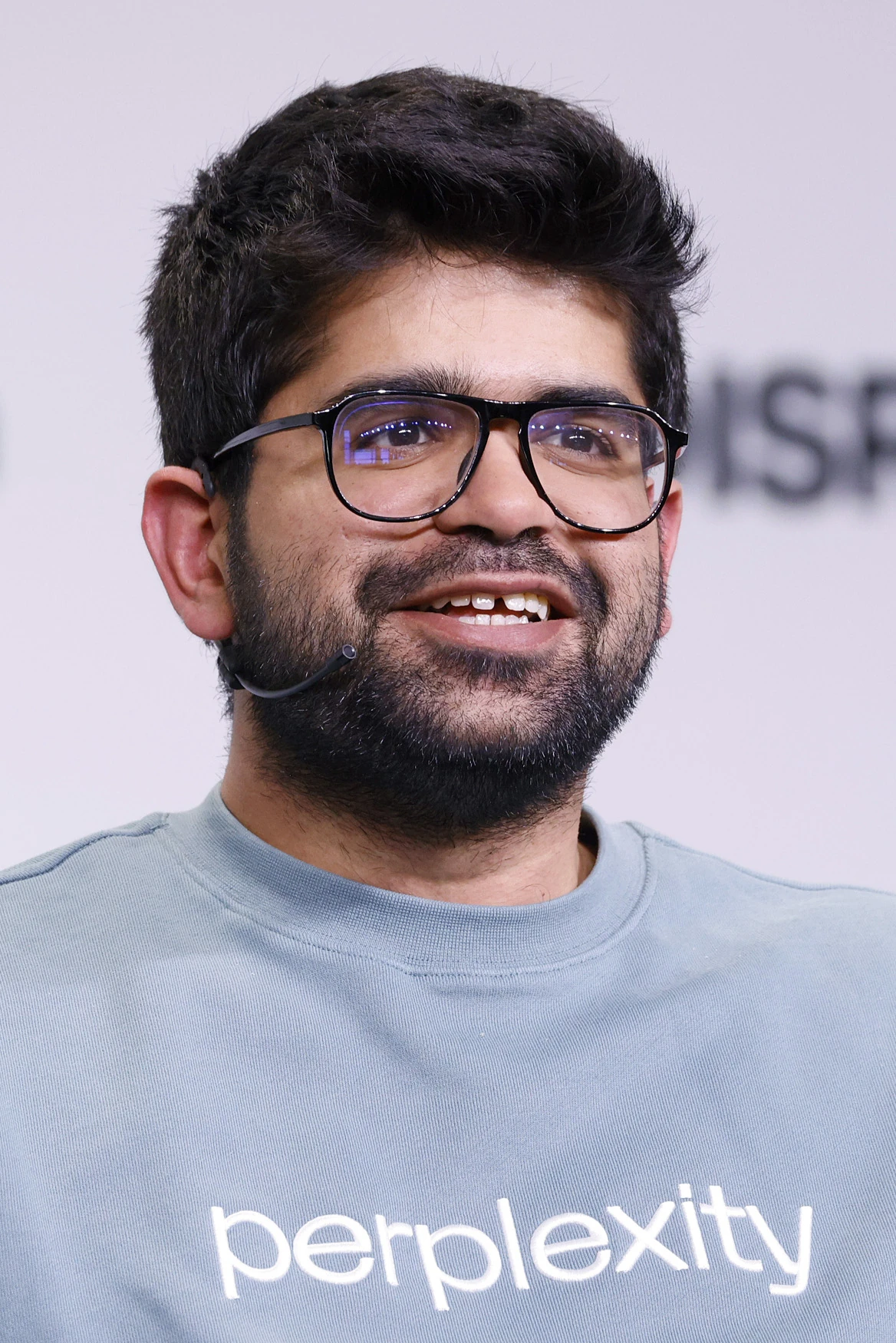
Aravind Srinivas built Perplexity around a useful behavioural shortcut: instead of asking people to open ten links, its answer engine would search, synthesise and cite. In 2026, he is attempting a much harder substitution. Perplexity wants software to do the work that begins after the answer—navigate websites, use connected applications, create files, send messages and keep running when the user leaves.
That ambition now has two main surfaces. Computer is a cloud-based digital worker that chains research, analysis and action across hundreds of connectors. Comet is a Chromium-based browser with an assistant and an agent inside the place where much office work already happens. By mid-July, Perplexity was offering companies mass deployment, more than 500 Chromium policies, restrictions on agent actions, central management and audit logs for qualifying enterprise plans.
The controls are not administrative decoration. They are the product. Search asks an organisation to trust an answer; an agentic browser asks it to trust software with authenticated sessions, internal data and permission to act. Srinivas’s next leadership test is persuading security teams that the productivity gain is worth expanding the browser’s authority—and proving to investors that a premium action layer can produce better economics than subsidised AI search.
From queries to higher-priced work
Perplexity remains private and does not publish audited financial statements. A funding round in September 2025 was reported at a $20 billion valuation. In April 2026, Srinivas said the company had increased its annualised revenue to $500 million, a management claim rather than audited revenue for a completed year. Taken together, those figures imply that investors are still pricing Perplexity for rapid growth and a much larger future market.
The product architecture shows how the company intends to reach it. Consumer subscriptions create an upgrade path; enterprise seats add governance and support; Computer adds usage-based credits for costly multi-step tasks; the API sells search grounding to developers; and device partnerships provide distribution. Enterprise Pro is priced at $40 a user each month, while Enterprise Max costs $325. A company can mix tiers, reserving expensive reasoning and agent capacity for employees likely to use it.
That pricing is a deliberate move away from treating every query as equal. Answering a question may require a few searches and a model response. Completing a workflow can involve multiple frontier models, repeated browsing, document generation, connectors and a secure sandbox. Credits let Perplexity charge closer to compute consumption and stop heavy agent users from overwhelming a flat subscription.
The margin challenge remains formidable. Perplexity promotes multi-model orchestration, routing work among its own systems and models from OpenAI, Google, Anthropic and others. That offers users choice and can improve quality, but it also makes gross margins sensitive to supplier pricing and availability. Larger rivals can bundle search, browsers, models, office suites and cloud infrastructure. Perplexity must show that its orchestration and web-first design create enough value to support premium prices after third-party inference, search indexing and security costs.
Comet must dislodge more than Chrome
A browser is an attractive strategic position because it sees the task before a user states an instruction. It knows the open tabs, the page context and, with permission, the applications involved. Comet Assistant can summarise material across tabs and workplace tools; Comet Agent can fill forms, schedule meetings and execute multi-step web tasks. That proximity can turn Perplexity from a destination into a persistent work layer.
It also confronts some of technology’s strongest inertia. Companies have spent years standardising on Chrome or Edge, configuring policies, testing extensions and training support teams. Comet’s Chromium base helps because it supports familiar policy structures and most Chrome extensions. Yet Perplexity acknowledges that extensions must be installed and configured again and that their data do not transfer seamlessly. For thousands of employees, such friction becomes a deployment project rather than a download.
Srinivas therefore needs a return-on-investment case that a chief information officer can measure. Faster summaries are unlikely to justify replacing a managed browser. Reduced research time, fewer repetitive service tasks, shorter sales cycles or automated compliance workflows might. Perplexity’s own enterprise research analyses millions of queries and estimates potential ticket deflection, but buyers will want controlled pilots using their labour costs, error rates and governance requirements.
The sales motion will also be slower than consumer adoption. A company can try an answer engine with limited exposure. Giving an agent access to email, calendars, cloud files and business applications requires procurement, legal review, identity integration and incident planning. Comet’s ability to deploy through mobile-device-management systems and respect existing network restrictions addresses that process. Audit logs, however, are available only above specified seat thresholds—50 Enterprise Pro seats or at least one Enterprise Max seat—which may complicate smaller regulated deployments.
Security is a continuing contest
Agentic browsing changes the threat model because web content is both information and potential instruction. In 2025, Brave researchers demonstrated indirect instruction-injection attacks against Comet in which malicious instructions embedded in a page could influence the assistant. Perplexity subsequently described malicious instruction injection as an industry-wide problem and outlined a defence-in-depth approach. The relevant lesson is not that Comet alone is vulnerable. It is that conventional browser controls cannot fully govern an agent that interprets untrusted language and acts with user privileges.
Enterprise Comet now offers website restrictions, action approvals, telemetry and administrator controls. Perplexity says enterprise data are not logged or used for model training, that third-party model providers are contractually barred from retaining transmitted data, and that the product operates under SOC 2 Type II and GDPR requirements. A partnership with CrowdStrike is intended to add browser-level detection, data controls and monitoring through its Falcon platform.
Those measures are credible progress, but security teams will judge outcomes rather than claims. They need to know which actions always require confirmation, whether an administrator can enforce that boundary, how secrets are isolated from page content and how incidents are reconstructed. They also need instruction-injection tests that evolve as quickly as attackers. An agent that succeeds on more tasks can create more risk if its permission model does not improve at the same rate.
Trust includes reliability as well as security. Cited search can be checked by opening a source. An autonomous workflow may fail across several steps, leaving a plausible final artefact with a hidden error in the middle. Perplexity needs granular records of what Computer and Comet observed, decided and changed. The winning enterprise agent may not be the most autonomous one; it may be the one that makes delegation easiest to supervise.
Samsung gives Perplexity an Asian distribution engine
Srinivas’s most important Asian advantage is distribution through Samsung. In February, Perplexity said its technology was deeply integrated into Galaxy S26 devices, supporting search and reasoning for both the Perplexity assistant and Bixby. The integration can read from and write to native applications with user permission, while the Perplexity application is pre-installed. Samsung also plans to bring Perplexity APIs and agentic capabilities into its browser, with Perplexity available as an optional default search service.
That relationship could put Perplexity in front of hundreds of millions of devices without requiring people to abandon an established hardware brand. It also demonstrates a second route to market: sell the intelligence and orchestration layer even when Comet is not the browser. For a company competing with platform owners, being both a product and a supplier is strategically sensible.
The partnership carries concentration and branding risks. Samsung controls the device interface, customer relationship and default settings. Perplexity may gain enormous query volume while remaining invisible behind Bixby, with economics determined by a negotiated API contract. Google’s position within Android creates another source of competitive tension. Srinivas must ensure that distribution adds durable users and revenue rather than low-margin workload.
Across Asia, the same enterprise trust questions become more complex. Organisations face different data-location rules, languages and procurement standards. Banks, governments and manufacturers may demand local hosting, detailed logs and stricter limits on cross-border model calls. Perplexity’s multi-model flexibility could help it adapt, but every additional provider and jurisdiction expands the compliance surface.
Srinivas, who grew up in Chennai before pursuing AI research in the United States, has become an unusually visible example of an Indian-born founder building a global consumer platform. The more important regional legacy would be commercial: showing that an independent company can use partnerships with Asian telecoms and device makers to weaken the default advantage of American search and browser incumbents.
Focus must catch up with ambition
Perplexity’s expansion—from answers to Computer, Comet, APIs and device agents—creates several paths to revenue. It also risks blurring the company’s core advantage. Google can defend search through distribution and advertising; Microsoft can bundle enterprise agents with software; OpenAI and Anthropic can sell increasingly capable general agents; browser companies can add their own assistants. Perplexity cannot outspend all of them.
Its strongest position is the intersection of current web information, citations, model choice and action. Srinivas should protect that clarity by publishing enterprise retention, agent completion and error measures rather than relying on query growth or headline revenue run rates. He must also show how usage-based pricing maps to gross margin as Computer tasks become longer.
Comet’s enterprise controls are evidence that Perplexity understands the change in responsibility. Samsung’s integration is evidence that major platforms see value in its technology. Neither proves that companies will delegate consequential work at scale.
Search reduced the cost of finding an answer. Srinivas is now trying to reduce the cost of turning an answer into an outcome. The prize is a larger market and a stronger customer relationship. The condition is equally clear: Perplexity must make autonomous browsing more auditable than it is magical.