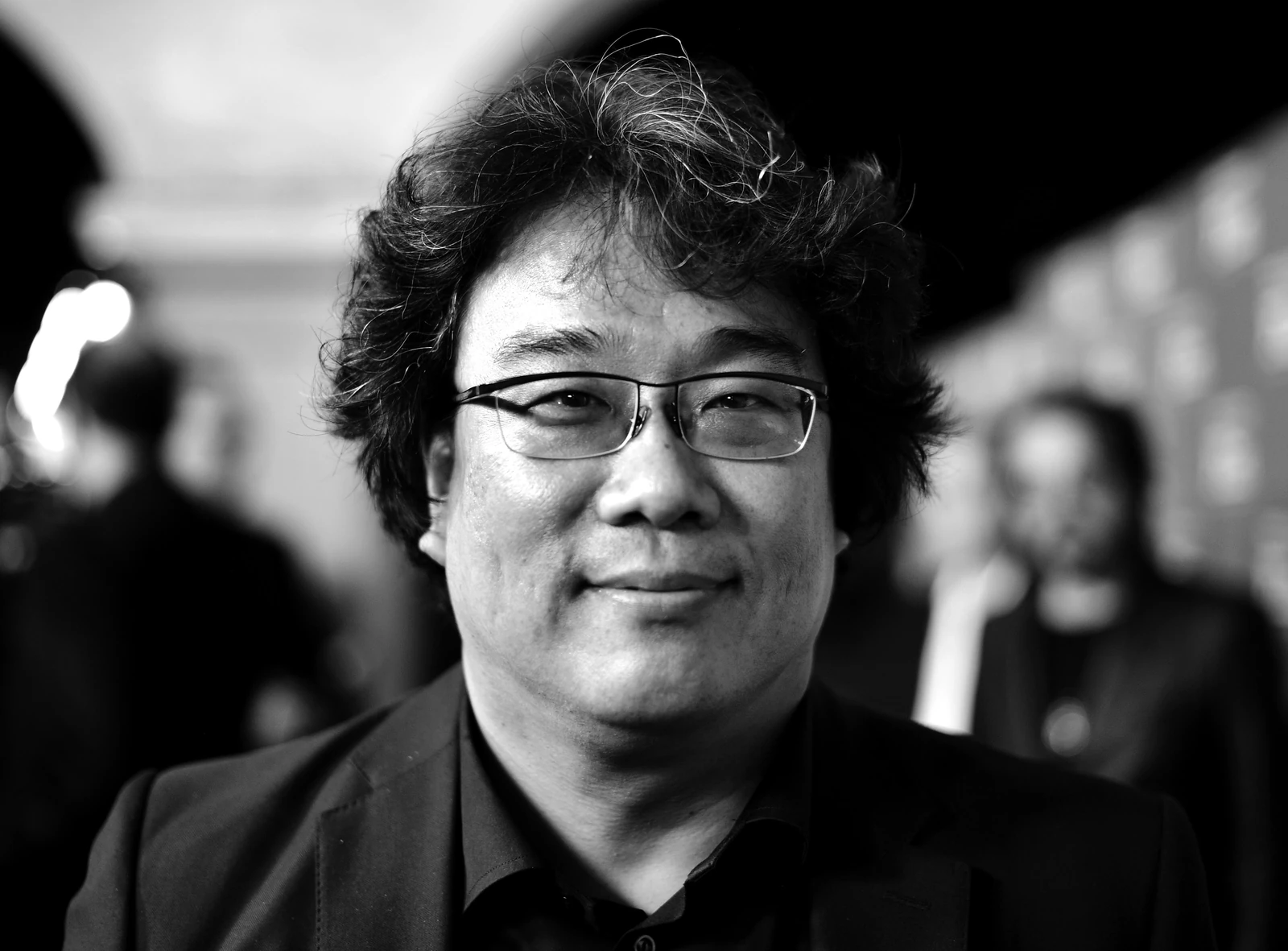
The useful place to begin with Bong Joon-ho is not a childhood anecdote or a catalogue of awards. It is the pressure point exposed by 2025: Mickey 17 returned him to global cinema conversation with science fiction, class pressure, repetition, and dark comic scale.
The achievement matters because it joined a distinctive creative decision to a distribution system large enough to carry that decision across borders. Many artists achieve one side of that equation. Far fewer preserve authorship after scale arrives. For Bong Joon-ho, that is the question the No. 11 profile must answer.
When form meets the public record
What matters is not a claim that Bong Joon-ho dominated every measure, but that one clear contribution reorganized the conversation around value, form and international attention. For Bong Joon-ho, rank No. 11 and a score of 95.4 are not substitutes for criticism; they are an invitation to identify what materially shifted during the year. That distinction protects the profile from the usual celebrity arithmetic in which reach is mistaken for meaning and repetition is confused with authority. The moment also reveals timing, because audiences, platforms and institutions were newly prepared to receive an idea that might have been marginalized in another season.
The achievement is that partial readings did not empty the work; they generated enough curiosity for the work’s own structure to recover authority. For Bong Joon-ho, movement beyond South Korea did not require the removal of every local reference; it required a form strong enough to make context desirable rather than burdensome. Distribution also changes status: a work can move from specialist admiration to public conversation, then back into institutions with new financial and symbolic weight. Cross-border success is therefore not a final stamp of universality. It is a series of negotiated readings, some precise and some inevitably partial.
FigureAsia’s perspective treats Asia as a network of languages, industries, histories and diasporas whose exchanges are as consequential as their movement toward Western institutions. Bong Joon-ho contributes to that shift by making specificity portable without presenting it as an explanatory service for outsiders. Even so, the 2025 record widened the space in which work from and around South Korea could be evaluated for ambition rather than merely categorized by origin. Calling Bong Joon-ho an Asian artist can create connection, but the label becomes useful only when it does not flatten South Korea into a single cultural position.
Festivals, platforms and leverage
That adaptability is crucial in a market that often asks successful artists to repeat the most easily marketed feature of the previous work. For younger practitioners, the lesson is not to copy the result but to notice the standard of attention that produced it under real constraints. Bong Joon-ho’s authority is clearest in the choices that remain visible in performance, rhythm, sound, framing and the moral position of the camera, not in the volume of commentary that accumulates after release. The signature remains recognizable because it is made from decisions, not surface branding, and decisions can adapt when format, budget or collaborator changes.
The 2025 chapter feels earned precisely because it does not erase the uncertainty, detours and less visible labor that made the present range possible. Work made earlier established tools and instincts, but 2025 tested whether those resources could answer a different market, audience or historical pressure. Bong Joon-ho’s trajectory shows that reinvention is rarely a clean break; it is a negotiation with an archive that audiences believe they already understand. Seen this way, experience is not a collection of credentials. It is a memory of consequences that improves the quality of the next decision.
Around Bong Joon-ho stands a system of writers, performers, producers, craftspeople, financiers, festivals and distributors; creative leadership determines whether those specialists receive a coherent question or merely a famous name. At scale, clarity is generous: collaborators need to understand what cannot be compromised, what remains open and where their expertise should change the original plan. That balance is a form of organizational design, requiring enough hierarchy to keep direction and enough permeability for an unexpected contribution to improve the whole. No film or series reaches the public through individual will alone, and the mythology of the lone genius can hide the management problem at the center of ambitious culture.
The discipline behind the signature
Bong Joon-ho’s 2025 moment mattered because creative value and market value reinforced one another without becoming identical in the public conversation. The economics of screen work are often discussed after the art, as though finance, rights and release strategy were external forces rather than part of the conditions of possibility. For rights holders and partners, a distinctive creative identity lowers one kind of market risk—indifference—while increasing another: the work may resist easy categorization. A serious business reading asks who owns the underlying work, who controls the next use, where value accumulates and whether the artist’s bargaining position improves after success.
The artist’s task is not to reject infrastructure but to understand its incentives well enough to use reach without allowing the institution to become the subject of the work. Bong Joon-ho gained authority because institutional recognition met an already coherent practice, rather than manufacturing importance from an empty campaign. The 2025 case shows how infrastructure can serve authorship when prestige is treated as a resource to deploy, not a destination at which creative risk should stop. Awards, festivals, platforms, publishers, museums, labels and studios are not neutral pipes; each builds a different public around the same creative act.
Authority also depends on listening. A leader who cannot be changed by collaborators eventually converts a living practice into an expensive imitation of earlier confidence. Bong Joon-ho has leverage because audiences recognize a standard before they can always name its components, giving the work continuity across changing formats. The word auteur can become a decorative label, but authorship has practical meaning when it helps a large network make consistent choices under pressure. Real creative control includes accountability for the parts that do not work, an obligation sometimes lost when success is credited to one person and failure dispersed across a team.
Bong Joon-ho gained authority because institutional recognition met an already coherent practice, rather than manufacturing importance from an empty campaign. The most useful institution is one that makes itself less visible in the final experience while remaining rigorous about labor, access, rights and public accountability. Awards, festivals, platforms, publishers, museums, labels and studios are not neutral pipes; each builds a different public around the same creative act. For partners, the lesson is equally demanding: supporting a distinctive voice requires patience with development, disagreement and outcomes that may not fit a familiar performance dashboard. A film or series can attract an enormous public and still leave little behind; it can also teach viewers, listeners, readers or players how to notice a different rhythm, image or moral problem. Fandom, criticism and institutional approval perform different functions, and none should be treated as a complete verdict on filmmaking. That loss of control is part of genuine public culture; influence begins where an artwork can no longer be contained by its launch materials. Audience is often rendered as a number, yet the more consequential question is what kind of attention Bong Joon-ho asked people to practice.
Beyond one release cycle
Fandom, criticism and institutional approval perform different functions, and none should be treated as a complete verdict on filmmaking. The relationship is not one-way. Audiences reinterpret, translate, circulate and sometimes resist a work, exposing meanings that production and marketing could not fully control. Audience is often rendered as a number, yet the more consequential question is what kind of attention Bong Joon-ho asked people to practice. The 2025 response suggests that recognition deepened because the work offered both an immediate point of contact and enough density to support argument, memory and return.
The operating constraints were concrete: budget, schedule, censorship, physical production and the unforgiving clarity of the finished frame. There is also the risk of representation, especially when one artist is asked to stand for a country, diaspora or entire field that contains far more disagreement than a global market prefers. Bong Joon-ho’s year remains interesting because the work preserved a productive instability instead of resolving every tension into a marketable message. Every profile of success is vulnerable to hindsight, which removes the credible possibility that the work could have been ignored, misunderstood, delayed or reduced to a safer version.
A second measure will be institutional memory: whether partners retain the lessons of process once the specific campaign, season or awards cycle has ended. That uncertainty is healthy. It keeps 2025 from becoming a coronation and returns attention to the unresolved work of making culture under changing conditions. There are reasons for caution, because every successful film or series invites accelerated production, imitation and the conversion of a living idea into a content schedule. For the surrounding field, Bong Joon-ho’s influence will be meaningful if resources move toward original practitioners instead of only toward copies of the most visible result.
FigureAsia ranks Bong Joon-ho at No. 11 because the 2025 record joined contribution, reach and a durable creative signature without pretending those qualities are the same thing. Bong Joon-ho’s strongest form of leadership is the standard carried by the work, a standard collaborators can respond to and audiences can recognize without receiving a corporate mission statement. For Asian cultural industries, the wider implication is clear: international authority grows when creators can keep specificity, rights, time and meaningful control as reach expands. What remains is the harder form of influence—the work other people make differently because Bong Joon-ho demonstrated that a different choice could hold the center.