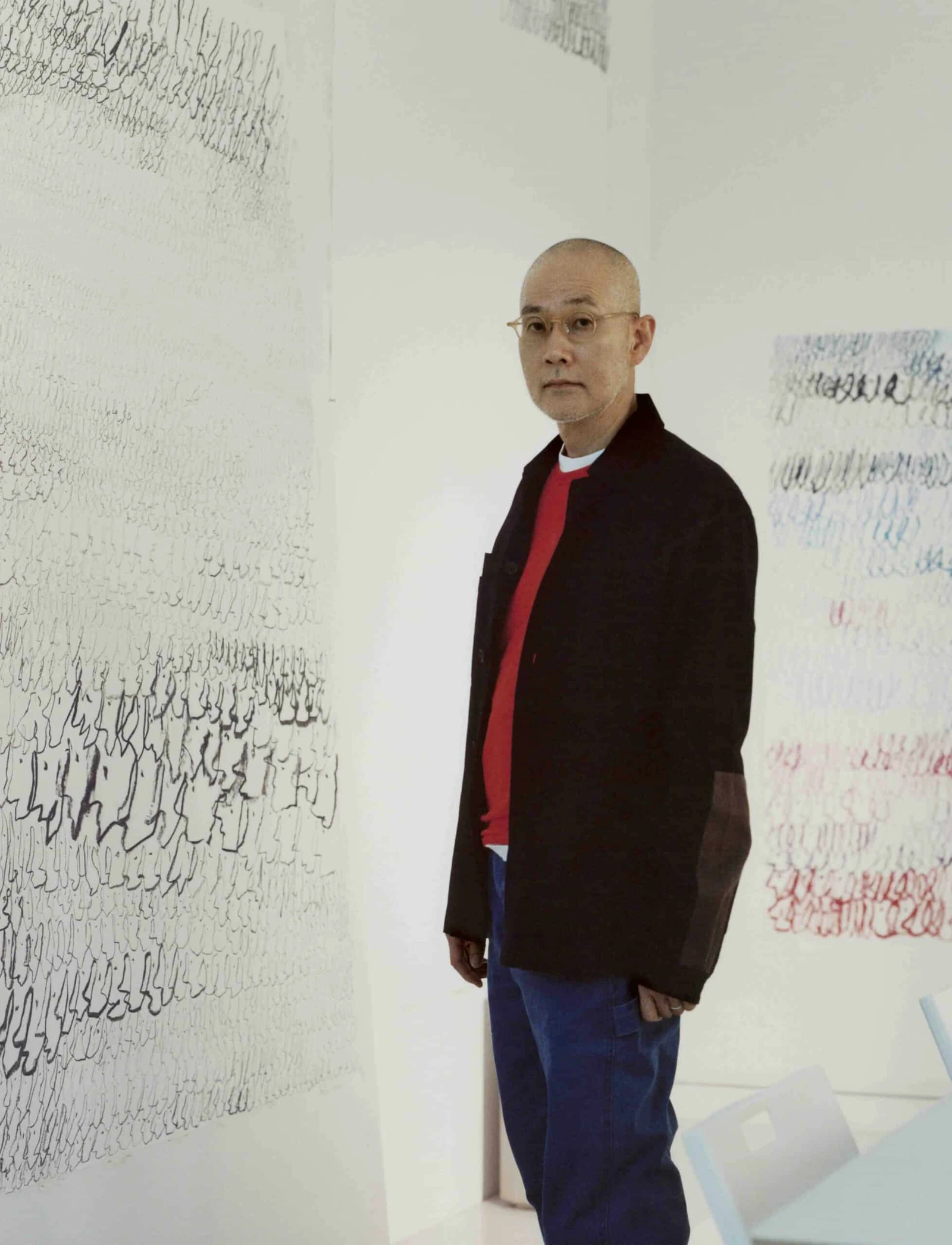
The most interesting thing about Do Ho Suh’s 2025 is the distance between the work’s point of origin and the conversation it created. His fabric architectures and memory spaces kept migration and home physically legible.
That distance was crossed through more than publicity. It required a form strong enough to move between languages, platforms and expectations while retaining its internal logic. The journey reveals how cultural authority is built in the current Asian century. For Do Ho Suh, that is the question the No. 89 profile must answer.
A practice built over time
For Do Ho Suh, rank No. 89 and a score of 64.2 are not substitutes for criticism; they are an invitation to identify what materially shifted during the year. The relevant change was a movement from presence to consequence, when the work began altering expectations around contemporary art rather than merely satisfying them. The moment also reveals timing, because audiences, platforms and institutions were newly prepared to receive an idea that might have been marginalized in another season. FigureAsia’s annual signal is deliberately specific: His fabric architectures and memory spaces kept migration and home physically legible.
For Do Ho Suh, movement beyond South Korea / Global did not require the removal of every local reference; it required a form strong enough to make context desirable rather than burdensome. The wrong kind of accessibility explains everything in advance. The right kind creates an entry point while preserving the unanswered questions that make return visits worthwhile. Cross-border success is therefore not a final stamp of universality. It is a series of negotiated readings, some precise and some inevitably partial. International reach is built through studio production, fabrication, curatorial advocacy, institutional access, exhibition logistics and collecting, a chain in which each participant can widen the audience or quietly redefine the work for convenience.
Do Ho Suh contributes to that shift by making specificity portable without presenting it as an explanatory service for outsiders. The effect should not be romanticized; access remains uneven, translation budgets are limited and global attention can move on before institutions learn anything durable. Calling Do Ho Suh an Asian artist can create connection, but the label becomes useful only when it does not flatten South Korea / Global into a single cultural position. The work’s international life matters partly because it changes the direction of reference: audiences do not encounter Asia only as subject matter, but as a source of form and standards.
The economy of global visibility
For younger practitioners, the lesson is not to copy the result but to notice the standard of attention that produced it under real constraints. In contemporary art, technique is inseparable from judgment; every visible choice carries a chain of discarded alternatives that the audience will never see. The signature remains recognizable because it is made from decisions, not surface branding, and decisions can adapt when format, budget or collaborator changes. The work gains force from proportion: spectacle and quiet, intimacy and distance, familiarity and surprise are calibrated rather than piled together. For Do Ho Suh, this craft question helps explain the No. 89 record without turning the ranking into its own argument.
Work made earlier established tools and instincts, but 2025 tested whether those resources could answer a different market, audience or historical pressure. Career durability comes from refusing two traps at once: disowning the work that built recognition and allowing that recognition to harden into a narrow job description. Seen this way, experience is not a collection of credentials. It is a memory of consequences that improves the quality of the next decision. A conventional profile would march through biography until success appears inevitable; Do Ho Suh’s record is more useful when read as a sequence of changing creative problems.
At scale, clarity is generous: collaborators need to understand what cannot be compromised, what remains open and where their expertise should change the original plan. Do Ho Suh’s case is instructive because the public result still reads as authored even though authorship was carried through many hands and institutions. No work, installation or exhibition reaches the public through individual will alone, and the mythology of the lone genius can hide the management problem at the center of ambitious culture. The invisible work includes aligning calendars, rights, budgets, technical standards and human trust without allowing administration to become the governing aesthetic.
Material as argument
The economics of contemporary visual practice are often discussed after the art, as though finance, rights and release strategy were external forces rather than part of the conditions of possibility. The durable asset is not a single spike of visibility. It is the leverage to choose collaborators, protect development time and reach audiences without accepting every available intermediary. A serious business reading asks who owns the underlying work, who controls the next use, where value accumulates and whether the artist’s bargaining position improves after success. The most important return on the year may be optionality: the power to reject a conventional follow-up and make the next difficult proposal financeable. For Do Ho Suh, this economic equation helps explain the No. 89 record without turning the ranking into its own argument.
Do Ho Suh gained authority because institutional recognition met an already coherent practice, rather than manufacturing importance from an empty campaign. The most useful institution is one that makes itself less visible in the final experience while remaining rigorous about labor, access, rights and public accountability. Awards, festivals, platforms, publishers, museums, labels and studios are not neutral pipes; each builds a different public around the same creative act. For partners, the lesson is equally demanding: supporting a distinctive voice requires patience with development, disagreement and outcomes that may not fit a familiar performance dashboard.
Do Ho Suh has leverage because audiences recognize a standard before they can always name its components, giving the work continuity across changing formats. The 2025 record suggests an artist still using recognition as a working tool rather than treating reputation as a finished monument. Real creative control includes accountability for the parts that do not work, an obligation sometimes lost when success is credited to one person and failure dispersed across a team. In contemporary art, the strongest authorship is porous but not vague: the destination is clear enough to organize effort, while the route can still be improved by expertise.
The most useful institution is one that makes itself less visible in the final experience while remaining rigorous about labor, access, rights and public accountability. Institutions entered Do Ho Suh’s 2025 story as amplifiers and gatekeepers, conferring resources and legitimacy while bringing their own preferences about what can be named, sold and celebrated. For partners, the lesson is equally demanding: supporting a distinctive voice requires patience with development, disagreement and outcomes that may not fit a familiar performance dashboard. That sequence matters. When recognition follows substance, it can provide time and bargaining power; when recognition leads, it often produces a brittle career organized around external approval. Fandom, criticism and institutional approval perform different functions, and none should be treated as a complete verdict on contemporary art. The relationship is not one-way. Audiences reinterpret, translate, circulate and sometimes resist a work, exposing meanings that production and marketing could not fully control. Audience is often rendered as a number, yet the more consequential question is what kind of attention Do Ho Suh asked people to practice. The 2025 response suggests that recognition deepened because the work offered both an immediate point of contact and enough density to support argument, memory and return.
What stays after the installation closes
The relationship is not one-way. Audiences reinterpret, translate, circulate and sometimes resist a work, exposing meanings that production and marketing could not fully control. The strongest evidence of durability will be whether the audience keeps using the work—to think, argue, imitate, teach or make something the original artist did not predict. The 2025 response suggests that recognition deepened because the work offered both an immediate point of contact and enough density to support argument, memory and return. Do Ho Suh’s leverage grows when those publics overlap without collapsing, allowing enthusiasm to fund attention while criticism keeps the work open to challenge.
There is also the risk of representation, especially when one artist is asked to stand for a country, diaspora or entire field that contains far more disagreement than a global market prefers. The wiser lesson is to separate method from formula: keep the seriousness of preparation, the quality threshold and the courage to edit, but do not reproduce the visible outcome. Every profile of success is vulnerable to hindsight, which removes the credible possibility that the work could have been ignored, misunderstood, delayed or reduced to a safer version. For Do Ho Suh, creative risk did not mean novelty for its own sake. It meant placing something valued—time, standing, capital or audience trust—behind a choice without a guaranteed reception.
That uncertainty is healthy. It keeps 2025 from becoming a coronation and returns attention to the unresolved work of making culture under changing conditions. By 2026, durability should be visible in more than residual publicity: stronger terms, wider creative options, deeper collaboration and a public willing to follow beyond the familiar signal. For the surrounding field, Do Ho Suh’s influence will be meaningful if resources move toward original practitioners instead of only toward copies of the most visible result. The third measure is artistic. The next work must be allowed to complicate the story told here, because a career that merely confirms a profile has already begun to narrow.
Do Ho Suh’s strongest form of leadership is the standard carried by the work, a standard collaborators can respond to and audiences can recognize without receiving a corporate mission statement. The business value follows from that distinction rather than replacing it, because singular work creates the kind of attention that platforms can distribute but rarely manufacture on command. What remains is the harder form of influence—the work other people make differently because Do Ho Suh demonstrated that a different choice could hold the center. The profile is ultimately less about prominence than consequence: what became newly possible, newly visible or newly difficult to dismiss after the work entered public life.