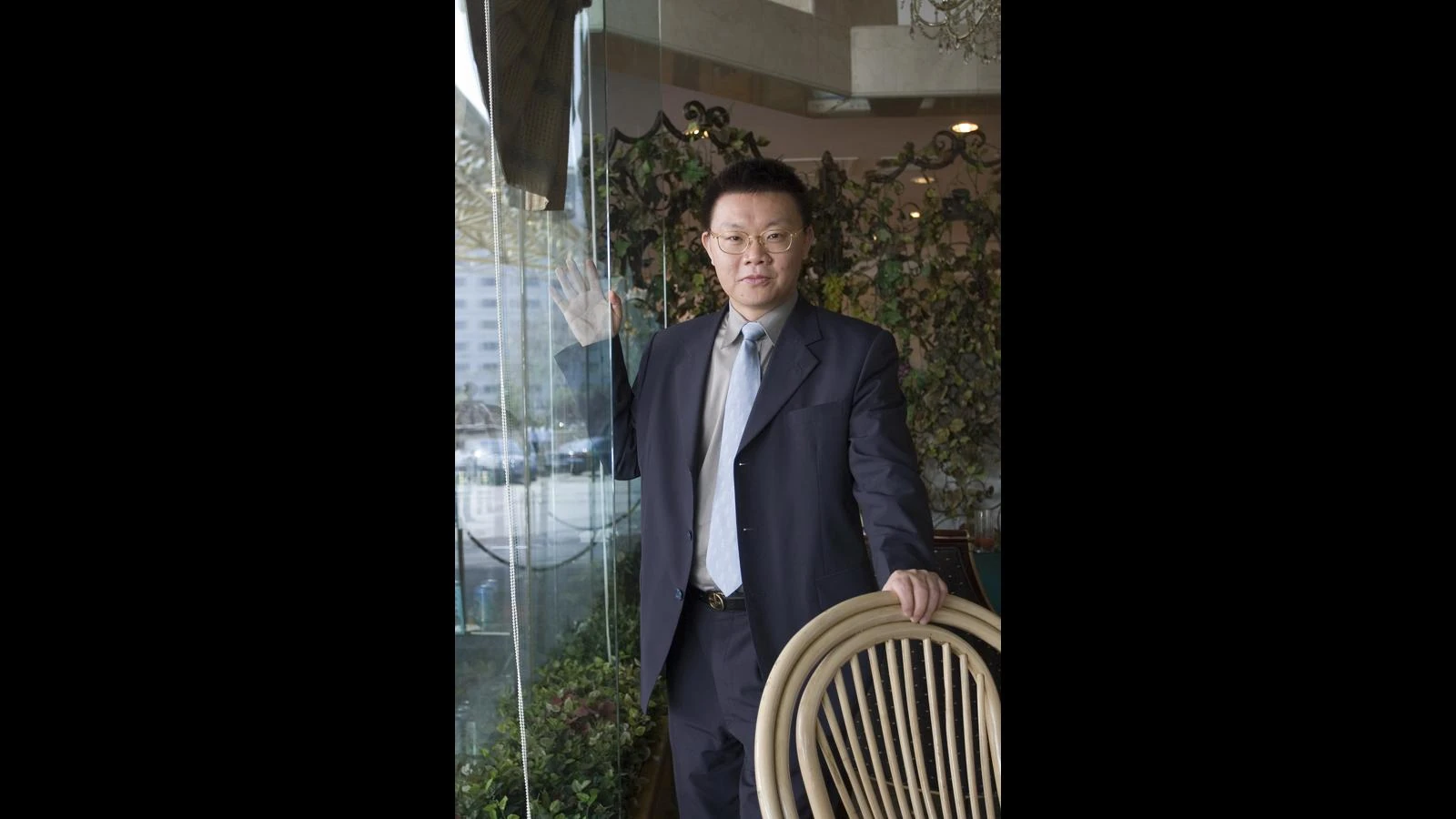
Hikvision and Vcanbio has made Gong Hongjia one of the defining business figures in the Asia Wealth 100. The ranking captures financial consequence; it does not explain what keeps the machine running. For that, the sharper lens is Gong Hongjia Keeps Finding Value Where Hardware Meets Data. The story is about a leader whose decisions now affect an ecosystem and whose greatest competitive advantage may be the discipline to protect it.
The turning points are concrete rather than mythic. Investor Gong Hongjia's fortune mainly comes from his stake in Hangzhou Hikvision Digital Technology, a supplier of surveillance products. He served as Hikvision's vice chairman until 2021 and is still its biggest individual shareholder.
The wealth associated with Gong Hongjia is rooted in video surveillance, but that label is too narrow for the leadership story. Hikvision and Vcanbio sits within finance & investments, a field where strategic control is created through a series of linked choices rather than one transaction. The advantage has to be renewed in operations: who gets capital, which customers shape the roadmap, what remains proprietary and where the organization accepts dependence on a partner. For Gong Hongjia, those choices now carry more weight than the origin story because the business has become part of the market infrastructure around it.
The next operating question
Finance rewards judgment only after it has first rewarded distribution, trust and control of funding. In this part of the market, the crucial question is not simply what an investor owns, but how quickly capital can be redeployed when conditions change. A celebrated bet can make a reputation; a durable institution needs risk limits, succession depth and clients who stay through a down cycle. That is where personal instinct has to become a repeatable operating system.
Leadership becomes more institutional as an enterprise grows, whether the controlling shareholder welcomes the change or not. Customers and regulators need continuity; senior talent needs real authority; minority investors need to know how capital decisions are tested. At Hikvision and Vcanbio, Gong Hongjia will be judged by the quality of the people who can make consequential decisions without waiting for the founder’s approval. Delegation is not distance. Done well, it is how standards survive scale.
Capital allocation is the hidden biography of any large fortune. The headline number rises and falls with markets, but the durable record is written in factories opened, acquisitions rejected, research funded and debt kept available for the wrong year. At Hikvision and Vcanbio, the important choices are no longer small enough to reverse quietly. Gong Hongjia must distinguish between investment that deepens the moat and expansion that merely enlarges the organization. The former compounds capability; the latter often compounds complexity.
Gong is the chairman of Vcanbio Cell & Gene Engineering, a Shanghai-listed company engaged in the preparation, detection and storage of stem cells. He bought a 2.4% stake in C-Mer Eye Care Holdings, a Chinese medical services provider, in 2022. He is also an investor in Shenzhen-based AI drug discovery startup Xtalpi, also known as QuantumPharm, which listed on the Hong Kong Stock Exchange in 2024.
The fault line investors should watch
The pressure point is credibility under reversal. Liquidity can make an aggressive strategy look effortless, then disappear just as obligations become fixed. Investors should watch concentration, governance and the distance between the founder’s judgment and the institution’s controls. A firm that depends on one person to see every risk has not yet converted talent into durable value.
Execution will be visible in the unglamorous details. Hikvision and Vcanbio has to recruit people who can improve the system rather than simply inherit it, give local managers enough authority to respond and keep information moving across the organization without being polished on the way up. Gong Hongjia can set the appetite for risk, but repeatable performance comes from incentives and routines. That is where a leadership thesis becomes an operating result, one decision and one review cycle at a time.
The valuation lens can obscure that distinction. Markets often price Hikvision and Vcanbio as a shorthand for a broad theme, then punish the company when the theme cools. A more durable assessment separates the cyclical tailwind from the capabilities Gong Hongjia can control: cost, customer concentration, research productivity, execution and balance-sheet room. Those measures are less dramatic than a wealth ranking, but they reveal whether the company is building bargaining power or simply benefiting from a favorable moment.
A wider map for the next chapter
East Asia adds a particular strategic pressure. Dense supply chains and demanding domestic customers can accelerate learning, while trade controls and political friction can narrow the room to maneuver. Gong Hongjia has to build relationships that survive policy cycles and localize enough capability to remain trusted without fragmenting Hikvision and Vcanbio into inefficient national versions. The region rewards speed, but the global opportunity belongs to companies that can translate speed into standards others choose to adopt. From Hong Kong, China, Gong Hongjia also has to decide how much of the operating model should travel and how much must remain shaped by the home market.
That is the next act for Gong Hongjia. The fortune may continue to be measured through the market value attached to Hikvision and Vcanbio, but leadership will be measured through the quality of the institution left behind: whether it can absorb challenge, allocate capital without nostalgia and stay useful as its industry changes. The point of Gong Hongjia Keeps Finding Value Where Hardware Meets Data is not that the outcome is settled. It is that the strategic question is now visible, and the answer will be written by operating decisions rather than mythology.
Banner photograph: Forbes profile image.