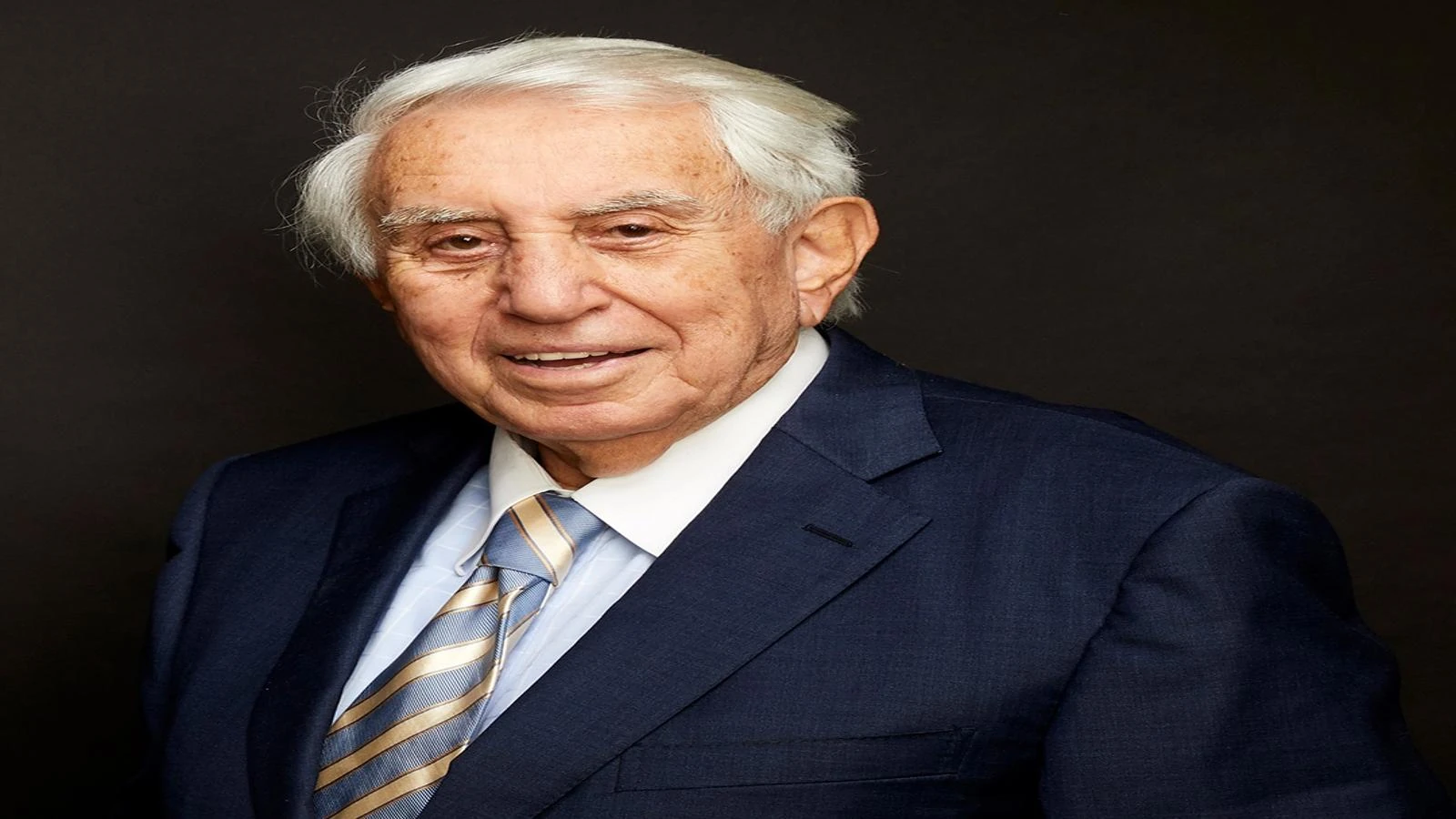
The conventional profile of Harry Triguboff would begin with the climb. The more useful one begins with Meriton today, when the organization has more capital, more attention and fewer easy choices. Harry Triguboff Changed the Shape of Sydney One Tower at a Time gets to the heart of the problem. The next chapter will be determined by allocation, governance and the ability to say no when expansion is available but strategic coherence is not.
The scale did not arrive in a single leap. Harry Triguboff is one of Australia's richest people. Born in Dalian, China, to Russian parents, he came to Australia as a teenager. Triguboff found success in business by providing higher-density living options in Sydney, Australia's largest city, which has traditionally been dominated by free-standing homes.
The wealth associated with Harry Triguboff is rooted in real estate, but that label is too narrow for the leadership story. Meriton sits within real estate, a field where strategic control is created through a series of linked choices rather than one transaction. The advantage has to be renewed in operations: who gets capital, which customers shape the roadmap, what remains proprietary and where the organization accepts dependence on a partner. For Harry Triguboff, those choices now carry more weight than the origin story because the business has become part of the market infrastructure around it.
From advantage to institution
The succession question is broader than naming a successor. It is about what must remain stable when leadership changes and what should finally be allowed to change. Meriton needs a clear account of decision rights, incentives and the role of family or founder capital. Harry Triguboff can shape that architecture while authority is strong. Waiting until transition is unavoidable would turn a strategic choice into a market event, with employees and partners forced to interpret every signal.
Property creates the illusion of permanence, but its economics move with interest rates, planning rules and the confidence of buyers. Great developers do more than acquire land; they read where a city is going and build the infrastructure of daily life around that view. The danger is leverage combined with optimism. Leadership is visible in what does not get built, in the pace of sales and in whether a family estate can professionalize before the cycle turns.
The story of Meriton can be read through a sequence of concentrated bets. That history encourages confidence, but it can also make caution look like timidity. Harry Triguboff faces a more demanding test now: to fund reinvention without forcing every part of the organization to move at the same speed. Capital should follow learning, not reputation. The businesses that can prove customer pull deserve acceleration; the rest should not be protected by the prestige of the group.
His apartment-tower development company, Meriton, has a strong presence in Sydney, while it also has an imprint in southeast Queensland. He was one of Australia's first developers to see the potential of apartment living when most of his countrymen aspired to single-family homes. Nicknamed "High Rise Harry," he has put up more than 79,000 apartments.
A harder test than expansion
Operational discipline becomes most valuable when conditions are favorable, because that is when weak commitments are easiest to hide. Harry Triguboff can use the current position of Meriton to simplify reporting lines, retire marginal projects and strengthen the parts of the network customers cannot see. None of that will produce the loudest announcement. It will, however, determine how quickly the organization can respond when supply, regulation or demand moves in a direction the annual plan did not anticipate.
The stress test is the cost of money. Higher financing costs expose optimistic land values, slow sales and projects that need perpetual refinancing. For a controlled property group, transparency and pacing become strategic advantages. The market will reward a smaller pipeline that can be completed over a grander one dependent on perfect conditions.
Investors should resist turning Harry Triguboff into a symbol. Symbols are easy to admire or attack; businesses require comparison. The relevant questions for Meriton are concrete. Is return on new capital holding up? Is growth creating cash or consuming it? Are adjacent businesses strengthening the core or borrowing its reputation? The answers will matter more than a single market move because they show whether leadership is converting influence into an operating advantage competitors cannot purchase quickly.
The geography of influence
East Asia adds a particular strategic pressure. Dense supply chains and demanding domestic customers can accelerate learning, while trade controls and political friction can narrow the room to maneuver. Harry Triguboff has to build relationships that survive policy cycles and localize enough capability to remain trusted without fragmenting Meriton into inefficient national versions. The region rewards speed, but the global opportunity belongs to companies that can translate speed into standards others choose to adopt. The diaspora dimension matters as well. With ties to China and citizenship in Australia, Harry Triguboff reflects how Asian commercial networks move knowledge and capital across jurisdictions without becoming detached from their origins.
That is the next act for Harry Triguboff. The fortune may continue to be measured through the market value attached to Meriton, but leadership will be measured through the quality of the institution left behind: whether it can absorb challenge, allocate capital without nostalgia and stay useful as its industry changes. The point of Harry Triguboff Changed the Shape of Sydney One Tower at a Time is not that the outcome is settled. It is that the strategic question is now visible, and the answer will be written by operating decisions rather than mythology.
Banner photograph: Forbes profile image.