Alibaba Group has made Jack Ma one of the defining business figures in the Asia Wealth 100. The ranking captures financial consequence; it does not explain what keeps the machine running. For that, the sharper lens is Jack Ma’s Most Important Role May Be the One He No Longer Holds. The story is about a leader whose decisions now affect an ecosystem and whose greatest competitive advantage may be the discipline to protect it.
The turning points are concrete rather than mythic. A former English teacher, Jack Ma cofounded Alibaba Group Holding, now one of the world's largest e-commerce businesses, in 1999. The former high-flying billionaire stepped down as Alibaba's executive chairman in 2019.
The wealth associated with Jack Ma is rooted in e-commerce, but that label is too narrow for the leadership story. Alibaba Group sits within technology, a field where strategic control is created through a series of linked choices rather than one transaction. The advantage has to be renewed in operations: who gets capital, which customers shape the roadmap, what remains proprietary and where the organization accepts dependence on a partner. For Jack Ma, those choices now carry more weight than the origin story because the business has become part of the market infrastructure around it.
The strategic hinge at Alibaba Group
Technology fortunes can look weightless, yet their staying power depends on very physical constraints: compute, power, components, manufacturing yield, distribution and access to scarce talent. The leaders who endure are rarely selling a single product. They are deciding which layer of a technical system becomes indispensable, then spending ahead of demand to protect that position. The danger is that a platform advantage can be erased by a standards shift, an export rule or a rival willing to price at the edge of profitability.
Control has created speed at Alibaba Group; governance must now create endurance. The useful board is not decorative and the capable executive team is not a layer between Jack Ma and the business. They are the mechanism for testing assumptions before the market does. The goal is not bureaucracy. It is to make sure bad news travels upward as quickly as ambition travels downward, particularly when a company’s reputation can make employees reluctant to challenge the prevailing view.
Scale gives Alibaba Group purchasing power and patience, two advantages that become dangerous when treated as proof of infallibility. Jack Ma now has to keep a portfolio mentality without allowing every initiative to claim strategic importance. The best-controlled groups set explicit hurdles, preserve room for error and close the distance between ownership and operating evidence. Wealth is a consequence of the old choices; institutional quality will be the consequence of the next ones.
After approximately a year overseas, Ma returned to China in 2023 just as Alibaba unveiled a plan to split itself into six businesses. But that overhaul has been on hold after the company walked back from the IPO plans of its Cainiao logistics unit and cloud computing arm. Ma remains a mentor, and often encourages employees to innovate and change at a time of heightened market competition.
The cost of staying ahead
The immediate pressure comes from technical cycles shortening while the cost of staying at the frontier rises. Customers want lower prices and more capability; governments want security and domestic capacity. That leaves little room for a comfortable middle. The company must keep investing before returns are visible, while proving that today’s advantage is more than a temporary shortage or a fashionable product category.
The customer will ultimately decide whether the strategy is working. At Alibaba Group, that means measuring more than growth: retention, reliability, delivery, product quality and the willingness of important clients to deepen the relationship. Jack Ma has enough visibility to dominate the narrative, but narrative cannot compensate for friction in the product or service. The next advantage will be built by teams that notice those small failures early and have permission to fix them before they become a strategic problem.
A fortune of this size is partly a market opinion, not a vault. That makes volatility less revealing than the quality of the underlying control. For Jack Ma, the real asset is the ability of Alibaba Group to keep customers, attract talent and finance change on acceptable terms. If those conditions improve, the enterprise can survive a lower valuation. If they weaken, a rising share price may only delay the harder conversation about competitive position.
Why the regional context matters
East Asia adds a particular strategic pressure. Dense supply chains and demanding domestic customers can accelerate learning, while trade controls and political friction can narrow the room to maneuver. Jack Ma has to build relationships that survive policy cycles and localize enough capability to remain trusted without fragmenting Alibaba Group into inefficient national versions. The region rewards speed, but the global opportunity belongs to companies that can translate speed into standards others choose to adopt. From China, Jack Ma also has to decide how much of the operating model should travel and how much must remain shaped by the home market.
That is the next act for Jack Ma. The fortune may continue to be measured through the market value attached to Alibaba Group, but leadership will be measured through the quality of the institution left behind: whether it can absorb challenge, allocate capital without nostalgia and stay useful as its industry changes. The point of Jack Ma’s Most Important Role May Be the One He No Longer Holds is not that the outcome is settled. It is that the strategic question is now visible, and the answer will be written by operating decisions rather than mythology.
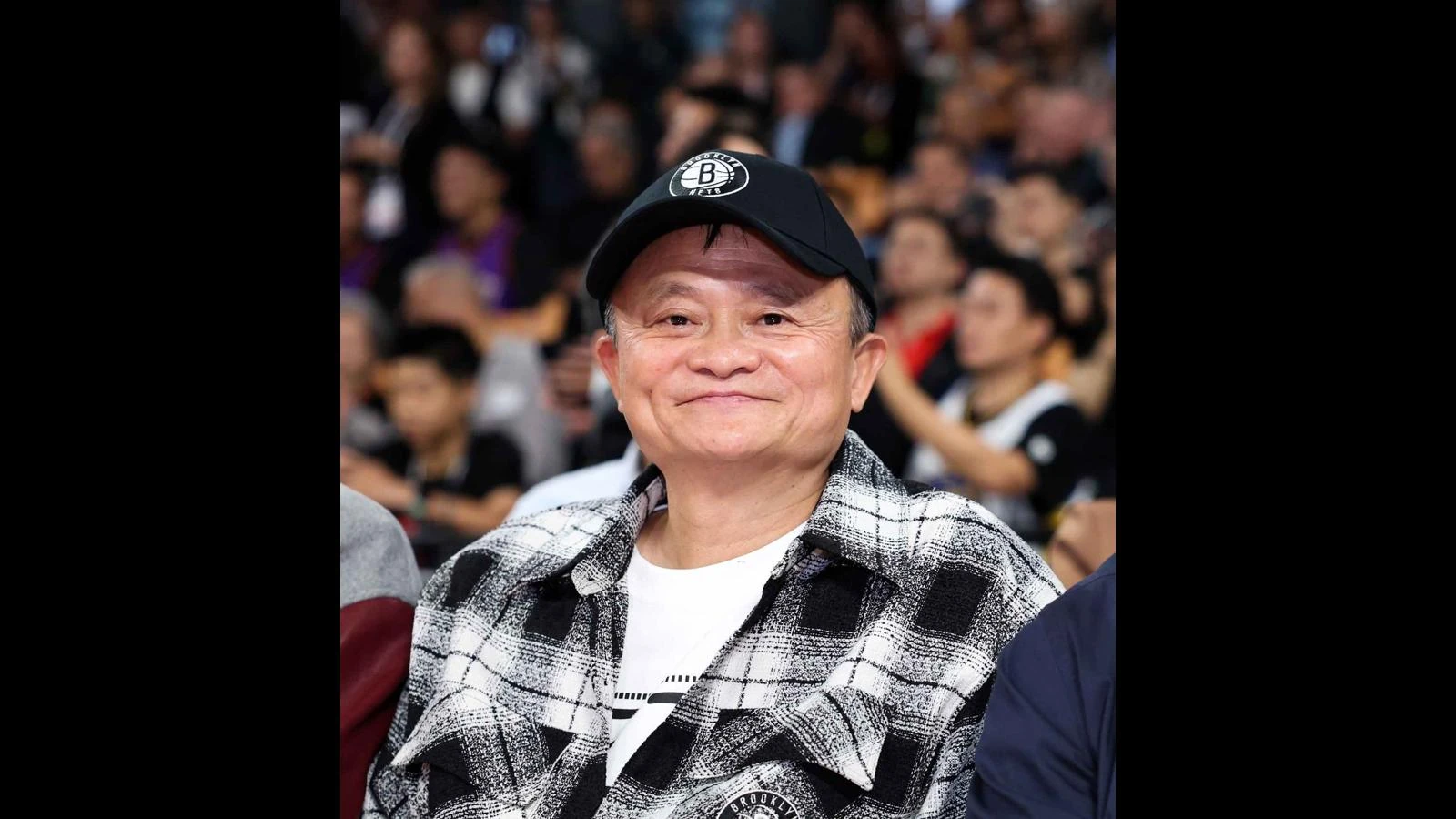
Banner photograph: Forbes profile image.