Long before a fortune appears in a ranking, a leader chooses where to concentrate attention. Kushal Pal Singh made that choice around DLF. The result now carries an obligation that early-stage entrepreneurship does not: the business must perform while it renews itself. Kushal Pal Singh Did Not Just Build Gurgaon He Changed India’s Corporate Geography is a way of asking whether the organization can keep its edge once scale, public expectations and legacy all arrive at the same time.
The record behind the public profile is unusually instructive. Property baron Kushal Pal Singh left an army posting in 1961 to join DLF, a company started by his father-in-law in 1946. Singh later built DLF City in Gurgaon, his showpiece township on the outskirts of Delhi, by acquiring land from farmers.
The wealth associated with Kushal Pal Singh is rooted in real estate, but that label is too narrow for the leadership story. DLF sits within real estate, a field where strategic control is created through a series of linked choices rather than one transaction. The advantage has to be renewed in operations: who gets capital, which customers shape the roadmap, what remains proprietary and where the organization accepts dependence on a partner. For Kushal Pal Singh, those choices now carry more weight than the origin story because the business has become part of the market infrastructure around it.
When momentum is no longer enough
Property creates the illusion of permanence, but its economics move with interest rates, planning rules and the confidence of buyers. Great developers do more than acquire land; they read where a city is going and build the infrastructure of daily life around that view. The danger is leverage combined with optimism. Leadership is visible in what does not get built, in the pace of sales and in whether a family estate can professionalize before the cycle turns.
Capital allocation is the hidden biography of any large fortune. The headline number rises and falls with markets, but the durable record is written in factories opened, acquisitions rejected, research funded and debt kept available for the wrong year. At DLF, the important choices are no longer small enough to reverse quietly. Kushal Pal Singh must distinguish between investment that deepens the moat and expansion that merely enlarges the organization. The former compounds capability; the latter often compounds complexity.
Leadership becomes more institutional as an enterprise grows, whether the controlling shareholder welcomes the change or not. Customers and regulators need continuity; senior talent needs real authority; minority investors need to know how capital decisions are tested. At DLF, Kushal Pal Singh will be judged by the quality of the people who can make consequential decisions without waiting for the founder’s approval. Delegation is not distance. Done well, it is how standards survive scale.
Today, Delhi-headquartered DLF, run by his son Rajiv as chairman, is India's biggest listed property firm by market cap. In 2017, Singh sold his one-third stake in DLF's rental arm to GIC, Singapore's sovereign wealth fund, for $1.9 billion. Singh stepped down as chairman after more than five decades in that position, in 2020. He's now chairman emeritus of DLF and lives mostly between London and Dubai.
Where the pressure is building
The stress test is the cost of money. Higher financing costs expose optimistic land values, slow sales and projects that need perpetual refinancing. For a controlled property group, transparency and pacing become strategic advantages. The market will reward a smaller pipeline that can be completed over a grander one dependent on perfect conditions.
The valuation lens can obscure that distinction. Markets often price DLF as a shorthand for a broad theme, then punish the company when the theme cools. A more durable assessment separates the cyclical tailwind from the capabilities Kushal Pal Singh can control: cost, customer concentration, research productivity, execution and balance-sheet room. Those measures are less dramatic than a wealth ranking, but they reveal whether the company is building bargaining power or simply benefiting from a favorable moment.
Execution will be visible in the unglamorous details. DLF has to recruit people who can improve the system rather than simply inherit it, give local managers enough authority to respond and keep information moving across the organization without being polished on the way up. Kushal Pal Singh can set the appetite for risk, but repeatable performance comes from incentives and routines. That is where a leadership thesis becomes an operating result, one decision and one review cycle at a time.
An Asian company with global consequences
South Asia offers scale before it offers simplicity. Demand is expanding, infrastructure is uneven and price sensitivity forces companies to innovate around cost as carefully as product. Kushal Pal Singh can use the home market as a proving ground for DLF, but international authority will depend on governance, quality and a willingness to compete without relying on domestic familiarity. The strongest regional champions become global when their operating discipline travels as well as their ambition. From India, Kushal Pal Singh also has to decide how much of the operating model should travel and how much must remain shaped by the home market.
That is the next act for Kushal Pal Singh. The fortune may continue to be measured through the market value attached to DLF, but leadership will be measured through the quality of the institution left behind: whether it can absorb challenge, allocate capital without nostalgia and stay useful as its industry changes. The point of Kushal Pal Singh Did Not Just Build Gurgaon He Changed India’s Corporate Geography is not that the outcome is settled. It is that the strategic question is now visible, and the answer will be written by operating decisions rather than mythology.
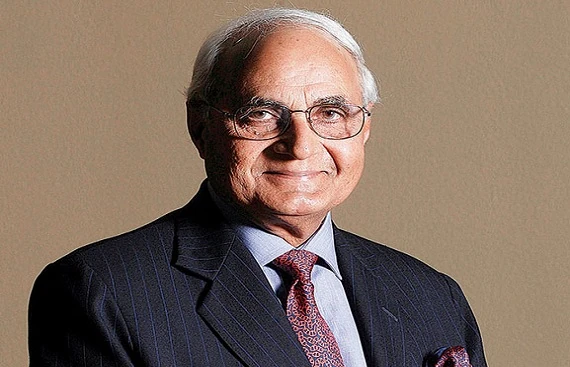
Banner photograph: Forbes profile image.