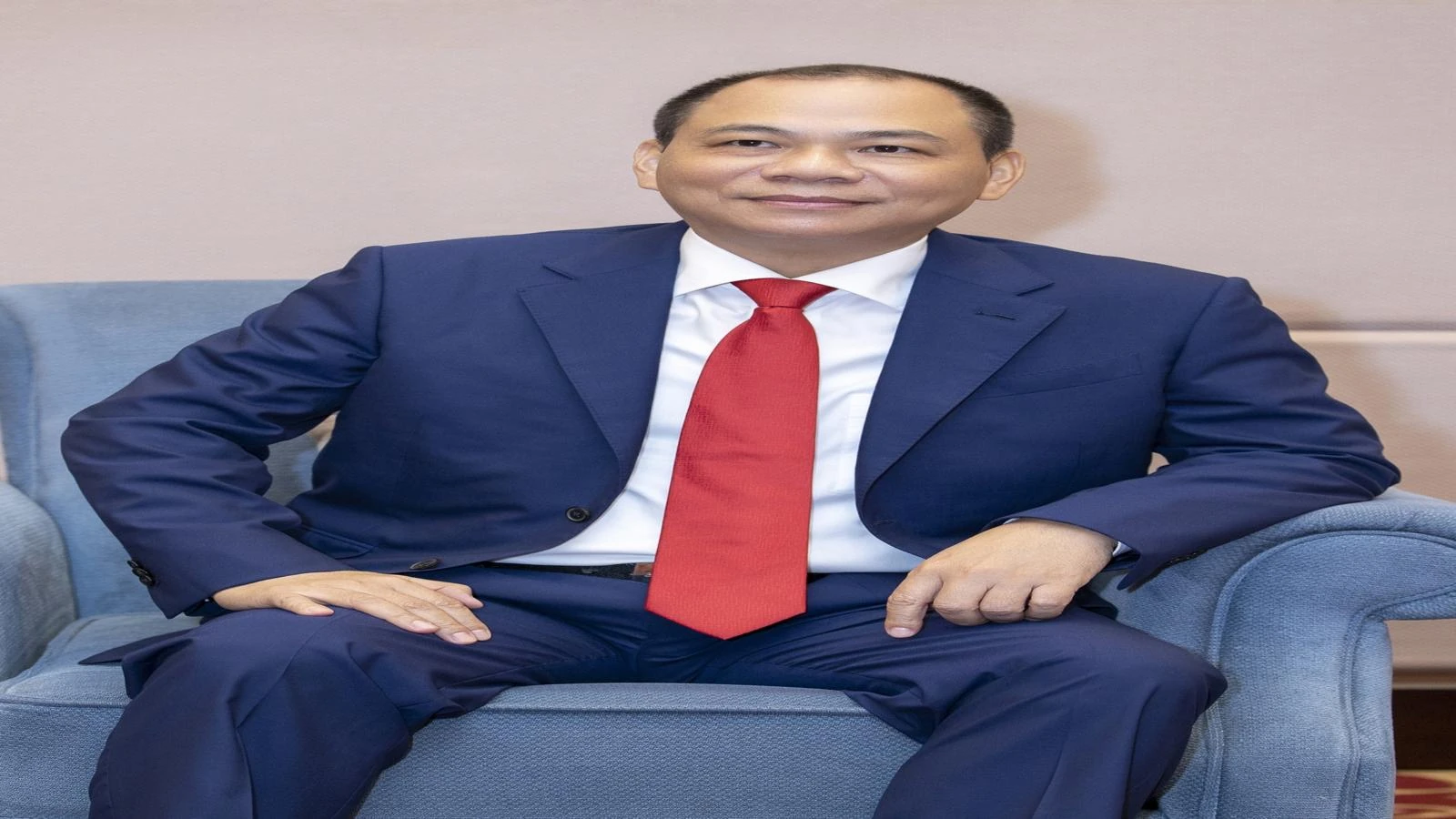
Pham Nhat Vuong is easiest to misunderstand when the conversation begins with wealth. The more revealing story sits inside Vingroup and VinFast, where control of an asset has become a test of judgment, timing and institutional endurance. Pham Nhat Vuong Is Wagering Vietnam’s Industrial Ambition on VinFast is not a victory lap. It is the question now hanging over the next phase of the business, as scale brings opportunity and removes the margin for improvisation.
The operating record is more revealing than the ranking. Pham Nhat Vuong studied in Russia and started a popular instant noodle business in the Ukraine in the 1990s before moving back to Vietnam. Today he is the chairman of Vingroup, one of Vietnam's largest conglomerates with interests in real estate, retail and healthcare among others.
The wealth associated with Pham Nhat Vuong is rooted in diversified, but that label is too narrow for the leadership story. Vingroup and VinFast sits within diversified, a field where strategic control is created through a series of linked choices rather than one transaction. The advantage has to be renewed in operations: who gets capital, which customers shape the roadmap, what remains proprietary and where the organization accepts dependence on a partner. For Pham Nhat Vuong, those choices now carry more weight than the origin story because the business has become part of the market infrastructure around it.
Inside the capital machine
The balance sheet gives Pham Nhat Vuong options that most competitors do not have, but optionality is not the same as strategy. Cash can buy speed, talent and access; it can also postpone hard decisions about a weak business. The next measure of Vingroup and VinFast will be whether investment creates a more coherent system. Markets may celebrate a dramatic transaction, yet the better evidence is operating leverage, resilience and the freedom to keep investing when the cycle turns.
This is also a governance story. Founder-led and family-controlled companies can move with unusual clarity because authority is visible. The weakness appears when disagreement becomes too expensive or succession is treated as a ceremony rather than an operating redesign. Pham Nhat Vuong does not need to surrender conviction at Vingroup and VinFast; the organization does need executives with enough information and independence to prevent conviction from hardening into inertia. A credible bench is insurance against both crisis and charisma.
Conglomerates are often dismissed as collections of unrelated assets. In Asia, the best of them work more like private capital markets, moving cash, managerial attention and political patience between businesses whose cycles do not line up. The model creates resilience, but it can also conceal weak returns and blur accountability. Leadership is therefore an exercise in deciding what still belongs together, which businesses deserve another decade of capital and where family control must yield to professional management.
The group's main units include electric vehicle maker VinFast, property developer Vinhomes and hotel chain Vinpearl. VinFast has become Vietnam's largest EV maker by market share, with overseas plants in India and Indonesia. In 2023 he took VinFast public through a SPAC listing on Nasdaq. Vinpearl listed on the Ho Chi Minh Stock Exchange in May 2025. Charging station operator V-Green was spun off from VinFast in 2024, and is investing more than $400 million over the next two years to build charging infrastructure across the country.
The risk inside the opportunity
Wealth rankings capture consequence, which is why Pham Nhat Vuong belongs in the Asia Wealth 100. They do not settle the question of quality. That must be read through Vingroup and VinFast itself: the durability of margins, the concentration of risk, the credibility of governance and the relevance of the next investment cycle. A leader can influence all four, but not by treating market value as confirmation that the operating model no longer needs to be challenged.
Talent is the other scarce resource. A company associated closely with Pham Nhat Vuong can attract ambitious executives, but it must also offer them decisions worth owning. Vingroup and VinFast will need specialists who understand the current business and outsiders prepared to question its assumptions. The useful culture is neither reverence nor rebellion. It is a system in which evidence can change a plan, accountability follows authority and the strongest people see a future for themselves beyond proximity to the controlling figure.
The pressure comes from the same force that created the fortune: scale. A larger system has more purchasing power and political relevance, but it also has more points of failure and more stakeholders able to demand an answer. The next phase will be judged less by expansion announcements than by returns, governance and the ability to absorb a bad year without abandoning the long view.
The world outside the core business
Southeast Asia is not one market, which is exactly why it rewards adaptable institutions. Regulation, consumer behavior and infrastructure vary across borders even when supply chains connect them. For Pham Nhat Vuong, the opportunity around Vingroup and VinFast is to use regional proximity without assuming uniform demand. Partnerships, local leadership and patient distribution often matter more than a dramatic launch. Companies that learn this become bridges between Asian markets rather than extensions of a single home base. From Vietnam, Pham Nhat Vuong also has to decide how much of the operating model should travel and how much must remain shaped by the home market.
That is the next act for Pham Nhat Vuong. The fortune may continue to be measured through the market value attached to Vingroup and VinFast, but leadership will be measured through the quality of the institution left behind: whether it can absorb challenge, allocate capital without nostalgia and stay useful as its industry changes. The point of Pham Nhat Vuong Is Wagering Vietnam’s Industrial Ambition on VinFast is not that the outcome is settled. It is that the strategic question is now visible, and the answer will be written by operating decisions rather than mythology.
Banner photograph: Forbes profile image.