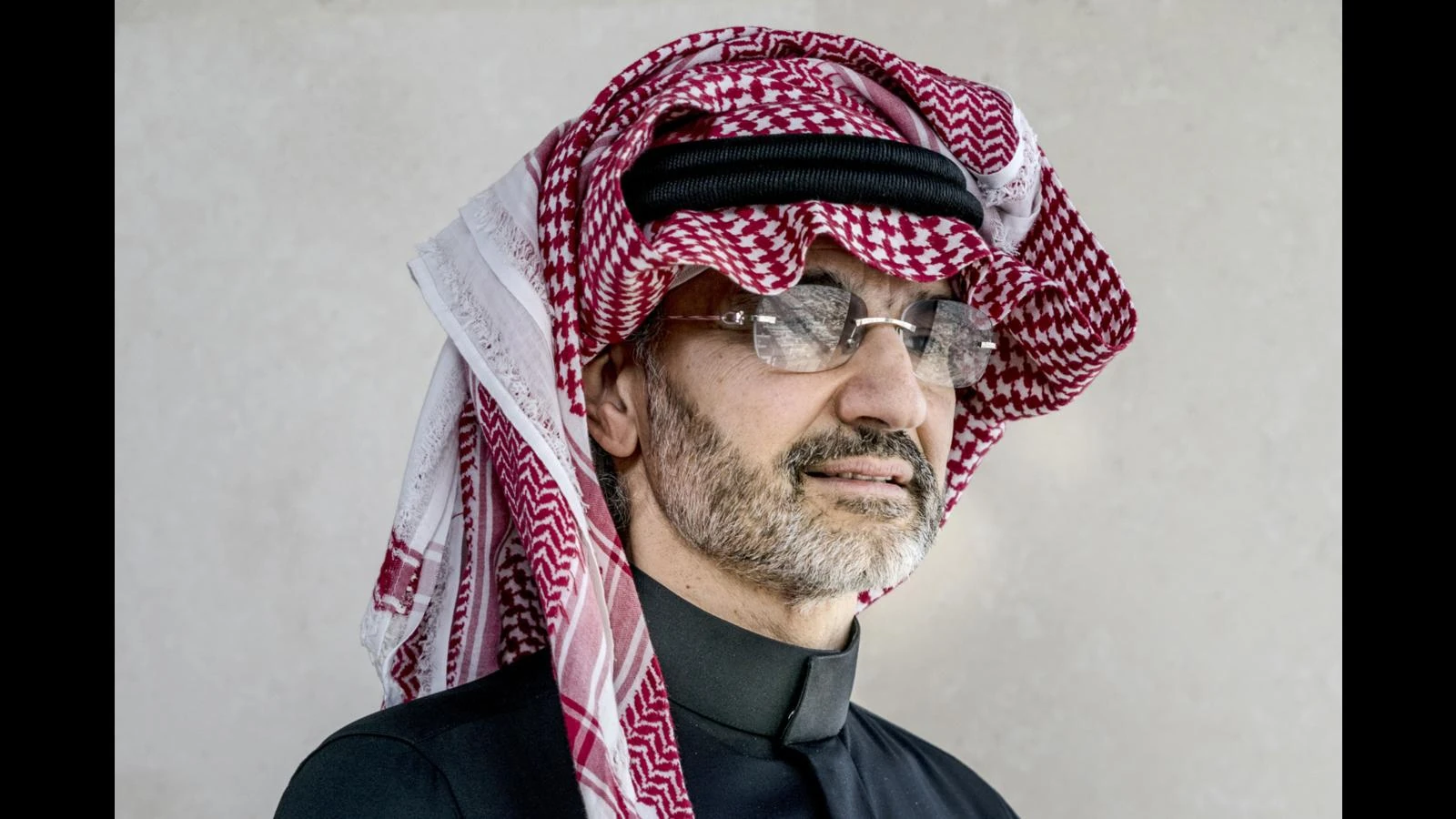
Prince Alwaleed Bin Talal Alsaud operates in a part of business where the headlines usually arrive after the important decisions. At Kingdom Holding, capital is committed, capacity is built and partnerships are chosen long before the outcome looks inevitable. The real significance of Prince Alwaleed Is Reassembling a Global Portfolio for a New Saudi Era is therefore not personal mythology. It is the operating question of how a leader converts an early edge into an advantage that can survive scrutiny and time.
The biography becomes more interesting when read as a capital-allocation record. Saudi investor Prince Alwaleed bin Talal owns stakes in a number of high profile companies like the Four Seasons hotel chain via Saudi-listed Kingdom Holding. Kingdom Holding announced in 2022 that the Saudi government Public Investment Fund bought a nearly 16.9% stake from Alwaleed for $1.6 billion.
The wealth associated with Prince Alwaleed Bin Talal Alsaud is rooted in investments, but that label is too narrow for the leadership story. Kingdom Holding sits within finance & investments, a field where strategic control is created through a series of linked choices rather than one transaction. The advantage has to be renewed in operations: who gets capital, which customers shape the roadmap, what remains proprietary and where the organization accepts dependence on a partner. For Prince Alwaleed Bin Talal Alsaud, those choices now carry more weight than the origin story because the business has become part of the market infrastructure around it.
Inside the capital machine
The balance sheet gives Prince Alwaleed Bin Talal Alsaud options that most competitors do not have, but optionality is not the same as strategy. Cash can buy speed, talent and access; it can also postpone hard decisions about a weak business. The next measure of Kingdom Holding will be whether investment creates a more coherent system. Markets may celebrate a dramatic transaction, yet the better evidence is operating leverage, resilience and the freedom to keep investing when the cycle turns.
This is also a governance story. Founder-led and family-controlled companies can move with unusual clarity because authority is visible. The weakness appears when disagreement becomes too expensive or succession is treated as a ceremony rather than an operating redesign. Prince Alwaleed Bin Talal Alsaud does not need to surrender conviction at Kingdom Holding; the organization does need executives with enough information and independence to prevent conviction from hardening into inertia. A credible bench is insurance against both crisis and charisma.
Finance rewards judgment only after it has first rewarded distribution, trust and control of funding. In this part of the market, the crucial question is not simply what an investor owns, but how quickly capital can be redeployed when conditions change. A celebrated bet can make a reputation; a durable institution needs risk limits, succession depth and clients who stay through a down cycle. That is where personal instinct has to become a repeatable operating system.
Personally and through Kingdom Holding, Alwaleed has invested in both X (formerly Twitter) and Elon Musk's related firm, xAI. Outside of Kingdom Holding, he owns real estate in Saudi Arabia, Arabic-language movie and music firm Rotana and an estimated 1.5% stake in social media firm Snap. Forbes dropped Alwaleed and other Saudi billionaires from the list in 2018 following the 2017 months-long detainment of Alwaleed and others by the Saudi government.
The risk inside the opportunity
Wealth rankings capture consequence, which is why Prince Alwaleed Bin Talal Alsaud belongs in the Asia Wealth 100. They do not settle the question of quality. That must be read through Kingdom Holding itself: the durability of margins, the concentration of risk, the credibility of governance and the relevance of the next investment cycle. A leader can influence all four, but not by treating market value as confirmation that the operating model no longer needs to be challenged.
Talent is the other scarce resource. A company associated closely with Prince Alwaleed Bin Talal Alsaud can attract ambitious executives, but it must also offer them decisions worth owning. Kingdom Holding will need specialists who understand the current business and outsiders prepared to question its assumptions. The useful culture is neither reverence nor rebellion. It is a system in which evidence can change a plan, accountability follows authority and the strongest people see a future for themselves beyond proximity to the controlling figure.
The pressure point is credibility under reversal. Liquidity can make an aggressive strategy look effortless, then disappear just as obligations become fixed. Investors should watch concentration, governance and the distance between the founder’s judgment and the institution’s controls. A firm that depends on one person to see every risk has not yet converted talent into durable value.
The world outside the core business
The Middle East is deploying capital to build new commercial centers while remaining deeply connected to energy, trade and family ownership. That combination creates speed and scrutiny. Prince Alwaleed Bin Talal Alsaud must position Kingdom Holding for a region that wants global relevance and domestic capability at the same time. The winning institution will not merely import expertise or export capital; it will create operating depth, credible governance and a reason for talent to stay. From Saudi Arabia, Prince Alwaleed Bin Talal Alsaud also has to decide how much of the operating model should travel and how much must remain shaped by the home market.
That is the next act for Prince Alwaleed Bin Talal Alsaud. The fortune may continue to be measured through the market value attached to Kingdom Holding, but leadership will be measured through the quality of the institution left behind: whether it can absorb challenge, allocate capital without nostalgia and stay useful as its industry changes. The point of Prince Alwaleed Is Reassembling a Global Portfolio for a New Saudi Era is not that the outcome is settled. It is that the strategic question is now visible, and the answer will be written by operating decisions rather than mythology.
Banner photograph: Forbes profile image.