There is a moment in every large enterprise when momentum stops being an answer. For Ravi Jaipuria, that moment is visible at RJ Corp and Varun Beverages. The business has enough weight to shape a market, yet every new move is harder to separate from regulation, supply chains and succession. Ravi Jaipuria Built a Beverage Empire One Territory at a Time describes the tension: a fortune created by decisive action now depends on an institution capable of disciplined restraint.
The useful evidence sits in the sequence of moves behind the fortune. India's cola king, Ravi Jaipuria, presides over RJ Corp. which is into everything from beverages and fast food to healthcare and education. His listed flagship Varun Beverages is one of PepsiCo's biggest bottlers outside the U.S.
The wealth associated with Ravi Jaipuria is rooted in soft drinks, fast food, but that label is too narrow for the leadership story. RJ Corp and Varun Beverages sits within food & beverage, a field where strategic control is created through a series of linked choices rather than one transaction. The advantage has to be renewed in operations: who gets capital, which customers shape the roadmap, what remains proprietary and where the organization accepts dependence on a partner. For Ravi Jaipuria, those choices now carry more weight than the origin story because the business has become part of the market infrastructure around it.
What RJ Corp and Varun Beverages must prove now
Food fortunes are built on repetition: the same purchase, made by millions of households, week after week. That makes distribution and quality control more valuable than spectacle. It also makes reputation unusually fragile. Leaders in the sector must balance pricing power with affordability, secure supply without becoming complacent and build brands that can travel without losing local trust. The apparently ordinary product is only the visible end of an industrial system whose margins depend on exact execution.
The balance sheet gives Ravi Jaipuria options that most competitors do not have, but optionality is not the same as strategy. Cash can buy speed, talent and access; it can also postpone hard decisions about a weak business. The next measure of RJ Corp and Varun Beverages will be whether investment creates a more coherent system. Markets may celebrate a dramatic transaction, yet the better evidence is operating leverage, resilience and the freedom to keep investing when the cycle turns.
This is also a governance story. Founder-led and family-controlled companies can move with unusual clarity because authority is visible. The weakness appears when disagreement becomes too expensive or succession is treated as a ceremony rather than an operating redesign. Ravi Jaipuria does not need to surrender conviction at RJ Corp and Varun Beverages; the organization does need executives with enough information and independence to prevent conviction from hardening into inertia. A credible bench is insurance against both crisis and charisma.
The youngest of three brothers, Jaipuria studied in the U.S. and returned home in 1985 to join the family business as a bottler for Coca-Cola. After a family division in 1987, in which he got one bottling plant as his share, he switched to PepsiCo. His Devyani International, which operates KFC, Pizza Hut and Costa Coffee stores, which got listed in 2021, agreed to merge with rival Sapphire Foods in a $934 million deal in January 2026, creating a fast food giant.
When scale stops being protection
The pressure comes from the same force that created the fortune: scale. A larger system has more purchasing power and political relevance, but it also has more points of failure and more stakeholders able to demand an answer. The next phase will be judged less by expansion announcements than by returns, governance and the ability to absorb a bad year without abandoning the long view.
Wealth rankings capture consequence, which is why Ravi Jaipuria belongs in the Asia Wealth 100. They do not settle the question of quality. That must be read through RJ Corp and Varun Beverages itself: the durability of margins, the concentration of risk, the credibility of governance and the relevance of the next investment cycle. A leader can influence all four, but not by treating market value as confirmation that the operating model no longer needs to be challenged.
Talent is the other scarce resource. A company associated closely with Ravi Jaipuria can attract ambitious executives, but it must also offer them decisions worth owning. RJ Corp and Varun Beverages will need specialists who understand the current business and outsiders prepared to question its assumptions. The useful culture is neither reverence nor rebellion. It is a system in which evidence can change a plan, accountability follows authority and the strongest people see a future for themselves beyond proximity to the controlling figure.
Global ambition needs local depth
South Asia offers scale before it offers simplicity. Demand is expanding, infrastructure is uneven and price sensitivity forces companies to innovate around cost as carefully as product. Ravi Jaipuria can use the home market as a proving ground for RJ Corp and Varun Beverages, but international authority will depend on governance, quality and a willingness to compete without relying on domestic familiarity. The strongest regional champions become global when their operating discipline travels as well as their ambition. From India, Ravi Jaipuria also has to decide how much of the operating model should travel and how much must remain shaped by the home market.
That is the next act for Ravi Jaipuria. The fortune may continue to be measured through the market value attached to RJ Corp and Varun Beverages, but leadership will be measured through the quality of the institution left behind: whether it can absorb challenge, allocate capital without nostalgia and stay useful as its industry changes. The point of Ravi Jaipuria Built a Beverage Empire One Territory at a Time is not that the outcome is settled. It is that the strategic question is now visible, and the answer will be written by operating decisions rather than mythology.
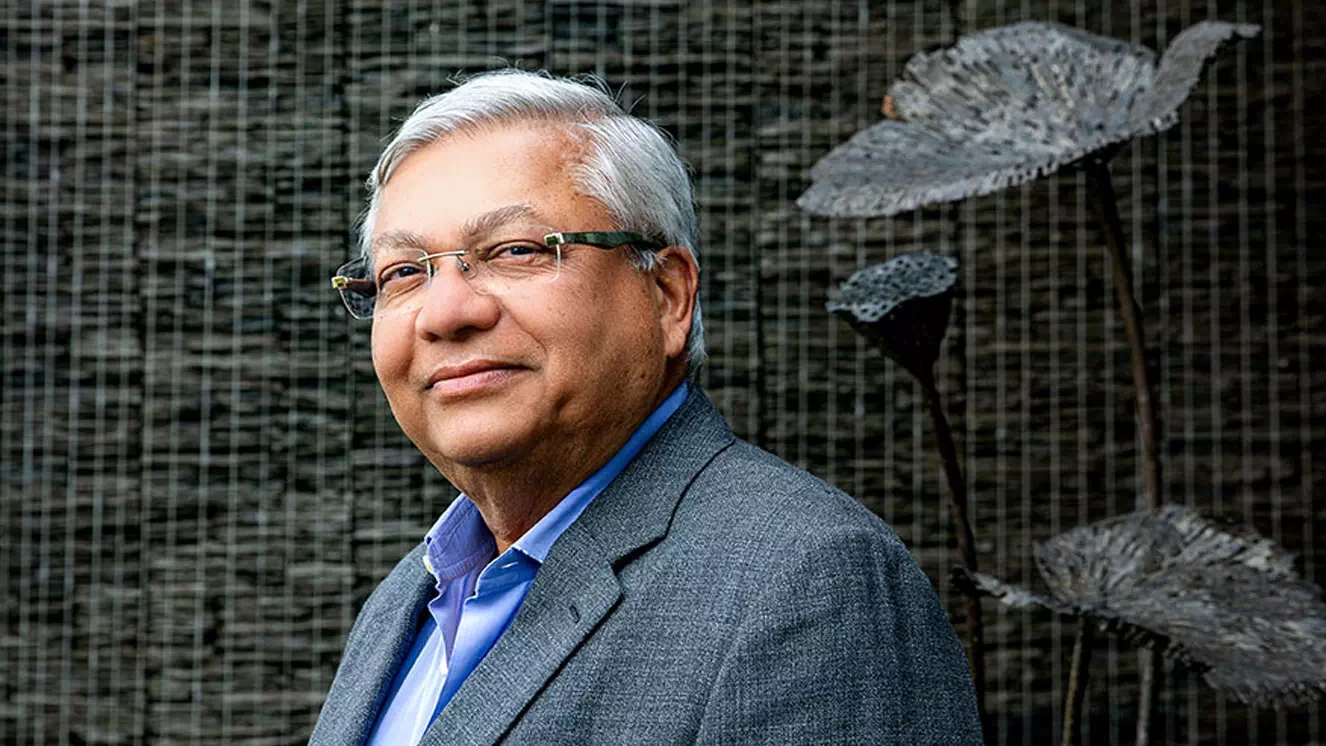
Banner photograph: Forbes profile image.