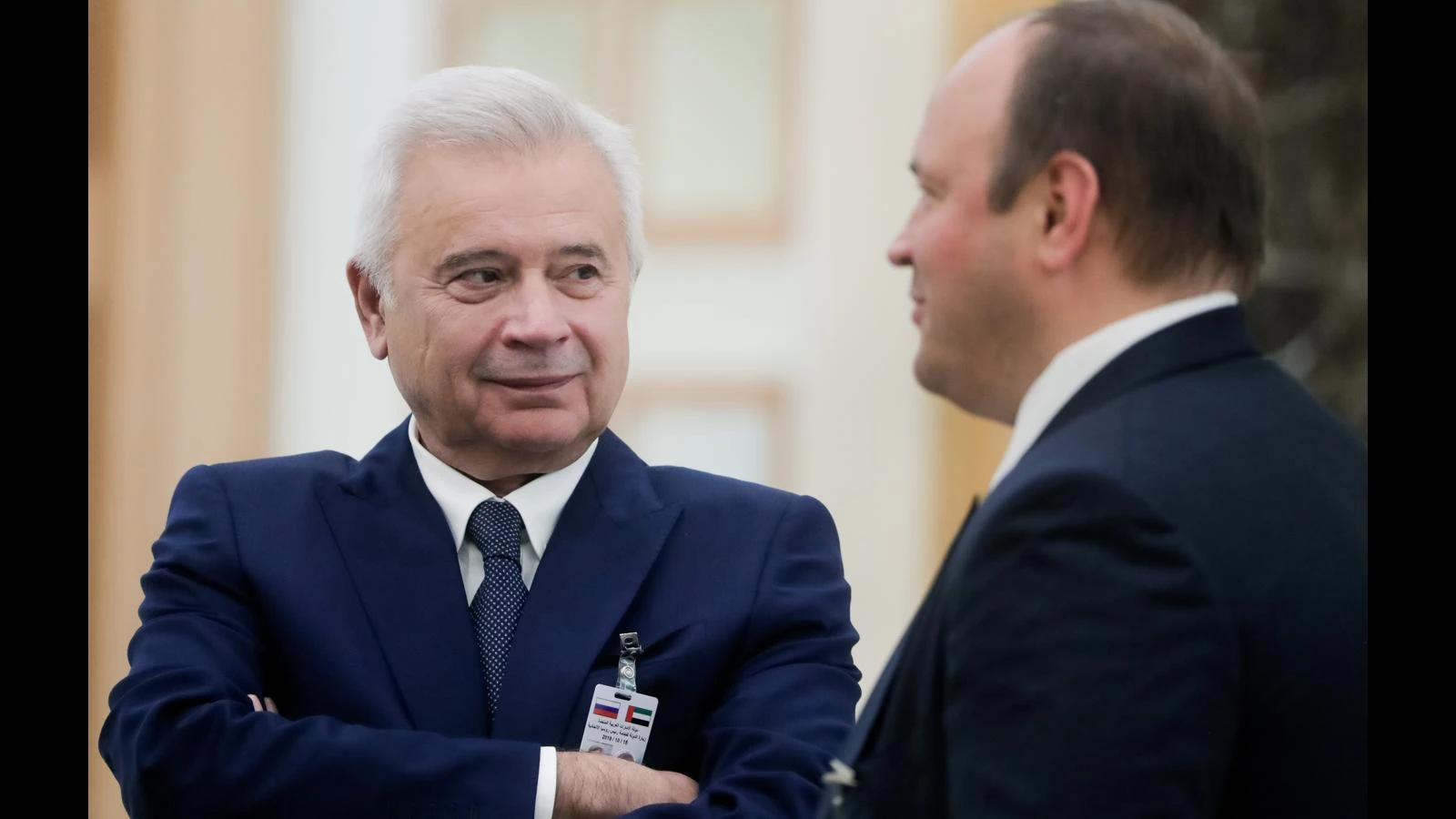
There is a moment in every large enterprise when momentum stops being an answer. For Vagit Alekperov, that moment is visible at Lukoil. The business has enough weight to shape a market, yet every new move is harder to separate from regulation, supply chains and succession. Vagit Alekperov Built Lukoil From the Machinery of a Vanished State describes the tension: a fortune created by decisive action now depends on an institution capable of disciplined restraint.
The useful evidence sits in the sequence of moves behind the fortune. A former Caspian Sea oil rig worker, Vagit Alekperov became a deputy minister overseeing the oil industry in the Soviet Union. In 1991 he took three large ministry-controlled oil fields and set up Lukoil, now Russia's largest independent oil company.
The wealth associated with Vagit Alekperov is rooted in oil, but that label is too narrow for the leadership story. Lukoil sits within energy, a field where strategic control is created through a series of linked choices rather than one transaction. The advantage has to be renewed in operations: who gets capital, which customers shape the roadmap, what remains proprietary and where the organization accepts dependence on a partner. For Vagit Alekperov, those choices now carry more weight than the origin story because the business has become part of the market infrastructure around it.
From advantage to institution
Energy wealth sits inside a transition that is neither orderly nor cheap. Demand for conventional fuels remains large even as policy, capital and technology push toward cleaner systems. The winners will not be those who merely own resources, but those who can finance long-duration projects, navigate regulation and place infrastructure where demand will exist years from now. Every expansion decision is also a view on geopolitics, commodity cycles and the speed at which customers can afford to change.
The story of Lukoil can be read through a sequence of concentrated bets. That history encourages confidence, but it can also make caution look like timidity. Vagit Alekperov faces a more demanding test now: to fund reinvention without forcing every part of the organization to move at the same speed. Capital should follow learning, not reputation. The businesses that can prove customer pull deserve acceleration; the rest should not be protected by the prestige of the group.
The succession question is broader than naming a successor. It is about what must remain stable when leadership changes and what should finally be allowed to change. Lukoil needs a clear account of decision rights, incentives and the role of family or founder capital. Vagit Alekperov can shape that architecture while authority is strong. Waiting until transition is unavoidable would turn a strategic choice into a market event, with employees and partners forced to interpret every signal.
Lukoil, of which he owns about 30%, was hit by U.S. sanctions in September 2014. Alekperov stepped down as the president of Lukoil in April 2022, a few days after being sanctioned by the U.K. Alekperov transferred his ownership in Dutch shipyard Heesen Yachts, where his 230-foot yacht Galactica Super Nova was built, to a dutch foundation in 2022.
A harder test than expansion
The central risk is timing. Invest too slowly and the asset base loses relevance; move too early and the balance sheet carries infrastructure customers are not ready to use. Policy can accelerate either outcome. The defensible position is optionality backed by cash flow, not a slogan about transition. That is a harder discipline than choosing one side of the energy debate.
Investors should resist turning Vagit Alekperov into a symbol. Symbols are easy to admire or attack; businesses require comparison. The relevant questions for Lukoil are concrete. Is return on new capital holding up? Is growth creating cash or consuming it? Are adjacent businesses strengthening the core or borrowing its reputation? The answers will matter more than a single market move because they show whether leadership is converting influence into an operating advantage competitors cannot purchase quickly.
Operational discipline becomes most valuable when conditions are favorable, because that is when weak commitments are easiest to hide. Vagit Alekperov can use the current position of Lukoil to simplify reporting lines, retire marginal projects and strengthen the parts of the network customers cannot see. None of that will produce the loudest announcement. It will, however, determine how quickly the organization can respond when supply, regulation or demand moves in a direction the annual plan did not anticipate.
The geography of influence
The Middle East is deploying capital to build new commercial centers while remaining deeply connected to energy, trade and family ownership. That combination creates speed and scrutiny. Vagit Alekperov must position Lukoil for a region that wants global relevance and domestic capability at the same time. The winning institution will not merely import expertise or export capital; it will create operating depth, credible governance and a reason for talent to stay. The diaspora dimension matters as well. With ties to Azerbaijan and citizenship in Russia, Vagit Alekperov reflects how Asian commercial networks move knowledge and capital across jurisdictions without becoming detached from their origins.
That is the next act for Vagit Alekperov. The fortune may continue to be measured through the market value attached to Lukoil, but leadership will be measured through the quality of the institution left behind: whether it can absorb challenge, allocate capital without nostalgia and stay useful as its industry changes. The point of Vagit Alekperov Built Lukoil From the Machinery of a Vanished State is not that the outcome is settled. It is that the strategic question is now visible, and the answer will be written by operating decisions rather than mythology.
Banner photograph: Forbes profile image.