Long before a fortune appears in a ranking, a leader chooses where to concentrate attention. Vinod Adani made that choice around Adani Group holdings. The result now carries an obligation that early-stage entrepreneurship does not: the business must perform while it renews itself. Vinod Adani’s Power Has Always Operated Away From the Spotlight is a way of asking whether the organization can keep its edge once scale, public expectations and legacy all arrive at the same time.
The record behind the public profile is unusually instructive. Vinod Adani is the older brother of Gautam Adani, who was at one point, the world's third-richest person. The Adani group, which started out in commodities trading, has interests in ports, airports, power generation and transmission, green energy, among others.
The wealth associated with Vinod Adani is rooted in infrastructure, commodities, but that label is too narrow for the leadership story. Adani Group holdings sits within diversified, a field where strategic control is created through a series of linked choices rather than one transaction. The advantage has to be renewed in operations: who gets capital, which customers shape the roadmap, what remains proprietary and where the organization accepts dependence on a partner. For Vinod Adani, those choices now carry more weight than the origin story because the business has become part of the market infrastructure around it.
Where scale becomes strategy
Conglomerates are often dismissed as collections of unrelated assets. In Asia, the best of them work more like private capital markets, moving cash, managerial attention and political patience between businesses whose cycles do not line up. The model creates resilience, but it can also conceal weak returns and blur accountability. Leadership is therefore an exercise in deciding what still belongs together, which businesses deserve another decade of capital and where family control must yield to professional management.
For investors, the central question is how Vinod Adani prices time. Some projects at Adani Group holdings need years before they become defensible, while public markets compare results every quarter. That gap can support bold leadership or shelter poor discipline. The strongest signal will be a capital plan that explains not only where money is going but what advantage it is supposed to earn, how failure will be recognized and which commitments can be slowed without damaging the core.
The most consequential leadership decision may be how much of Vinod Adani the organization still requires. A company that depends on constant personal intervention can be formidable and fragile at once. At Adani Group holdings, the next phase should make judgment more distributed without making accountability vague. That means clearer ownership of outcomes, deeper operating talent and a succession process measured through actual decisions rather than titles announced at the end.
Vinod Adani, who lives overseas, has stakes in various group companies that are held through multiple overseas investment firms that belong to him. The Adani group became India's second-largest cement producer in 2022, after Swiss firm Holcim's Indian assets were acquired for $10.5 billion through Vinod's investment firms. In January 2023, U.S. firm Hindenburg Research accused the group of financial fraud and stock market manipulation, which caused its shares to plummet. The Adani group has denied any wrongdoing.
What the market may be missing
The pressure comes from the same force that created the fortune: scale. A larger system has more purchasing power and political relevance, but it also has more points of failure and more stakeholders able to demand an answer. The next phase will be judged less by expansion announcements than by returns, governance and the ability to absorb a bad year without abandoning the long view.
The better scorecard for Adani Group holdings starts with resilience. Can the business protect service and investment during a downturn? Can it raise standards without losing speed? Can it explain a difficult choice before the market forces disclosure? Vinod Adani has the advantage of time and capital, but those resources only create value when the organization uses them to learn faster. The next cycle will show whether the company has accumulated capability or only scale.
The institution also needs a sharper definition of success. Revenue, market value and expansion all matter, but each can rise while strategic control weakens. At Adani Group holdings, Vinod Adani should be asking whether the company is learning faster, reducing avoidable dependence and earning trust in the markets it wants to enter. Those measures force the organization to connect ambition with capability. They also make it harder for prestige projects to compete with investments that improve the core business every day.
Building authority beyond the home market
The Middle East is deploying capital to build new commercial centers while remaining deeply connected to energy, trade and family ownership. That combination creates speed and scrutiny. Vinod Adani must position Adani Group holdings for a region that wants global relevance and domestic capability at the same time. The winning institution will not merely import expertise or export capital; it will create operating depth, credible governance and a reason for talent to stay. From Cyprus, Vinod Adani also has to decide how much of the operating model should travel and how much must remain shaped by the home market.
That is the next act for Vinod Adani. The fortune may continue to be measured through the market value attached to Adani Group holdings, but leadership will be measured through the quality of the institution left behind: whether it can absorb challenge, allocate capital without nostalgia and stay useful as its industry changes. The point of Vinod Adani’s Power Has Always Operated Away From the Spotlight is not that the outcome is settled. It is that the strategic question is now visible, and the answer will be written by operating decisions rather than mythology.
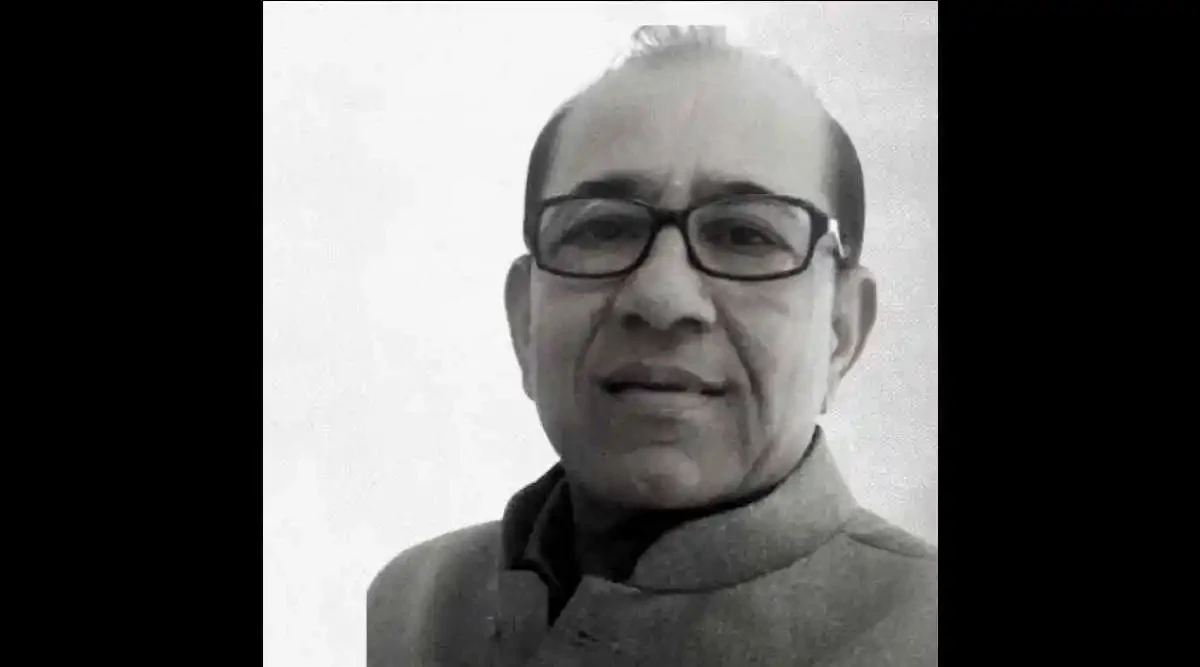
Banner photograph: The Indian Express.