Wang Laisheng built influence through Luxshare Precision, but the most interesting part of the story begins after the breakthrough. Leadership at this scale is no longer about spotting a single opening. It is about deciding which advantage can travel, which risk must remain local and which old habit has become a liability. That is why Wang Laisheng Helped Luxshare Move From Connectors to Apple’s Inner Circle has become a business question rather than a biographical observation.
Several decisions explain how the position was built. Wang Laisheng is vice chairman of Shenzhen-headquartered electronics manufacturer Luxshare Precision Industry. Luxshare, whose products include connectors and wireless headphones, is a supplier to Apple.
The wealth associated with Wang Laisheng is rooted in electronics components, but that label is too narrow for the leadership story. Luxshare Precision sits within technology, a field where strategic control is created through a series of linked choices rather than one transaction. The advantage has to be renewed in operations: who gets capital, which customers shape the roadmap, what remains proprietary and where the organization accepts dependence on a partner. For Wang Laisheng, those choices now carry more weight than the origin story because the business has become part of the market infrastructure around it.
The next operating question
Technology fortunes can look weightless, yet their staying power depends on very physical constraints: compute, power, components, manufacturing yield, distribution and access to scarce talent. The leaders who endure are rarely selling a single product. They are deciding which layer of a technical system becomes indispensable, then spending ahead of demand to protect that position. The danger is that a platform advantage can be erased by a standards shift, an export rule or a rival willing to price at the edge of profitability.
Leadership becomes more institutional as an enterprise grows, whether the controlling shareholder welcomes the change or not. Customers and regulators need continuity; senior talent needs real authority; minority investors need to know how capital decisions are tested. At Luxshare Precision, Wang Laisheng will be judged by the quality of the people who can make consequential decisions without waiting for the founder’s approval. Delegation is not distance. Done well, it is how standards survive scale.
Capital allocation is the hidden biography of any large fortune. The headline number rises and falls with markets, but the durable record is written in factories opened, acquisitions rejected, research funded and debt kept available for the wrong year. At Luxshare Precision, the important choices are no longer small enough to reverse quietly. Wang Laisheng must distinguish between investment that deepens the moat and expansion that merely enlarges the organization. The former compounds capability; the latter often compounds complexity.
Wang started his own business in the mid-1980s, and later teamed up with sister Wang Laichun to buy Luxshare's precursor in 1999. Wang Laichun, Luxshare's chairman, is also a billionaire.
The fault line investors should watch
The immediate pressure comes from technical cycles shortening while the cost of staying at the frontier rises. Customers want lower prices and more capability; governments want security and domestic capacity. That leaves little room for a comfortable middle. The company must keep investing before returns are visible, while proving that today’s advantage is more than a temporary shortage or a fashionable product category.
Execution will be visible in the unglamorous details. Luxshare Precision has to recruit people who can improve the system rather than simply inherit it, give local managers enough authority to respond and keep information moving across the organization without being polished on the way up. Wang Laisheng can set the appetite for risk, but repeatable performance comes from incentives and routines. That is where a leadership thesis becomes an operating result, one decision and one review cycle at a time.
The valuation lens can obscure that distinction. Markets often price Luxshare Precision as a shorthand for a broad theme, then punish the company when the theme cools. A more durable assessment separates the cyclical tailwind from the capabilities Wang Laisheng can control: cost, customer concentration, research productivity, execution and balance-sheet room. Those measures are less dramatic than a wealth ranking, but they reveal whether the company is building bargaining power or simply benefiting from a favorable moment.
A wider map for the next chapter
East Asia adds a particular strategic pressure. Dense supply chains and demanding domestic customers can accelerate learning, while trade controls and political friction can narrow the room to maneuver. Wang Laisheng has to build relationships that survive policy cycles and localize enough capability to remain trusted without fragmenting Luxshare Precision into inefficient national versions. The region rewards speed, but the global opportunity belongs to companies that can translate speed into standards others choose to adopt. From Hong Kong, China, Wang Laisheng also has to decide how much of the operating model should travel and how much must remain shaped by the home market.
That is the next act for Wang Laisheng. The fortune may continue to be measured through the market value attached to Luxshare Precision, but leadership will be measured through the quality of the institution left behind: whether it can absorb challenge, allocate capital without nostalgia and stay useful as its industry changes. The point of Wang Laisheng Helped Luxshare Move From Connectors to Apple’s Inner Circle is not that the outcome is settled. It is that the strategic question is now visible, and the answer will be written by operating decisions rather than mythology.
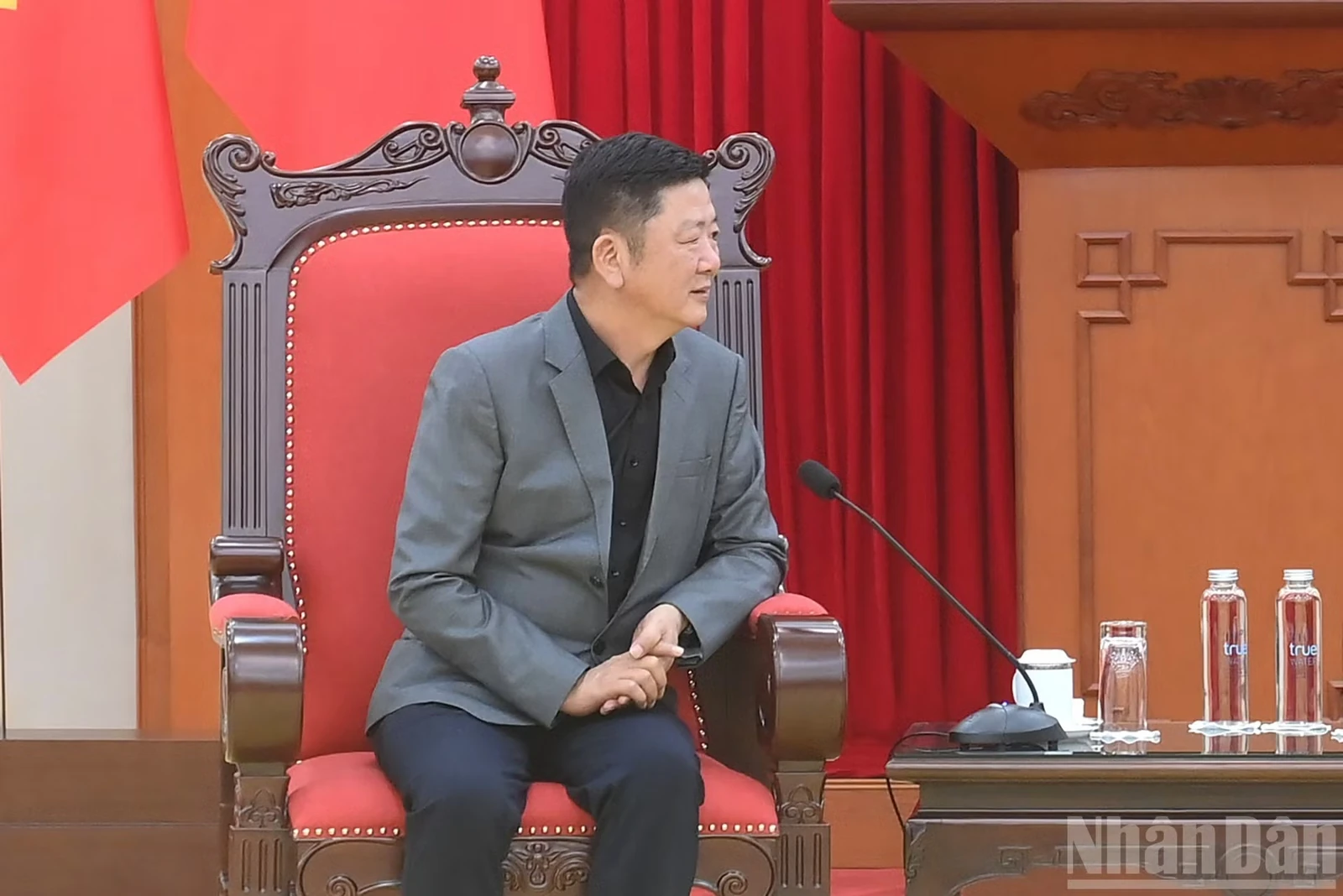
Banner photograph: Nhan Dan.