
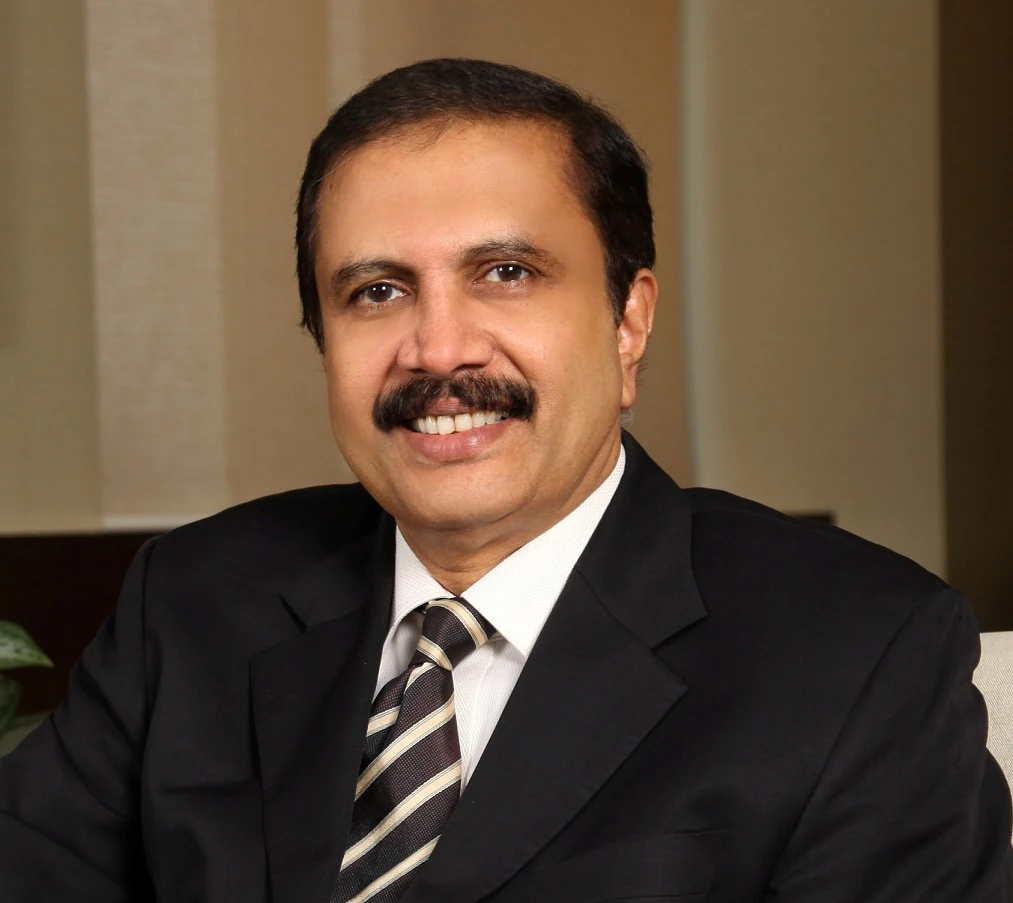
Azad Moopen spent much of the past two years simplifying Aster DM Healthcare and preparing its Indian business for greater scale. On 1 July 2026, the complicated part began. Aster's merger with Blackstone-backed Quality Care India became operational, creating a group of 39 hospitals in 28 cities with more than 10,600 beds. Four brands now sit inside one listed enterprise: Aster DM, CARE Hospitals, KIMSHEALTH and Evercare.
The transaction makes Aster DM Quality Care one of India's largest hospital platforms. It does not make it integrated. Moopen, who continues as executive chairman, must oversee the conversion of legal scale into clinical collaboration, procurement savings and better capital productivity. He must do so within a joint-control arrangement involving a global private-equity owner, a professional group chief executive and a promoter family that built Aster across India and the Gulf.
Financial momentum gives the combination a favourable opening. On a pro forma basis, Aster and Quality Care generated Rs2,361 crore of revenue in the March quarter, 18 per cent more than a year earlier. Operating EBITDA rose 25 per cent to Rs517 crore, a 21.9 per cent margin. Yet pro forma accounts are a map of what two companies would have looked like together. The first audited results of the merged entity will show whether accounting policies, costs and cash flows align in practice.
A national platform built from regional strength
Aster entered the combination with a strong presence in Kerala, Karnataka, Andhra Pradesh, Telangana and Maharashtra. Quality Care brought CARE Hospitals, KIMSHEALTH and Evercare assets across South and Central India. The overlap is limited enough to broaden geography, while clusters in several states provide density. That is a better starting point than a merger that simply places competing hospitals on the same street.
The new network has meaningful exposure to cities outside the largest metros, including Nagpur, Aurangabad, Vijayawada, Guntur, Bhubaneswar, Raipur, Nagercoil, Kolhapur, Kannur, Kasaragod and Kottakkal. Demand in these markets is rising as incomes, insurance coverage and diagnostic access improve. Patients who previously travelled to Bengaluru, Hyderabad, Mumbai or Chennai for complex treatment increasingly expect oncology, cardiac and neurological care closer to home.
That decentralisation thesis is commercially attractive because land and some operating costs can be lower than in major cities, while competition for advanced care is often less intense. The constraint is clinical talent. A hospital can buy a surgical robot or linear accelerator, but it cannot instantly build a multidisciplinary team with enough case volume to use the equipment well. The combined group plans 10 robotic platforms and 12 additional linear-accelerator systems across tier-two and tier-three cities. Returns will depend on referrals and clinicians, not the equipment count.
Scale can help. Shared centres of excellence can support difficult cases remotely, common protocols can reduce variation and a wider network gives senior specialists more options for rotation and training. Procurement of implants, drugs and consumables should improve with volume. Technology and back-office functions can be consolidated. These are the familiar sources of hospital-merger synergy; each requires standardisation without flattening the local relationships that drive referrals.
Four brands are an asset and a cost
Moopen has chosen to retain the operating brands rather than force an immediate conversion to Aster. That protects recognition built over years in local markets. CARE is established in several central and southern cities, KIMSHEALTH has deep equity in Kerala, and Aster carries its own clinical and consumer associations. A sudden rebrand could waste that goodwill and unsettle doctors.
A multi-brand model also complicates marketing, technology and service standards. Patients may not understand which parts of the network are interchangeable. Corporate payors negotiate across entities with different histories. Separate hospital systems can prevent records from following patients and make group-wide purchasing harder. The merged company needs a common operating layer beneath the brands: clinical governance, cybersecurity, data definitions, quality measures and capital approval.
The risk is pursuing superficial unity. A single app or logo treatment will not integrate discharge practices, infection controls or physician incentives. Hospital combinations are won on detailed processes: formulary choices, roster planning, theatre scheduling, revenue-cycle management and claims collection. Those changes can provoke resistance because they alter professional autonomy and local profit pools. Moopen and Varun Khanna, the managing director and group chief executive, need a clear division between board-level ambition and operational authority.
Patient continuity is the non-negotiable constraint. Merging information systems or supply contracts can disrupt appointments and billing if implementation is rushed. Clinical protocols should be harmonised through evidence and peer leadership, not just cost targets. Synergy that lowers procurement expense but weakens clinician retention or treatment availability destroys value that is difficult to recover.
Shared control raises the governance standard
The original transaction terms gave Aster shareholders 57.3 per cent of the merged listed company and Quality Care shareholders 42.7 per cent. Within the resulting ownership, Blackstone was expected to hold about 30.7 per cent and Aster's promoters about 24 per cent, with public and other shareholders holding the balance. Aster's promoters and Blackstone agreed joint control and equal board representation, while independent directors were intended to account for half the board.
This structure combines Moopen's sector knowledge and long-term identity with Blackstone's capital and operating resources. It can impose valuable discipline on expansion. It can also slow decisions if the two controlling groups disagree over leverage, acquisitions, dividends or an eventual stake sale. Private equity normally operates with a defined investment horizon, while a founder may think across generations. The governance architecture must manage that difference before it becomes a strategic dispute.
Moopen's shift in July to non-key-managerial-personnel status under Indian company law, while remaining executive chairman, reinforces the importance of role clarity. Khanna leads daily operations as group chief executive. The chairman should protect clinical purpose, capital discipline and the integration compact without creating a second management channel. Employees need to know who decides, and minority shareholders need assurance that related-party interests will not supersede the listed company's returns.
Board independence will be tested through the 4,400-plus-bed expansion pipeline. Large greenfield hospitals can take years to mature. Brownfield additions often offer faster returns because they use existing clinicians and referrals, but physical sites have limits. Acquisitions can fill geographic gaps, though another deal before the current merger is stabilised would increase execution risk. Capital should follow transparent hurdle rates rather than a race for the largest bed count.
The opening numbers are strong, not conclusive
Aster's stand-alone Indian business entered the merger in good condition. Fourth-quarter FY26 revenue rose 18 per cent to Rs1,182 crore. Excluding the newly commissioned Kasaragod hospital, operating EBITDA increased 31 per cent to Rs253 crore and the margin reached 21.7 per cent. Normalised profit after minority interests grew 45 per cent to Rs153 crore. Patient volume rose 15 per cent, with inpatient volume up 7 per cent and outpatient activity up 15 per cent.
Quality Care's quarter was similarly robust: revenue increased 18 per cent to Rs1,178 crore and operating EBITDA rose 23 per cent to Rs272 crore, a 23.1 per cent margin. Average length of stay improved to 3.94 days. Together, the companies reported a 21.2 per cent pro forma return on capital employed, excluding selected adjustments. Maintaining that figure while adding beds will be harder than producing it from established facilities.
New hospitals dilute margins before occupancy rises. Kasaragod was excluded from several performance comparisons because it was still ramping. The treatment is analytically useful, but the losses are real and belong to shareholders. As the enlarged group opens more facilities, investors should monitor both mature-hospital margins and consolidated returns. A strategy cannot be judged only after removing every asset that is still consuming capital.
The combination also has to demonstrate cash conversion. EBITDA synergies from procurement and corporate functions can take time, while integration spending arrives early. Receivables from insurers and government schemes may expand as the network grows outside metros. Equipment purchases, clinician guarantees and working capital can absorb cash even when reported profit increases. The first two years should be judged on free cash flow after maintenance and integration expenditure, not revenue alone.
India's consolidation race is intensifying
Aster DM Quality Care faces well-capitalised rivals. Apollo Hospitals is expanding beds while separating its digital and pharmacy arm. Max Healthcare has used acquisitions and brownfield capacity to build density in northern and western India. Manipal, Fortis, Narayana and strong regional systems compete for specialists, sites and patients. Private-equity capital has raised transaction prices and made operational improvement more important than financial leverage.
Size can improve Aster's bargaining position, but healthcare remains local. Patients choose doctors and nearby facilities; insurers steer networks; state regulation and purchasing differ. The group should use national scale to strengthen local hospitals, not assume that national advertising will replace physician trust. Its advantage may lie in linking regional brands through shared clinical capability while leaving patient relationships intact.
Medical travel adds another Asian dimension. Aster's international-patient revenue grew 41 per cent in the March quarter, led by Kerala. The larger network can offer more specialties and entry points for patients from the Gulf, Africa, Bangladesh and neighbouring markets. Yet cross-border demand is volatile, exposed to visas, flights, currencies and geopolitics. Domestic utilisation must justify every major facility; medical travel should enhance, not underwrite, the expansion case.
Moopen has already completed the transaction that changes Aster's competitive position. His next proof points are operational: common quality reporting across four brands, retention of leading clinicians, procurement benefits visible in cash, and new beds commissioned in an order that protects return on capital. By mid-2027, the merged group should be able to show organic performance rather than pro forma arithmetic. Scale will matter only when a patient receives consistent care and a shareholder receives a better return because the merger occurred.