Qatar Airways has moved from recovery to expansion with unusual force. For the financial year ended March 2026, the group reported net profit of QAR7.08 billion, or about $1.94 billion, and record operating profit of QAR15.2 billion. It carried 41.8 million passengers, moved 1.43 million tonnes of cargo and retained an estimated 12 per cent share of global air freight. At the same time, it placed commitments for as many as 210 aircraft and 400 engines.
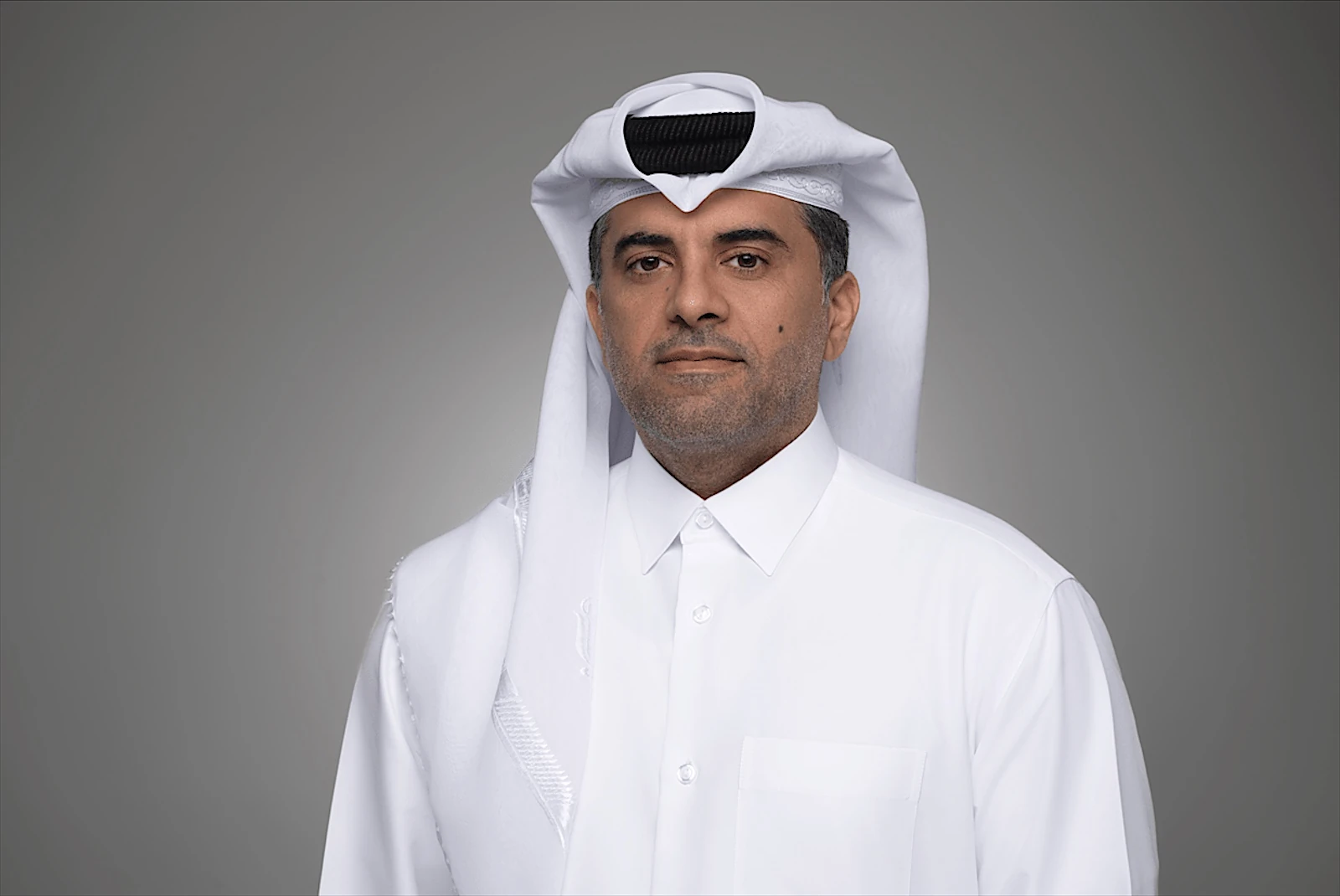
The results give Badr Mohammed Al-Meer a strong platform less than three years after he became group chief executive. The aircraft order gives him a much harder assignment. Qatar Airways has committed capital and capacity deep into the next decade, when demand, fuel prices, trade patterns and access to airspace will be different from today's. The commercial value of the order will depend on how precisely Al-Meer matches fleet, network and product to those changing conditions.
For a carrier built around a connecting hub, size is not an end in itself. More aircraft can add destinations and frequency, making the network more attractive. They can also depress yields if capacity runs ahead of profitable demand. Al-Meer's central test is therefore not whether Qatar Airways can grow. It is whether the airline can make each new wave of capacity strengthen the economics of Doha as a global interchange.
Record profit reflects a broad operating system
Qatar Airways' performance rests on more than passenger tickets. The group combines a long-haul network, a leading cargo operation, Hamad International Airport and interests across travel, handling and hospitality. That structure allows revenue and assets to reinforce one another. Passenger services create belly cargo capacity; freight supports routes whose traveller demand may be uneven; the airport captures value from connecting flows.
Carrying 41.8 million passengers in a year demonstrates the reach of the network, but the cargo figures are just as important. Air freight is volatile, sensitive to global trade and shipping disruption, yet it gives Qatar Airways a strategic position in time-critical supply chains. During periods of constrained sea routes or urgent demand, cargo can provide both commercial returns and geopolitical relevance.
The record operating profit suggests that management converted this scale into strong current economics. Al-Meer, who previously led Hamad International Airport's expansion, understands the connection between airline growth and hub capacity. Smooth transfers, baggage reliability and ground efficiency are not supporting details for a connecting carrier; they are part of the product.
Still, one strong year cannot settle the investment case for a fleet that will arrive over many years. Aviation profits are cyclical, and margins can change quickly when fuel, currency or capacity moves against an airline. The appropriate response to record earnings is to strengthen resilience while funding growth, not to assume recent conditions will persist.
The aircraft order is a network thesis
A commitment for up to 210 aircraft and 400 engines is often described as a procurement event. In reality, it is a thesis about the future shape of global travel. Qatar Airways is betting that flows between Asia, Europe, Africa and the Americas will continue to expand, and that Doha can win a disproportionate share by offering efficient one-stop connections.
New-generation aircraft can improve fuel efficiency and reduce maintenance costs. They can open thinner routes at lower risk and support longer services that were previously uneconomic. Fleet commonality can simplify training and operations, while a mix of aircraft sizes gives planners more control over capacity. These advantages matter only when the jets arrive on time and are deployed into routes with sufficient yield.
Manufacturer delays have become a central risk for global airlines. Supply-chain constraints, engine durability issues and certification schedules can upset carefully designed fleet plans. Qatar Airways' large order provides negotiating weight and potential delivery options, but it also makes execution by suppliers crucial to the carrier's strategy. Al-Meer must plan for scenarios in which older aircraft remain longer or growth is deferred.
The financial structure of the fleet will also matter. Airlines can purchase, finance or lease aircraft in different combinations, shifting the balance between capital commitment and operating flexibility. The group needs enough flexibility to adjust to shocks without paying away the benefits of scale through expensive last-minute solutions.
Geopolitics is an operating variable
Qatar Airways' geographic position is its advantage and its exposure. Doha sits within efficient flying range of major population and business centres, but routes across the Middle East can be affected by conflict and airspace restrictions. Longer diversions increase fuel burn, crew time and schedule complexity. Sudden closures can require a network to be redesigned in hours.
The airline has long experience with geopolitical disruption, including the regional blockade that forced dramatic rerouting between 2017 and 2021. That period strengthened operational adaptability, but history does not eliminate future cost. As the fleet grows, Qatar Airways will have more aircraft and passengers to reposition when disruption occurs.
Al-Meer's investment decisions must therefore include resilience that may look inefficient in normal periods: spare capacity, alternative routings, robust crew planning and liquidity. A tightly optimised network can produce excellent margins when every assumption holds and fail quickly when airspace changes. The premium on resilience is higher for a hub carrier whose flights depend on coordinated connections.
Diplomatic relationships also shape market access. Bilateral air-service agreements determine where and how frequently airlines can fly. Qatar's global commercial ties help support expansion, but competitors and governments can resist additional capacity. Fleet growth must be matched by rights, slots and local demand, not merely airport space in Doha.
Cargo can smooth the cycle, not remove it
Qatar Airways Cargo is a strategic asset, with a scale few passenger airlines can match. Dedicated freighters and passenger belly space allow the group to serve pharmaceuticals, perishables, e-commerce and industrial shipments. Cargo can improve the economics of long-haul routes and provide revenue when passenger demand is disrupted.
Yet freight markets can swing sharply. Rates rose to exceptional levels when supply chains were constrained, then normalised as capacity returned. Trade policy, manufacturing shifts and changes in e-commerce can alter volumes. Maintaining a large share of global air cargo requires disciplined capacity management rather than pursuit of tonnage alone.
Al-Meer must also judge the future fleet mix. Passenger aircraft generate substantial belly capacity, while freighters provide schedule control and the ability to carry goods unsuitable for passenger holds. Too much dedicated capacity can pressure returns in weak markets; too little can surrender valuable specialist business. The answer depends on Qatar Airways' route structure and long-term customer contracts.
Cargo's strategic role extends into Asia, where manufacturing networks and cross-border e-commerce create demand for time-sensitive transport. Doha can connect Asian production centres with Europe, Africa and the Americas. The opportunity is significant, but Asian competitors and integrators are investing in their own networks. Service reliability and digital visibility will be as important as price.
Premium service must scale with the fleet
Qatar Airways has built its brand around a high-end cabin product and a broad network. New aircraft can refresh that proposition, but rapid growth can strain consistency. Recruiting and training crew, maintaining service standards and handling more connections through the airport all require investment that arrives alongside the jets.
Hamad International Airport provides a modern hub, and Al-Meer's previous role there gives him a direct understanding of its operating capacity. The airline and airport must grow in sequence. Additional flights create little value if security queues, gates, baggage systems or lounges become congested. Airport retail and hospitality can capture more spending, but only if the transfer experience remains efficient.
Premium demand has broadened since the pandemic, with affluent leisure travellers contributing more alongside corporate passengers. This is favourable for Qatar Airways, which serves many long-haul leisure destinations, but it changes scheduling and product needs. Families, business travellers and luxury tourists value different elements. The airline must preserve a clear premium identity without treating the cabin as a uniform market.
Partnerships and equity stakes can extend the network without deploying Qatar Airways aircraft everywhere. Codeshares and alliance relationships give passengers more destinations and can provide feed into Doha services. Al-Meer should use those tools where they generate better returns than direct expansion, particularly in markets with slot or regulatory constraints.
Returns, not deliveries, will define the decade
A large aircraft order creates visible milestones: announcements, first deliveries and new routes. None by itself proves value. The relevant measures are return on invested capital, unit cost, yield, load factor, cargo contribution and the network revenue that each aircraft enables. Management should show that newer equipment improves these economics rather than simply enlarging the airline.
Environmental pressure will add another test. More efficient aircraft reduce fuel burn per seat, but absolute emissions can rise with capacity. Sustainable aviation fuel remains costly and limited. Qatar Airways will need a credible transition path that combines fleet efficiency, operational improvement and access to lower-carbon fuel without making claims beyond what the technology can deliver.
Al-Meer inherits a carrier with a powerful brand, a strategically located hub and a state shareholder able to think over long horizons. Those are significant advantages. They can also reduce the immediate market pressure that forces difficult choices. The discipline must come from within: routes should meet economic thresholds, capital should be staged carefully and risk should be priced honestly.
The latest profit shows that Qatar Airways' current system is working. The new fleet is a bet that the system can become much larger without losing its quality or resilience. Badr Mohammed Al-Meer's reputation will be built less on the size of the order than on the returns it produces through a decade certain to include both growth and disruption. Aviation rewards ambition only when it is matched by relentless operating control.