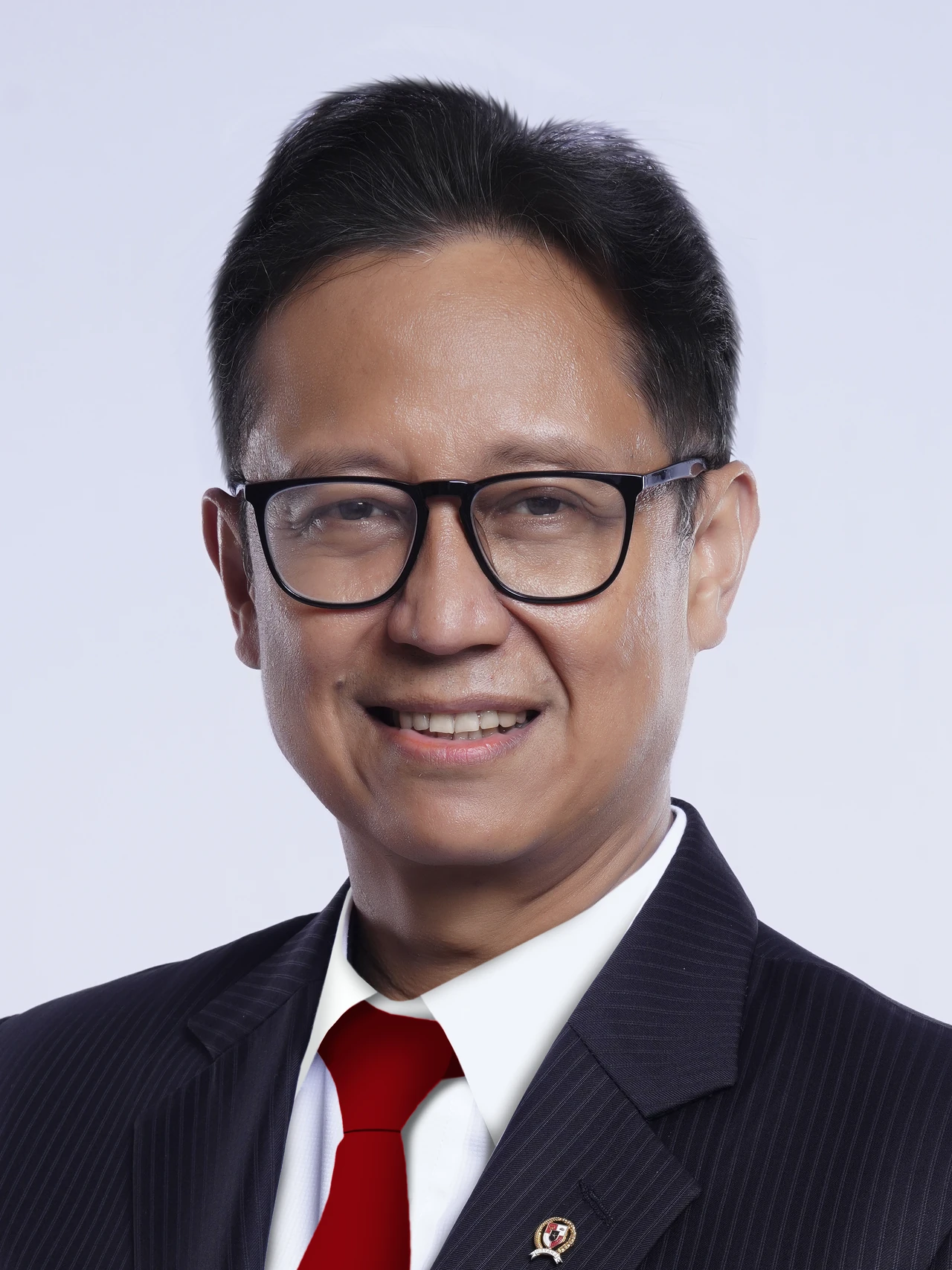
Budi Gunadi Sadikin has brought a banker’s instinct for scale and procurement to Indonesia’s health system. The latest evidence is unusually concrete. A World Bank-supported equipment programme has delivered more than 6,700 pieces of equipment to over 4,000 primary-care centres, contributing to an 8 per cent annual increase in outpatient consultations. Across its first 20 signed contracts, pooled purchasing produced average savings of 52 per cent against historical prices, equivalent to about US$550 million.
The programme is also deploying 419 catheterisation laboratories, upgrading 180 public laboratories and supporting 560 hospitals. Eighty-nine ultrasound machines have reached rural Papua. Indonesia is attempting to improve access across more than 6,000 inhabited islands while managing rising diabetes, heart disease and cancer alongside tuberculosis, maternal health and nutrition.
Sadikin ranks ninth because financial discipline has created room for a more ambitious service model. The Ministry of Health is moving its Free Health Check programme from screening towards immediate treatment, connecting records through SATUSEHAT and relying on national health insurance for continuing care. The risk is that cheap equipment and mass screening produce a wave of diagnoses that the workforce, maintenance system and insurance budget cannot absorb.
Pooled procurement has created measurable fiscal space
Indonesia’s geography makes equipment purchasing difficult. Thousands of facilities have different needs, local budgets and delivery constraints. Fragmented orders reduce bargaining power and can create incompatible machines, uneven service contracts and high prices. Central purchasing can standardise specifications and aggregate volume.
The 52 per cent saving reported on the first 20 contracts shows the potential. US$550 million can finance additional equipment, installation, training or treatment. It also raises questions about the historical baseline. Some apparent savings may reflect stronger negotiation, while some may come from different technical specifications or bundled terms. The government should disclose total lifecycle cost, not only purchase price.
A cheap machine becomes expensive if it lacks consumables, trained operators or spare parts. Service contracts, uptime and calibration should be included in procurement evaluation. Indonesia can use its scale to demand regional maintenance capacity and training from suppliers rather than accept equipment that remains idle after warranty periods.
The policy has industrial implications. Health-sector demand is estimated to generate two to 3.2 rupiah of output for each additional rupiah spent, supporting roughly five million direct and indirect jobs. Local manufacturing and biomedical-engineering capability can retain more of that value. Local-content goals should still be balanced against clinical quality and total cost.
The external-finance stack is large but fragmented
The World Bank Group has a US$2.9 billion health portfolio in Indonesia and says this has mobilised a further US$2 billion from institutions including the Asian Development Bank, Asian Infrastructure Investment Bank, Islamic Development Bank and several grant partners. The financing supports service delivery, tuberculosis, nutrition, national insurance and private-sector investment.
Multiple financiers increase capacity and spread risk. They can also impose different reporting systems, procurement rules and outcome measures. Sadikin’s ministry needs one national investment plan in which each lender or donor finances a defined component. Parallel projects can duplicate technical assistance while leaving recurrent costs uncovered.
Capital financing is only the beginning. New laboratories and hospital equipment create depreciation, maintenance, staffing and utility costs for years. Development loans can fund installation, but domestic revenue and JKN payments must support operation. Investment appraisal should include the budget required at expected utilisation, not assume that equipment automatically pays for itself through higher activity.
The reform’s stated goal is to raise Indonesia’s Universal Health Coverage Service Coverage Index from 55 in 2025 to 62 by 2030. That target provides a broad result, but managers also need local productivity measures: examinations per machine, referral completion, diagnostic turnaround, equipment uptime and outcomes after treatment.
Free screening is becoming a treatment obligation
Indonesia introduced its Cek Kesehatan Gratis, or Free Health Check, programme to identify disease earlier across the population. For 2026, the ministry has shifted emphasis from the number of checks towards management of abnormal findings. People with a detected condition are eligible for the first 15 days of treatment free, after which active national-insurance members continue through JKN and others are directed to enrol.
The change is necessary. Screening without follow-up creates little health value and can undermine trust. Same-day medicines for hypertension and diabetes at community health centres make detection more actionable. Yet each positive result creates a future stream of consultations, laboratory tests and prescriptions.
Programme economics depend on targeting and continuity. Broad screening can identify substantial untreated need, but it can also generate false positives and repeated tests. Clinical protocols need to route low-risk people back to prevention while ensuring that high-risk cases receive timely confirmation and treatment. Quality-adjusted outcomes matter more than checks completed.
The ministry has extended the model into hard-to-reach populations, including a July 2026 initiative combining free health checks and tuberculosis chest X-rays across 532 correctional facilities for more than 320,000 prisoners and staff. The operational lessons from prisons, islands and remote districts should inform national design rather than remain isolated campaigns.
JKN must carry the recurring cost
Indonesia’s national health insurance system is the bridge from a government-funded check to ongoing care. World Bank-supported reforms contributed to service use rising from 378 million visits in 2020 to 686 million in 2024, while a related programme reached more than 99 million beneficiaries. Greater use signals improved access, but it also increases claims.
Health accounts for 2024 put total national health expenditure at about Rp639.9 trillion, equivalent to 2.9 per cent of gross domestic product and roughly Rp2.3 million per person. Public sources financed 58.5 per cent, while household out-of-pocket spending remained 28.3 per cent. The numbers show progress in financial protection but limited fiscal room compared with many larger health systems.
Free checks will improve JKN’s economics only if early treatment prevents expensive complications. That benefit may take years to appear, while medication and consultation costs rise immediately. The insurer and ministry need linked data to compare screened and unscreened populations, track adherence and identify avoidable admissions.
Provider payment also matters. If facilities are paid mainly for activity, screening can add volume without rewarding control of blood pressure, diabetes or tuberculosis. Blended payment models should support necessary service while encouraging prevention and efficient referral. Rates must be adequate to keep private and public providers participating.
SATUSEHAT is the control layer
Sadikin has positioned SATUSEHAT as the national interoperability backbone linking hospitals, community health centres, laboratories and pharmacies. The ministry is integrating millions of electronic medical records into a government cloud and exploring artificial intelligence for clinical decisions, surveillance and operating efficiency.
A common record can prevent duplicate tests, support referral and give JKN better information for purchasing care. It can also reveal whether a patient detected through free screening receives treatment. At Indonesia’s scale, even modest reductions in duplication or missed follow-up can produce large savings.
Interoperability requires more than an application interface. Facilities need stable identifiers, common clinical terminology, connectivity and incentives to submit accurate data. Smaller providers may need financial and technical support. The ministry should measure completeness and usability rather than count nominal connections.
Data security is a strategic risk. A central health platform creates an attractive target and holds sensitive information for hundreds of millions of people. The ministry has created an AI committee and an ethical, legal and social framework. Those structures need independent audit, clear accountability for breaches and limits on commercial access.
Equipment needs people and logistics
A catheterisation laboratory cannot expand cardiac care without cardiologists, nurses, technicians, referral pathways and emergency transport. Ultrasound access depends on trained operators and interpretation. Laboratories need reagents, quality control and sample logistics. Workforce distribution is therefore the binding constraint in many districts.
Sadikin has supported incentives to draw doctors to underserved areas, but retention requires professional development, housing, safe working conditions and predictable pay. Telemedicine and decision support can extend specialist reach, though they cannot replace all hands-on care. Training plans should be linked to each capital purchase before delivery.
Island logistics raise inventory risk. Spare parts and reagents can take longer to reach eastern provinces. Procurement contracts should include regional service hubs, minimum uptime and performance penalties. The government can also standardise fewer equipment platforms to simplify training and parts, provided this does not create excessive supplier dependence.
The metrics that should define the reform
The first measure is utilisation adjusted for need: whether equipment in remote and urban facilities is used at appropriate rates. The second is the percentage of abnormal free checks that lead to confirmed diagnosis, treatment and control. The third is JKN’s cost trajectory after accounting for avoided hospital episodes.
Financial disclosure should show lifecycle procurement savings, maintenance obligations and recurrent budgets by asset category. Digital reporting should cover record completeness, referral closure and downtime. Equity measures should compare provinces and income groups rather than rely on national averages.
Sadikin has used central purchasing and external finance to compress prices and accelerate deployment. That is a material achievement for a system of Indonesia’s size. His next challenge is less visible and more difficult: making every machine, record and screening result part of a continuous care pathway. The reform will succeed when lower purchase prices become lower cost per healthy life, not merely more assets distributed across a map.