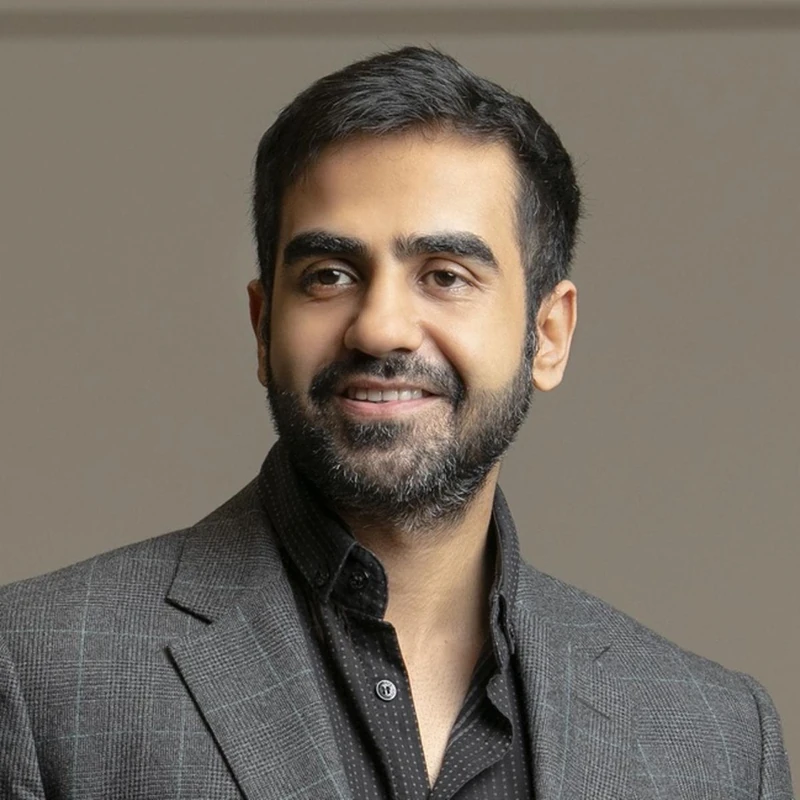

Few chief executives get to choose a clean starting point. Charoen Sirivadhanabhakdi certainly did not. ThaiBev and TCC carried into 2025 the advantages of accumulated scale and the obligations that come with it. Customers wanted more, capital markets wanted proof, and the competitive set was moving at different speeds. The task was therefore less about invention than selection: which edge to reinforce, which cost to remove and which fashionable opportunity to leave alone. In food and beverage, that discipline can look cautious until the cycle turns.
The dangerous rival is often narrow before it becomes large. A specialist may target the most profitable product, a digital entrant may remove one source of friction, or a lower-cost producer may reset the acceptable price. ThaiBev and TCC's defense is the combined value of brands, distribution, sourcing relationships and a place in routines repeated millions of times, but that combination works only when the parts cooperate. Charoen Sirivadhanabhakdi cannot assume that leadership in Thailand will transfer automatically to the next category or geography. The company has to earn adjacency one customer at a time. That makes competitive intelligence an operating practice: observing where customers tolerate inconvenience today, because that is where a focused rival will begin tomorrow.
The evidence for Charoen Sirivadhanabhakdi's place in the 2025 edition sits inside the company itself. At ThaiBev and TCC, the year was defined by beverages, property, retail exposure, consumer brands, and regional capital allocation. Those priorities connect growth to institutional capacity: the company had to make several systems work at once, not win one isolated contest. They also show how a chairman can use an established position to alter the choices available to customers, competitors and the wider Thailand economy. The scale of the platform raises the standard. When ThaiBev and TCC moves, suppliers invest, rivals answer and policymakers pay attention.
The asset competitors cannot copy quickly
Oversight is not the opposite of entrepreneurial speed. At ThaiBev and TCC, good governance gives a leader room to act while preserving a record of assumptions that can later be tested. That is particularly important around capital commitments, succession and any transaction that changes the institution faster than its controls can adapt. Charoen Sirivadhanabhakdi benefits from a board that can separate a temporary setback from a damaged thesis, and from directors willing to say which evidence would change their support. The public tends to encounter governance after something has failed. Its real value is preventive: it improves the probability that ambition is examined by people who share responsibility for the outcome but not the same incentives.
Capital allocation is where a leader's beliefs become difficult to edit. At ThaiBev and TCC, the central exposure is factories, farms, stores and acquisitions that must preserve cash generation through commodity and consumer cycles. Charoen Sirivadhanabhakdi must decide how much uncertainty the existing cash engine can responsibly carry and how quickly a new business should be asked to prove itself. Too little investment can surrender a market; too much can lock the company into assumptions that were only briefly true. The strongest capital discipline is not a refusal to take risk. It is a clear account of what must happen for the risk to earn another round of money—and a willingness to stop when the evidence no longer supports the original case.
Annual performance can flatter or punish choices made much earlier. The 2025 record placed Charoen Sirivadhanabhakdi at the intersection of beverages, property, retail exposure, consumer brands, and regional capital allocation. Some of those forces are cyclical; others change the structure of ThaiBev and TCC's market. The leadership task is to distinguish them. Cutting investment in a temporary downturn can damage the next upturn, while defending a structurally weakened business can consume years of attention. FigureAsia reads the period as evidence of judgment under mixed signals. The point is not to declare every decision correct before its outcome is known, but to ask whether the company has defined the assumptions and milestones clearly enough to learn before capital and credibility are exhausted.
The supply chain is part of the strategy, not a route between factories. ThaiBev and TCC depends on partners whose decisions shape cost, quality and speed before Charoen Sirivadhanabhakdi's own teams can act. Inventory can buy time, yet too much of it hides weak forecasting and consumes cash that a better system would release. The leadership choice is therefore about visibility as much as bargaining power. Charoen Sirivadhanabhakdi needs operating teams that can distinguish a temporary delay from evidence that the network itself must be redesigned. It is an institutional capability because the next disruption will not resemble the last one closely enough for a checklist to solve it.
How leadership shows up in operations
Corporate power creates a public balance sheet as well as a financial one. ThaiBev and TCC's decisions affect suppliers, workers, customers and, in Thailand, sometimes the direction of national investment. That reach gives Charoen Sirivadhanabhakdi access and influence; it also creates obligations that cannot be measured only by short-term shareholder return. The relevant standard is practical: whether pricing is explainable, commitments are delivered, failures are addressed and the institution makes its trade-offs visible enough to be challenged. This matters because consumers grant repeat business to companies that deliver familiar quality without abusing pricing power. Once confidence breaks, the cost appears in regulation, customer behavior, employee caution and a higher price for every future promise.
A company's confidence can often be read in the price it is willing to defend. For ThaiBev and TCC, holding price can signal strength, but it can also conceal that the product has stopped reaching the next customer cohort. Charoen Sirivadhanabhakdi must read willingness to pay alongside acquisition cost, retention and the operational burden created by each promise. That is harder in 2025–2026 because digital comparison makes prices more visible while inflation and investment needs keep cost structures unsettled. The useful metric is not the highest possible price. It is the price that funds a reliable product, remains intelligible to the customer and leaves the company with enough trust to introduce the next offer on its merits.
A robust institution keeps functioning while it revises its explanation of what went wrong. For ThaiBev and TCC, speed matters, yet improvisation without controls can create a second failure after the first one is contained. Charoen Sirivadhanabhakdi's job is to define which services, customers and controls cannot be compromised, then give teams room to redesign everything else around them. That principle turns resilience from a warehouse of emergency procedures into a way of allocating attention under pressure. The evidence arrives after the event: not only in how quickly operations resume, but in whether the company learns enough to avoid rebuilding the exact vulnerability that failed.
Every advantage contains its own form of overconfidence. For ThaiBev and TCC, scale becomes a liability when it makes the organization slow to notice a changing household. A large organization can postpone recognition because one strong division, favorable price or established brand masks weakness elsewhere. Charoen Sirivadhanabhakdi's responsibility is to shorten that delay. The board needs indicators that reveal deterioration before consensus becomes comfortable, and operating teams need permission to report a broken assumption without being treated as disloyal. This is the uncelebrated side of leadership: creating an institution in which changing one's mind is not a humiliation, provided the change follows evidence and happens before customers pay for management's pride.
Growth without the easy assumptions
The role looks singular from outside; the decisions are not. As Chairman of Thai Beverage Public Company Limited / TCC Group, Charoen Sirivadhanabhakdi sits above a business whose advantage comes from brands, distribution, sourcing relationships and a place in routines repeated millions of times. At ThaiBev and TCC, that asset has to be renewed through ordinary operations; it cannot be protected by reputation alone. A missed delivery, a weak control or a poorly timed investment can travel through the system before senior management sees it in a consolidated number. The real work of leadership is therefore architectural. Charoen Sirivadhanabhakdi must set incentives and thresholds that allow thousands of decisions to point in roughly the same direction without waiting for the center to approve each one.
Scale turns small operating choices into financial outcomes. For ThaiBev and TCC, it is expressed through availability, product quality, working capital and the reading of demand across very different income groups. These are not background functions; they decide whether the strategic promise reaches the income statement and the customer. Charoen Sirivadhanabhakdi's task is to make the organization notice variation early—before a weak unit, late project or deteriorating service standard becomes accepted as normal. That requires measurement, but also judgment about which number deserves intervention. Companies this large can generate dashboards faster than they generate understanding. The leader's contribution is to keep attention fixed on the few operating relationships that explain the rest.
The second act will be judged by conversion, not intention. Can ThaiBev and TCC use distribution scale to introduce new categories without weakening the core products that finance expansion while improving availability, product quality, working capital and the reading of demand across very different income groups? That pairing matters. A future business that weakens today's service, margin or balance sheet will eventually lose the internal support required to scale. Charoen Sirivadhanabhakdi needs proof at several levels: a customer willing to pay, an operating team able to repeat the result and a capital plan that does not depend on permanently generous markets. If those pieces align, the company will have turned transition into capability. If they do not, the strategy may remain impressive in presentation form while the institution quietly returns to what it already knows.
The question the board cannot avoid
A company from Asia carries its home market into every global decision. ThaiBev and TCC's base in Thailand connects it to the capital, regulation, talent and demand patterns of Southeast Asia. That connection can provide patient suppliers, sophisticated customers or national strategic support. It can also expose the business to policy changes and geopolitical interpretations beyond management's control. Charoen Sirivadhanabhakdi's international task is therefore not to make the company less Asian. It is to make the home-grown advantage legible and dependable elsewhere, while learning which assumptions do not travel. The result matters beyond one enterprise because it influences how global customers assess the institutional quality of companies from the same market.
ThaiBev and TCC does not need another story about its size. It needs evidence that size still creates learning, resilience and the freedom to invest with patience. Charoen Sirivadhanabhakdi's contribution will be measured in that evidence—in operating standards that survive pressure, capital decisions that remain intelligible after the cycle changes and a leadership bench able to continue the work. For FigureAsia, this is why the profile belongs in Leadership: the consequential act is not occupying the top office, but leaving the institution more capable than the office found it.