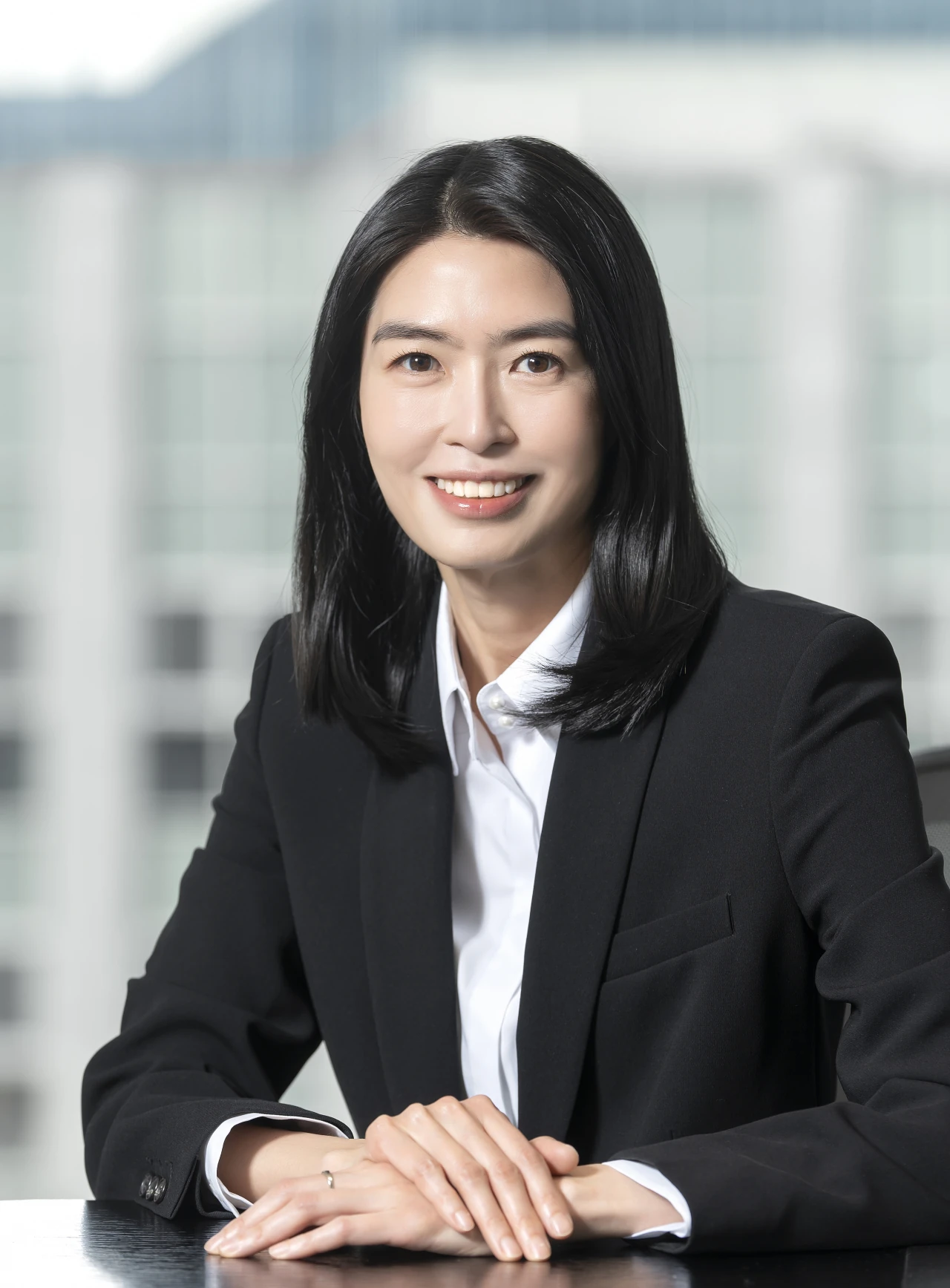
The public sees Kakao through its products, brands or headline investments. Chung Shin-a sees a different company: contracts, bottlenecks, technical compromises and thousands of people whose small decisions either reinforce a strategy or quietly defeat it. That gap between external image and internal machinery is where this profile begins. In 2025, leadership was not a matter of sounding more ambitious. It was the ability to make reliability, product focus, compute discipline and the ability to retire projects that attract attention but not users work together under pressure.
The portfolio tells customers which problems the company has chosen to own. At Kakao, it is whether the company can maintain the promise at the volume its brand is capable of attracting. Chung Shin-a has to protect teams from two opposite mistakes: extending a successful franchise until it loses meaning, and abandoning a useful core because a newer category appears more exciting. The answer is a portfolio with explicit jobs. Some products earn cash, some win entry to a customer, some create technical learning and some should disappear. Clarity about those jobs makes innovation more credible, because the organization can evaluate a launch by the purpose it was funded to serve rather than by publicity alone.
FigureAsia's case for Chung Shin-a begins with the 2025 operating record, not celebrity. At Kakao, the year was defined by messaging, fintech, mobility, entertainment, governance renewal, and platform trust rebuilding. Those priorities connect growth to institutional capacity: the company had to make several systems work at once, not win one isolated contest. They also show how a chief executive officer can use an established position to alter the choices available to customers, competitors and the wider South Korea economy. The scale of the platform raises the standard. When Kakao moves, suppliers invest, rivals answer and policymakers pay attention.
The contradiction inside Kakao
Cross-border growth multiplies opportunity and the number of ways a strategy can be misunderstood. For Kakao, the foreign operation must become part of the institution rather than a distant asset reviewed only when it misses a target. Chung Shin-a is carrying a company shaped in East Asia into markets with different customers, regulators and expectations about corporate conduct. The useful question is not whether the brand can appear in more places. It is whether the operating model can absorb local knowledge without losing the discipline that created the original advantage. Successful expansion makes the whole organization more intelligent. Unsuccessful expansion merely makes the reporting structure wider.
Corporate ambition is tested in the smallest transaction. What customers need from Kakao is the ability to turn artificial intelligence and cloud capacity into products people will repeatedly pay to use. If the company succeeds, the complexity disappears into reliability, price or convenience. If it fails, brand power only makes the disappointment more visible. This is why users, enterprises and regulators need clearer answers about data, accountability and the limits of automation. Chung Shin-a is managing an economic relationship as well as a product portfolio. The temptation is to treat installed scale as loyalty. The 2025 record argues for the opposite reading: scale increases the number of moments in which the company has to earn the right to remain the customer's default choice.
Timing is a form of competitive advantage that financial statements record late. At Kakao, waiting for certainty can surrender the opportunity; pretending uncertainty does not exist can destroy the return. Chung Shin-a has to protect the enterprise from bureaucratic delay and from urgency manufactured by the news cycle. That means naming the clock attached to each decision: a customer window, a technology curve, a regulatory deadline or the financial runway of a project. When the clocks are explicit, pace becomes a deliberate choice. Without them, teams can call any hesitation prudent and any rush entrepreneurial.
History gives a company identity, but it does not give management an exemption from evidence. Kakao entered this period with operating habits, relationships and expectations formed before Chung Shin-a's current set of choices. The challenge is to preserve hard-won judgment without preserving every structure through which an earlier generation expressed it. That makes renewal a selective exercise rather than an attack on tradition. Chung Shin-a must identify which practices embody the company's real advantage and which simply reflect the tools or market conditions of their time. A durable legacy is visible when younger managers can use institutional memory to move faster, not when they repeat the vocabulary of an earlier success.
Where the advantage really lives
The calendar does not align neatly with a strategy. The decisions visible in 2025, and their consequences in 2026, placed Chung Shin-a at the intersection of messaging, fintech, mobility, entertainment, governance renewal, and platform trust rebuilding. Some of those forces are cyclical; others change the structure of Kakao's market. The leadership task is to distinguish them. Cutting investment in a temporary downturn can damage the next upturn, while defending a structurally weakened business can consume years of attention. FigureAsia reads the period as evidence of judgment under mixed signals. The point is not to declare every decision correct before its outcome is known, but to ask whether the company has defined the assumptions and milestones clearly enough to learn before capital and credibility are exhausted.
A supplier network records years of choices that a balance sheet cannot fully describe. Kakao depends on partners whose decisions shape cost, quality and speed before Chung Shin-a's own teams can act. A contract secures volume; it does not create the candor required when a launch date or specification is in danger. The leadership choice is therefore about visibility as much as bargaining power. Chung Shin-a needs operating teams that can distinguish a temporary delay from evidence that the network itself must be redesigned. This is how scale becomes useful rather than brittle: information travels before the shortage does.
Competition rarely attacks the whole company at once. A specialist may target the most profitable product, a digital entrant may remove one source of friction, or a lower-cost producer may reset the acceptable price. Kakao's defense is the combined value of software, distribution, data, developer communities and the habit of shipping products before the market stops moving, but that combination works only when the parts cooperate. Chung Shin-a cannot assume that leadership in South Korea will transfer automatically to the next category or geography. The company has to earn adjacency one customer at a time. That makes competitive intelligence an operating practice: observing where customers tolerate inconvenience today, because that is where a focused rival will begin tomorrow.
Partnership is often the fastest way to admit that no company owns the whole solution. For Kakao, speed at signing means little if teams cannot exchange data, resolve defects and make decisions after the executives leave the room. Chung Shin-a has to decide which advantage should remain proprietary and where openness expands the market more than exclusivity protects it. That calculation changes across borders and technologies, but the governance principle is stable: responsibilities must be clear at the moment incentives diverge. A successful partnership leaves Kakao better able to serve the customer after the agreement ends. A weak one creates growth that cannot be explained without the partner continuing to absorb the difficult part.
The price of scale
A professional chief executive inherits commitments made by predecessors and is judged on the ability to change them without damaging continuity. Chung Shin-a's influence at Kakao has to be read through that tension. That balance between conviction and correction is where governance becomes an operating advantage. In a year of rapid shifts, consistency did not mean refusing to change. It meant making changes that the operating organization could absorb, measure and, when necessary, reverse before a strategic error became part of the culture.
Scale turns small operating choices into financial outcomes. For Kakao, it is expressed through reliability, product focus, compute discipline and the ability to retire projects that attract attention but not users. These are not background functions; they decide whether the strategic promise reaches the income statement and the customer. Chung Shin-a's task is to make the organization notice variation early—before a weak unit, late project or deteriorating service standard becomes accepted as normal. That requires measurement, but also judgment about which number deserves intervention. Companies this large can generate dashboards faster than they generate understanding. The leader's contribution is to keep attention fixed on the few operating relationships that explain the rest.
The second act will be judged by conversion, not intention. Can Kakao make AI an operating advantage rather than a costly feature attached to every presentation while improving reliability, product focus, compute discipline and the ability to retire projects that attract attention but not users? That pairing matters. A future business that weakens today's service, margin or balance sheet will eventually lose the internal support required to scale. Chung Shin-a needs proof at several levels: a customer willing to pay, an operating team able to repeat the result and a capital plan that does not depend on permanently generous markets. If those pieces align, the company will have turned transition into capability. If they do not, the strategy may remain impressive in presentation form while the institution quietly returns to what it already knows.
The decision after 2025
The title is accurate but incomplete. As Chief Executive Officer of Kakao Corp., Chung Shin-a sits above a business whose advantage comes from software, distribution, data, developer communities and the habit of shipping products before the market stops moving. At Kakao, that asset has to be renewed through ordinary operations; it cannot be protected by reputation alone. A missed delivery, a weak control or a poorly timed investment can travel through the system before senior management sees it in a consolidated number. The real work of leadership is therefore architectural. Chung Shin-a must set incentives and thresholds that allow thousands of decisions to point in roughly the same direction without waiting for the center to approve each one.
Kakao does not need another story about its size. It needs evidence that size still creates learning, resilience and the freedom to invest with patience. Chung Shin-a's contribution will be measured in that evidence—in operating standards that survive pressure, capital decisions that remain intelligible after the cycle changes and a leadership bench able to continue the work. For FigureAsia, this is why the profile belongs in Leadership: the consequential act is not occupying the top office, but leaving the institution more capable than the office found it.