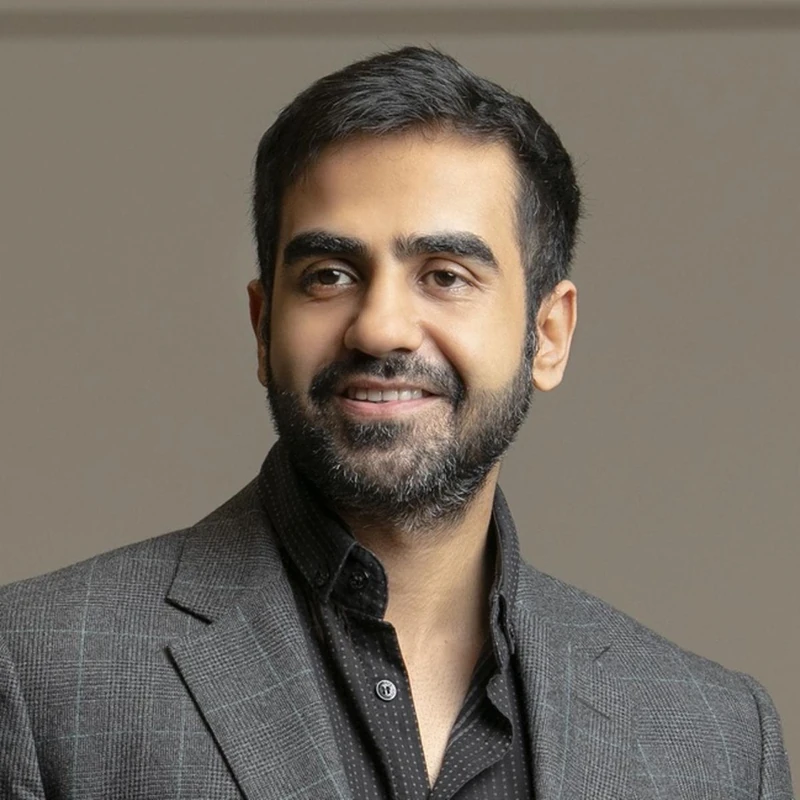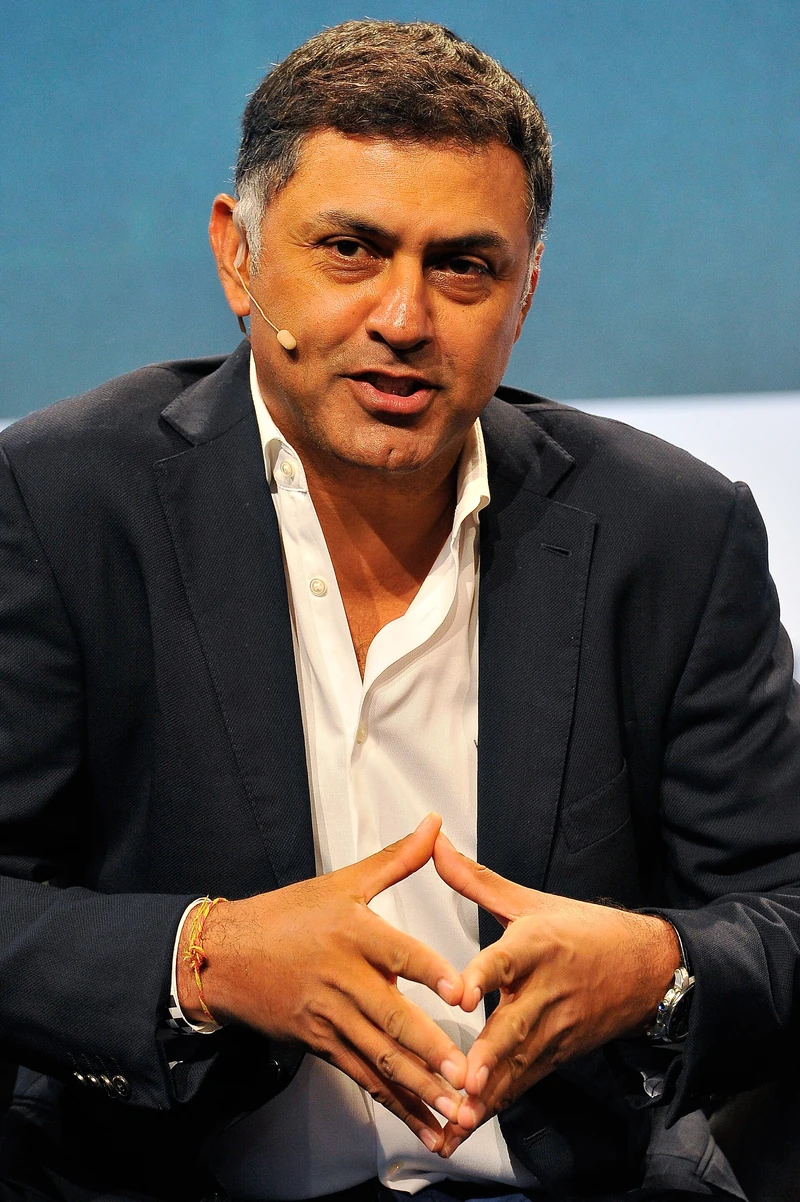

Power in Asian business is often physical before it is financial: a network, a plant, a route, a distribution system or a place in the customer's routine. Nykaa has that kind of power. Falguni Nayar's challenge is to keep it from becoming passive. The asset matters only if the organization continues to learn from it, price it intelligently and use it to enter the next market on better terms. In 2025, the argument for Falguni Nayar's leadership rested on that conversion of inherited position into current relevance.
The real stress test is whether information and authority still move when the normal hierarchy is overloaded. For Nykaa, central command can coordinate the response, while local teams often hold the facts required to make it credible. Falguni Nayar's job is to define which services, customers and controls cannot be compromised, then give teams room to redesign everything else around them. That principle turns resilience from a warehouse of emergency procedures into a way of allocating attention under pressure. The evidence arrives after the event: not only in how quickly operations resume, but in whether the company learns enough to avoid rebuilding the exact vulnerability that failed.
Strip away the corporate language and the record is clear. At Nykaa, the year was defined by beauty commerce, omnichannel retail, private labels, brand partnerships, and Indian consumer digital demand. Those priorities connect growth to institutional capacity: the company had to make several systems work at once, not win one isolated contest. They also show how a founder and chief executive officer can use an established position to alter the choices available to customers, competitors and the wider India economy. The scale of the platform raises the standard. When Nykaa moves, suppliers invest, rivals answer and policymakers pay attention.
A business built around difficult choices
The formal description understates the job. As Founder and Chief Executive Officer of FSN E-Commerce Ventures Limited (Nykaa), Falguni Nayar sits above a business whose advantage comes from merchant density, logistics, payments, recommendation systems and the behavioral habit of opening the app first. At Nykaa, that asset has to be renewed through ordinary operations; it cannot be protected by reputation alone. A missed delivery, a weak control or a poorly timed investment can travel through the system before senior management sees it in a consolidated number. The real work of leadership is therefore architectural. Falguni Nayar must set incentives and thresholds that allow thousands of decisions to point in roughly the same direction without waiting for the center to approve each one.
Talent is not a line item when the business depends on judgment. At Nykaa, specialists must make decisions with consequences too technical and too immediate to be escalated every time. Falguni Nayar therefore has to build a common language for risk, customer value and capital—not a culture of identical opinions. The strongest teams can challenge a cherished project while remaining committed to the enterprise. They also develop successors whose credibility comes from operating results rather than proximity to power. For a company of this scale, that depth is not a human-resources virtue. It is continuity insurance, and it determines whether the organization can pursue a long strategy without becoming dependent on one personality.
The company is private or listed, but its consequences are widely shared. Nykaa's decisions affect suppliers, workers, customers and, in India, sometimes the direction of national investment. That reach gives Falguni Nayar access and influence; it also creates obligations that cannot be measured only by short-term shareholder return. The relevant standard is practical: whether pricing is explainable, commitments are delivered, failures are addressed and the institution makes its trade-offs visible enough to be challenged. This matters because shoppers and sellers need predictable rules, authentic products and remedies when the transaction fails. Once confidence breaks, the cost appears in regulation, customer behavior, employee caution and a higher price for every future promise.
Research becomes strategy when the company knows where to deploy it. Nykaa already possesses people, systems and customers; the challenge is to connect a new capability to those assets without adding another layer of complexity. For Falguni Nayar, the future-facing objective is to convert marketplace reach into a profitable consumer institution rather than an endless promotion engine. That requires technical talent, but also product managers, procurement teams and financial controls able to distinguish a platform from a demonstration. The 2025 technology cycle rewarded announcements. Durable leadership will be judged later, when the organization has to show that a new tool improved cost, speed, quality or customer value enough to survive the end of the fashion cycle.
What customers are actually buying
The balance sheet is not a passive record; it is a map of management's convictions. At Nykaa, the central exposure is subsidies, warehouses and international expansion that can create scale or conceal weak unit economics. Falguni Nayar must decide how much uncertainty the existing cash engine can responsibly carry and how quickly a new business should be asked to prove itself. Too little investment can surrender a market; too much can lock the company into assumptions that were only briefly true. The strongest capital discipline is not a refusal to take risk. It is a clear account of what must happen for the risk to earn another round of money—and a willingness to stop when the evidence no longer supports the original case.
Market leadership can hide the segment where the next fight begins. A specialist may target the most profitable product, a digital entrant may remove one source of friction, or a lower-cost producer may reset the acceptable price. Nykaa's defense is the combined value of merchant density, logistics, payments, recommendation systems and the behavioral habit of opening the app first, but that combination works only when the parts cooperate. Falguni Nayar cannot assume that leadership in India will transfer automatically to the next category or geography. The company has to earn adjacency one customer at a time. That makes competitive intelligence an operating practice: observing where customers tolerate inconvenience today, because that is where a focused rival will begin tomorrow.
The best alliance begins with a precise account of what each side cannot do alone. For Nykaa, shared ambition is not enough; operating rights and exit conditions matter before the first success changes the balance of power. Falguni Nayar has to decide which advantage should remain proprietary and where openness expands the market more than exclusivity protects it. That calculation changes across borders and technologies, but the governance principle is stable: responsibilities must be clear at the moment incentives diverge. A successful partnership leaves Nykaa better able to serve the customer after the agreement ends. A weak one creates growth that cannot be explained without the partner continuing to absorb the difficult part.
The regional context is not scenery. Nykaa's base in India connects it to the capital, regulation, talent and demand patterns of South Asia. That connection can provide patient suppliers, sophisticated customers or national strategic support. It can also expose the business to policy changes and geopolitical interpretations beyond management's control. Falguni Nayar's international task is therefore not to make the company less Asian. It is to make the home-grown advantage legible and dependable elsewhere, while learning which assumptions do not travel. The result matters beyond one enterprise because it influences how global customers assess the institutional quality of companies from the same market.
The risk behind the momentum
Scale turns small operating choices into financial outcomes. For Nykaa, it is expressed through delivery cost, inventory turns, customer service and the balance between growth incentives and durable margins. These are not background functions; they decide whether the strategic promise reaches the income statement and the customer. Falguni Nayar's task is to make the organization notice variation early—before a weak unit, late project or deteriorating service standard becomes accepted as normal. That requires measurement, but also judgment about which number deserves intervention. Companies this large can generate dashboards faster than they generate understanding. The leader's contribution is to keep attention fixed on the few operating relationships that explain the rest.
Pricing is the shortest version of the strategy. For Nykaa, passing through every cost protects a spreadsheet while inviting the customer to look for an alternative. Falguni Nayar must read willingness to pay alongside acquisition cost, retention and the operational burden created by each promise. That is harder in 2025–2026 because digital comparison makes prices more visible while inflation and investment needs keep cost structures unsettled. The useful metric is not the highest possible price. It is the price that funds a reliable product, remains intelligible to the customer and leaves the company with enough trust to introduce the next offer on its merits.
The second act will be judged by conversion, not intention. Can Nykaa convert marketplace reach into a profitable consumer institution rather than an endless promotion engine while improving delivery cost, inventory turns, customer service and the balance between growth incentives and durable margins? That pairing matters. A future business that weakens today's service, margin or balance sheet will eventually lose the internal support required to scale. Falguni Nayar needs proof at several levels: a customer willing to pay, an operating team able to repeat the result and a capital plan that does not depend on permanently generous markets. If those pieces align, the company will have turned transition into capability. If they do not, the strategy may remain impressive in presentation form while the institution quietly returns to what it already knows.
The next operating test
New products create attention; coherent products create an institution. At Nykaa, it is whether the customer understands why the new offer belongs beside the old one. Falguni Nayar has to protect teams from two opposite mistakes: extending a successful franchise until it loses meaning, and abandoning a useful core because a newer category appears more exciting. The answer is a portfolio with explicit jobs. Some products earn cash, some win entry to a customer, some create technical learning and some should disappear. Clarity about those jobs makes innovation more credible, because the organization can evaluate a launch by the purpose it was funded to serve rather than by publicity alone.
Nykaa does not need another story about its size. It needs evidence that size still creates learning, resilience and the freedom to invest with patience. Falguni Nayar's contribution will be measured in that evidence—in operating standards that survive pressure, capital decisions that remain intelligible after the cycle changes and a leadership bench able to continue the work. For FigureAsia, this is why the profile belongs in Leadership: the consequential act is not occupying the top office, but leaving the institution more capable than the office found it.