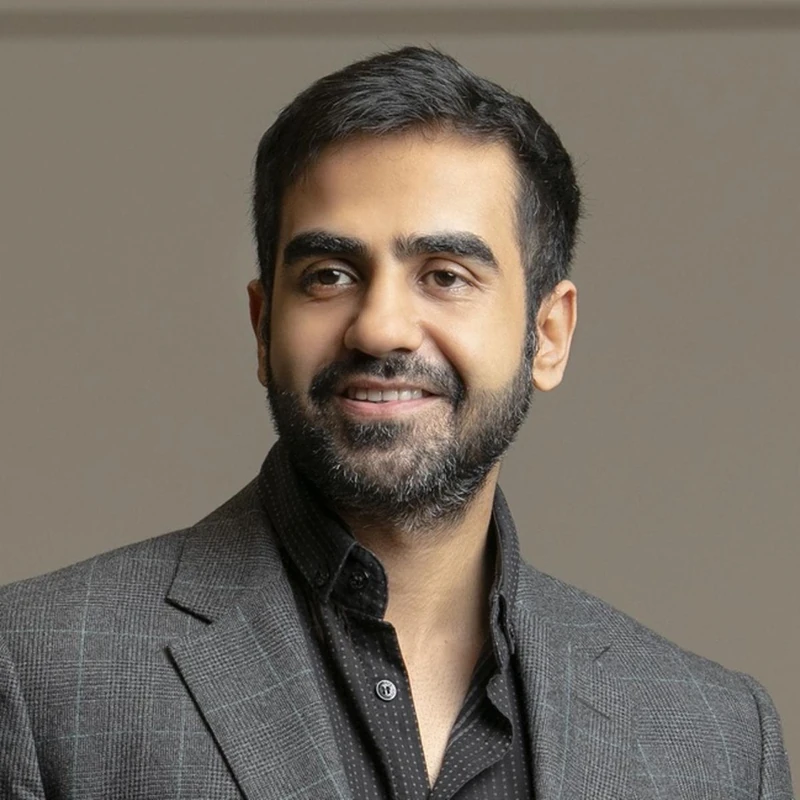

Power in Asian business is often physical before it is financial: a network, a plant, a route, a distribution system or a place in the customer's routine. OCBC has that kind of power. Helen Wong's challenge is to keep it from becoming passive. The asset matters only if the organization continues to learn from it, price it intelligently and use it to enter the next market on better terms. In 2025, the argument for Helen Wong's leadership rested on that conversion of inherited position into current relevance.
The real stress test is whether information and authority still move when the normal hierarchy is overloaded. For OCBC, central command can coordinate the response, while local teams often hold the facts required to make it credible. Helen Wong's job is to define which services, customers and controls cannot be compromised, then give teams room to redesign everything else around them. That principle turns resilience from a warehouse of emergency procedures into a way of allocating attention under pressure. The evidence arrives after the event: not only in how quickly operations resume, but in whether the company learns enough to avoid rebuilding the exact vulnerability that failed.
Strip away the corporate language and the record is clear. At OCBC, the year was defined by regional banking, wealth management, insurance exposure, risk discipline, and Southeast Asian client relationships. Those priorities connect growth to institutional capacity: the company had to make several systems work at once, not win one isolated contest. They also show how a group chief executive officer can use an established position to alter the choices available to customers, competitors and the wider Singapore economy. The scale of the platform raises the standard. When OCBC moves, suppliers invest, rivals answer and policymakers pay attention.
A business built around difficult choices
A succession plan is also a test of the current leader. At OCBC, specialists must make decisions with consequences too technical and too immediate to be escalated every time. Helen Wong therefore has to build a common language for risk, customer value and capital—not a culture of identical opinions. The strongest teams can challenge a cherished project while remaining committed to the enterprise. They also develop successors whose credibility comes from operating results rather than proximity to power. For a company of this scale, that depth is not a human-resources virtue. It is continuity insurance, and it determines whether the organization can pursue a long strategy without becoming dependent on one personality.
A board earns its relevance in the quality of questions it asks while performance still looks comfortable. At OCBC, the board must understand the operating thesis well enough to recognize when favorable results are coming from a factor management did not create. That is particularly important around capital commitments, succession and any transaction that changes the institution faster than its controls can adapt. Helen Wong benefits from a board that can separate a temporary setback from a damaged thesis, and from directors willing to say which evidence would change their support. The public tends to encounter governance after something has failed. Its real value is preventive: it improves the probability that ambition is examined by people who share responsibility for the outcome but not the same incentives.
The home market gives scale, but it also shapes blind spots. OCBC's base in Singapore connects it to the capital, regulation, talent and demand patterns of Southeast Asia. That connection can provide patient suppliers, sophisticated customers or national strategic support. It can also expose the business to policy changes and geopolitical interpretations beyond management's control. Helen Wong's international task is therefore not to make the company less Asian. It is to make the home-grown advantage legible and dependable elsewhere, while learning which assumptions do not travel. The result matters beyond one enterprise because it influences how global customers assess the institutional quality of companies from the same market.
Every advantage contains its own form of overconfidence. For OCBC, market share won through mispriced credit is a future loss disguised as growth. A large organization can postpone recognition because one strong division, favorable price or established brand masks weakness elsewhere. Helen Wong's responsibility is to shorten that delay. The board needs indicators that reveal deterioration before consensus becomes comfortable, and operating teams need permission to report a broken assumption without being treated as disloyal. This is the uncelebrated side of leadership: creating an institution in which changing one's mind is not a humiliation, provided the change follows evidence and happens before customers pay for management's pride.
What customers are actually buying
Revenue growth reveals demand; pricing reveals the quality of the relationship. For OCBC, bundling can deepen a relationship or make the customer feel that complexity is being used to prevent comparison. Helen Wong must read willingness to pay alongside acquisition cost, retention and the operational burden created by each promise. That is harder in 2025–2026 because digital comparison makes prices more visible while inflation and investment needs keep cost structures unsettled. The useful metric is not the highest possible price. It is the price that funds a reliable product, remains intelligible to the customer and leaves the company with enough trust to introduce the next offer on its merits.
A leader of critical infrastructure cannot treat legitimacy as public relations. OCBC's decisions affect suppliers, workers, customers and, in Singapore, sometimes the direction of national investment. That reach gives Helen Wong access and influence; it also creates obligations that cannot be measured only by short-term shareholder return. The relevant standard is practical: whether pricing is explainable, commitments are delivered, failures are addressed and the institution makes its trade-offs visible enough to be challenged. This matters because depositors and regulators need proof that convenience has not outrun resilience. Once confidence breaks, the cost appears in regulation, customer behavior, employee caution and a higher price for every future promise.
A dashboard can make a business look controlled while the decisive relationship remains unmeasured. At OCBC, volume can rise while customer quality deteriorates; margin can improve while investment needed for the next cycle is deferred. Helen Wong needs a small set of measures that connect customer behavior, operating quality and capital return without pretending that one number can settle the argument. Those measures should be stable enough to reveal a trend and specific enough to trigger action. They should also make gaming visible. The objective is not to remove judgment. It is to give judgment a common evidentiary base, so that a strong narrative cannot outrun what the institution is actually learning.
A board can approve direction; customers experience execution. For OCBC, it is expressed through pricing risk, managing liquidity, resolving service failures and integrating digital speed with institutional controls. These are not background functions; they decide whether the strategic promise reaches the income statement and the customer. Helen Wong's task is to make the organization notice variation early—before a weak unit, late project or deteriorating service standard becomes accepted as normal. That requires measurement, but also judgment about which number deserves intervention. Companies this large can generate dashboards faster than they generate understanding. The leader's contribution is to keep attention fixed on the few operating relationships that explain the rest.
The risk behind the momentum
Product discipline is the ability to make absence as deliberate as presence. At OCBC, it is whether the offer solves enough of a real problem to survive after introductory incentives disappear. Helen Wong has to protect teams from two opposite mistakes: extending a successful franchise until it loses meaning, and abandoning a useful core because a newer category appears more exciting. The answer is a portfolio with explicit jobs. Some products earn cash, some win entry to a customer, some create technical learning and some should disappear. Clarity about those jobs makes innovation more credible, because the organization can evaluate a launch by the purpose it was funded to serve rather than by publicity alone.
Resilience begins with knowing which apparently small component can stop the whole system. OCBC depends on partners whose decisions shape cost, quality and speed before Helen Wong's own teams can act. The strongest network shares enough information to solve a problem early without making every participant dependent on one forecast. The leadership choice is therefore about visibility as much as bargaining power. Helen Wong needs operating teams that can distinguish a temporary delay from evidence that the network itself must be redesigned. That work is rarely visible in a product announcement, but it is where continuity becomes a competitive advantage.
By 2026, the strategic question becomes operational. Can OCBC become more useful in a customer's financial life without turning data access into an excuse for careless lending while improving pricing risk, managing liquidity, resolving service failures and integrating digital speed with institutional controls? That pairing matters. A future business that weakens today's service, margin or balance sheet will eventually lose the internal support required to scale. Helen Wong needs proof at several levels: a customer willing to pay, an operating team able to repeat the result and a capital plan that does not depend on permanently generous markets. If those pieces align, the company will have turned transition into capability. If they do not, the strategy may remain impressive in presentation form while the institution quietly returns to what it already knows.
The next operating test
Technical ambition is useful; technical absorption is decisive. OCBC already possesses people, systems and customers; the challenge is to connect a new capability to those assets without adding another layer of complexity. For Helen Wong, the future-facing objective is to become more useful in a customer's financial life without turning data access into an excuse for careless lending. That requires technical talent, but also product managers, procurement teams and financial controls able to distinguish a platform from a demonstration. The 2025 technology cycle rewarded announcements. Durable leadership will be judged later, when the organization has to show that a new tool improved cost, speed, quality or customer value enough to survive the end of the fashion cycle.
The durable case for Helen Wong will not rest on a single ranking year. It will rest on whether OCBC emerges from this period with better choices, stronger managers and a clearer reason for customers to depend on it. That is a demanding definition of leadership because it treats scale as a responsibility rather than an achievement. The 2025–2026 record is still being written, but the stakes are already visible: Helen Wong is deciding whether an established Asian institution can use its weight to move early without becoming too heavy to move at all.