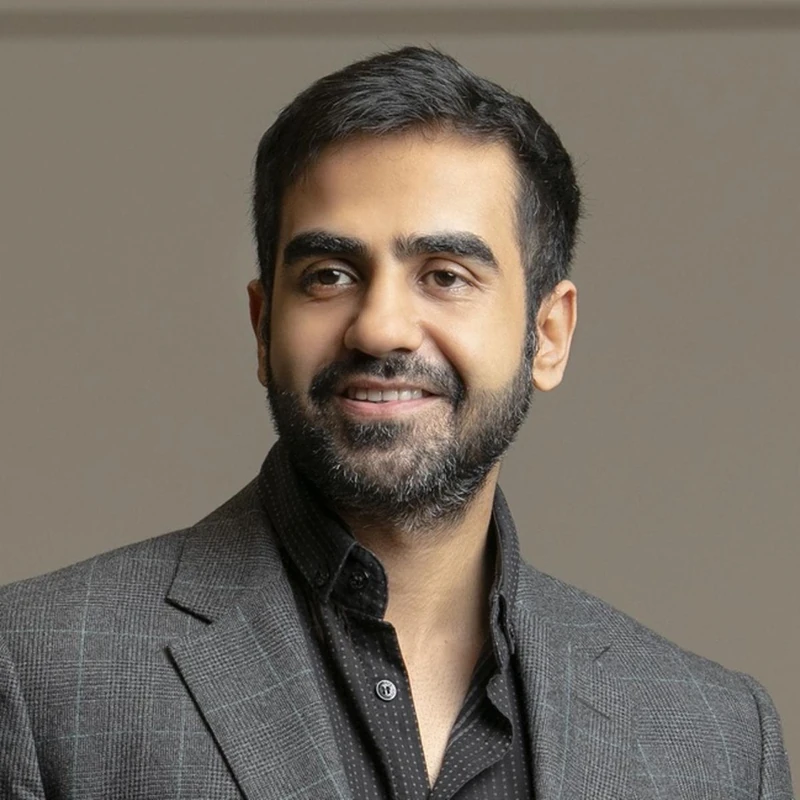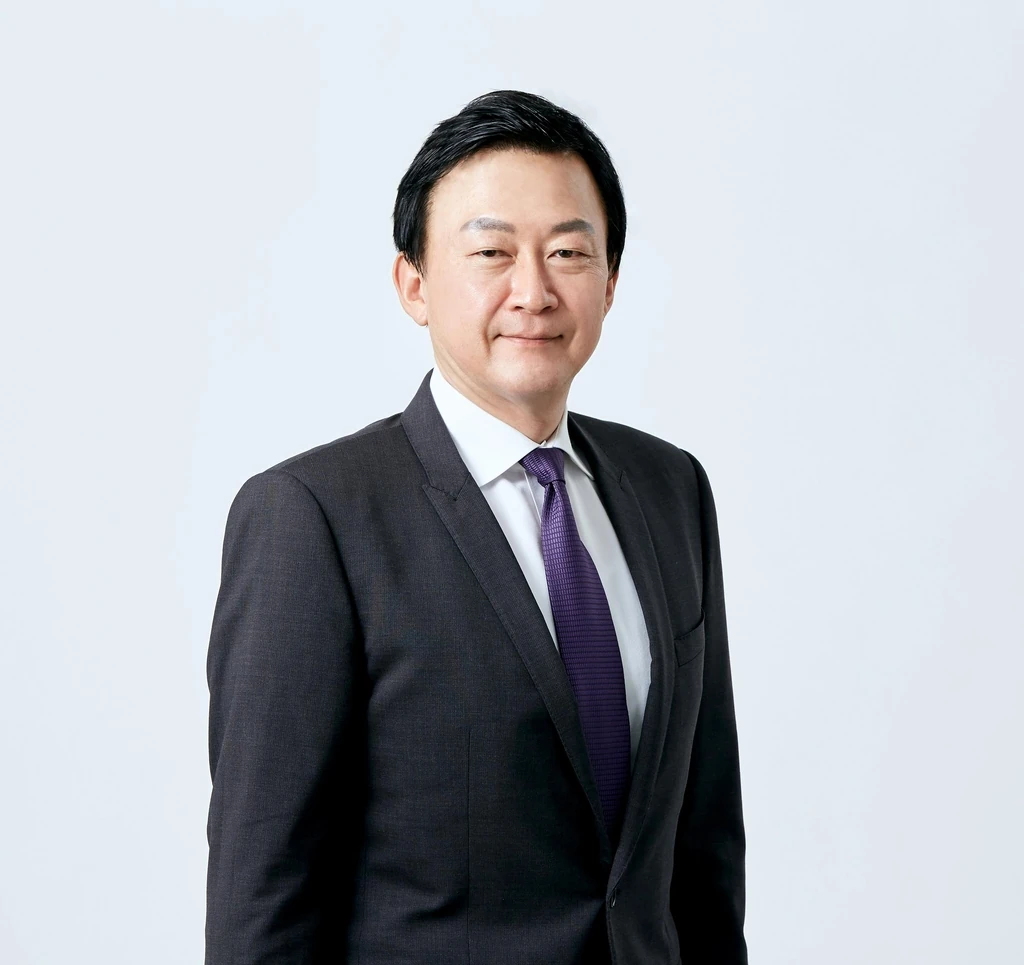
The most consequential decision at Samsung Biologics is unlikely to arrive with the drama of a takeover or a product launch. It will appear in the allocation of money, engineering attention and management time between a business that already works and one that must work next. That is the terrain John Rim occupies. In biotechnology, incumbency offers scale, but it also makes every change expensive. The 2025 record matters because Samsung Biologics has to turn scientific platforms into medicines that improve outcomes and can be manufactured consistently without losing the operating advantage that made the company important in the first place.
History gives a company identity, but it does not give management an exemption from evidence. Samsung Biologics entered this period with operating habits, relationships and expectations formed before John Rim's current set of choices. The challenge is to preserve hard-won judgment without preserving every structure through which an earlier generation expressed it. That makes renewal a selective exercise rather than an attack on tradition. John Rim must identify which practices embody the company's real advantage and which simply reflect the tools or market conditions of their time. A durable legacy is visible when younger managers can use institutional memory to move faster, not when they repeat the vocabulary of an earlier success.
What put John Rim in FigureAsia's 2025 leadership portfolio was consequence rather than visibility. At Samsung Biologics, the year was defined by contract biologics manufacturing, capacity expansion, quality systems, and global healthcare customer growth. Those priorities connect growth to institutional capacity: the company had to make several systems work at once, not win one isolated contest. They also show how a president and chief executive officer can use an established position to alter the choices available to customers, competitors and the wider South Korea economy. The scale of the platform raises the standard. When Samsung Biologics moves, suppliers invest, rivals answer and policymakers pay attention.
A business built around difficult choices
A strategy becomes tangible in the product portfolio. At Samsung Biologics, it is whether another launch strengthens the system or simply gives each business unit something new to announce. John Rim has to protect teams from two opposite mistakes: extending a successful franchise until it loses meaning, and abandoning a useful core because a newer category appears more exciting. The answer is a portfolio with explicit jobs. Some products earn cash, some win entry to a customer, some create technical learning and some should disappear. Clarity about those jobs makes innovation more credible, because the organization can evaluate a launch by the purpose it was funded to serve rather than by publicity alone.
Every advantage contains its own form of overconfidence. For Samsung Biologics, a promising mechanism is not a medicine until evidence, supply and reimbursement align. A large organization can postpone recognition because one strong division, favorable price or established brand masks weakness elsewhere. John Rim's responsibility is to shorten that delay. The board needs indicators that reveal deterioration before consensus becomes comfortable, and operating teams need permission to report a broken assumption without being treated as disloyal. This is the uncelebrated side of leadership: creating an institution in which changing one's mind is not a humiliation, provided the change follows evidence and happens before customers pay for management's pride.
Cross-border growth multiplies opportunity and the number of ways a strategy can be misunderstood. For Samsung Biologics, the foreign operation must become part of the institution rather than a distant asset reviewed only when it misses a target. John Rim is carrying a company shaped in East Asia into markets with different customers, regulators and expectations about corporate conduct. The useful question is not whether the brand can appear in more places. It is whether the operating model can absorb local knowledge without losing the discipline that created the original advantage. Successful expansion makes the whole organization more intelligent. Unsuccessful expansion merely makes the reporting structure wider.
Oversight is not the opposite of entrepreneurial speed. At Samsung Biologics, good governance gives a leader room to act while preserving a record of assumptions that can later be tested. That is particularly important around capital commitments, succession and any transaction that changes the institution faster than its controls can adapt. John Rim benefits from a board that can separate a temporary setback from a damaged thesis, and from directors willing to say which evidence would change their support. The public tends to encounter governance after something has failed. Its real value is preventive: it improves the probability that ambition is examined by people who share responsibility for the outcome but not the same incentives.
What customers are actually buying
What management measures repeatedly becomes difficult for the organization to ignore. At Samsung Biologics, averages can hide the one region, product or cohort where the strategy is actually being tested. John Rim needs a small set of measures that connect customer behavior, operating quality and capital return without pretending that one number can settle the argument. Those measures should be stable enough to reveal a trend and specific enough to trigger action. They should also make gaming visible. The objective is not to remove judgment. It is to give judgment a common evidentiary base, so that a strong narrative cannot outrun what the institution is actually learning.
The strategic question is often not whether to act, but what must be true before acting becomes responsible. At Samsung Biologics, management can accelerate experiments while remaining patient about the time required for a new market to develop. John Rim has to protect the enterprise from bureaucratic delay and from urgency manufactured by the news cycle. That means naming the clock attached to each decision: a customer window, a technology curve, a regulatory deadline or the financial runway of a project. When the clocks are explicit, pace becomes a deliberate choice. Without them, teams can call any hesitation prudent and any rush entrepreneurial.
Capital allocation is where a leader's beliefs become difficult to edit. At Samsung Biologics, the central exposure is years of research spending before a product produces revenue, followed by pressure to make access economically credible. John Rim must decide how much uncertainty the existing cash engine can responsibly carry and how quickly a new business should be asked to prove itself. Too little investment can surrender a market; too much can lock the company into assumptions that were only briefly true. The strongest capital discipline is not a refusal to take risk. It is a clear account of what must happen for the risk to earn another round of money—and a willingness to stop when the evidence no longer supports the original case.
A board can approve direction; customers experience execution. For Samsung Biologics, it is expressed through trial design, portfolio choices, safety, manufacturing and the decision to stop projects that cannot earn confidence. These are not background functions; they decide whether the strategic promise reaches the income statement and the customer. John Rim's task is to make the organization notice variation early—before a weak unit, late project or deteriorating service standard becomes accepted as normal. That requires measurement, but also judgment about which number deserves intervention. Companies this large can generate dashboards faster than they generate understanding. The leader's contribution is to keep attention fixed on the few operating relationships that explain the rest.
The risk behind the momentum
Corporate ambition is tested in the smallest transaction. What customers need from Samsung Biologics is the ability to turn scientific platforms into medicines that improve outcomes and can be manufactured consistently. If the company succeeds, the complexity disappears into reliability, price or convenience. If it fails, brand power only makes the disappointment more visible. This is why patients and regulators need transparent evidence because the cost of a weak claim is measured in health. John Rim is managing an economic relationship as well as a product portfolio. The temptation is to treat installed scale as loyalty. The 2025 record argues for the opposite reading: scale increases the number of moments in which the company has to earn the right to remain the customer's default choice.
A succession plan is also a test of the current leader. At Samsung Biologics, specialists must make decisions with consequences too technical and too immediate to be escalated every time. John Rim therefore has to build a common language for risk, customer value and capital—not a culture of identical opinions. The strongest teams can challenge a cherished project while remaining committed to the enterprise. They also develop successors whose credibility comes from operating results rather than proximity to power. For a company of this scale, that depth is not a human-resources virtue. It is continuity insurance, and it determines whether the organization can pursue a long strategy without becoming dependent on one personality.
By 2026, the strategic question becomes operational. Can Samsung Biologics build a pipeline whose scientific ambition survives the commercial demand for focus while improving trial design, portfolio choices, safety, manufacturing and the decision to stop projects that cannot earn confidence? That pairing matters. A future business that weakens today's service, margin or balance sheet will eventually lose the internal support required to scale. John Rim needs proof at several levels: a customer willing to pay, an operating team able to repeat the result and a capital plan that does not depend on permanently generous markets. If those pieces align, the company will have turned transition into capability. If they do not, the strategy may remain impressive in presentation form while the institution quietly returns to what it already knows.
The next operating test
The next technology matters only when it changes an operating equation. Samsung Biologics already possesses people, systems and customers; the challenge is to connect a new capability to those assets without adding another layer of complexity. For John Rim, the future-facing objective is to build a pipeline whose scientific ambition survives the commercial demand for focus. That requires technical talent, but also product managers, procurement teams and financial controls able to distinguish a platform from a demonstration. The 2025 technology cycle rewarded announcements. Durable leadership will be judged later, when the organization has to show that a new tool improved cost, speed, quality or customer value enough to survive the end of the fashion cycle.
Samsung Biologics does not need another story about its size. It needs evidence that size still creates learning, resilience and the freedom to invest with patience. John Rim's contribution will be measured in that evidence—in operating standards that survive pressure, capital decisions that remain intelligible after the cycle changes and a leadership bench able to continue the work. For FigureAsia, this is why the profile belongs in Leadership: the consequential act is not occupying the top office, but leaving the institution more capable than the office found it.