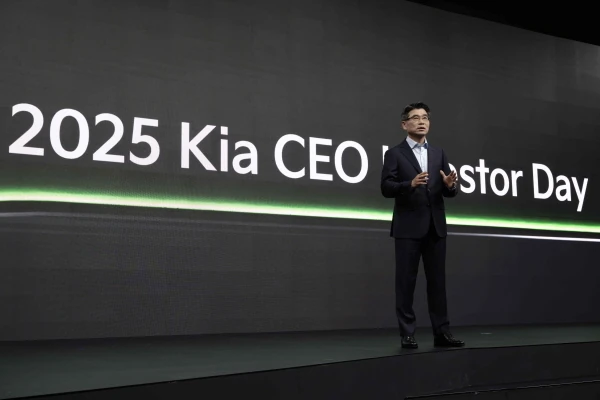
For Song Ho-sung, 2025 was not a victory lap. Kia may possess brand recognition and institutional weight, yet the company operates in a market that discounts yesterday's achievements quickly. The relevant question is what happens when scale meets a new bottleneck. In this case, that bottleneck lies in the effort to make software and batteries part of an industrial system rather than expensive accessories to it. How Song Ho-sung addresses it will say more about the durability of the enterprise than another year of headline growth.
The calendar does not align neatly with a strategy. The 2025 record placed Song Ho-sung at the intersection of global vehicle demand, electric-vehicle product expansion, design-led brand repositioning, and manufacturing discipline. Some of those forces are cyclical; others change the structure of Kia's market. The leadership task is to distinguish them. Cutting investment in a temporary downturn can damage the next upturn, while defending a structurally weakened business can consume years of attention. FigureAsia reads the period as evidence of judgment under mixed signals. The point is not to declare every decision correct before its outcome is known, but to ask whether the company has defined the assumptions and milestones clearly enough to learn before capital and credibility are exhausted.
What put Song Ho-sung in FigureAsia's 2025 leadership portfolio was consequence rather than visibility. At Kia, the year was defined by global vehicle demand, electric-vehicle product expansion, design-led brand repositioning, and manufacturing discipline. Those priorities connect growth to institutional capacity: the company had to make several systems work at once, not win one isolated contest. They also show how a president and chief executive officer can use an established position to alter the choices available to customers, competitors and the wider South Korea economy. The scale of the platform raises the standard. When Kia moves, suppliers invest, rivals answer and policymakers pay attention.
A business built around difficult choices
The choice of metric is already a choice of strategy. At Kia, market share can be purchased, satisfaction can be surveyed badly and cost reductions can simply move work to the customer. Song Ho-sung needs a small set of measures that connect customer behavior, operating quality and capital return without pretending that one number can settle the argument. Those measures should be stable enough to reveal a trend and specific enough to trigger action. They should also make gaming visible. The objective is not to remove judgment. It is to give judgment a common evidentiary base, so that a strong narrative cannot outrun what the institution is actually learning.
The first foreign success can teach the wrong lesson if management mistakes a favorable opening for a repeatable model. For Kia, the product may travel while pricing, distribution and service need to be rebuilt. Song Ho-sung is carrying a company shaped in East Asia into markets with different customers, regulators and expectations about corporate conduct. The useful question is not whether the brand can appear in more places. It is whether the operating model can absorb local knowledge without losing the discipline that created the original advantage. Successful expansion makes the whole organization more intelligent. Unsuccessful expansion merely makes the reporting structure wider.
A board can approve direction; customers experience execution. For Kia, it is expressed through quality, launch cadence, supplier coordination and the unglamorous removal of cost from every vehicle. These are not background functions; they decide whether the strategic promise reaches the income statement and the customer. Song Ho-sung's task is to make the organization notice variation early—before a weak unit, late project or deteriorating service standard becomes accepted as normal. That requires measurement, but also judgment about which number deserves intervention. Companies this large can generate dashboards faster than they generate understanding. The leader's contribution is to keep attention fixed on the few operating relationships that explain the rest.
Speed and patience are not opposites when each is applied to the right part of the problem. At Kia, the company should move quickly on reversible choices and demand more evidence where the balance sheet cannot easily turn back. Song Ho-sung has to protect the enterprise from bureaucratic delay and from urgency manufactured by the news cycle. That means naming the clock attached to each decision: a customer window, a technology curve, a regulatory deadline or the financial runway of a project. When the clocks are explicit, pace becomes a deliberate choice. Without them, teams can call any hesitation prudent and any rush entrepreneurial.
What customers are actually buying
The most consequential commercial decision may be what not to discount. For Kia, a discount can accelerate adoption and still train the market to wait for the next subsidy. Song Ho-sung must read willingness to pay alongside acquisition cost, retention and the operational burden created by each promise. That is harder in 2025–2026 because digital comparison makes prices more visible while inflation and investment needs keep cost structures unsettled. The useful metric is not the highest possible price. It is the price that funds a reliable product, remains intelligible to the customer and leaves the company with enough trust to introduce the next offer on its merits.
Corporate organization charts conceal more than they reveal. As President and Chief Executive Officer of Kia Corporation, Song Ho-sung sits above a business whose advantage comes from factories, dealer networks, engineering routines and brands built through millions of customer encounters. At Kia, that asset has to be renewed through ordinary operations; it cannot be protected by reputation alone. A missed delivery, a weak control or a poorly timed investment can travel through the system before senior management sees it in a consolidated number. The real work of leadership is therefore architectural. Song Ho-sung must set incentives and thresholds that allow thousands of decisions to point in roughly the same direction without waiting for the center to approve each one.
Strategy travels through people before it travels through markets. At Kia, specialists must make decisions with consequences too technical and too immediate to be escalated every time. Song Ho-sung therefore has to build a common language for risk, customer value and capital—not a culture of identical opinions. The strongest teams can challenge a cherished project while remaining committed to the enterprise. They also develop successors whose credibility comes from operating results rather than proximity to power. For a company of this scale, that depth is not a human-resources virtue. It is continuity insurance, and it determines whether the organization can pursue a long strategy without becoming dependent on one personality.
A professional chief executive inherits commitments made by predecessors and is judged on the ability to change them without damaging continuity. Song Ho-sung's influence at Kia has to be read through that tension. That balance between conviction and correction is where governance becomes an operating advantage. In a year of rapid shifts, consistency did not mean refusing to change. It meant making changes that the operating organization could absorb, measure and, when necessary, reverse before a strategic error became part of the culture.
The risk behind the momentum
Innovation at this scale is mostly an integration problem. Kia already possesses people, systems and customers; the challenge is to connect a new capability to those assets without adding another layer of complexity. For Song Ho-sung, the future-facing objective is to make software and batteries part of an industrial system rather than expensive accessories to it. That requires technical talent, but also product managers, procurement teams and financial controls able to distinguish a platform from a demonstration. The 2025 technology cycle rewarded announcements. Durable leadership will be judged later, when the organization has to show that a new tool improved cost, speed, quality or customer value enough to survive the end of the fashion cycle.
Procurement becomes leadership when scarcity forces the company to show what it values most. Kia depends on partners whose decisions shape cost, quality and speed before Song Ho-sung's own teams can act. The organization needs alternatives, but duplication adds cost and can dilute the learning concentrated in a trusted partner. The leadership choice is therefore about visibility as much as bargaining power. Song Ho-sung needs operating teams that can distinguish a temporary delay from evidence that the network itself must be redesigned. The result should be measured in fewer surprises, quicker recovery and better economics—not in the number of suppliers on a slide.
The next test is narrower than the vision statement. Can Kia make software and batteries part of an industrial system rather than expensive accessories to it while improving quality, launch cadence, supplier coordination and the unglamorous removal of cost from every vehicle? That pairing matters. A future business that weakens today's service, margin or balance sheet will eventually lose the internal support required to scale. Song Ho-sung needs proof at several levels: a customer willing to pay, an operating team able to repeat the result and a capital plan that does not depend on permanently generous markets. If those pieces align, the company will have turned transition into capability. If they do not, the strategy may remain impressive in presentation form while the institution quietly returns to what it already knows.
The next operating test
The formal controls tell only part of the governance story. At Kia, the goal is not consensus; it is a decision process in which dissent is heard before accountability is assigned. That is particularly important around capital commitments, succession and any transaction that changes the institution faster than its controls can adapt. Song Ho-sung benefits from a board that can separate a temporary setback from a damaged thesis, and from directors willing to say which evidence would change their support. The public tends to encounter governance after something has failed. Its real value is preventive: it improves the probability that ambition is examined by people who share responsibility for the outcome but not the same incentives.
The headline may belong to Song Ho-sung, but the outcome belongs to the institution. If Kia can translate the year's ambitions into repeatable operating behavior, the influence of this period will extend well beyond one executive's tenure. If it cannot, scale will only delay the reckoning. FigureAsia's view is that the distinction deserves close attention in 2025 and 2026. At a moment when Asian companies are being asked to carry commercial, technological and national expectations at once, Song Ho-sung's real achievement will be making those demands reinforce one another rather than compete for the same finite capacity.