At Bharti Airtel, strategy becomes real long before it becomes visible. It sits in a capacity plan, a hiring decision, a product that is cancelled, or a customer problem that the organization decides to solve permanently. Sunil Bharti Mittal leads at that less theatrical level. The company entered 2025 with assets competitors could not quickly reproduce, but also with expectations that left little room for a merely respectable year. The central question was whether those advantages could become a faster, clearer operating system.
A board can approve direction; customers experience execution. For Bharti Airtel, it is expressed through coverage, latency, capital efficiency and service recovery when an always-on network inevitably fails. These are not background functions; they decide whether the strategic promise reaches the income statement and the customer. Sunil Bharti Mittal's task is to make the organization notice variation early—before a weak unit, late project or deteriorating service standard becomes accepted as normal. That requires measurement, but also judgment about which number deserves intervention. Companies this large can generate dashboards faster than they generate understanding. The leader's contribution is to keep attention fixed on the few operating relationships that explain the rest.
The ranking case is specific. At Bharti Airtel, the year was defined by mobile networks, 5G, enterprise connectivity, broadband, and digital services. Those priorities connect growth to institutional capacity: the company had to make several systems work at once, not win one isolated contest. They also show how a founder and chairman can use an established position to alter the choices available to customers, competitors and the wider India economy. The scale of the platform raises the standard. When Bharti Airtel moves, suppliers invest, rivals answer and policymakers pay attention.
More than a scale story
The supply chain is part of the strategy, not a route between factories. Bharti Airtel depends on partners whose decisions shape cost, quality and speed before Sunil Bharti Mittal's own teams can act. Inventory can buy time, yet too much of it hides weak forecasting and consumes cash that a better system would release. The leadership choice is therefore about visibility as much as bargaining power. Sunil Bharti Mittal needs operating teams that can distinguish a temporary delay from evidence that the network itself must be redesigned. It is an institutional capability because the next disruption will not resemble the last one closely enough for a checklist to solve it.
Founders can move faster because the institution recognizes their authority, but the same authority can suppress inconvenient evidence. Sunil Bharti Mittal's influence at Bharti Airtel has to be read through that tension. The best evidence is not deference to the leader; it is an organization capable of surfacing bad news early. In a year of rapid shifts, consistency did not mean refusing to change. It meant making changes that the operating organization could absorb, measure and, when necessary, reverse before a strategic error became part of the culture.
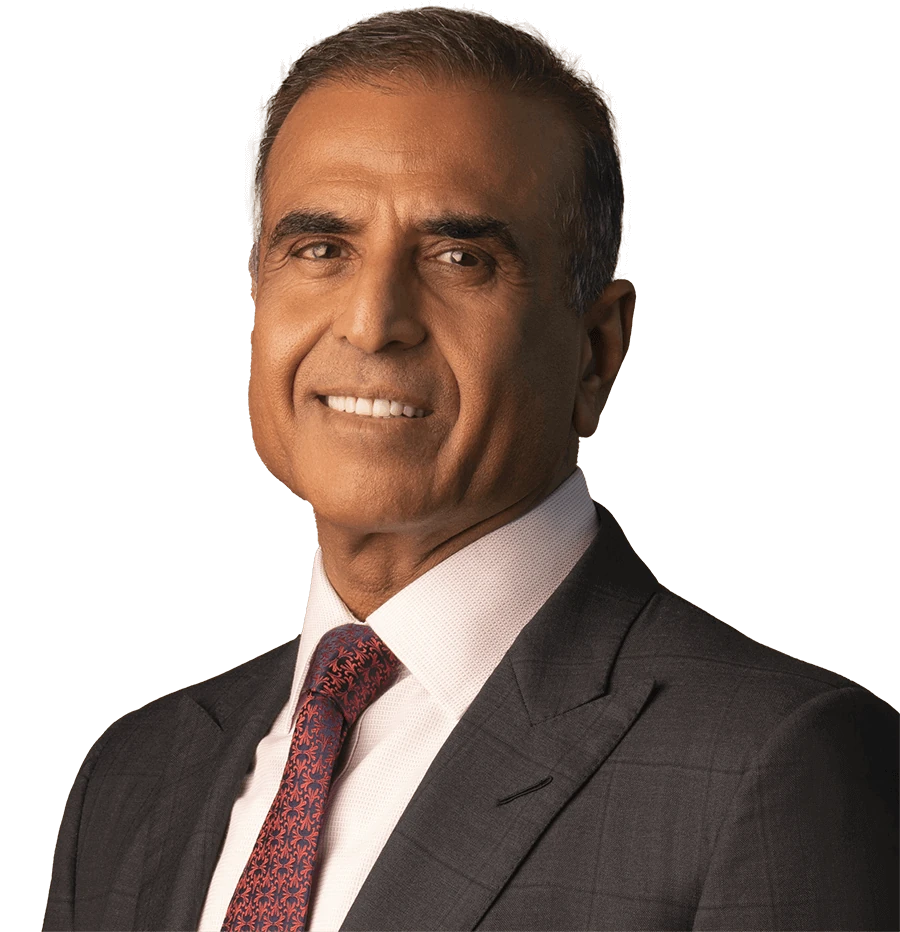
The role looks singular from outside; the decisions are not. As Founder and Chairman of Bharti Airtel Limited, Sunil Bharti Mittal sits above a business whose advantage comes from spectrum, fiber, towers, billing relationships and network operations built over years. At Bharti Airtel, that asset has to be renewed through ordinary operations; it cannot be protected by reputation alone. A missed delivery, a weak control or a poorly timed investment can travel through the system before senior management sees it in a consolidated number. The real work of leadership is therefore architectural. Sunil Bharti Mittal must set incentives and thresholds that allow thousands of decisions to point in roughly the same direction without waiting for the center to approve each one.
Incumbents tend to compare balance sheets; challengers compare customer pain. A specialist may target the most profitable product, a digital entrant may remove one source of friction, or a lower-cost producer may reset the acceptable price. Bharti Airtel's defense is the combined value of spectrum, fiber, towers, billing relationships and network operations built over years, but that combination works only when the parts cooperate. Sunil Bharti Mittal cannot assume that leadership in India will transfer automatically to the next category or geography. The company has to earn adjacency one customer at a time. That makes competitive intelligence an operating practice: observing where customers tolerate inconvenience today, because that is where a focused rival will begin tomorrow.
The choices hidden inside the numbers
The company is private or listed, but its consequences are widely shared. Bharti Airtel's decisions affect suppliers, workers, customers and, in India, sometimes the direction of national investment. That reach gives Sunil Bharti Mittal access and influence; it also creates obligations that cannot be measured only by short-term shareholder return. The relevant standard is practical: whether pricing is explainable, commitments are delivered, failures are addressed and the institution makes its trade-offs visible enough to be challenged. This matters because consumers, enterprises and governments depend on secure infrastructure that they rarely notice until it breaks. Once confidence breaks, the cost appears in regulation, customer behavior, employee caution and a higher price for every future promise.
Moving first is valuable only when the organization can carry the lead into execution. At Bharti Airtel, a decision process earns its speed when roles, evidence thresholds and the authority to stop are settled in advance. Sunil Bharti Mittal has to protect the enterprise from bureaucratic delay and from urgency manufactured by the news cycle. That means naming the clock attached to each decision: a customer window, a technology curve, a regulatory deadline or the financial runway of a project. When the clocks are explicit, pace becomes a deliberate choice. Without them, teams can call any hesitation prudent and any rush entrepreneurial.
The boundary of the firm is one of management's most important design choices. For Bharti Airtel, the alliance must create capability rather than a permanent dependency hidden behind cooperative language. Sunil Bharti Mittal has to decide which advantage should remain proprietary and where openness expands the market more than exclusivity protects it. That calculation changes across borders and technologies, but the governance principle is stable: responsibilities must be clear at the moment incentives diverge. A successful partnership leaves Bharti Airtel better able to serve the customer after the agreement ends. A weak one creates growth that cannot be explained without the partner continuing to absorb the difficult part.
History gives a company identity, but it does not give management an exemption from evidence. Bharti Airtel entered this period with operating habits, relationships and expectations formed before Sunil Bharti Mittal's current set of choices. The challenge is to preserve hard-won judgment without preserving every structure through which an earlier generation expressed it. That makes renewal a selective exercise rather than an attack on tradition. Sunil Bharti Mittal must identify which practices embody the company's real advantage and which simply reflect the tools or market conditions of their time. A durable legacy is visible when younger managers can use institutional memory to move faster, not when they repeat the vocabulary of an earlier success.
Why legitimacy matters
The balance sheet is not a passive record; it is a map of management's convictions. At Bharti Airtel, the central exposure is continuous network spending whose social value is obvious but whose incremental return can be difficult to defend. Sunil Bharti Mittal must decide how much uncertainty the existing cash engine can responsibly carry and how quickly a new business should be asked to prove itself. Too little investment can surrender a market; too much can lock the company into assumptions that were only briefly true. The strongest capital discipline is not a refusal to take risk. It is a clear account of what must happen for the risk to earn another round of money—and a willingness to stop when the evidence no longer supports the original case.
The home market gives scale, but it also shapes blind spots. Bharti Airtel's base in India connects it to the capital, regulation, talent and demand patterns of South Asia. That connection can provide patient suppliers, sophisticated customers or national strategic support. It can also expose the business to policy changes and geopolitical interpretations beyond management's control. Sunil Bharti Mittal's international task is therefore not to make the company less Asian. It is to make the home-grown advantage legible and dependable elsewhere, while learning which assumptions do not travel. The result matters beyond one enterprise because it influences how global customers assess the institutional quality of companies from the same market.
By 2026, the strategic question becomes operational. Can Bharti Airtel move up the digital stack without neglecting the network that gives every adjacent service credibility while improving coverage, latency, capital efficiency and service recovery when an always-on network inevitably fails? That pairing matters. A future business that weakens today's service, margin or balance sheet will eventually lose the internal support required to scale. Sunil Bharti Mittal needs proof at several levels: a customer willing to pay, an operating team able to repeat the result and a capital plan that does not depend on permanently generous markets. If those pieces align, the company will have turned transition into capability. If they do not, the strategy may remain impressive in presentation form while the institution quietly returns to what it already knows.
The test of institutional depth
The formal controls tell only part of the governance story. At Bharti Airtel, the goal is not consensus; it is a decision process in which dissent is heard before accountability is assigned. That is particularly important around capital commitments, succession and any transaction that changes the institution faster than its controls can adapt. Sunil Bharti Mittal benefits from a board that can separate a temporary setback from a damaged thesis, and from directors willing to say which evidence would change their support. The public tends to encounter governance after something has failed. Its real value is preventive: it improves the probability that ambition is examined by people who share responsibility for the outcome but not the same incentives.
There is no final form for a company operating at Bharti Airtel's scale. Markets change, technologies mature and advantages that once looked structural become merely expensive. Sunil Bharti Mittal's task is to preserve the institution's capacity to choose again. That means protecting cash and trust, but also refusing to let either become an excuse for inertia. The strongest reading of the 2025–2026 period is therefore provisional and practical: leadership is visible in the quality of the options Bharti Airtel is creating before circumstances remove the option to wait.