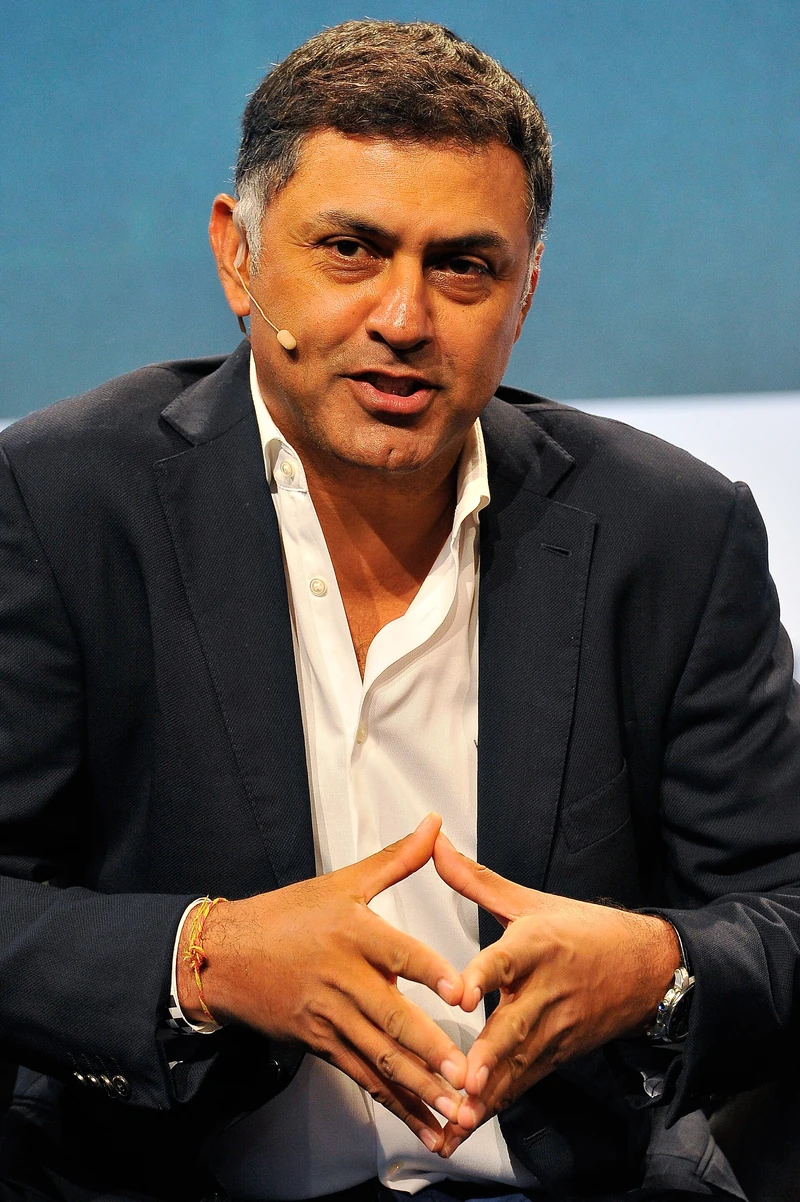

Tadashi Yanai is closer than ever to proving that Uniqlo can become a global default. That is precisely why his unfinished task has become more difficult.
Fast Retailing entered the summer of 2026 with the strongest performance in its history. Revenue for the nine months to May reached ¥3.07 trillion, up 17.1 per cent, while business profit rose by a third to ¥592.7 billion. Management lifted its full-year forecast to ¥3.97 trillion in revenue and ¥710 billion in business profit. Uniqlo generated growth in every region, with the international operation expanding far faster than the Japanese business that created it.
The figures confirm what Yanai has argued for decades: functional, accessible clothing designed around everyday life can travel across cultures without relying on the churn of conventional fashion. LifeWear has become one of Asia’s most successful consumer propositions, recognisable from Seoul and Singapore to Paris, London, New York and Sydney.
But record performance does not settle the central question of Yanai’s leadership. At 77, he remains Fast Retailing’s chairman, president and chief executive, the principal architect of its strategy and the standard against which senior managers are judged. The company has shown that Uniqlo can outgrow Japan. It has yet to demonstrate, in public and at comparable scale, that the institution can outgrow its founder.
The company at the point of proof
Yanai’s career has been built around refusing the limits assigned to Japanese retail. He joined the family business in 1972, became president in 1984 and transformed a regional menswear operation into a global apparel group. The first Uniqlo store opened in Hiroshima that year. What followed was not a straight line of expansion but a series of reinventions: fleece as a mass product, vertical control over design and sourcing, large urban flagships, overseas retreats and returns, digital integration, technical fabrics and the gradual articulation of LifeWear as a category distinct from fashion’s seasonal hierarchy.
The current numbers place Fast Retailing at a different strategic altitude. Fiscal 2025 revenue reached ¥3.40 trillion, with operating profit of ¥564.3 billion. In the first nine months of fiscal 2026, Uniqlo International alone produced ¥1.83 trillion in revenue and ¥345.3 billion in business profit, increases of 25.9 per cent and 45.4 per cent respectively. The international division is no longer an overseas extension of a Japanese champion. It is the centre of the growth story.
Yanai now speaks openly about becoming the world’s leading apparel brand and building Europe and North America into ¥1 trillion businesses each. Those ambitions no longer sound rhetorical. Combined sales in the two regions reached ¥640.6 billion in fiscal 2025, while business profit approached ¥100 billion. Their market share remains below 0.5 per cent, leaving room for expansion that is unusual for a company already operating at Fast Retailing’s scale.
Scale, however, changes the quality of the challenge. Uniqlo can no longer enter a market as an interesting Japanese alternative and rely on novelty. It has to become locally useful, operationally consistent and culturally intelligible enough to earn repeat purchases after the opening crowds disappear.
LifeWear is an operating system, not a slogan
The commercial power of LifeWear lies in its restraint. Uniqlo does not promise the customer a new identity every season. It offers a tightly edited wardrobe of T-shirts, knitwear, jeans, shirts, outerwear and underlayers whose value comes from fabric, function, colour, fit and price. HEATTECH, AIRism, PUFFTECH and UV Protection are not simply product names; they give ordinary garments a technical reason to exist.
That proposition creates attractive economics when executed well. Core items can be sold for longer, improved over multiple seasons and produced at volumes that support purchasing power. Marketing investment can accumulate around recognisable franchises. Stores become easier to navigate than fashion retailers built around rapid novelty. Customers return because a familiar product has changed in a useful way rather than because last month’s range has been declared obsolete.
It also creates a particular form of risk. A concentrated assortment magnifies mistakes in colour, silhouette, sizing and inventory. Functional products depend on weather, yet weather patterns are becoming less predictable. The same fleece or thermal range that performs brilliantly in a cold autumn can become a costly overhang when temperatures remain high. The company must operate with the efficiency of a manufacturer and the sensitivity of a local merchant.
Fast Retailing’s recent response has been to reduce its dependence on winter demand and strengthen year-round products. Sweatshirts, trousers, jeans, knitwear and light outerwear are being presented in ways that respond to changing temperatures rather than fixed retail calendars. The shift helped drive record growth in fiscal 2026, including in Greater China, where warmer conditions had exposed weaknesses in the previous product mix.
This is the substance behind Yanai’s description of Uniqlo as a digital consumer retailing company. Digitalisation matters not because online sales will replace stores—they represented roughly 15 per cent of group sales in fiscal 2025—but because information must move faster from customers and individual stores into merchandising, production and logistics. The strategic asset is not the website. It is the ability to see demand early enough to change what the physical network does.
The global business is being built through local correction
Uniqlo’s international success can appear to validate a universal formula. The operating record suggests something more demanding. The brand travels because its core idea is consistent, but it succeeds only when local teams correct the assumptions embedded in that idea.
Greater China provides the clearest example. The region was once the natural second engine after Japan, built through rapid store openings and efficient chain management. In fiscal 2025, revenue fell 4 per cent to ¥650.2 billion and business profit declined 12.5 per cent to ¥89.9 billion. Weak consumer sentiment played a part, but Fast Retailing also acknowledged that assortments had not adequately reflected sharp differences in regional temperatures and demand.
The response has been structural rather than promotional. Management is moving from a chain-store model toward greater accountability at individual stores, giving local teams more responsibility for customers, merchandising and communication. The physical network has been refined as weaker locations are reconsidered and higher-quality stores receive more emphasis. By May 2026, Uniqlo operated 875 stores in mainland China, still a formidable presence but one being managed with more attention to productivity than simple count.
The early evidence is encouraging. Mainland China produced higher revenue and double-digit profit growth in the first nine months of fiscal 2026. Spring and year-round products were introduced more proactively during a warm Chinese New Year period; summer ranges were marketed more effectively when temperatures rose. This is less dramatic than opening hundreds of stores. It is also a more credible test of whether Uniqlo has become a learning organisation.
South Korea offers another lesson. The business has rebuilt support, particularly among younger customers, through clearer digital communication and products that circulate on social media without abandoning the LifeWear proposition. Southeast Asia, India and Australia require a different assortment again: lightweight products for local climates, winter inventory for travel and a balance between aspirational flagships and price-sensitive mass demand.
Yanai’s global Uniqlo cannot be a Japanese template reproduced abroad. It has to be a common product philosophy interpreted by managers who understand how people actually dress in each market. The more authority the company gives those managers, the more important its culture and information systems become.
North America and Europe have become the credibility test
Fast Retailing’s ambition to lead global apparel will be judged disproportionately in North America and Europe. These markets are crowded with established brands, specialist retailers, sportswear groups, luxury houses and fast-fashion operators. Consumers have abundant choice and little reason to reward scale for its own sake.
Uniqlo’s recent growth suggests that LifeWear is finding a durable position between categories. It is neither trend-disposable nor luxury-exclusive, neither pure sportswear nor conventional basics. Its strongest products solve mundane problems—temperature, layering, travel, comfort, care—with enough design discipline to avoid feeling utilitarian.
The company is using flagship stores as a form of brand media. In the three months to May 2026, it opened six stores in North America, including a flagship in Chicago and large-format locations in New York and Boston. Europe added stores in cities including Bristol and Utrecht after earlier openings in Glasgow, Birmingham, Frankfurt and Munich. These locations are intended to do more than produce four-wall profit. They explain the brand through product presentation, local collaborations and physical experience.
That strategy runs against the assumption that global retail expansion should be primarily digital. For Uniqlo, the store remains the most complete demonstration of LifeWear. A customer can compare fabric, fit and colour in a way that a screen cannot fully reproduce. A successful flagship also creates local visibility that lowers the cost of acquiring online customers later.
The risk is capital discipline. Landmark stores are expensive, leases are long and opening enthusiasm can flatter early performance. Yanai has to distinguish stores that deepen a market from stores that merely announce corporate ambition. Fast Retailing’s stated emphasis on “quality stores” reflects an understanding that the wrong network can make a global brand look larger while leaving it less productive.
North America and Europe will also test whether Uniqlo can develop products locally that matter globally. Modern fashion’s institutions, talent and media remain influential in both regions. Yanai’s objective is not simply to sell Japanese-designed garments there, but to use local customer insight and creative capability to improve the assortment everywhere. That is how international expansion becomes organisational learning rather than geographic duplication.
The supply chain is where the brand promise becomes real
Uniqlo’s clean stores and simple products conceal a complicated industrial system. Fast Retailing must secure materials, plan large production runs, coordinate factories, manage quality, transport inventory across borders and respond to demand without losing control of cost. The apparent simplicity of LifeWear is created by complexity elsewhere.
Yanai’s long-standing advantage has been to treat retail and manufacturing as one connected process. Product teams work with fabric partners; merchandisers influence production; store information feeds planning; logistics is part of the commercial model rather than a back-office function. The company’s scale allows it to invest in materials and secure capacity, but scale also turns a forecasting error into millions of garments.
Currency compounds the difficulty. A weaker yen raises procurement costs for the Japanese business and can pressure gross margins after forward contracts roll over. Freight disruption, tariffs and geopolitical tension can alter sourcing economics. Climate volatility changes what customers want and when they want it. The traditional seasonal calendar offers less protection each year.
Fast Retailing’s answer is shorter lead times, more accurate volume planning and a tighter connection between store-level demand and production. The aspiration is to reduce both shortages and oversupply. That objective is financially attractive and environmentally necessary. Unsold inventory is not only a margin problem; it is evidence that materials, labour and transport were committed without creating customer value.
The company’s global stature also raises the standard for labour and human-rights oversight. A brand that presents itself as improving everyday life cannot separate product quality from the conditions under which products are made. Transparency, traceability, grievance systems and supplier relationships are therefore part of the operating model, not a parallel sustainability narrative.
Yanai’s challenge is to preserve the purchasing discipline of a large buyer without allowing power to suppress bad news from factories. Supply chains become resilient when information about delays, quality failures and working conditions travels quickly enough to change decisions. A contract can enforce a standard. It cannot substitute for a relationship in which problems are surfaced before they become scandals or shortages.
Uniqlo’s strength exposes the weakness of the rest
Fast Retailing is often discussed as a group, but Uniqlo carries most of its strategic weight. GU offers a younger, more trend-oriented proposition and has improved profitability after narrowing products and concentrating inventory behind stronger items. In the first nine months of fiscal 2026, GU revenue rose 3.7 per cent and business profit increased 28 per cent. The operation is becoming healthier, but it remains far smaller than Uniqlo.
The Global Brands segment is less convincing. Theory retains recognition in contemporary fashion, while PLST has areas of growth, but the collection has struggled to produce consistent expansion. Revenue fell in the first nine months of fiscal 2026, and the French labels Comptoir des Cotonniers and Princesse tam.tam have been reducing their store networks sharply.
This unevenness creates a strategic choice. Fast Retailing can continue trying to build a multi-brand apparel group, accepting that different labels require different creative and wholesale capabilities. Or it can concentrate even more intensely on Uniqlo and GU, where its operating system has a clearer advantage.
Yanai’s instinct has historically favoured ambition and correction over passive ownership. Yet the burden of proof should now be higher. Acquisitions and smaller brands must contribute capabilities, customers or ideas that strengthen the group; they cannot be protected simply because a global company is expected to own a portfolio.
Uniqlo’s success makes this discipline easier financially and harder psychologically. Strong cash generation can sustain experiments for a long time. The risk is that peripheral businesses consume management attention without changing Fast Retailing’s competitive position.
The succession issue is now a business issue
Fast Retailing describes chief-executive succession as a central management priority. Senior officers are given responsibility for major businesses, many have spent decades rising from store operations and Yanai devotes significant time to their development. The company says its next chief executive will be selected at an appropriate time from its senior management team.
The language is orderly. The lived reality is more complicated. Yanai has led the company for most of the past four decades and has held the combined chairman, president and chief-executive roles continuously since 2005. He is not merely the person at the top of the organisation. He is the source of its urgency, its global ambition, its intolerance of complacency and much of its public identity.
Founder-led companies often confuse the transfer of title with the transfer of authority. A successor can be appointed while major decisions still orbit the founder. Conversely, removing a founder too abruptly can deprive the organisation of judgment that has not yet been translated into processes other people can use.
Yanai’s real succession task is therefore institutional. Senior executives must be able to challenge product assumptions, close weak stores, allocate capital and revise global strategy without waiting for the founder’s instinct to legitimise the decision. The board must be capable of evaluating a chief executive whose authority does not come from Yanai. Investors must understand what will remain constant and where a successor will have permission to differ.
The company’s current strength creates the best possible conditions for that work. Succession undertaken during a crisis tends to produce defensive choices and narrow mandates. Succession prepared during record growth can give the next generation room to invest, make mistakes and establish credibility.
It also removes the excuse for delay. The stronger Fast Retailing becomes, the larger the disruption if leadership continuity remains too concentrated in one individual.
An Asian brand learning to define the global mainstream
Uniqlo’s rise matters beyond apparel. Asian consumer companies have often reached the world through electronics, automobiles, platforms or price-led manufacturing. Yanai is attempting something culturally more elusive: to make a Japanese idea of ordinary clothing part of the global mainstream without disguising it as Western fashion.
LifeWear carries recognisably Japanese principles—attention to material, incremental improvement, utility and reduction—but its products are not marketed as national artefacts. Their appeal lies in being adaptable enough to enter different wardrobes while retaining a clear point of view.
For FigureAsia, that is the most important dimension of Yanai’s leadership. He has shown that an Asian brand does not need to choose between low-cost scale and luxury symbolism to become global. It can build power through dependable products, industrial depth and a long relationship with the customer.
The next stage will determine whether that model is truly transferable. Fast Retailing must develop leaders across nationalities, move ideas in both directions between Japan and overseas markets, and allow local knowledge to reshape the global product. If every important decision still requires interpretation through Tokyo and ultimately through Yanai, the company will have expanded geographically without becoming fully global institutionally.
Building beyond the founder
Yanai’s place in modern retail is secure. He turned a family clothing business into a company approaching ¥4 trillion in annual revenue and made Uniqlo one of the world’s most recognisable apparel brands. The remaining questions are no longer about whether the concept works.
They are about durability. Can international growth remain profitable after the easiest cities have been entered? Can stores become more locally intelligent without fragmenting the brand? Can Fast Retailing respond to climate and demand without accumulating inventory? Can supply-chain efficiency coexist with credible human-rights oversight? Can GU become a meaningful second engine? Above all, can another chief executive exercise real authority?
The title of global number one will not be decided by revenue alone. Apparel leadership depends on relevance, operating resilience and the capacity to renew the institution before the market forces renewal upon it.
Tadashi Yanai built Uniqlo for a world far larger than Japan. His final and most important act of construction is to build a Fast Retailing that can keep expanding when his own judgment is no longer the company’s organising principle.
Only then will Uniqlo have become not simply a global brand, but a global institution.