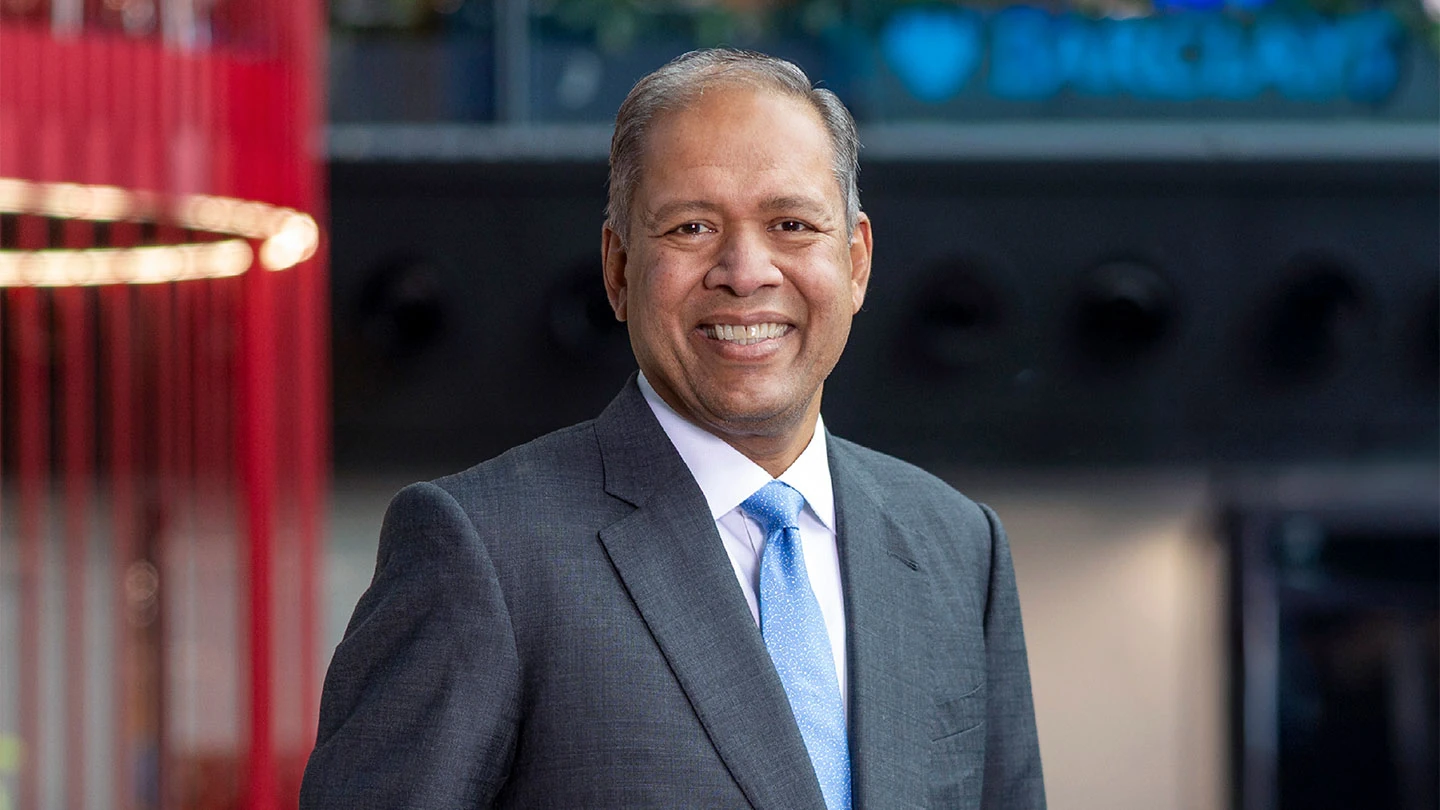
C.S. Venkatakrishnan has brought Barclays closer to the outcome promised by its three-year strategy: a simpler, better and more balanced bank. First-quarter 2026 return on tangible equity was 13.5%, earnings per share rose 8% to 14.1 pence and the board announced a £500 million share buyback. The results show progress across a group that combines a major UK consumer franchise with global markets and investment banking. They do not settle the central strategic argument. The investment bank still uses a large share of capital, and Venkatakrishnan must prove that its returns and diversification justify that weight through the cycle.
Barclays has debated this balance for years. The investment bank offers global client relationships, dollar earnings and strength in markets, while the UK bank provides deposits and a familiar domestic franchise. In favourable trading conditions, the combination can look resilient. In weak markets or during conduct failures, complexity becomes costly. Venkatakrishnan’s plan reallocates capital towards higher-return consumer and corporate opportunities without dismantling the global business. Execution depends on disciplined limits rather than another strategic redesign.
His background in risk management is relevant. Balance-sheet allocation, not headline revenue, determines whether an investment bank creates value. Each desk and client relationship should be assessed against funding, capital, operational and conduct costs. Revenue growth achieved through low-return assets would undermine the strategy even if market share improves. Venkatakrishnan must give business leaders freedom to compete while being willing to withdraw from activities that fail the hurdle.
The investment bank needs through-cycle proof
Funding transfer prices should prevent one division from appearing stronger because it receives deposits or liquidity too cheaply from another. A balanced bank needs transparent internal economics. Venkatakrishnan should ensure that scarce balance sheet follows total client value and risk-adjusted return, with exceptions documented and reviewed.
Stress testing should include simultaneous pressure in UK credit and global markets. Diversification can fail when shocks become correlated through funding and confidence. Management actions identified in advance—hedging, exposure reduction, dividend restraint and liquidity mobilisation—will be more credible than improvisation during stress.
Markets income can be volatile, and one strong quarter does not establish sustainable returns. Barclays should disclose enough information for investors to understand risk-adjusted performance across equities, fixed income and advisory. Compensation needs to reflect multi-year outcomes and control behaviour. Deferred pay cannot eliminate risk, but it aligns decision-makers with consequences that appear later.
Advisory and underwriting can deepen corporate relationships without consuming the same balance sheet as some trading activities. Yet competition from US banks is intense and talent is expensive. Barclays should focus on sectors and corridors where its European and transatlantic position is credible. Chasing league-table rank through underpriced mandates would contradict the return agenda.
Technology is reshaping markets. Electronic trading, cloud infrastructure and AI can improve pricing and productivity, but models can amplify errors at speed. Controls must be designed into systems rather than added after deployment. Venkatakrishnan should ensure that technology savings are not offset by new concentration in vendors or opaque model risk.
The UK franchise must grow without lowering standards
Payments are another contested layer. Open banking and digital wallets reduce the visibility of the traditional bank while depending on its accounts and controls. Barclays should make its infrastructure easy for trusted partners to use, price it fairly and protect customers when responsibility is shared. The strategic goal is to remain the secure account and data platform even when another company owns the interface.
Barclays UK provides deposits, payments, mortgages and business banking. Growth opportunities include serving affluent customers, small companies and consumers across digital channels. The bank must remain cautious as households face uncertain rates and living costs. Loan growth should be based on affordability under stress, not recent employment stability or rising collateral values.
The acquisition and integration of Tesco Bank’s retail banking activities can add customers and deposits, but it also introduces systems and conduct obligations. Migration must protect account access and data. Cross-selling can create value when products are suitable; aggressive conversion targets would erode trust. Venkatakrishnan should publish practical integration milestones and ensure customer complaints are treated as leading indicators.
Business banking is strategically important to the UK economy. Smaller companies need working capital, payments and advice through uncertain trade conditions. Barclays can combine local relationships with investment-bank capabilities for firms that grow internationally. The connection should be designed around customer need rather than internal referrals. A small business should not have to navigate the group’s organisational chart.
Consumer finance requires cycle discipline
Barclays’ US cards business and other consumer exposures can produce attractive returns but react quickly to unemployment and household stress. Underwriting models trained on benign periods need severe testing. Marketing, credit lines and collections should reflect vulnerability as well as profitability. Regulatory scrutiny of fees and interest remains high, making transparent customer treatment essential.
Partnership cards depend on retailers and brands whose strategies can change. Contracts should price concentration and renewal risk. The bank can use data to personalise offers, but consent and security are non-negotiable. A breach or unfair algorithm in one portfolio can affect the Barclays brand across markets.
Provisioning should be candid. Investors may reward lower impairment in the short term, but reserves are valuable when they recognise risk before losses crystallise. Venkatakrishnan’s risk background gives him credibility to resist optimism. He should use it to build a culture in which front-line leaders surface deterioration early.
Operational trust is part of the return target
Climate and transition finance will increasingly affect the portfolio. Barclays serves energy companies, heavy industry and households financing homes and vehicles. It should distinguish credible transition plans from vague commitments and account for physical risk in collateral. The investment bank can advise clients and finance change, but public targets must be consistent with underwriting decisions. Transparency is essential when commercial relationships are politically contested.
The bank’s international footprint also creates sanctions and financial-crime exposure. Fragmented systems and customer records are dangerous in a group moving funds globally. Venkatakrishnan should prioritise data quality, beneficial-ownership checks and transaction monitoring even when they raise costs. AI can help investigators focus, but accountability remains with the bank. False confidence in an automated alert system would be worse than an acknowledged manual limitation.
Management succession should not wait until the plan concludes. Leaders across the UK bank, investment bank and consumer businesses need experience allocating capital at group level. The board should evaluate candidates through conduct and risk outcomes as well as revenue. Venkatakrishnan’s tenure has benefited from stability after serious illness; institutional resilience means responsibilities and contingencies are explicit.
Barclays should also improve the quality of performance communication. Targets such as RoTE, costs and capital allocation are useful, but investors need bridges from reported to adjusted results and evidence that improvements are not driven by temporary markets. Segment disclosures should show the economics of growth investments. A credible bank does not ask shareholders to ignore charges that recur under different names.
Employee incentives will determine whether balance persists. A lending team, trader and engineer create value over different horizons, yet all can generate deferred risk. Scorecards should combine financial returns, customer outcomes, control performance and collaboration. Managers must not be rewarded for shifting exposure to another division. The group strategy becomes real only when local choices reflect it without constant intervention.
British banks operate under intense scrutiny of outages, fraud and treatment of vulnerable customers. Digital convenience increases dependence on systems that must work continuously. Barclays needs resilient architecture, tested recovery and sufficient support for customers unable to use an app. Cost reduction cannot make human help inaccessible when the problem is complex or urgent.
Fraud prevention is becoming harder as criminals use AI and social engineering. Banks can block suspicious payments, but false positives can harm customers and businesses. Barclays should combine models with informed human review and share intelligence across the industry. Reimbursement rules change incentives, yet the goal should remain prevention rather than transferring liability.
The group’s capital distributions demonstrate confidence, but buybacks should not become an automatic response to every strong quarter. Venkatakrishnan must compare them with organic investment and the buffer required for stress. The best signal is not the largest repurchase; it is a consistent policy that preserves strategic capacity while returning genuine excess.
Culture ties the portfolio together. Investment bankers, branch staff, engineers and risk specialists experience different incentives. Leadership must make the return target compatible with conduct and customer outcomes across all of them. Performance systems should recognise collaboration and long-term value rather than encouraging businesses to move cost or risk elsewhere in the group.
The next twelve to twenty-four months cover the final stretch of Barclays’ current strategic plan and the beginning of the proof beyond it. Venkatakrishnan needs sustained returns, disciplined Tesco Bank integration and capital growth in businesses that can outperform through the cycle. Most importantly, the investment bank must earn its place without relying on unusually favourable markets. Balance will be credible when every major division covers its cost of capital, customers benefit from the combination and management no longer needs to promise another restructuring. That is the result his simpler bank must deliver.