
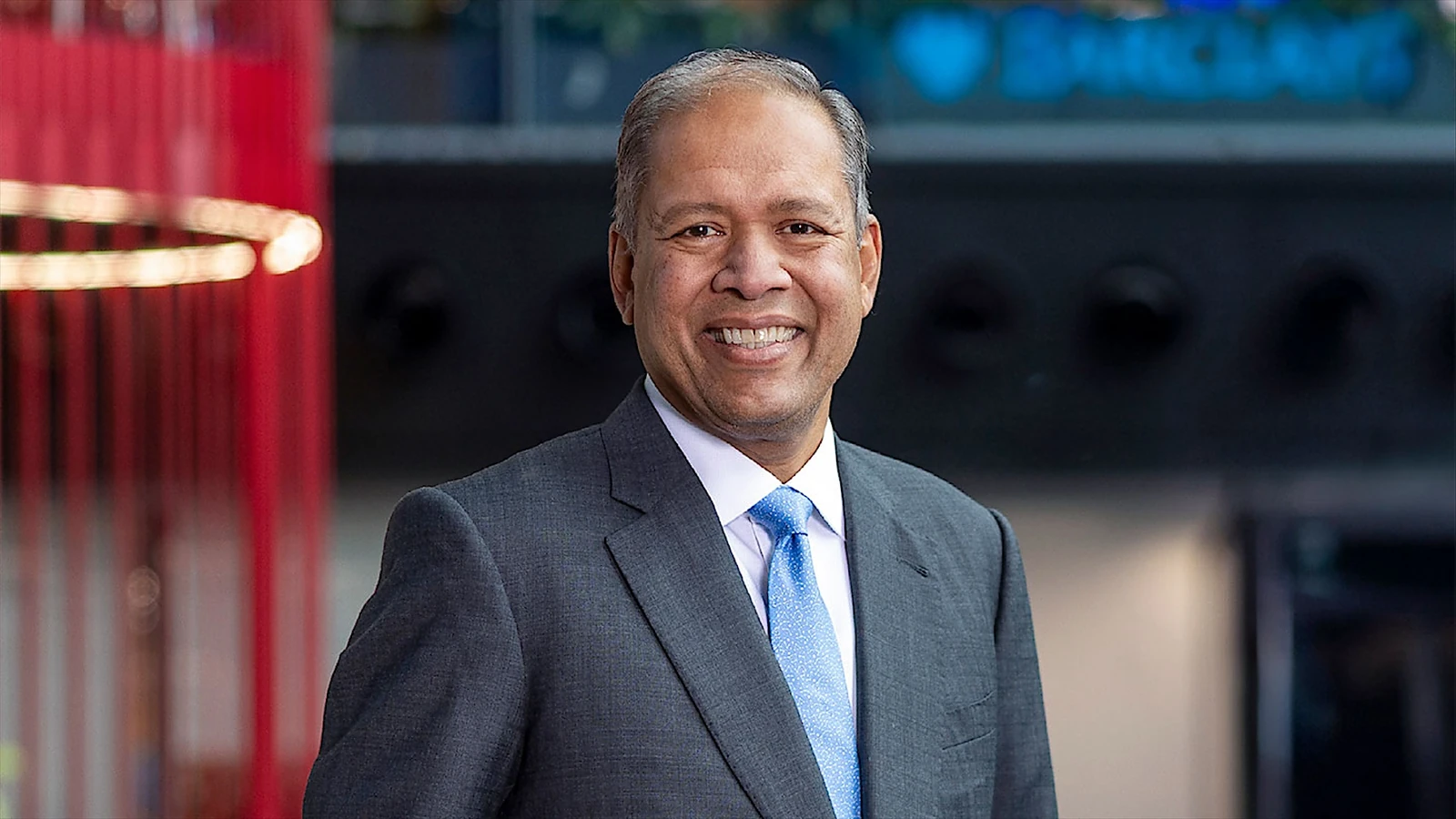
Barclays opened 2026 with a 13.5 per cent return on tangible equity, earnings per share of 14.1 pence and income of £8.2 billion. Global Markets generated more than £4 billion of revenue, the cost-to-income ratio stood at 56 per cent and the common equity tier one ratio was 14.1 per cent. The bank announced a £500 million share buyback and remained ahead of its target for a return above 12 per cent this year.
The same quarter contained a warning. Credit impairment charges reached £823 million, including £228 million tied to a single exposure. Barclays now expects its loan-loss rate to finish near the top of a 50 to 60 basis-point range. For C.S. Venkatakrishnan, who has spent his career across risk and markets, the juxtaposition is exact: strong trading and disciplined costs have lifted returns, but concentrated credit can remove part of that progress quickly.
Venkatakrishnan's goal is to push return on tangible equity above 14 per cent by 2028. The path depends on growth in higher-return businesses, productivity and capital allocation. It also depends on losses staying within the economics assumed when loans were written. His next test is to show that Barclays can compound higher returns through a less forgiving credit cycle, rather than merely report them when markets are active and defaults low.
The strategy is beginning to show in the numbers
Barclays set out a multi-year plan to improve returns by allocating more capital to its UK consumer and corporate franchises, growing selected businesses and controlling the amount consumed by the investment bank. The objective was not to abandon global markets, where the bank has genuine scale, but to make the group more balanced and the capital inside it more productive.
The first quarter provides evidence of that approach. Global Markets performed strongly, and the group generated returns above its near-term target while maintaining a CET1 ratio within its operating range. A cost-to-income ratio of 56 per cent indicates that revenue growth is translating into operating leverage rather than being entirely absorbed by expense.
Market businesses are volatile, however. Revenue can rise sharply when clients reposition around rates, currencies and geopolitical events, then normalise. Barclays needs the investment bank to earn attractive returns across the cycle and the UK businesses to provide stable income. Diversification works only if each division meets its cost of capital.
Venkatakrishnan should resist using a strong markets quarter to relax structural targets. Technology simplification, process improvement and capital discipline remain necessary. The £500 million buyback is a useful signal of surplus capital, but distributions should follow investment and risk needs rather than become an inflexible promise.
One exposure can reveal a wider question
A £228 million impairment tied to a single name does not necessarily indicate broad deterioration. It does show why concentration matters. Large corporate or financial exposures can appear well protected until a change in liquidity, collateral or governance produces a rapid loss. Diversification limits the damage but does not excuse weak underwriting.
Venkatakrishnan's risk background raises expectations that Barclays will examine the event closely. The relevant questions include how the exposure was originated, whether warning signals were recognised, how collateral was valued and whether incentives encouraged excessive concentration. Lessons should be applied across lending and counterparty portfolios.
Credit risk can also migrate through products. A client relationship may include loans, derivatives, prime brokerage and commitments across divisions. A bank organised by product can miss the total exposure unless systems and governance aggregate it properly. Barclays' scale in markets makes this enterprise view essential.
The issue is not to eliminate large relationships. Major clients often need substantial financing and can generate valuable fee and transaction income. The bank must price the full risk, set limits and retain enough ability to reduce exposure when facts change. Returns that depend on underpriced tail risk are not genuine returns.
The UK consumer cycle is turning unevenly
Barclays has a large UK card, mortgage and current-account franchise, alongside business banking. Household finances have absorbed years of inflation and higher borrowing costs, though wage growth and easing rates can provide support. Average credit conditions may look stable while pressure concentrates among lower-income borrowers or customers rolling onto new terms.
The expected loan-loss rate near the top of guidance suggests management is allowing for a more demanding environment. Provisioning should reflect forward-looking scenarios rather than wait for arrears to rise. Early support for viable customers can improve outcomes, while forbearance that merely delays recognition can increase eventual losses.
Mortgage portfolios often carry lower loss rates because of collateral, but affordability and regional house prices still matter. Cards and unsecured loans generate higher yields and higher volatility. Barclays needs pricing and limits that respond to risk without withdrawing credit indiscriminately from sound customers.
Data can improve underwriting and early intervention, but models trained on past cycles may not capture new patterns. Human challenge remains important, particularly when rates, employment and living costs move in unfamiliar combinations. Venkatakrishnan must ensure that pressure to reach growth targets does not weaken this challenge.
Markets revenue needs a capital test
More than £4 billion of quarterly Global Markets income demonstrates Barclays' relevance in fixed income and equities. Clients value balance sheet, execution and risk management during volatile periods. The franchise can produce substantial profit and supports relationships across the corporate and investment bank.
Headline revenue is not enough. Trading businesses use capital, liquidity, technology and highly paid staff. They can also create operational and conduct risk. The proper measure is risk-adjusted return after the full cost of infrastructure. Venkatakrishnan needs to allocate resources towards desks and client segments where Barclays has a sustainable advantage.
Technology investment is particularly important. Electronic trading, data and risk systems determine efficiency and control. Spending can lower unit cost and reduce errors, but fragmented platforms can absorb large budgets without visible returns. The bank should connect investment to faster processing, better client service and lower operational risk.
Asian markets are part of this global network. Barclays does not have the retail footprint of regionally centred banks, but it serves institutions and companies through financing, advisory and markets. Its advantage lies in connecting Asian capital with Europe and the Americas. Expansion should be selective and client-led rather than a pursuit of geographic scale.
Cost discipline must be durable
A 56 per cent cost-to-income ratio places Barclays in a stronger position than when expenses consumed a larger share of revenue. The next challenge is maintaining efficiency when markets income is weaker. Costs that appear manageable in an active quarter can become heavy when revenue falls.
Venkatakrishnan has to distinguish investment from inertia. Modernising systems, strengthening controls and building high-return businesses may raise near-term spending. Duplicated processes, excessive management layers and underused property do not. Cost programmes should remove the latter while protecting the former.
Compensation is central in investment banking. The bank needs to retain strong teams without allowing variable pay to capture too much of the upside while shareholders bear losses. Incentives should reflect risk-adjusted, multi-year performance. Clawback and deferral are practical governance tools, not symbolic policies.
Efficiency also affects customers. Simplification should make account opening, lending decisions and issue resolution faster. If cost savings merely move work to clients or weaken service, they can reduce revenue and trust. The most valuable productivity eliminates friction for both the bank and the customer.
Capital returns depend on credibility
Barclays' 14.1 per cent CET1 ratio supports investment, lending and distributions. Buybacks can create value when the bank's shares trade below a reasonable assessment of book value, but only if the capital is genuinely surplus after stress and growth. Credit losses are one reason to maintain a buffer.
The route to a return above 14 per cent by 2028 should not depend on running capital at the edge of the range. It should come from higher operating returns on a resilient base. Regulators and investors will look at stress performance, funding and liquidity as closely as quarterly profitability.
Venkatakrishnan must also manage legal and conduct obligations that can produce unpredictable costs. A bank earns the right to return capital by demonstrating that controls are effective and historical issues are not being replaced by new ones. Culture is part of the valuation because misconduct converts directly into fines, remediation and lost business.
Clear communication can reduce the discount investors apply. Barclays should explain how much capital each division uses, what returns it produces and how management responds when it falls short. Targets gain credibility when they guide difficult allocation decisions, not when every business is declared strategically important.
The 2028 goal will be won through the cycle
The first-quarter performance is a strong opening. Returns exceeded the 2026 target, markets revenue was high and cost discipline remained visible. The impairment charge prevents the result from being read too comfortably. It is a reminder that banking performance is the difference between revenue earned and risk eventually realised.
Investors should watch the evolution of the loan-loss rate, single-name concentrations, UK consumer arrears and risk-adjusted returns in markets. They should also track whether costs remain controlled when revenue conditions change and whether capital distributions leave adequate resilience.
C.S. Venkatakrishnan has brought Barclays to a point where a higher long-term return looks attainable. His background makes him unusually familiar with the mechanisms that can derail it. That knowledge must shape underwriting, limits, incentives and capital decisions across the group.
The next two years will show whether Barclays' strategy is a cyclical improvement or a structural one. If the bank can absorb credit normalisation, preserve markets discipline and keep capital productive, the 2028 target will represent a better franchise. If concentrated losses recur, strong revenue will have been masking the price of risk. Venkatakrishnan's test is to make the return durable after that price is paid.