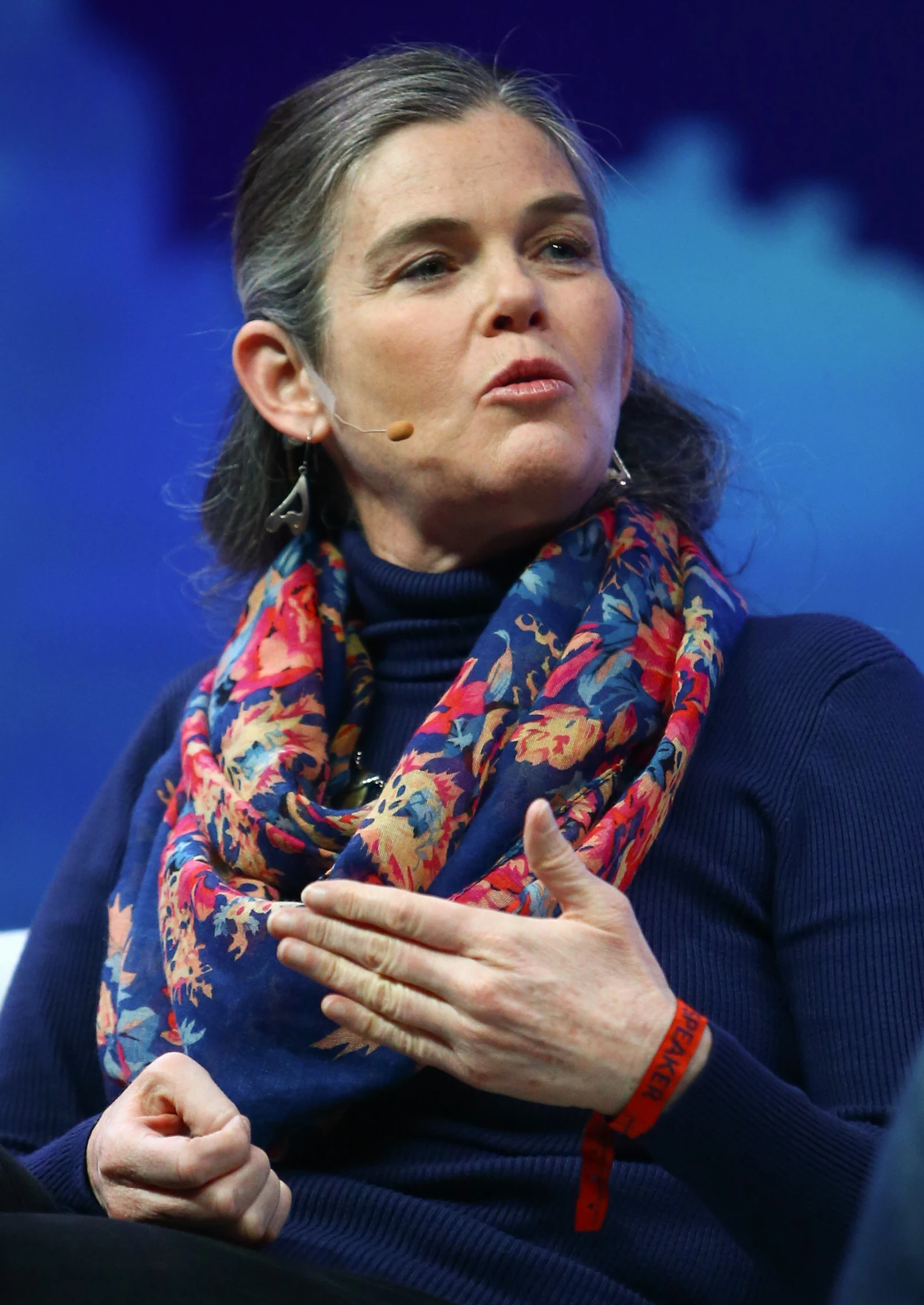
Daphne Koller has spent eight years arguing that machine learning can improve the probability that a drug survives development. In 2026, that claim is moving towards its cleanest test. Insitro’s lead wholly owned programme, CTRO-1013, is being prepared for a first-in-human trial in metabolic dysfunction-associated steatohepatitis, or MASH. The company says artificial intelligence helped identify IRS1 as the strongest of 480 genetic signals linked to liver fat, then connected the target to fibrosis and designed a liver-directed silencing therapy.
Preclinical data presented in June added to the case. In a mouse model, reducing IRS1 lowered biomarkers associated with fibrosis progression and liver-cell injury as well as liver fat. Human genetic analysis suggested a fibrosis signal that remained after adjusting for fat, supporting a mechanism beyond steatosis. Insitro was still conducting additional mechanistic and tissue analysis and expected the programme to enter human testing during 2026.
The qualification is the story. CTRO-1013 has not yet shown safety, target engagement or benefit in a patient. Its anti-fibrotic evidence includes biomarkers and animal models, not a clinical outcome. Koller has built insitro with about $800 million in capital and collaboration revenue, extensive proprietary data, laboratory automation and partnerships with Bristol Myers Squibb, Eli Lilly and Gilead. The approaching trial will show whether that infrastructure has compressed uncertainty before the clinic—or merely financed a more sophisticated route to the same biological verdict.
A platform finally produces a product question
Insitro’s model combines human genetics, clinical phenotypes, engineered cellular systems, high-content imaging, machine learning and drug design. The intended loop is straightforward: begin with causal signals in people, reproduce disease-relevant biology in cells, perturb it at scale, select a target and design a medicine. Data from each stage improve the next model. In theory, this reduces two major causes of failure: choosing biology that does not matter in humans and creating a molecule with poor pharmacology.
The business appeal is powerful. Pharmaceutical research spends heavily on programmes that fail after years of chemistry and animal work. A modest improvement in the probability of clinical success can be worth far more than a dramatic improvement in the speed of generating candidate molecules. Koller has consistently focused insitro on causal biology rather than presenting AI as an automated chemistry machine.
CTRO-1013 makes that philosophy auditable. IRS1 is not an obscure target invented by a model; it is a central signalling protein with complex roles in metabolism. The human-genetic association provides relevance, while also raising questions about systemic effects. A liver-targeted silencing approach is intended to localise exposure. The trial must establish whether that localisation is sufficient, whether reducing IRS1 is safe and whether the effect on fat and fibrosis is clinically meaningful.
MASH is an unforgiving proving ground. Disease progression is slow and heterogeneous. Liver biopsy has been an important but invasive endpoint, while non-invasive biomarkers are improving but do not settle every regulatory question. The field now has approved and late-stage competitors, raising the standard for differentiation. A new therapy may need to show an anti-fibrotic benefit, tolerability suitable for chronic use and value alongside weight-loss and metabolic medicines that can also improve liver disease.
Milestones finance the waiting period
Insitro has not relied solely on equity. By late 2025 and early 2026 it described roughly $150 million of revenue from collaborations with major pharmaceutical groups. In March 2026, Bristol Myers Squibb selected two additional targets from the companies’ work in amyotrophic lateral sclerosis, triggering a $10 million milestone. Insitro is advancing an oligonucleotide programme against the first ALS target for itself while progressing a small-molecule programme for BMS against the same biology.
This arrangement does several things. Partner money extends runway without immediate dilution. A large drugmaker provides development expertise and external validation. Multiple modalities test whether the target is robust rather than tied to one molecule. Insitro retains a route to proprietary value while monetising part of the platform.
It also complicates the scorecard. A milestone is evidence that a contract condition was met, not that a drug works. Potential deal values running into billions assume many future successes and commercial events that may never occur. Platform companies can appear productive through target nominations while delaying the binary risk of clinical trials. Koller’s decision to advance a wholly owned asset prevents that ambiguity from defining the company indefinitely.
The 2025 Lilly collaboration adds another revenue model. Insitro is building machine-learning models using decades of Lilly preclinical data to predict absorption, distribution, metabolism, excretion, toxicity and in-vivo behaviour of small molecules. Better predictions could reduce lengthy optimisation cycles and animal experiments. The models will be available to insitro, Lilly and selected partners through Lilly’s wider platform. This creates utility even before insitro sells a medicine, but it also means some platform value is shared rather than exclusively captured.
Data scale is not biological truth
Insitro’s competitive claim rests partly on a large, coherent multimodal corpus. Quality and consistency matter because biological datasets assembled from different laboratories often contain technical differences stronger than the disease signal. Generating data under controlled conditions can give machine learning a cleaner foundation. Acquiring or partnering for specialised datasets, such as millions of retinal images linked to clinical records, extends the range of human phenotypes.
No dataset removes the translation gap. Cells in a dish lack the full immune, hormonal and mechanical environment of a person. Genetic associations can identify lifelong differences that do not predict the effect of changing the same pathway with a drug in adulthood. Animal models simplify disease. Machine learning can reveal patterns inside those systems; it cannot guarantee that the system represents the patient.
This is why trial design may become insitro’s most valuable capability. The same data that identify a target can define which patients are most likely to benefit and which biomarkers should move. A smaller, enriched trial can provide a faster answer than a broad study. But enrichment also narrows the market and risks creating a post hoc story if criteria are repeatedly adjusted. Biomarker strategy must be specified before results are visible.
Insitro’s 2025 publication on its pooled optical screening platform showed that machine learning and large-scale cell imaging can recover biologically meaningful gene networks without predefined markers. Peer-reviewed validation strengthens the technical case. Investors should still separate platform validation from therapeutic validation. A tool can work exactly as designed and select a target that fails clinically.
Asia is central to the MASH thesis
MASH is often associated with Western obesity, but Asia’s large diabetes burden, changing diets and ageing populations make it a major regional disease. Patients can develop metabolic liver disease at lower body-mass indices than thresholds commonly used in Western care. That affects screening, trial recruitment and commercial positioning. A programme built on cohorts that underrepresent Asian ancestry may miss important variation in risk and response.
Japan, South Korea and China have deep hepatology expertise and established pharmaceutical partners. Singapore offers translational infrastructure, while India combines a large metabolic-disease population with expanding clinical research capacity. These markets could accelerate recruitment and test whether IRS1-linked biology generalises. They also expose reimbursement pressure: a chronic injectable or oligonucleotide therapy must deliver enough benefit to compete with inexpensive diabetes treatment and increasingly available incretin medicines.
Asian pharmaceutical companies are also prospective users of insitro’s platform, not only trial operators. Many hold valuable compound and clinical datasets but lack an integrated machine-learning and high-throughput biology stack. Partnerships can unlock those assets. The negotiation turns on data rights: whether a model trained on one company’s history becomes a reusable insitro advantage, and how improvements are shared.
Data sovereignty and genomic governance vary across the region. Centralising patient-level information may be restricted, making federated approaches attractive. Yet models trained without moving data still require harmonised definitions and rigorous local validation. Technology cannot paper over inconsistent diagnosis or missing outcomes.
Patients set the next valuation
Koller has achieved what many AI-biotechnology founders have not: a company with substantial capital, multiple pharmaceutical validations, peer-reviewed platform evidence and a wholly owned candidate nearing the clinic. Those achievements justify attention. They do not answer the question on which the model was founded.
The first CTRO-1013 trial need not prove that AI drug discovery works as a category. It must show that this programme behaves as predicted: liver-directed exposure, acceptable safety, measurable target engagement and a biomarker pattern consistent with a credible clinical dose. Later studies must establish fibrosis benefit and durability. A negative result would not invalidate every component of insitro, though it would reveal which assumptions survived computation and failed in biology.
That learning only creates value if it changes the next programme. A genuine self-improving platform should diagnose failure, update target or molecule-selection rules and produce better assets over time. If every setback is explained as an unpredictable exception, the loop is branding rather than engineering.
Insitro’s roughly $800 million has bought Koller the machinery to ask better questions before human trials. In 2026, she is approaching the stage where better questions must produce better odds. The company’s most important dataset will not come from another model or cell screen. It will come from the first patients who show whether CTRO-1013 reached the biology insitro said it could see.