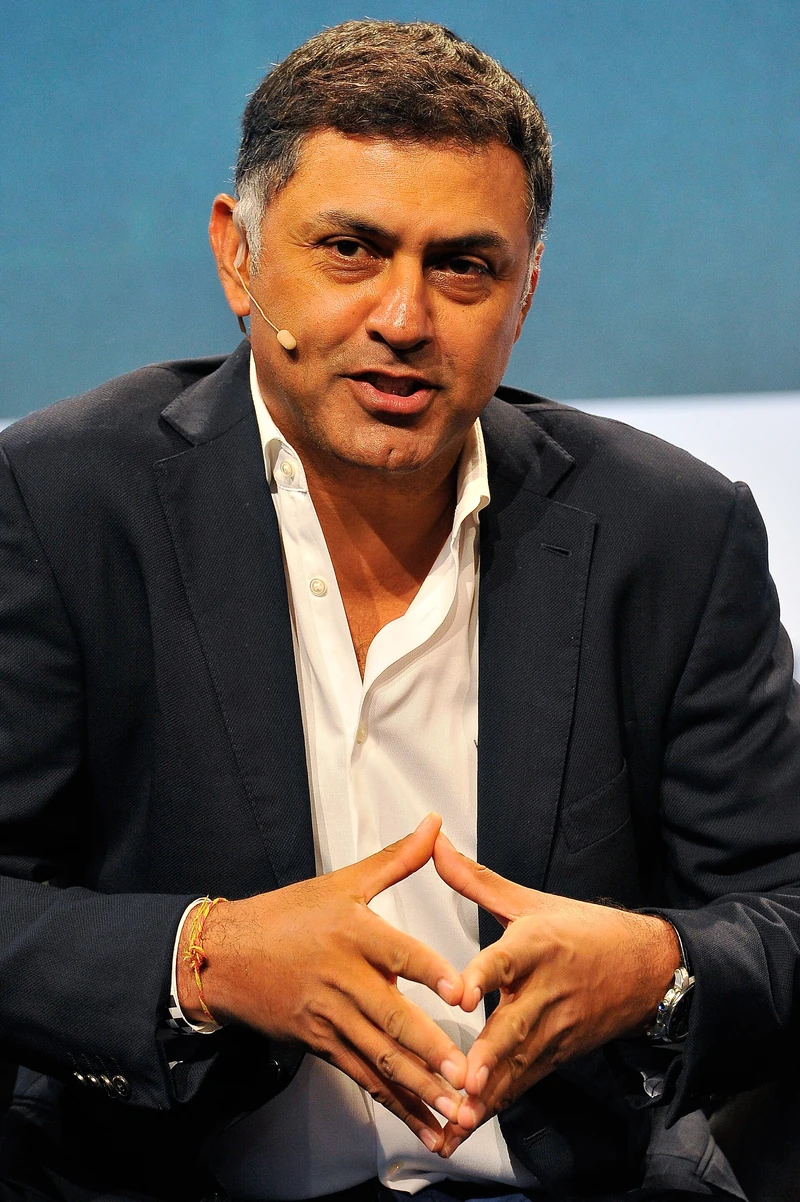
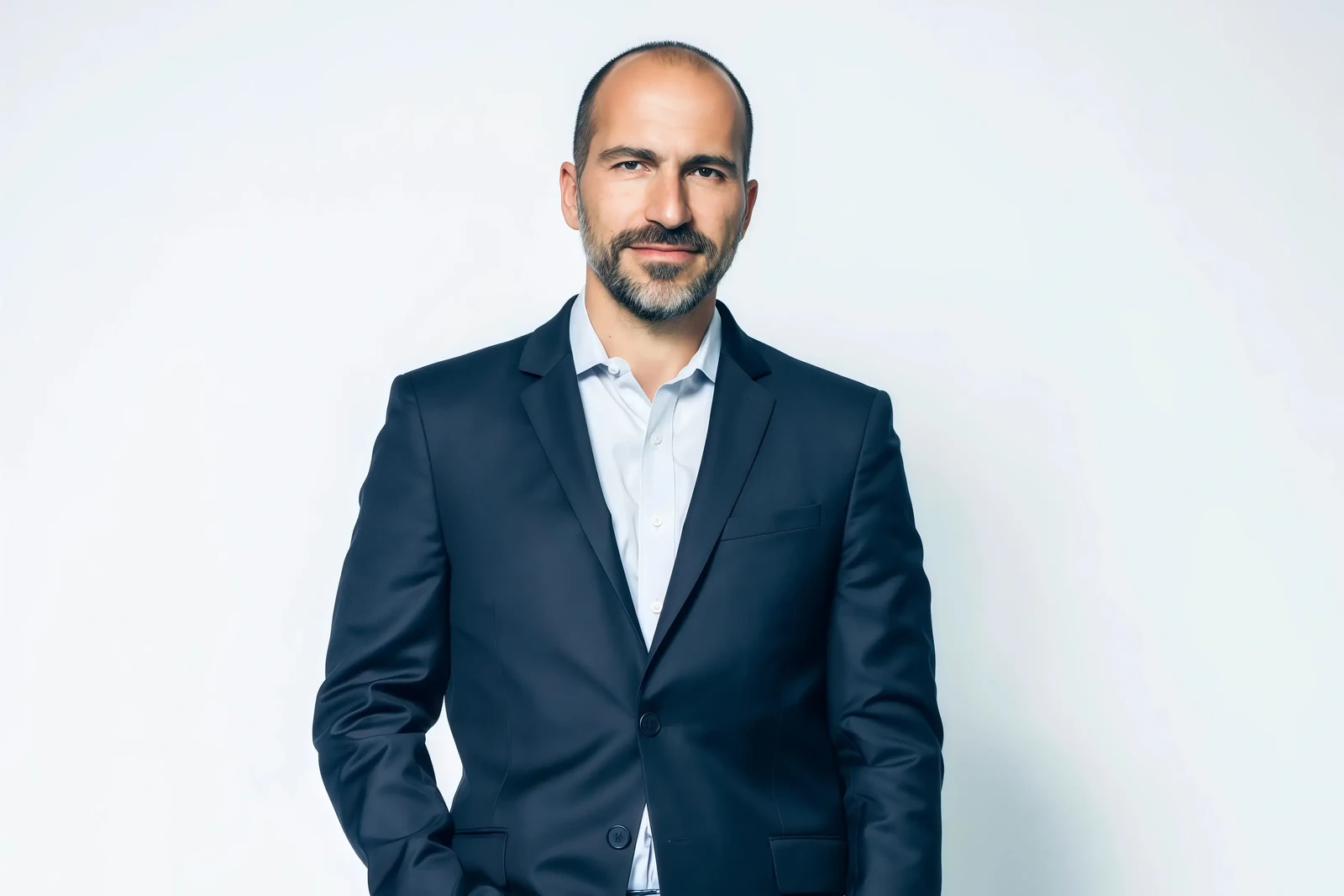
The most consequential vehicle in Dara Khosrowshahi’s strategy for Uber is the one the company may never own.
Uber spent its first era trying to prove that an app could replace the friction of urban transport. It spent part of its second trying to build the autonomous technology that might replace the driver. Under Khosrowshahi, it is attempting something more commercially disciplined: become the marketplace, operating layer and customer relationship through which many autonomous fleets reach the world, while leaving much of the cost and technical risk of developing those vehicles to others.
The proposition is elegant. Waymo, Wayve, WeRide, Volkswagen, May Mobility, Motional, Avride, Nuro and other partners can provide different combinations of vehicles, sensors and driving systems. Uber can provide demand, dispatch, pricing, payments, support, insurance, fleet intelligence and the local knowledge required to turn a demonstration into a service. It is the asset-light version of the driverless future.
It is also the largest strategic test Khosrowshahi has faced since arriving in 2017. He has already made Uber governable, public and profitable. He now has to ensure that the technology capable of removing the driver does not also remove Uber from the centre of the transaction.
From crisis executive to platform builder
Khosrowshahi was hired at a moment when Uber’s appetite for expansion had outrun its institutional capacity. The company’s brand was damaged, its internal culture had become a liability and its relationships with regulators, drivers and competitors were frequently adversarial. His initial assignment was less about mobility innovation than corporate legitimacy.
Nine years later, the numbers describe a different enterprise. In 2025, Uber processed $193.5 billion in gross bookings, generated $52 billion in revenue and produced $5.6 billion in operating income. Free cash flow reached $9.8 billion. The platform completed 13.6 billion trips during the year and ended it with 202 million monthly active consumers. In the first quarter of 2026 alone, trips rose 20 per cent, gross bookings reached $53.7 billion and operating income climbed to $1.9 billion.
These results matter because they reverse the premise on which much of Uber’s early value was built. The company no longer needs investors to believe that scale will eventually produce economics. It can show that network density, disciplined incentives, advertising, membership and improved delivery margins are converting activity into cash.
Khosrowshahi’s achievement has not been to make Uber conservative. The company is moving into groceries, retail, travel, logistics, public-transport ticketing and autonomous operations. His contribution has been to force expansion through a more demanding question: does each new service deepen the platform, improve frequency or make the existing network more valuable?
That is the logic of a mature marketplace. Growth is no longer measured only by how many categories the app can enter. It is measured by whether those categories reinforce one another.
The economics of becoming habitual
Uber’s strongest defence is not the ride itself. A ride can be supplied by a taxi company, another app, a private vehicle, public transport or eventually an autonomous fleet. The defence is habit: the expectation that the same account can solve multiple forms of movement and delivery with reliable timing, familiar payments and minimal thought.
Mobility remains the earnings engine. In the first quarter of 2026, it produced $26.4 billion in gross bookings and more than $2 billion in segment operating income. Delivery, however, has become far more than the pandemic-era hedge it once appeared to be. Quarterly delivery gross bookings approached $26 billion and segment operating income reached $961 million, up 43 per cent from a year earlier.
The interaction between the two businesses is more important than either total in isolation. Consumers who use both mobility and delivery generate more than three times the gross bookings of those using only one service in markets where both are available. Yet only about one in five eligible consumers is active monthly across both. That gap is the commercial territory Khosrowshahi is trying to occupy.
Uber One is the mechanism that makes the strategy visible. Membership passed 50 million in early 2026, and members accounted for half of gross bookings across mobility and delivery. Discounts and credits are part of the appeal, but the deeper purpose is behavioural. Membership turns a sequence of separate transactions into a default relationship and raises the cost, in attention rather than money, of moving elsewhere.
The company’s new travel features push that logic further. A partnership with Expedia allows hotel inventory to appear inside Uber, while Uber rides are being integrated into Expedia’s service. Khosrowshahi, who led Expedia for more than a decade before joining Uber, is returning to travel from the opposite side of the itinerary. Instead of asking where a customer will stay, Uber can begin with every movement around the trip.
The phrase “app for everything” is useful marketing and a dangerous strategic temptation. Super-app ambition can produce genuine convenience, but it can also fill a strong product with marginal features and promotional clutter. Uber’s advantage is that movement connects naturally to food, hotels, airports, commerce and local services. Khosrowshahi must preserve that adjacency test. The app should expand because the network becomes more useful, not because management wants a larger menu.
The autonomous strategy is a wager on the middle
Khosrowshahi’s approach to autonomy is rooted in a decision that once looked like retreat. Uber transferred its in-house autonomous-driving operation to Aurora in 2020 and retained an economic interest rather than continuing to fund a capital-intensive race against specialist developers and technology groups. The company gave up the prestige of owning the complete driving stack. It kept the possibility of owning the route to commercial demand.
That distinction now shapes Uber Autonomous Solutions, the suite of services introduced in 2026 for companies trying to deploy driverless fleets. The offering includes rider interfaces, customer support, depot tools, fleet intelligence, remote assistance, field operations and insurance designed around autonomous use. Its Mission Control system translates vehicle telemetry into a real-time view of fleet readiness and identifies where human intervention may be required.
This is not peripheral work. A self-driving system can navigate a city and still fail as a transportation business. Vehicles need to be positioned where demand exists, cleaned, charged, insured, recovered when something goes wrong and supported when a rider leaves a phone behind. Weather can narrow the operating domain. Construction can confuse routing. A passenger may need assistance. The difficult final layer is not simply autonomy; it is reliable autonomy at marketplace scale.
Uber already runs support infrastructure for more than a billion trips each month. It can blend human-driven and autonomous supply, dispatching a conventional driver when weather or geography makes a robotaxi unsuitable. It can help partners decide which neighbourhoods and hours offer the best economics. It can present riders with a consistent experience even when the underlying vehicle and driving system differ.
Khosrowshahi’s wager is that this middle layer will remain valuable even as vehicle technology improves. The autonomous developers will own the intelligence that drives. Uber intends to own the intelligence that decides where, when and for whom the vehicle should operate.
Partners can also become principals
The weakness in the model is that Uber’s partners are not neutral suppliers. Waymo already operates its own consumer service as well as vehicles offered through Uber. Tesla has a direct relationship with drivers and owners, a large installed base and ambitions in robotaxis. Amazon’s Zoox is designed around an integrated vehicle and service. Automakers may conclude that autonomous fleets give them a route to recurring revenue without an intermediary.
If the best fleets attract customers directly, Uber could be left aggregating supply that is less differentiated or paying heavily for access to the most desirable vehicles. If autonomous transport becomes cheaper than human-driven rides, a rival with superior technology and its own app could use price to acquire demand. If partners grant Uber limited geographic rights or withdraw vehicles after building brand recognition, the platform’s negotiating position could weaken.
Uber acknowledges the danger plainly in its own risk disclosures: autonomous partners may fail, agreements may expire, competitors may deploy first and customers may judge another system safer. The company’s response is breadth. It is assembling a portfolio of relationships across vehicle makers, autonomous-driving companies and markets rather than binding its future to one technical architecture.
That portfolio includes plans with Volkswagen in Los Angeles, Wayve and Nissan in Tokyo, WeRide in the Middle East and multiple operators in the United States and Europe. Different partnerships distribute risk and allow Uber to learn across regulatory environments. They also create complexity. Each deployment has its own insurance structure, vehicle economics, operational domain, data arrangements and balance of power.
Khosrowshahi must make Uber indispensable before autonomy becomes commonplace. The more demand, support infrastructure, regulatory credibility and fleet-management capability the platform can offer today, the less attractive it becomes for a vehicle partner to reproduce those functions independently tomorrow.
The driver paradox
Uber’s autonomous ambition rests on a network still powered by millions of human drivers and couriers. They create the liquidity that makes the app reliable, absorb much of the cost of vehicles and fuel, and allow the company to respond flexibly to changes in demand. They are also the constituency with the clearest reason to view driverless investment as a threat.
The contradiction cannot be managed with distant assurances that autonomy will take time. Drivers make decisions in the present: whether to log on, which platform to use, which trip to accept and whether the earnings justify the cost. Uber’s own filings recognise that investment in autonomous vehicles may increase driver dissatisfaction as the technology reduces the need for human supply.
Khosrowshahi has tried to improve the practical terms of platform work through clearer trip information, earning tools, safety features, rewards and protections. The company argues that flexibility is the defining value of independent work. Regulators and driver groups continue to challenge whether that flexibility is compatible with the degree of control exercised by the platform.
Worker classification remains one of Uber’s largest structural risks. Courts and governments across jurisdictions are testing whether drivers should be treated as independent contractors, workers or employees. Different outcomes can introduce minimum earnings, benefits, social contributions, collective bargaining and tax obligations. None is merely a legal detail. Each changes the economics and operating model of the marketplace.
The strategic mistake would be to treat drivers as a transitional cost base whose importance declines in a smooth line. Autonomous deployment will be uneven by city, weather, road type and hour. Human drivers are likely to remain essential for a long period, especially in markets where vehicle costs are high, streets are complex or regulation moves slowly. A hybrid network may be more valuable than a purely autonomous one, but only if the human side remains liquid.
Uber therefore has to manage two promises simultaneously. To investors and autonomous partners, it must show that driverless vehicles can lower costs and scale. To drivers, it must make the platform attractive enough that they continue to supply the rides on which the current business depends. The transition will not be credible if one promise is financed by quietly weakening the other.
Asia shows what a mobility platform really has to become
Uber’s early international expansion was built on the assumption that a common product could be introduced city by city with limited deference to local transport systems. Asia helped disprove that assumption. The company exited China and Southeast Asian ride-hailing after expensive battles with stronger local platforms, retaining equity positions that still introduce volatility into reported earnings. The lesson was not that Uber could not operate in Asia. It was that scale without local structure is not a moat.
India now offers the clearest alternative model. Uber’s network there spans cars, auto-rickshaws, motorcycles, buses, intercity routes and delivery. Cash remains relevant, while the Unified Payments Interface supports digital transactions at population scale. Through the Open Network for Digital Commerce, users can purchase metro tickets inside the Uber app, beginning with Delhi, and businesses can gain access to on-demand logistics without building their own fleet.
This is a more sophisticated version of platform strategy than simply replacing the taxi. Uber is inserting itself between private mobility, public transport and digital public infrastructure. It adapts to local vehicle economics rather than insisting on a premium car. It can become useful to riders who may combine a motorcycle, metro and auto-rickshaw in one journey. The Indian driver network, which Uber said numbered 1.4 million in 2025, also gives the company a distribution layer for new logistics services.
Japan presents the opposite challenge: a highly organised transport market, strong automakers and demanding safety expectations. Uber’s planned Tokyo robotaxi pilot with Wayve and Nissan is therefore strategically important. It combines a British autonomous-driving company, a Japanese manufacturer and Uber’s marketplace rather than asking one participant to own the entire system. If successful, it would validate the partnership model in a country where service reliability is not negotiable.
In the Gulf, collaborations with WeRide in Abu Dhabi, Dubai and Riyadh test whether autonomous fleets can scale in cities with supportive governments, significant capital and an appetite for new infrastructure. Across these markets, Uber is less a universal product than an orchestration layer. That is the role Khosrowshahi needs it to master.
For FigureAsia, his regional significance begins with biography but does not end there. Khosrowshahi left Iran as a child during the revolution and built his career in the United States, first in finance and then in online travel. His leadership now sits at the intersection of Asian urbanisation, global technology capital, local labour markets and the next generation of transport systems. The relevant question is not whether Uber is an American company operating in Asia. It is whether it can become local infrastructure without pretending to be local government.
Delivery, advertising and the quality of growth
Autonomy commands attention, but delivery may reveal more about Khosrowshahi’s operating discipline. Uber Eats was once criticised as a low-margin extension sustained by promotions. In 2025, delivery adjusted earnings before interest, tax, depreciation and amortisation rose 45 per cent to $3.6 billion. Advertising revenue helped that improvement, increasing by $568 million during the year.
The advertising business is attractive because it monetises a scarce moment: a consumer close to a transaction. Restaurants and brands can pay for visibility inside a marketplace where intent is already high. The revenue can improve delivery economics without placing the full burden on consumer fees or merchant commissions.
It can also degrade the product if commercial placement overwhelms relevance. The platform knows where users travel, what they order, when they commute and which offers convert. That information is commercially powerful and reputationally sensitive. Khosrowshahi has to ensure that advertising remains an enhancement to marketplace discovery rather than a tax on attention.
Grocery and retail expand the addressable market, while Uber Direct turns the delivery network into infrastructure for businesses that may never appear as restaurants in the consumer app. These services make better use of courier supply and logistics technology. They also expose Uber to more operational complexity, lower-value trips and strong specialists.
The measure of quality is not category count. It is whether each additional transaction improves density and whether that density produces better service at a lower incremental cost. Uber’s 2026 performance suggests the model is working. Maintaining it will require Khosrowshahi to keep saying no to growth that looks large in bookings but weakens the platform’s economics.
Cash flow creates a new kind of pressure
For much of its history, Uber’s strategic discipline was imposed by the need to fund losses. Cash generation changes the psychology of the company. Nearly $10 billion of free cash flow in 2025 gives Khosrowshahi greater freedom to invest in autonomous partnerships, product development, acquisitions, share repurchases and incentives. It also raises the cost of poor allocation.
Uber remains exposed to sharp movements in the value of equity stakes accumulated through investments and market exits. A $1.5 billion pre-tax headwind from equity revaluations reduced first-quarter 2026 net income even as operations performed strongly. The volatility is a reminder that the company’s reported earnings still contain traces of its earlier dealmaking model.
The autonomous strategy can also become less asset-light than advertised. Fleet partners may demand guarantees, financing or investment. Depots and charging require capital. Insurance must be priced for unfamiliar risks. If Uber needs to secure access to vehicles by placing more of its balance sheet behind them, the distinction between platform and operator will narrow.
Khosrowshahi’s advantage is that he has experienced both sides of the cycle. His background in finance and his years running Expedia trained him to think in marketplaces, customer acquisition and capital returns. At Uber, he has learned the political and operational cost of applying a purely financial answer to a city-level service. The next phase requires both instincts.
The company after the comeback
Khosrowshahi’s public persona has often been defined in contrast with the founder-led Uber he replaced: calmer, more diplomatic and more willing to compromise. That contrast helped during the repair. It is less useful now. Uber no longer needs only a custodian of credibility. It needs a chief executive capable of making an aggressive choice about where value will settle in the autonomous economy.
If the vehicle makers and driving systems capture most of the profit, Uber risks becoming a thin demand channel. If Uber owns the customer, operations and hybrid network, autonomous fleets may become another form of supply competing for access to its marketplace. The difference will be determined before robotaxis are ubiquitous, through the contracts, data rights, service standards and consumer habits being established now.
Khosrowshahi made Uber investable by proving that extraordinary scale could coexist with institutional discipline. His next task is to make it structurally necessary. The company must remain valuable whether a trip is provided by a person in Delhi, a taxi operator in Tokyo, a courier in London or a driverless vehicle in Los Angeles.
The old Uber wanted to own the disruption. Khosrowshahi’s Uber wants to own the connection between disruptions. It is a more mature ambition, and potentially a more durable one.
But it depends on a delicate proposition: that in a world where the driver may disappear, the platform in the middle becomes more important, not less.