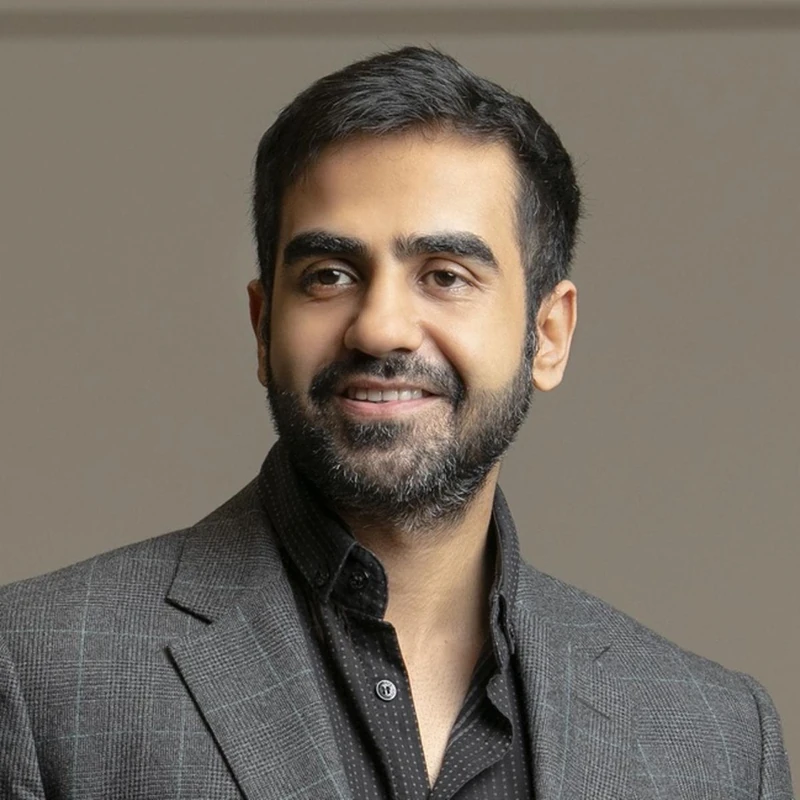

Two 2026 Nature papers widened the platform: AlphaGenome predicted regulatory-variant effects across long genomic sequences, while Co-Scientist used multiple agents to generate, debate and rank biomedical hypotheses. For Demis Hassabis, the importance of that record is not simply another publication cycle. It creates a harder proposition: whether a stack of foundation models, computing infrastructure and research workflows that can address several stages of discovery can become a dependable economic and institutional platform. Science establishes possibility. Organisations still have to decide what to fund, how to manufacture or operate it, which users should trust it and what evidence would justify replacing an existing process.
That distinction matters in artificial intelligence for scientific discovery. A strong result can attract grants, partners and talent long before it supports a repeatable product. The gap is where capital is often mispriced. Early enthusiasm rewards novelty; later adoption rewards reliability, measured advantage and a clear owner for failure. Demis Hassabis now sits close to that boundary at Google DeepMind. The research is credible enough to draw commercial attention, yet broad enough that careless claims could turn a coherent programme into a collection of promises.
The platform claim
The strategic asset is a stack of foundation models, computing infrastructure and research workflows that can address several stages of discovery. Platform language is useful only when the same underlying capability reduces the cost or time of several future programmes. A platform that must be rebuilt for every customer, disease or experiment is better understood as bespoke research. The burden therefore falls on architecture: shared tools, validation methods, data standards, production steps and decision rules must carry across applications without hiding material differences.
The potential buyers or partners include pharmaceutical companies, universities, hospitals, public research agencies and technology partners. Their incentives are not aligned. Researchers value access and interpretability. Companies seek defensible intellectual property, predictable development schedules and margins. Public agencies care about capability, access and national resilience. Clinicians or industrial operators need safety and dependable performance. A strategy that pleases one group can create cost for another. Open publication may accelerate the field while narrowing exclusivity; tight control may support investment while slowing independent verification.
Capital allocation should follow those differences. Foundational work belongs in long-horizon research budgets. Translational programmes require milestones that can stop spending when assumptions fail. Manufacturing and deployment need separate economics, because the best-performing laboratory method is not always the one with the lowest total cost. Treating all three as one continuous success story obscures where risk changes hands.
Evidence before scale
high benchmark performance does not establish that generated hypotheses are novel, reproducible, safe or worth diverting scarce experimental capacity toward. That is not an argument for caution without action. It is a reason to define the next experiment around the decision that capital providers or users actually face. Better accuracy, selectivity or biological effect is valuable; the decisive measure is whether it changes an outcome after realistic constraints are introduced.
Independent replication is part of the business model. It can appear slower than keeping a promising system inside the originating laboratory, but it reduces the cost of later failure. Common reference datasets, blinded comparisons and pre-specified end points make performance legible to partners. Negative results matter as well: they show where the system should not be deployed and prevent sales or licensing teams from turning uncertainty into an implied guarantee.
There is also a governance question. Scientific leaders can influence both the definition of a problem and the organisations created to solve it. That position is productive, but it requires clarity about authorship, licences, board roles, public funding and commercial rights. Trust weakens when academic validation and product promotion become indistinguishable. The strongest approach is not to deny those overlaps; it is to disclose them and maintain routes for genuinely independent assessment.
Asia’s operating advantage
Asian genomics programmes, pharmaceutical research and sovereign computing investments could give the programme an important operating base. The region offers scale, technical labour and increasingly sophisticated pools of capital. It also contains very different regulatory systems, income levels and procurement structures. An Asian strategy cannot consist of adding local samples or a distribution partner after the central product has been designed elsewhere. It must shape validation, cost targets, manufacturing choices and access from the start.
That is especially important where public institutions are expected to absorb early risk. Governments may finance infrastructure that private investors will not, but public money should purchase durable capability rather than subsidise a narrow proprietary asset without clear access terms. Universities need rules that reward translation while protecting research freedom. Companies need enough commercial certainty to invest. The balance is difficult, yet it is more defensible when milestones, rights and pricing principles are agreed before success makes negotiation harder.
Competition will not come only from another laboratory pursuing the same method. It may come from a cheaper incumbent, a less elegant technology with easier regulation, or a workflow that removes the need for the new tool altogether. Managers should compare the proposition against the full cost of the current alternative. That includes staff time, infrastructure, failure rates, delay and downstream consequences—not simply the price of a reagent, model or device.
The economics of proof
For investors and strategic partners, the next useful disclosure is not a larger list of possible applications. It is evidence about conversion. How many programmes move from demonstration to validated use? How long does that take? Which steps are shared? What fails most often? Where does each new application require fresh capital? Those questions reveal whether scale improves economics or merely increases organisational complexity.
Talent is another constraint. Interdisciplinary science is often described as if experts can be assembled interchangeably. In practice, teams need people who can translate between technical languages and still carry responsibility for a decision. Hiring more specialists does not solve a weak interface between research, engineering, clinical or industrial operations and regulation. Leadership has to make those interfaces explicit, with authority residing where evidence can be challenged.
The Asian opportunity makes cost discipline more important, not less. Large populations and manufacturing depth can create volume, but price sensitivity exposes inefficient workflows quickly. A technology that depends on scarce specialists, imported consumables or centralised facilities may serve elite institutions while missing the wider market. Local production can help, although technology transfer without quality systems simply relocates risk.
Intellectual property will influence which route is available. A broad foundational patent can attract investment by protecting years of expensive development, yet overlapping claims can also slow collaboration and raise transaction costs. Universities and commercial partners should distinguish the core invention from the know-how required to reproduce it at scale. The latter often becomes the more durable advantage because it resides in protocols, quality control, datasets and teams. Licensing terms should reward investment without creating a thicket that prevents researchers from testing alternatives or local manufacturers from building affordable capacity.
Procurement is usually discussed too late. A hospital, factory or research agency needs evidence formatted around its own decision: budget impact, staffing, compatibility, downtime, liability and service support. Publication metrics do not answer those questions. Early engagement with real operators can expose requirements that a scientific team would otherwise discover after an expensive redesign. It can also prevent a common mistake in deep technology—optimising the technically visible component while ignoring the surrounding system that determines whether anyone can use it.
Time creates another trade-off. Moving quickly can preserve leadership, attract scarce talent and generate learning before competitors. Moving before measurement systems are ready can lock an organisation into claims it later has to retreat from. The sensible pace is not uniformly fast or slow. It is fastest where experiments are reversible and slower where patients, public trust or large capital commitments bear the downside. Clear stage gates make that distinction operational and give boards a basis for stopping a programme without treating every setback as a verdict on the underlying science.
Success should therefore be defined in layers. Scientific success means that the mechanism or model withstands scrutiny. Translational success means it changes a relevant outcome under realistic conditions. Commercial success means customers or funders value that change above its full cost. Public success adds access, resilience and responsible use. Conflating the layers encourages premature celebration; separating them allows progress to be recognised without claiming that the final economic case has already been made.
None of this diminishes the scientific achievement. It locates its value more precisely. Breakthrough research can redefine what is technically conceivable. Durable institutions then decide whether that possibility becomes a treatment, industrial process, research service or public capability. The transition is rarely linear, and the scientist’s reputation cannot substitute for operating evidence.
Demis Hassabis now has to show that independent laboratories can reproduce material gains in discovery speed or quality without surrendering scientific judgement, data control or access. If that result arrives, the 2026 work will look less like a set of impressive papers and more like the moment a scientific idea acquired an operating model. If it does not, the research can remain important while its commercial scope narrows. That is the useful discipline of the next phase: not asking whether the science is exciting, but identifying the conditions under which others can rely on it.