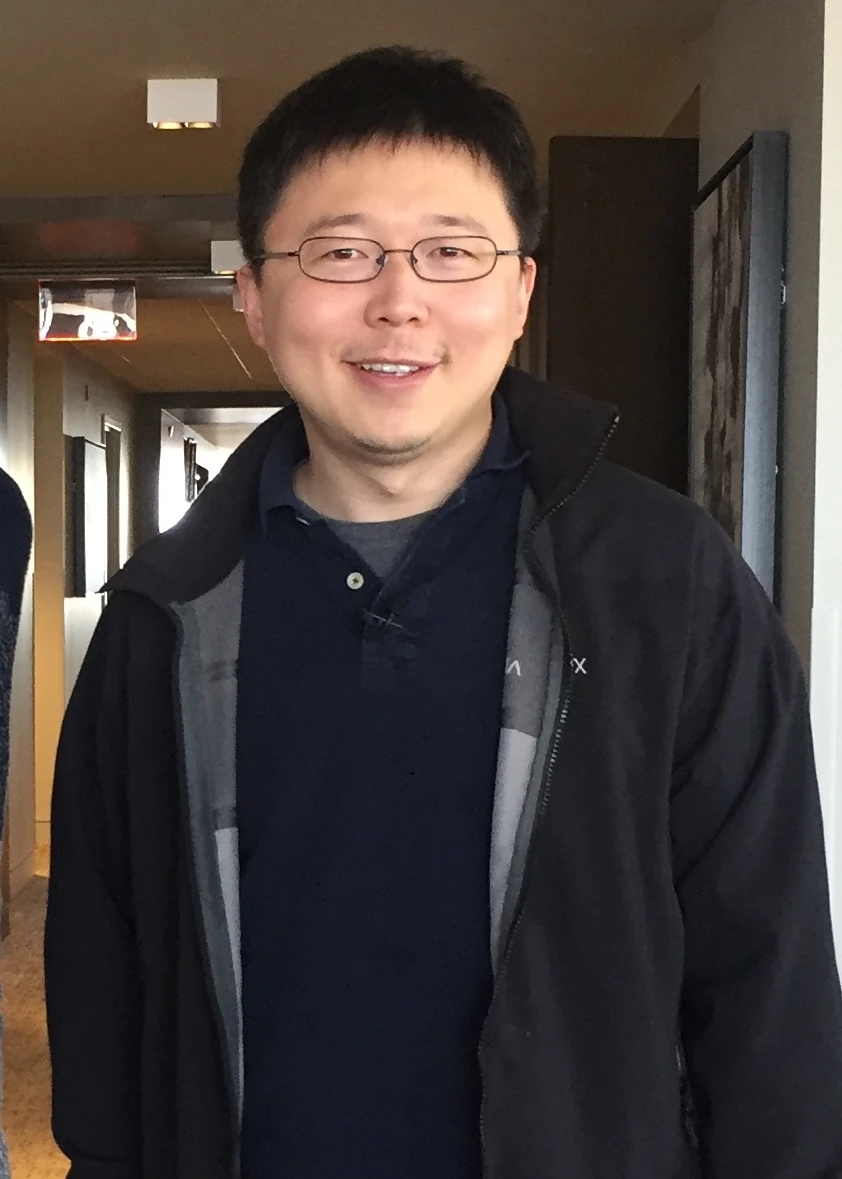
Feng Zhang has spent much of his career turning biological mechanisms into programmable tools. His laboratory’s work on TIGR-Tas extends that pattern with an especially important feature: size. The RNA-guided DNA-targeting system is substantially smaller than widely used Cas9 editors, with average proteins around a quarter of the size. That can matter more than another improvement on a laboratory benchmark.
Delivery remains one of genetic medicine’s hardest constraints. A molecular editor must reach the correct cells, enter the relevant compartment, act at the intended site and then disappear or remain controlled. Popular viral vectors have limited cargo capacity, while non-viral approaches face their own efficiency and distribution problems. Smaller machinery can create room for regulatory elements, repair templates or multiple functions.
Zhang, a core institute member at the Broad Institute and a professor at MIT, does not run a pharmaceutical company. His leadership operates through research choices, open tool distribution, collaboration and the training of scientists who carry discoveries into industry. The next test for TIGR-Tas is whether that ecosystem can convert compactness into a safer, manufacturable therapeutic platform.
Size can change the delivery design
Gene-editing discussions often focus on targeting accuracy or the type of DNA change. Those properties are essential, but a capable editor that cannot reach a tissue has little clinical value. Large proteins can exceed the capacity of commonly used adeno-associated viral vectors when combined with the rest of a therapeutic construct.
A compact system offers several options. It may fit into a single vector instead of requiring split delivery. It can leave room for promoters that restrict expression to certain cells. Developers may combine targeting and regulatory components without making the package impractical. Manufacturing and dose could improve if fewer particles are required to deliver a complete system.
These are possibilities, not established clinical outcomes. A smaller protein may have different activity, stability or immune recognition. It may require guide designs that work unevenly across targets. The natural system’s behaviour in a microbe does not guarantee performance in human cells.
Zhang’s team should prioritise head-to-head studies that compare delivery, editing and toxicity under realistic conditions. The meaningful result is not only molecular size; it is how much correct editing occurs in a relevant tissue at a tolerable dose.
Natural diversity is a research strategy
CRISPR-Cas systems demonstrated that microbial defence mechanisms can become broad engineering platforms. Zhang’s laboratory continues to search biological diversity for other programmable functions. TIGR-Tas belongs to a family of compact systems found across organisms and offers a different starting point from repeatedly modifying the same editor.
This strategy can produce tools with properties that conventional engineering might not reach easily. Nature has explored an enormous design space under evolutionary pressure. Researchers can identify useful mechanisms, determine their structures and adapt them for mammalian cells.
The approach also requires restraint. Newly discovered systems often generate excitement before their limitations are known. Zhang’s standing can help set a higher standard by separating discovery, optimisation and therapeutic readiness. Data on off-target activity, chromosomal changes, immune response and long-term expression should develop alongside performance.
Open comparison is particularly valuable. Independent laboratories need access to constructs and protocols so that results can be reproduced. Broad distribution through repositories such as Addgene has been a defining part of Zhang’s scientific influence, with tools reaching institutions around the world.
Editing precision has several dimensions
An editor can reach the intended DNA sequence and still create an unsuitable outcome. It may cut both DNA strands, produce varied repair products or act in cells that should remain untouched. Therapeutic precision therefore includes molecular specificity, edit uniformity, tissue targeting and timing.
Compact machinery can improve tissue targeting by fitting better control elements into a delivery package. It can also enable transient formats that limit exposure. Developers should design the delivery system and editor together rather than optimise the enzyme in isolation.
Evaluation must look beyond a short list of predicted off-target sites. Genome-wide methods, long-read sequencing and studies in primary human cells can identify rearrangements or rare events. Animal models help assess distribution and immune effects, although they do not perfectly predict people.
Zhang can encourage a common evaluation framework across academic and commercial partners. Standard reference materials, reporting and negative results would reduce duplication and make promising systems easier to compare. The field benefits when safety evidence is treated as shared infrastructure.
Manufacturing will shape the addressable diseases
A therapy’s molecular design influences how it can be made, stored and administered. Viral vectors require complex production and quality control. Lipid nanoparticles and other non-viral systems may scale differently but often target a narrower set of tissues. Protein and RNA stability affect cold-chain and dose.
Compact editors could reduce some manufacturing burdens, but only if expression and activity remain efficient. A small enzyme that requires a much higher dose may not improve cost. Developers should measure the complete product, including guide RNA, vector, formulation and release testing.
Disease selection matters. Early programmes should match the delivery system to tissues it can reach reliably and to conditions where partial correction has meaningful benefit. Pursuing the most commercially visible disease before the platform is ready can create avoidable failures.
Academic laboratories are not designed to solve every process challenge. Partnerships with vector specialists, clinicians and manufacturers should begin before a candidate is fixed. Zhang’s network can help connect discovery with those disciplines while preserving scientific independence.
The intellectual-property environment needs workable access
Gene editing has been shaped by complex patent disputes and overlapping licences. New systems can open technical options, but they can also add another layer of claims. Universities and companies need enough certainty to invest in translation, while research access should remain broad.
Zhang and the Broad Institute can support clear, non-exclusive research licences and transparent routes for therapeutic development. Exclusive rights may be justified for a specific product that requires heavy investment, but broad control over an entire compact-editor family could narrow experimentation.
Access terms also influence global health. A platform developed with public and philanthropic support should have mechanisms for use in diseases and regions that may not attract large commercial returns. Manufacturing partnerships and tiered licences can help without eliminating incentives.
Researchers need freedom to compare systems. Licence provisions should not prevent publication of unfavourable results or use of competing editors. Scientific credibility depends on evidence rather than contractual silence.
An open tool ecosystem multiplies leadership
Zhang’s impact extends beyond papers because laboratories around the world have used and modified tools from his group. Open distribution accelerates discovery, creates independent validation and trains scientists. It also allows unexpected applications to emerge outside the original team.
TIGR-Tas should follow that pattern with well-documented constructs, protocols and known limitations. Community data can reveal which targets, cell types and delivery methods work. A shared registry of results would be more useful than isolated demonstrations selected for success.
Open science does not mean unmanaged use. Gene-editing research requires biosafety, ethical review and appropriate controls. Tool repositories can provide guidance, while institutions remain responsible for experiments. Transparency makes responsible practice easier to monitor.
Commercial partners can contribute optimisation and clinical development without closing the basic research commons. Zhang’s leadership is strongest when many groups can test the premise and the best applications receive investment.
Talent and institutions shape the translation pathway
Platform biology advances through teams that combine structural science, computation, chemistry, delivery and clinical knowledge. Zhang can strengthen the pathway by training researchers who understand both mechanism and application. Academic incentives should reward the careful optimisation and negative results that often sit between a discovery and a medicine.
Conflicts of interest require active management when faculty discoveries support companies. Universities should disclose relationships, preserve publication rights and use independent oversight for research that may affect commercial value. Clear boundaries protect both patients and scientific credibility.
Public funders can support shared delivery and safety infrastructure that no single product company has reason to build. Reference assays, manufacturing methods and long-term follow-up standards reduce the cost of translation across many programmes. Zhang’s leadership can direct attention toward these enabling systems rather than only the most visible editor.
Clinical translation will require patience
The first approved CRISPR-based therapy demonstrated that genome editing can become medicine, but it also showed the advantage of editing cells outside the body and returning them to the patient. Direct editing inside organs presents a more demanding delivery problem. Compact systems are relevant precisely because that frontier remains open.
Before a human study, developers need reproducible efficacy, toxicology, biodistribution and manufacturing. Regulators will examine both the editor and delivery vehicle. Long-term monitoring may be necessary because a permanent DNA change cannot simply be discontinued.
Zhang should resist treating every successful cell experiment as a therapy pipeline. The field benefits from milestones that reflect uncertainty: validated mechanism, primary-cell performance, animal delivery, manufacturable candidate and clinical evidence. Each stage can fail without invalidating the research platform.
Feng Zhang’s latest compact machinery offers a plausible way around a physical constraint that has limited genetic medicine. The discovery earns attention because it changes what may fit inside a delivery system. Its leadership significance will be determined by what follows: rigorous comparison, open validation, workable access and patient translation. The smallest editor will matter only if the complete therapeutic system reaches the right place and performs the right change safely.