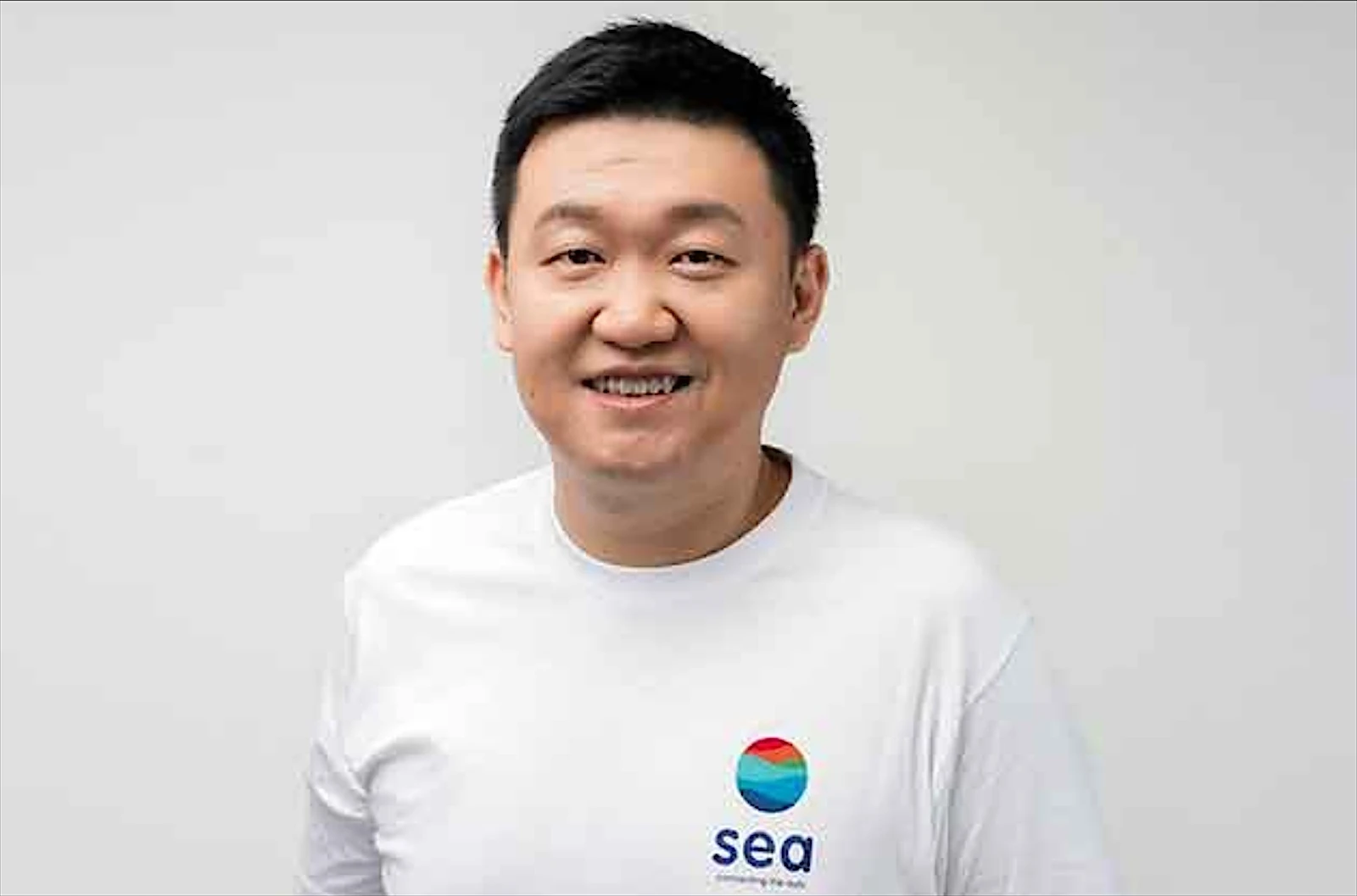
Forrest Li has brought Sea back to the strategic question that existed before the company’s painful reset: how much should it spend when growth opportunities are abundant?
The difference is that Sea now has profits with which to answer. First-quarter revenue rose 46.6 per cent to $7.1 billion. Gross profit reached $3.1 billion, net income was $438.2 million and adjusted earnings before interest, tax, depreciation and amortisation exceeded $1 billion. Shopee set records for merchandise value, orders and revenue. Monee expanded its financial-services reach. Garena produced its best quarter since 2021.
Li has said that 2026 will be a year of leaning in to deepen competitive moats while maintaining financial discipline. That formulation recognises Sea’s history. During the pandemic-era expansion, easy capital and surging digital demand encouraged the group to treat market share as the immediate objective and profitability as a later consequence. When funding conditions changed, Li cut costs, withdrew from markets and demonstrated that Shopee could produce earnings.
He now has to reinvest without rebuilding the fragility he removed. The task is more difficult than choosing between growth and profit. Sea operates three businesses with different cycles, risks and capital needs. The portfolio works only if their data, distribution and cash flows reinforce one another rather than conceal weak economics.
Shopee is large enough to shape the group
Shopee remains Sea’s centre of gravity. For 2025, the commerce business generated $17 billion of revenue and $881 million of adjusted EBITDA, compared with $156 million a year earlier. In the first quarter of 2026, it reached new highs while management maintained guidance for roughly 25 per cent annual growth in gross merchandise value and full-year adjusted EBITDA no lower than 2025 in absolute dollars.
That guidance defines the investment bargain. Sea is willing to hold Shopee’s earnings broadly level while transaction volume expands sharply. The implied spending will support logistics, seller services, price competitiveness, advertising, content and new user segments. If those investments improve retention and monetisation, the sacrifice in near-term margin can produce a stronger platform. If they merely offset competitors’ subsidies, shareholders will have financed an expensive equilibrium.
Southeast Asian e-commerce rewards local operating depth. Delivery networks are fragmented, islands and borders complicate logistics, and merchants range from global brands to individuals managing inventory through a phone. Shopee’s scale allows it to spread technology and fulfilment investment across markets while using advertising and transaction fees to monetise merchant demand.
Brazil adds a second growth engine and a different competitive environment. Success there shows that Sea can export parts of its commerce model. It also increases currency, logistics and regulatory exposure. Li must decide how much standardisation is efficient and where local systems deserve autonomy.
The cleanest evidence will come from unit economics. Faster delivery or higher advertising revenue should improve contribution after incentives and logistics. Growth that depends on perpetually discounted shipping will remain vulnerable when a rival raises spending.
Garena is again more than a source of cash
Sea’s digital-entertainment business has often been described as the source of funds for Shopee. That is financially convenient and strategically incomplete. Garena’s strength is its ability to operate games across languages, devices and markets for long periods. Free Fire remains one of the world’s most durable mobile titles, while Arena of Valor made a record contribution at the start of 2026.
Garena bookings grew 37 per cent in 2025 and began 2026 with its strongest quarter since 2021. The recovery reduces the pressure on Shopee and Monee to carry the group alone. It also creates a capital-allocation decision. A game publisher can return cash from established titles, invest in extending them or fund new intellectual property with uncertain outcomes.
Li should resist treating longevity as permanence. Mobile games are exposed to platform policies, changing player taste and regional regulation. A franchise can remain culturally powerful while monetisation weakens. New titles are expensive, and the hit-driven nature of the industry makes portfolio claims easy to overstate.
Artificial intelligence may improve content production, localisation, customer support and fraud detection. It does not remove the need for creative judgment. Players recognise repetitive design and synthetic excess quickly. Garena’s advantage lies in operating communities, not simply generating assets more cheaply.
The business earns its place in Sea when it combines creative durability with cash discipline. If Li can build a broader games portfolio without assuming every investment will become another Free Fire, Garena can remain both cultural business and financial ballast.
Monee broadens the economics and the risk
Sea renamed its digital-financial-services business Monee to reflect an ambition larger than payments. The platform now offers consumer and merchant credit, digital banking, insurance and payment services across Southeast Asia and a growing Latin American footprint. Its first-quarter expansion beyond Shopee users and into markets such as Brazil enlarges the addressable opportunity.
Financial services can strengthen the group’s commerce system. Transaction history helps assess cash flow. Credit can finance seller inventory and consumer purchases. Payments lower friction and keep more of the economics inside Sea. A merchant that uses logistics, advertising, payments and working-capital finance is harder to displace than one that lists products on a marketplace alone.
The benefit also creates correlated risk. If commerce weakens, merchant revenue, consumer spending and loan performance can deteriorate together. Data can improve underwriting but does not repeal a credit cycle. Expansion outside Shopee may reduce the proprietary signals that made initial lending attractive.
Li has emphasised stable asset quality. Investors should continue to examine delinquency, provisioning, funding cost and the share of lending outside the core ecosystem. Monee can become a significant profit contributor, as management expects, only if credit growth survives stress without forcing the group to retreat or recapitalise the business.
Regulation will shape the path. Financial licences create durable barriers and obligations that differ across Indonesia, Singapore, Malaysia and Brazil. Depositor protection, capital requirements, consumer disclosure and collection practices make finance less forgiving than commerce. Sea’s ability to move fast must sit inside institutions built to say no.
The portfolio needs an operating logic
Conglomerates often claim synergy because several businesses share customers. That is a weak standard. Sea’s portfolio should be judged by whether shared capabilities reduce cost, improve service or produce information unavailable to a standalone competitor.
There are plausible connections. Shopee provides merchant and consumer distribution. Monee adds payments and credit. Garena contributes expertise in digital communities, content and engagement. A common identity layer, fraud system, data architecture and advertising platform can create genuine efficiency.
There are also boundaries worth preserving. A financial regulator should not depend on assumptions developed for a game. A commerce ranking system should not exploit sensitive credit information without clear consent. Creative teams lose effectiveness when managed as extensions of transaction optimisation. Synergy can become a justification for data use that customers did not expect.
Li needs governance that distinguishes shared infrastructure from shared purpose. The businesses should exchange capabilities where the user benefit is explicit and remain separated where regulation or trust requires it. The portfolio will be more valuable if each division can explain its economics on its own.
Asia’s scale is an advantage with political conditions
Sea’s principal markets give it access to hundreds of millions of young consumers and businesses entering formal digital systems. Southeast Asia’s growth, Brazil’s commerce market and the region’s adoption of mobile finance provide a long runway. They also expose the group to governments that increasingly view platforms as infrastructure.
Seller taxes, gig-worker protections, data localisation, financial regulation and competition policy can change costs quickly. A platform that becomes essential to small merchants will be expected to demonstrate fair commissions, transparent ranking and reliable dispute resolution. A lender serving consumers with limited formal credit histories will face scrutiny over affordability and collection.
Sea can turn local institutional knowledge into an advantage. Its teams understand cash logistics, language, merchant fragmentation and regulatory negotiation in markets that global competitors often treat as extensions of another region. That depth is difficult to reproduce.
The trade-off is complexity. Each additional product and jurisdiction increases the number of controls the group must operate. Investment in compliance and risk should be understood as part of the moat, not overhead to be cut when margins tighten.
Discipline is visible when growth is easiest
Forrest Li’s most consequential decision was not launching another service. It was proving that Sea could reduce spending and survive after investors stopped rewarding expansion without profit. The reset gave management credibility and the group financial options.
Strong first-quarter results now make restraint harder. Every division can present a case for more capital. Shopee sees commerce share available, Monee sees unmet demand for finance and Garena sees an opportunity to extend renewed momentum. The portfolio could absorb investment faster than cash generation improves.
Li’s claim that Sea can lean in while preserving discipline will be tested through the relationship between growth and returns. Shopee needs to meet its volume target without allowing EBITDA to fall below the stated floor. Monee must expand while maintaining credit quality. Garena has to convert franchise strength into a durable pipeline rather than a temporary bookings surge.
The group’s 46.6 per cent revenue growth is evidence of operating force. It is not the final measure. Sea will have a compounding portfolio when the divisions strengthen one another through a full cycle and each can still stand on its own economics.
Li has earned the right to invest again. His next achievement will be showing that the memory of the reset remains active while the numbers are good.