
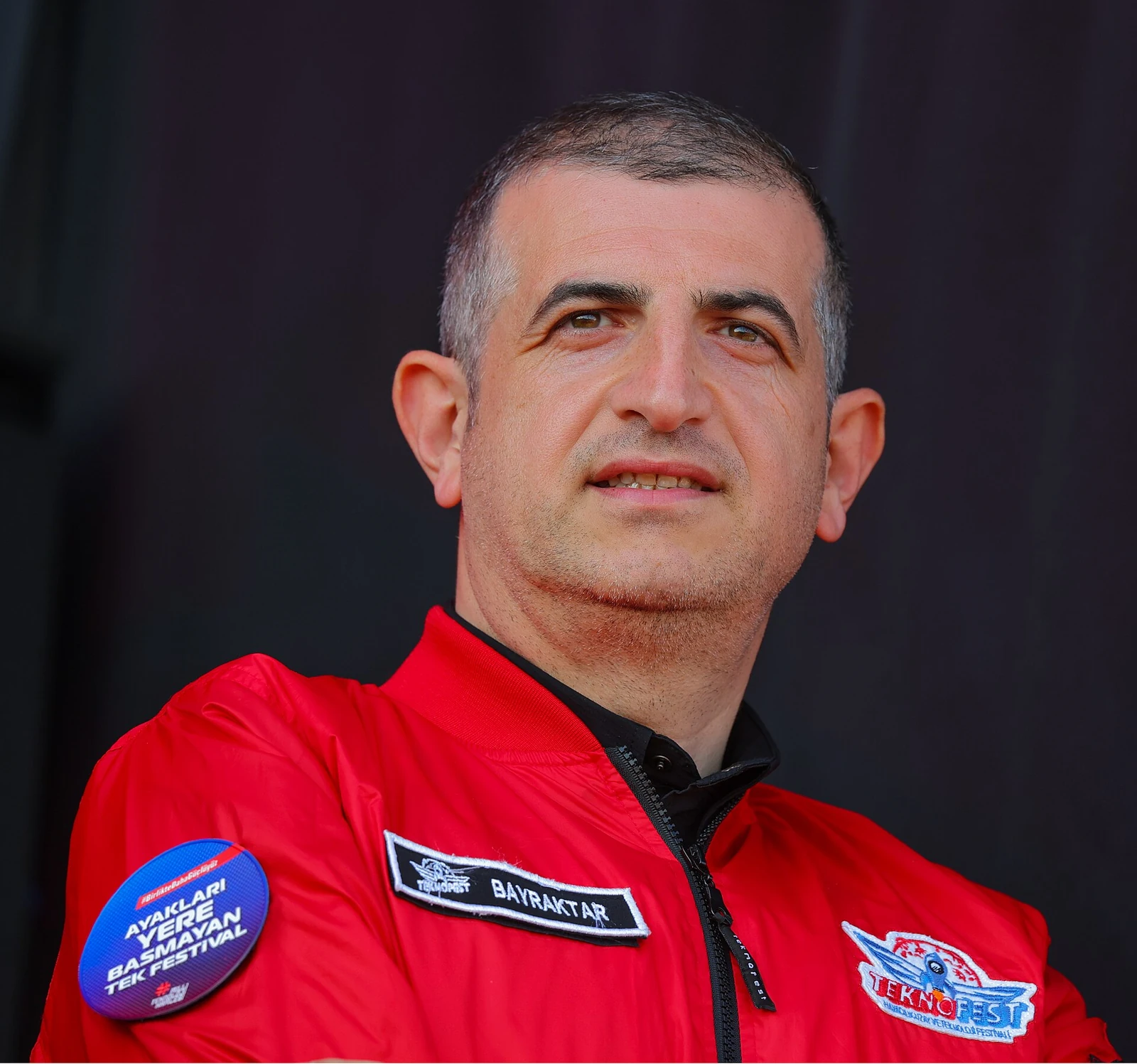
Haluk Bayraktar’s most consequential product has moved beyond the stage when a maiden flight alone could define progress. On 13 July, Baykar’s KIZILELMA S2 production model launched a JET-230 supersonic air-to-ground missile from more than 120 kilometres away and hit a naval target, according to a company disclosure two days later. The aircraft had flown from Baykar’s test centre in Çorlu to a Turkish air base in Merzifon, where it departed carrying two of the weapons.
The result added range and a maritime target set to KIZILELMA’s growing test record. It did not establish that the jet-powered uncrewed aircraft is ready for sustained operations. One successful firing proves an integration point under controlled conditions. A deployable system must repeat that performance across aircraft, crews, bases, weather, software versions and contested communications, while meeting military airworthiness and customer-acceptance requirements.
That distinction now defines the commercial and leadership test for Bayraktar, Baykar’s chief executive. The company has said serial production is under way and has targeted entry into Turkish inventory in 2026. It has not publicly provided a firm production rate, an accepted fleet size, a unit cost or availability data. The S2 designation is evidence that hardware is advancing; it is not a substitute for the operating record on which customers make long-term procurement decisions.
The programme has crossed several technical gates
KIZILELMA’s development speed is real. Baykar launched the project with its own capital in 2021 and flew the first prototype in December 2022. A substantially revised production prototype, PT3, made its maiden flight in September 2024 after structural and avionics changes. During 2025, it completed aerodynamic and manoeuvring work with an integrated afterburning engine alternative, followed by a sequence of weapons and autonomy trials.
In October 2025, PT3 released TOLUN and TEBER-82 guided munitions in separate sorties. The next month, Baykar reported that KIZILELMA used an onboard MURAD active electronically scanned array radar to designate a jet-powered aerial target and hit it with a GÖKDOĞAN beyond-visual-range missile. In December, two prototypes flew in close formation using Baykar’s fleet-autonomy software. Joint trials conducted with Leonardo M-346 aircraft in May 2026 then tested crewed-uncrewed formations, data exchange and the ability of an M-346 crew to command KIZILELMA’s position changes, separations and rejoins.
These are not trivial demonstrations. They span flight controls, radar, weapons, communications and collaborative software, and they show that Baykar is testing the aircraft as a mission system rather than an isolated airframe. The July firing extends that chain. Roketsan describes the JET-230 family as a solid-fuel, supersonic weapon designed for land and sea targets; the tested release from beyond 120 kilometres allowed the aircraft to remain distant from the target.
Yet the evidence remains largely milestone-based and company-reported. Baykar has not disclosed the number of KIZILELMA flight hours, the size of its instrumented test fleet, reliability growth, software-defect closure or the conditions applied to the latest firing. It has also not published measured radar-signature data to support the low-observability language used in its product material. This does not invalidate the tests. It limits what an outside customer can infer from them.
Serial production is more than another prototype
Baykar advertises the current configuration with an 8.5-tonne maximum take-off weight, a 1.5-tonne payload, a combat radius of 500 nautical miles, more than three hours of endurance and a maximum speed of Mach 0.9. Those figures place KIZILELMA in a more demanding industrial class than the propeller-driven aircraft on which Baykar built its export franchise. A faster jet carries greater thermal, structural and propulsion loads. It also brings a larger test matrix when radar, electronic protection, communications and weapons are altered.
Production therefore cannot be measured by airframes leaving a line. Each aircraft must conform to a controlled design baseline. Suppliers need qualified processes, components require traceability and software loads must be configuration-managed. Changes discovered during flight testing have to enter the factory without creating incompatible batches. The discipline becomes harder when production starts before development is complete: early aircraft may need expensive retrofits, while frozen designs can lock in weaknesses revealed later.
Military certification is different from civil type certification, but it still requires an airworthiness basis, documented hazards, authorised operating limits and evidence that the system behaves safely. Weapons release adds separation analysis and stores-clearance work. Autonomy adds another layer because the customer must understand how the aircraft responds to degraded sensors, lost links, conflicting commands and unexpected traffic. A headline test cannot compress those obligations.
The planned 2026 inventory entry is consequently best treated as a schedule objective, not as a declaration of full combat capability. An initial aircraft can enter inventory with restrictions and continue operational evaluation. The more meaningful milestones will be acceptance by the customer, formation of a trained unit, repeatable sortie generation and expansion of the authorised mission set. Baykar has not yet disclosed those outcomes.
Export cash finances the transition, but obscures its cost
Baykar enters this phase with an unusually strong source of internal funding. It reported $2.5 billion in revenue for 2025, of which $2.2 billion, or 88 per cent, came from exports. The company said it had signed agreements across 39 countries by July 2026, including 36 for the TB2 and 16 for AKINCI, with overlap between the customer groups. That installed base gives it supply-chain purchasing power, international relationships and experience training operators far from Türkiye.
The figures are company disclosures from a privately held business. Baykar does not publish the detailed margins, cash flow, backlog quality or research spending that a listed defence contractor would normally provide. Its 2025 export record therefore demonstrates demand and financing capacity, but not the economics of KIZILELMA. Jet engines, radar arrays, low-observable materials and high-tempo flight testing can absorb cash long before a new platform produces service revenue.
In a 2024 interview, Bayraktar said the company had allocated $1 billion to KIZILELMA, planned at least $1.5 billion of investment over five years and intended to put $300 million into engine production. Those commitments illustrated the scale of the wager, but they were plans rather than a current audited cost account. The question in 2026 is how much additional capital will be required to finish qualification, create production tooling and support the first operational unit.
Self-financing gives Baykar freedom from annual public-market pressure, although it does not remove opportunity cost. Cash committed to KIZILELMA cannot fund production capacity for the TB2 and AKINCI, spare parts for existing customers or other development programmes. Bayraktar must decide how much concurrency the balance sheet can carry and which capabilities belong in the first operational standard. Adding every possible weapon and mission before the baseline is stable would generate demonstrations while delaying a supportable product.
Availability will decide whether the economics work
For an air force, the useful output is not aircraft delivered but mission-ready sorties. KIZILELMA will need trained maintainers, ground-control equipment, simulators, secure data infrastructure, spare engines, repair capacity and mission-planning tools. Technical publications and fault diagnostics must mature alongside the aircraft. A platform that performs an advanced firing but spends long intervals awaiting a component offers less operational value than a simpler fleet that can launch repeatedly.
Propulsion is a particular strategic issue. Bayraktar has acknowledged the importance of turbine-engine capability and set out a longer-term plan to invest in domestic production. Until that plan yields a qualified engine at rate, supply continuity, overhaul capacity and configuration changes will shape how quickly fleets can grow. Domestic manufacture would not end the work: a new engine needs its own durability campaign, production learning and maintenance network.
Software creates a recurring business opportunity and an operational liability. Fleet autonomy, radar processing and crewed-uncrewed control can be upgraded after delivery, allowing capability to improve without replacing the airframe. They also require secure update pipelines, regression testing and clear responsibility when different suppliers alter connected systems. The May trials showed that KIZILELMA could exchange data and respond to another aircraft’s commands in a defined exercise. Operational interoperability will demand many more combinations of aircraft, networks and electronic conditions.
Weapons integration follows the same pattern. Supporting TOLUN, TEBER-82, GÖKDOĞAN and JET-230 gives a prospective operator options across ground, maritime and air targets. Every additional store, however, creates testing, inventory and training obligations. The commercial prize is a wider mission set and potential upgrade revenue. The risk is an engineering organisation fragmented across too many configurations before the first fleet has established a stable maintenance rhythm.
Asia offers a demanding comparison
KIZILELMA’s transition matters well beyond Türkiye because Indo-Pacific air forces are seeking uncrewed aircraft that can extend sensors, weapons and mass without matching the cost of a crewed fighter. Australia’s MQ-28 Ghost Bat provides one useful benchmark. Boeing and the Royal Australian Air Force reported the programme’s 100th flight in March 2025; in May 2026 it completed three flights from a United States naval range, its first operation outside Australia. Boeing also disclosed radar cross-section testing intended to provide repeatable data for procurement and certification.
The two programmes are not identical. KIZILELMA is presented as a more independent combat aircraft with a broad weapons set, while MQ-28 is centred on collaborative missions alongside crewed platforms. The comparison is still instructive. Asian customers will examine evidence rather than labels: flight-test depth, radar performance, autonomy under human command, sovereign access to software, delivery tempo and the cost of sustaining a squadron.
Baykar’s established exports may help it compete on speed and commercial flexibility. Its record with TB2 and AKINCI shows that it can deliver outside the traditional group of Western prime contractors. KIZILELMA raises the threshold. Customers buying a jet-powered combat system will require stronger assurance on airworthiness, cyber protection, engine support and long-term upgrade control. Export approvals and interoperability with national weapons and networks will further separate a production model from an exportable fleet.
There is also a governance test in the autonomy that gives these aircraft their economic appeal. Automated formation and navigation can reduce crew workload, but the authority to identify and engage targets must remain accountable. Baykar’s crewed-uncrewed trial described full human control and decision-making as the system moves towards greater autonomy. Converting that principle into verified rules, audit trails and resilient command links will be essential for customers operating under different legal and military doctrines.
Bayraktar’s next milestone should be operational evidence
Haluk Bayraktar’s contribution is now less about presenting another successful test than building the organisation that can repeat it. As chief executive, he controls capital allocation, supplier scale, hiring and the contractual promises made to customers. His brother Selçuk, Baykar’s chairman and chief technology officer, leads the programme’s public flight-test milestones. Haluk’s task is to ensure that technical ambition becomes an aircraft Baykar can build, support and improve without weakening the export business that pays for it.
The clearest proof points are measurable. Baykar needs accepted production aircraft rather than an expanding catalogue of prototypes; a disclosed path from limited inventory entry to a trained operational unit; evidence of flight-hour accumulation and reliability growth; and a sustainment system that can generate sorties at predictable cost. Production should rise without uncontrolled retrofit work, while software and weapons releases should follow a disciplined baseline.
The July JET-230 firing is important because it shows that KIZILELMA’s mission portfolio is becoming more credible at the moment Baykar calls the aircraft a production model. It also sharpens the gap that remains. If Bayraktar can close that gap with accepted aircraft, repeatable manufacturing and dependable fleet availability, KIZILELMA can become a new engine of Baykar’s global business. If not, its impressive sequence of demonstrations will remain a costly development achievement rather than a durable combat-air franchise.