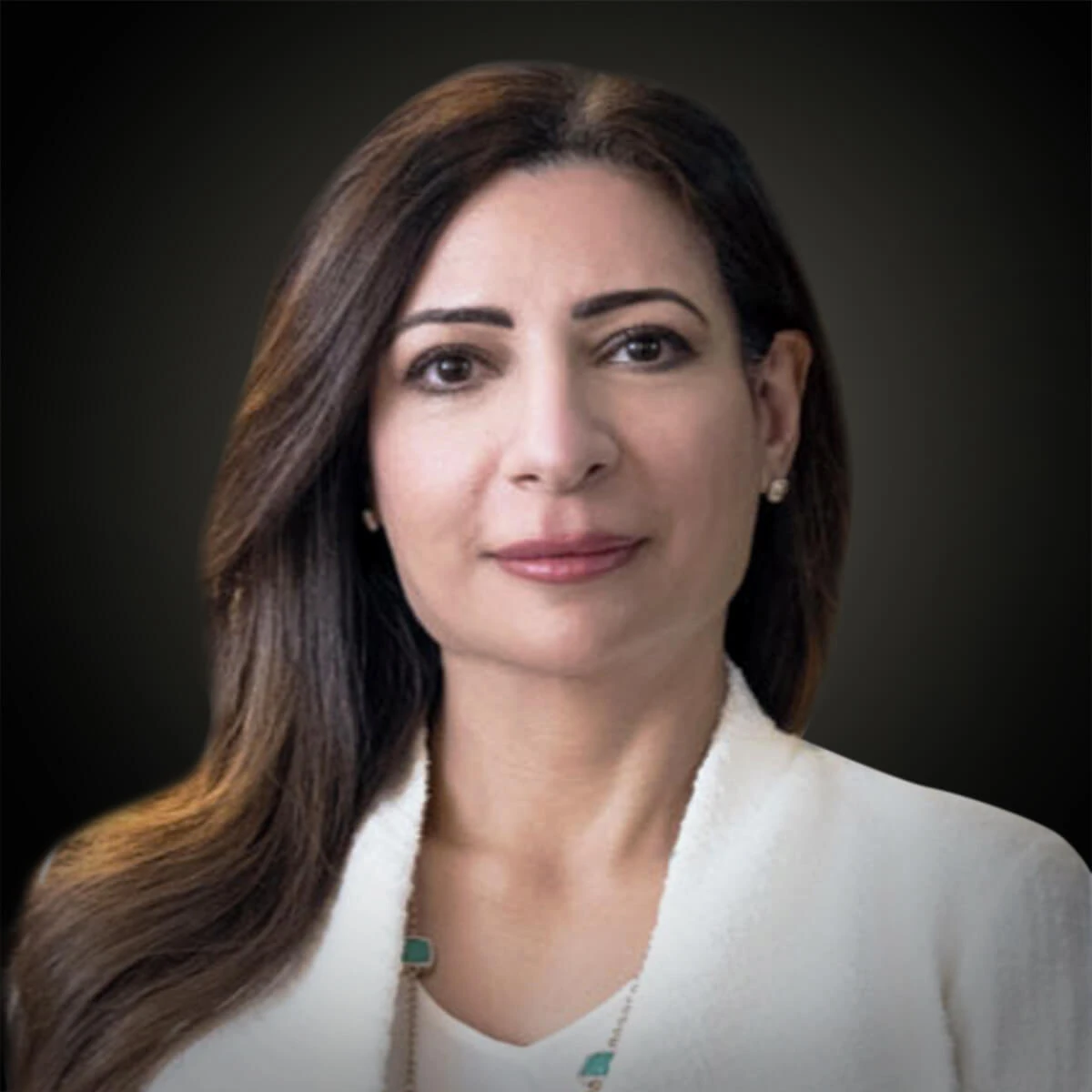
Hana Al Rostamani leads First Abu Dhabi Bank at a moment when the UAE’s financial influence is expanding faster than its geography might suggest. Sovereign capital, energy transition, logistics, technology investment and trade are connecting Abu Dhabi with Asia, the Middle East, Africa and Europe. FAB, the country’s largest bank, can finance and intermediate those flows. The opportunity is to become a preferred bank for clients operating across the new corridors. The leadership test is ensuring that international ambition produces repeatable returns and strong controls rather than a collection of distant offices and exposures.
Al Rostamani has positioned FAB around growth, customer experience and technology while maintaining a strong capital base. High regional liquidity and interest rates supported earnings, but those conditions can change. A globally relevant bank needs fee income, transaction relationships and disciplined lending that endure through the cycle. It must also manage currency, sanctions and operational risk across jurisdictions whose rules and politics differ.
The UAE’s state-linked ecosystem is an advantage. FAB has relationships with major corporates, government entities and investors whose projects extend abroad. That information and trust can open doors. It also creates concentration and governance questions. The bank should price each exposure on its own economics and avoid assuming implicit support. National strategic importance makes independent risk judgement more necessary, not less.
Cross-border corridors need local depth
Trade between the Gulf and Asia is expanding across energy, food, technology and manufacturing. FAB can provide payments, foreign exchange, working capital and advisory services from China and India to Southeast Asia. A corridor strategy works when teams on both ends share customer information and decision rights. It fails when offices chase unrelated local balance sheets under a global label.
Al Rostamani should define markets where FAB has a genuine right to win: flows connected to the UAE, sovereign and institutional capital, and clients needing regional expertise. Local partnerships may be more efficient than owning full operations in every country. Each expansion should have clear revenue, risk and funding milestones. Prestige is not a banking return.
Africa presents opportunity in infrastructure, commodities and trade but includes currency and sovereign risk. Projects require conservative assumptions about repayment and political change. Risk-sharing with development institutions and export agencies can make finance more sustainable. FAB should avoid concentrating on headline transactions while neglecting the local systems needed to monitor them.
Wealth management can connect capital across generations
Abu Dhabi and Dubai are attracting entrepreneurs, family offices and wealthy individuals. FAB can combine local trust with investment access across global markets. The business offers fee growth that is less dependent on interest margins, but it requires high standards in suitability, custody and source-of-wealth controls. Rapid onboarding should not outrun compliance.
Family businesses need governance, succession and corporate services as well as investment products. FAB can deepen relationships by connecting private wealth with operating companies, provided conflicts are managed. Advisers should be rewarded for long-term client outcomes rather than product volume. Open architecture can strengthen credibility when the best solution is not manufactured by the bank.
Digital wealth tools can serve a broader affluent market, but complex decisions still need human judgement. AI may assist portfolio analysis and language support. It should not make opaque recommendations or blur responsibility. Al Rostamani can differentiate FAB by combining high-touch regional knowledge with transparent technology.
Technology and AI are now infrastructure risks
FAB’s digital channels carry payments, trade documents and sensitive client data. Modernisation can lower cost and improve speed, but migrating core systems creates dependency and cyber exposure. The bank needs staged implementation, tested recovery and clear accountability for cloud providers and vendors. Customer-facing innovation should not advance faster than operational resilience.
Artificial intelligence can strengthen fraud detection, service and credit analysis across languages. Models must be validated for the region’s diverse populations and business structures. Decisions affecting credit or compliance need explainable evidence and human oversight. A model built on data from another market may misread local cash flows or names, producing unfair outcomes and regulatory risk.
Cyber threats are increasingly geopolitical. A major UAE bank may be targeted because of its clients and national role. FAB should share intelligence with authorities and peers while maintaining independent defences. Board exercises should simulate prolonged outages and compromised suppliers. Resilience includes the ability to communicate clearly when facts are incomplete.
Climate finance needs credible definitions
Market risk is becoming more important as FAB expands advisory and trading capabilities. Limits should reflect liquidity under stress, not normal-day volatility. Valuation controls need independence, particularly for instruments linked to less liquid regional assets. Growth in sophisticated products should be paced by risk talent and systems rather than client demand alone.
Payments innovation, including tokenised deposits and digital assets, may improve cross-border settlement. FAB should experiment within clear regulatory boundaries and focus on customer problems rather than speculation. Interoperability, legal finality and cyber resilience matter more than announcing a novel platform. The bank can help shape regional standards through cautious, evidence-led pilots.
The UAE remains a major hydrocarbon producer while investing heavily in renewable energy and decarbonisation. FAB can finance both conventional energy and transition. The bank should define how projects align with credible emissions pathways and disclose progress without presenting every efficiency loan as green. Clients need capital to change, but transition finance must include measurable commitments.
Physical climate risk is immediate across heat, water scarcity and coastal exposure. Credit models should incorporate these factors in property and infrastructure. Financing adaptation can create opportunity in cooling, water and resilient construction. Al Rostamani should make climate assessment part of ordinary underwriting rather than a separate sustainability exercise.
International investors will scrutinise standards. FAB can use recognised frameworks while adapting them to regional realities. Independent assurance and transparent exclusions can reduce accusations of greenwashing. The bank’s role is not to set national energy policy, but it is responsible for understanding the long-term value of assets it finances.
Leadership visibility carries institutional responsibility
Regulatory coordination will become more demanding as the footprint expands. Home and host supervisors may differ on capital, data and recovery expectations. FAB should maintain clear legal-entity governance and ensure local boards have sufficient expertise. A central risk framework must not prevent a country team from escalating a local concern. Resolution planning may feel remote in good times, but it clarifies dependencies before stress.
Funding strategy also deserves attention. A strong domestic deposit base can support lending, while international growth may require currencies and tenors that are less stable. Treasury should match assets prudently and avoid relying on short-term wholesale markets. Transfer pricing must reflect the real cost of liquidity so distant units do not appear profitable only because Abu Dhabi funding is underpriced internally.
Client concentration can rise quietly when related entities operate across sectors and countries. FAB should aggregate exposures by ultimate economic risk, including guarantees and derivatives. Stress tests need scenarios involving energy prices, regional property and geopolitical disruption occurring together. Growth is safest when the bank understands how apparently separate assets can fail for the same reason.
Customer experience remains a practical test of scale. Corporate clients need consistent onboarding and payment visibility across markets; individuals need rapid resolution when digital systems fail. Al Rostamani should track complaints, processing time and abandonment alongside revenue. A global bank is not created by adding countries if customers still encounter separate forms, repeated checks and unclear ownership.
The bank can also strengthen the regional talent market. International expansion requires bankers who understand Asian and African markets as well as Abu Dhabi. Rotations, local leadership and technical training can create that capability. Importing expertise is useful, but institutional knowledge becomes durable when Emirati and local professionals share senior responsibility across the network.
As the first woman to lead the UAE’s largest bank, Al Rostamani has significance beyond FAB. That visibility creates an opportunity to broaden leadership pipelines across banking and technology. Progress should be measured through responsibility, promotion and retention, not symbolic appointments. Diverse teams improve judgement in a bank serving international clients.
The organisation also needs strong challenge. Rapid growth and prominent clients can make junior employees reluctant to question decisions. Risk leaders must have authority and direct board access. Compensation should reflect conduct and the long-term performance of assets. A culture that raises concerns early is essential to global expansion.
Capital allocation will bind the strategy. FAB needs buffers for credit and market shocks while funding technology, dividends and growth. Acquisitions may provide capability, but large deals could import unfamiliar risks and distract integration. Organic corridor growth and targeted partnerships may produce better returns. Al Rostamani should state the hurdles clearly enough that investors can distinguish strategy from opportunism.
The next twelve to twenty-four months will test the bank under changing rates and continued geopolitical tension. Success will mean fee and transaction growth, resilient asset quality and measurable progress in priority corridors. It will also mean no separation between expansion and control: every new client, model and market should meet the same institutional standard. FAB has the balance sheet and national relationships to become a more influential global bank. Al Rostamani’s legacy will depend on whether execution, technology and governance extend as far as the UAE’s financial reach.