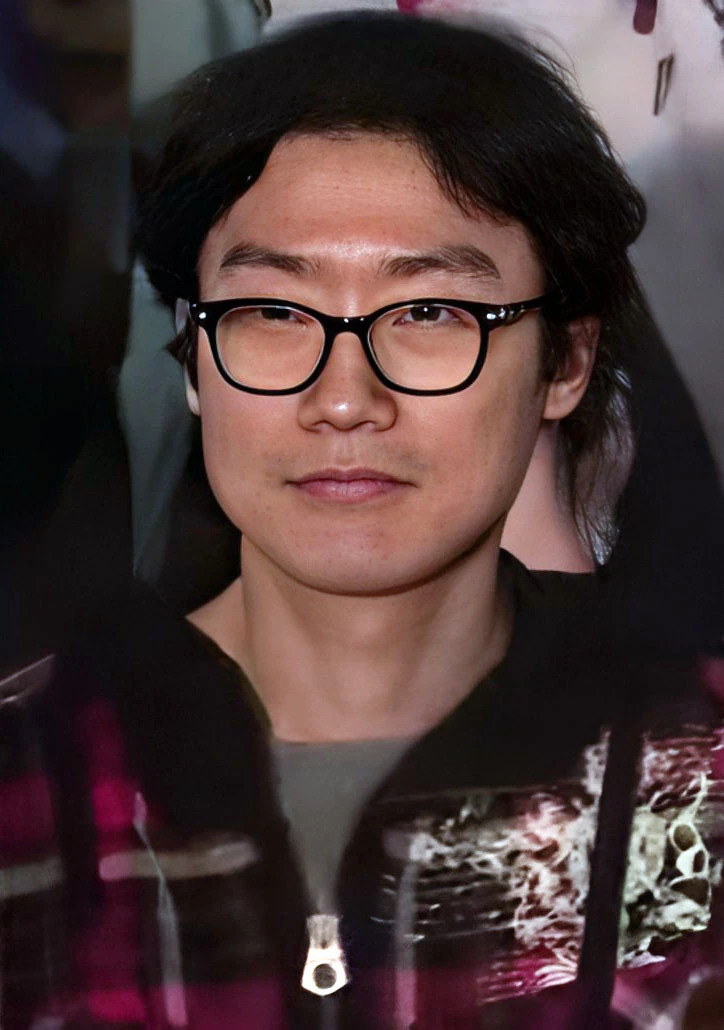
Hwang Dong-hyuk did something the streaming business rarely encourages: he ended a global hit while the audience was still enormous. The third and final season of Squid Game drew about 60 million views in its first three days in June 2025, a Netflix record for a series over that period. It reached number one in all 93 countries tracked by the platform during its opening week. The previous season accumulated more than 192 million views and ranked among Netflix’s largest television releases. By the time Hwang closed the story, the property had already expanded into reality television, games, live experiences, merchandise and a global promotional system.
That scale makes the ending more than a creative decision. It is a test of who controls value after a streaming franchise becomes larger than the work that created it. Netflix can continue to exploit the name through formats and extensions. Hwang has to decide whether his future lies inside that universe, alongside it or deliberately away from it. His authority is at its highest, but so is the risk that every subsequent project will be judged as a smaller version of Squid Game.
The series changed the assumptions of global television. A Korean-language drama built around debt, class humiliation and children’s games became Netflix’s most important original series. It demonstrated that local specificity could support worldwide scale without an English-language remake as the entry point. It also exposed the tension in a platform model that pays production costs and secures rights upfront while retaining the upside when a title becomes a cultural and commercial phenomenon.
The value captured by the platform
Hwang conceived the original story years before a buyer was willing to finance it. Netflix supplied the capital, distribution and risk tolerance that the Korean film and television market had not. The arrangement solved the hardest problem: getting the work made. It also placed the intellectual property inside a global company whose business is to convert attention into subscriptions, retention and franchise activity across markets.
The first season’s success produced far more value than a production fee could anticipate. Hwang has discussed the absence of performance-linked royalties under the initial arrangement, and the issue became part of a wider Asian debate over creator compensation. Netflix’s position has been that paying fully at the outset protects producers when a programme fails. The weakness of that model appears when success is extreme. A fixed payment transfers most of the upside to the platform even when the creator’s distinct idea is the principal reason for the result.
That imbalance does not make the transaction irrational. Without Netflix, Squid Game might have remained an unproduced script. The company took a risk that domestic financiers rejected and gave the series simultaneous reach that no Korean broadcaster could match. The commercial question is what changes after success removes much of the uncertainty. Later seasons, new projects and creator deals should reflect a different bargaining position.
Netflix has committed to invest $2.5 billion in Korean content over four years, roughly twice the amount it had announced since entering the market in 2016. The company cites Squid Game as proof that Korea can generate global hits. For the local industry, the investment brings employment, technical capacity and international exposure. It can also deepen dependence on one buyer and leave Korean companies with limited ownership of the programmes that build their reputation.
A franchise bigger than its ending
Hwang’s final season closed the story of Seong Gi-hun, but it did not close the commercial system around the games. Squid Game: The Challenge translates the fictional competition into unscripted entertainment. Games, consumer products and live experiences keep the visual language in circulation between scripted releases. Global activations for the final season reached more than 25 countries; Netflix said related marquee events drew millions of online participants and hundreds of thousands in person.
This is the logic of contemporary intellectual property. A successful story becomes a reusable design system: numbered tracksuits, geometric masks, coloured staircases, a giant doll and a set of rules that can be adapted without the original characters. Hwang created the grammar. Netflix owns the ability to deploy it at industrial scale.
There is a creative paradox in that expansion. Squid Game is a critique of systems that turn human desperation into spectacle. Its commercial afterlife depends on turning that spectacle into participation and merchandise. The contradiction did not prevent growth; it may have intensified it. Audiences can recognise the satire and enjoy the games at the same time. For Hwang, the issue is whether remaining close to the franchise strengthens his influence or makes him responsible for every use of an idea he no longer fully controls.
Ending the scripted series gives him a boundary. It preserves the dramatic argument from indefinite extension and creates space for another work. Yet the market will continue to associate his name with the franchise because his creator credit is one of its strongest authenticity signals. Any return, spin-off or consultation would carry value. So would a clean break.
The next project as a negotiation
Hwang has indicated that his next major work will move back towards feature filmmaking and a darker near-future story. That direction matters. A film offers tighter authorship and a finite production cycle, but it also operates in a weaker theatrical market, particularly in South Korea where cinema attendance has struggled to regain its earlier strength. A platform can finance ambition and guarantee distribution; a theatrical release can preserve event value and a clearer sense of the work as a discrete object.
The choice of partner will reveal how much leverage Squid Game created. Hwang can seek a deal that protects more rights, includes performance participation or gives his production company a stronger position. He can also use competition among buyers to secure creative freedom. The challenge is that large budgets often recreate the same dependency under better terms. True control is not only approval over the script. It is a meaningful claim on the value generated after delivery.
His next work does not need to match the view count of Squid Game. Almost nothing can. It needs to prove that the series was an expression of a broader directorial intelligence rather than a single unrepeatable concept. That means making a project with a distinct commercial thesis, not a disguised attempt to reproduce the same violence, class conflict and survival mechanics.
Hwang’s earlier films already show range. He worked in social drama, historical comedy and family-centred cinema before the series. That record matters because it gives him a route out of franchise captivity. Biography should not be mistaken for future demand, however. The global audience that knows the masks may not automatically follow a less accessible film. Marketing will have to introduce Hwang as an author, not merely the man behind a brand.
Korea’s creator bargain
The industry consequences extend beyond one director. Korean television has become a global supply base because it combines strong writing, disciplined production and a domestic culture capable of generating its own genres and stars. Platforms benefit from costs that have historically been lower than comparable US productions and from stories that can travel through dubbing and subtitles. As competition for Korean content increases, creators should gain bargaining power. Whether they retain ownership is another matter.
Local producers need capital to develop work before a platform arrives, legal capacity to negotiate rights and distribution options beyond a single buyer. Public policy can support funds and export promotion, but it cannot manufacture audience demand. Squid Game supplied the most persuasive demand signal imaginable. The next phase should be measured by whether more of the resulting value remains with Korean creators and companies.
Hwang is unusually well placed to force the question. He has awards, global recognition and evidence that his decisions can move a platform’s subscriber conversation. If even he cannot secure a durable share of future value, lesser-known creators will struggle. If he can, the precedent may influence how Korean projects are packaged and financed.
Life after the largest number
The temptation after a phenomenon is to manage the decline: make extensions, preserve familiarity and avoid a conspicuous failure. Hwang’s stronger option is to use the ending as a capital event. He has released himself from the yearly burden of servicing the same story while retaining the reputation it built. The next twelve to twenty-four months are the window in which that reputation has maximum negotiating force.
Success will require discipline from both sides of the deal. Hwang must choose a project whose scale serves the idea rather than the expectation surrounding his name. His partners must resist marketing it as the next Squid Game. The audience needs a reason to follow the creator across form, tone and distribution.
Squid Game proved that a Korean story could become the centre of global television. Its final season proved that demand survived long enough for Hwang to end it on his terms. The unresolved business question is more consequential than another view record: can the person who created the platform’s defining franchise convert that achievement into ownership, choice and an identity beyond the property? Hwang has finished the game. Now he has to show that the creator did not finish with it.