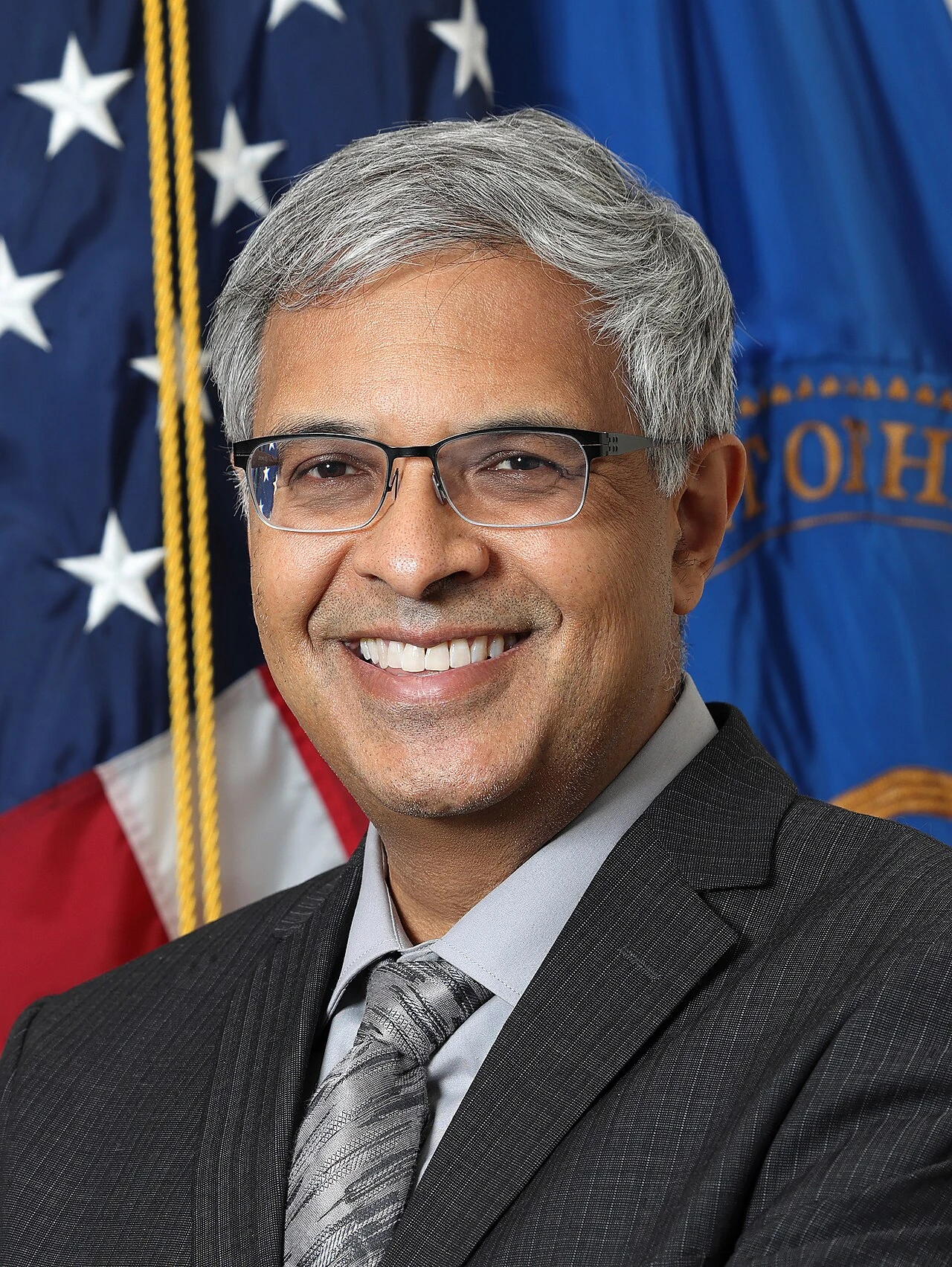
Jay Bhattacharya entered 2026 with something few incoming heads of the US National Institutes of Health receive: a reprieve from Congress and a mandate to disturb the machinery. The spending law signed in February provided NIH with $47.5 billion in programme-level funding, a one per cent increase over the previous year. That settlement rejected the far deeper reduction proposed by the administration for 2026, but it did not restore the old operating assumptions. Bhattacharya is using the breathing room to change how the agency chooses research, how it rewards risk and how it decides which scientific ideas deserve another dollar.
The change sounds procedural. It is, in fact, a capital-allocation decision on a scale matched by few organisations in medicine. NIH money supports laboratories, clinical networks, trainees and biotechnology formation throughout the United States, while influencing what universities and drugmakers investigate around the world. Bhattacharya’s “Unified NIH Funding Strategy” moves institutes away from treating fixed percentile paylines as the decisive threshold for grants. Scientific merit still matters, but institute directors are expected to weigh mission, portfolio balance, career stage and opportunity cost. The practical effect is to transfer more judgement from a numerical boundary to leaders managing a portfolio.
That discretion could finance unconventional work that conservative peer review misses. It could also make decisions less predictable for universities that hire staff and build facilities against multi-year grant expectations. Bhattacharya, an economist as well as a physician, is therefore running an unusually pure experiment in the economics of discovery: can a public funder behave more like an active portfolio manager without importing the short horizons, thematic fashion and key-person risk that active management often brings?
A stable budget, an unstable settlement
The 2026 appropriation matters because it separates immediate fiscal survival from structural reform. NIH received roughly $47.5 billion, including funding authorised through the 21st Century Cures Act. The administration’s 2027 request, however, asks for about $41.5 billion, roughly $5 billion below the comparable enacted 2026 programme level. It also proposes further institutional consolidation and transfers. Congress will decide the eventual number, but research organisations cannot wait for that answer before recruiting postdoctoral scientists, ordering equipment or opening trials.
Bhattacharya’s task is thus to improve productivity while the future cost base remains contested. More than four-fifths of some major institutes’ budgets flow outside government to universities, hospitals, research organisations and companies. A change in grant timing can become a cash-flow shock for a laboratory; a shift in priority can strand specialist infrastructure; uncertainty over renewals can push a young scientist into industry or out of research. None of those consequences appears immediately in a headline budget figure, yet all influence the rate at which biomedical knowledge compounds.
The unified strategy is intended to correct a genuine weakness. Grant systems can become risk-averse because reviewers have more confidence in established methods, familiar investigators and projects already surrounded by supportive evidence. Bhattacharya has argued that NIH funding increasingly favoured older ideas. He wants institute leaders to assemble a mix that includes high-risk, high-reward projects, early-career investigators and studies with a plausible chance of transforming a field. The agency is also simplifying funding notices, removing some pre-application requirements and signalling priority topics without proliferating bespoke programmes.
Those moves could lower transaction costs. Researchers have long spent substantial time interpreting notices and rewriting proposals to fit administrative categories. A simpler application system leaves more time for science and may widen access beyond institutions with large grant-support offices. Yet a portfolio approach only creates value if decision-makers can distinguish productive risk from fashionable speculation. Venture investors can absorb many failures in pursuit of one large return; a public health agency must also sustain unglamorous work in epidemiology, measurement, reference data and long-term cohorts. The best portfolio is not simply the one with the boldest projects.
Replication becomes an investment category
Bhattacharya has placed replication and reproducibility near the centre of his programme. NIH plans support for replication studies, an Office of Metascience and better linking of replication results to original research in PubMed. This is more than an academic clean-up. Irreproducible findings impose costs throughout the healthcare economy: companies pursue targets that later fail, patients enrol in trials built on weak premises, and funders pay again to discover that an apparent signal was noise.
A dedicated replication effort treats reliability as infrastructure. The commercial analogy is quality control in manufacturing: it does not generate a new product by itself, but it protects every subsequent investment. The difficult question is how to design incentives. Replication can become slow, adversarial and professionally unrewarding. If NIH chooses only prominent disputed studies, it risks turning the programme into a tribunal. If it spreads funds too broadly, the work may lack consequence. Success requires selecting results whose validity would materially change research or clinical capital allocation, pre-registering methods and publishing negative outcomes without drama.
The return could be substantial. Pharmaceutical research spending is consumed not only by late-stage clinical failure but by years invested before a target reaches human testing. Better validation upstream cannot eliminate biological risk, although it can expose some assumptions earlier. It also gives Asia’s drug developers and research hospitals a clearer basis for deciding which US-generated findings warrant local programmes. American basic science remains a critical input for biotechnology clusters in Japan, South Korea, Singapore and India. When its evidence is stronger, the benefit is exported; when its incentives are distorted, the cost travels too.
Bhattacharya’s interest in real-world data follows the same economic logic. Linking government and external datasets could make clinical research faster, broaden patient participation and test how treatments work beyond tightly selected trials. The value of such a platform would come from scale and interoperability, not from a single model. But data access is never frictionless. Privacy protections, consent, security, commercial rights and uneven coding standards can undermine both trust and analytical validity. A federal platform that is extensive but difficult to use would become expensive storage. One that is easy to use but weakly governed could damage public confidence for a generation.
Two agencies, one leadership bottleneck
Bhattacharya’s remit widened in February when he was named acting director of the Centers for Disease Control and Prevention while continuing to lead NIH. The combination places research funding and frontline public-health capacity under one individual at a sensitive moment. There is a strategic case for closer connection. Clinical evidence, surveillance data and intervention research frequently sit in separate bureaucratic channels. A leader overseeing both agencies can identify where those channels fail to meet.
There is also an obvious governance risk. NIH and CDC have different operating rhythms, statutory responsibilities and stakeholder relationships. NIH finances discovery over years; CDC must detect threats and issue guidance under time pressure. Concentrating leadership may accelerate coordination, but it can also centralise delay. Every hour spent on an outbreak, personnel decision or CDC controversy is time unavailable for a $47.5 billion research enterprise. An acting appointment compounds uncertainty because major organisational choices may outlast the temporary arrangement.
The dual role will be judged less by organisational charts than by whether the agencies preserve specialist authority. Public-health credibility cannot be rebuilt solely through a director’s message. It depends on transparent methods, stable data releases and the willingness to distinguish evidence from policy preference. The same is true at NIH. Greater discretion in grant funding makes documented reasoning more important, not less. Researchers need to understand why a highly rated project was passed over and how strategic considerations were applied. Without that audit trail, portfolio management can be interpreted as political selection even when the scientific rationale is sound.
This is where Bhattacharya’s past as a prominent critic of pandemic restrictions remains relevant, though it need not define his term. His appointment embodied a political demand to challenge the public-health establishment. The leadership question is whether he can convert dissent into better institutions rather than permanent opposition. An agency designed mainly to reverse its predecessor’s choices will eventually run out of reversals. An agency that publishes clear standards, tests its own assumptions and changes course when evidence requires it can turn scepticism into an operating discipline.
Asia will feel the funding choices
The consequences extend well beyond the United States. NIH grants support international collaboration, shared databases and scientific training, while US universities employ researchers from across Asia. Tighter scrutiny of foreign relationships, data access and research security is now embedded in the geopolitical environment. Legitimate concerns about intellectual property and undisclosed affiliations must be addressed, especially in strategically important fields. Yet poorly calibrated restrictions can sever productive networks, duplicate research and deter talent that has historically strengthened American science.
For Asian governments, the lesson is not simply to replace uncertain US funding with domestic money. Few can reproduce NIH’s breadth, peer-review capacity or clinical networks. They can, however, reduce dependence by funding long-horizon infrastructure, making national health data research-ready and forming partnerships that survive annual political cycles. Japan and South Korea have strong translational institutions; Singapore has built concentrated biomedical capabilities; India offers scale in disease burden, clinical expertise and digital health. Each has an interest in an NIH that remains open enough to collaborate and rigorous enough to trust.
Bhattacharya’s emphasis on chronic disease, nutrition, artificial intelligence and alternatives to animal testing also intersects with Asian priorities. Ageing societies need better prevention and cheaper trials. Large, diverse populations can improve the external validity of algorithms and treatment evidence. New approach methodologies could shorten development in markets where cost constrains access. But international relevance must be designed into studies. Data drawn mostly from one health system, ancestry group or care pathway will not automatically generalise across Asia’s clinical and genetic diversity.
The business community should watch three indicators. First is the composition of awards: whether early-career and genuinely novel projects gain share without hollowing out foundational science. Second is throughput: the time between application, decision, award and usable result. Third is downstream validation, including replication and movement into diagnostics, medicines or public-health practice. Counting grants or publications alone would reward activity rather than value.
The price of discretion
NIH has always made choices; paylines never removed judgement. Bhattacharya is making that judgement more explicit and placing more of it with institute leaders. That can be an honest improvement if the agency publishes enough evidence for outsiders to evaluate the choices. Portfolio balance should not become a phrase that explains everything after the fact. High-risk science should have defined review points. Replication should change decisions. Data platforms should demonstrate use, not merely scale.
The tension between Congress’s 2026 appropriation and the administration’s smaller 2027 request gives the experiment urgency. Bhattacharya cannot assume that stable money will continue, and research institutions cannot instantly resize around each proposal. If he can show that a more selective, less bureaucratic NIH funds better ideas, catches weak evidence earlier and connects discovery to health outcomes faster, he will have a defensible case for investment. If grant selection becomes opaque, workforce instability grows and the dual NIH-CDC role diffuses accountability, the overhaul will look like volatility imposed on an enterprise whose returns require patience.
Bhattacharya has won the authority to challenge how American medical science is financed. The proof will not be a new priority list or a smaller stack of forms. It will be whether the 2026 cohort of funded ideas produces a stronger, more diverse and more reproducible pipeline than the system he inherited—and whether that improvement is visible before fiscal pressure turns reform into retrenchment.