
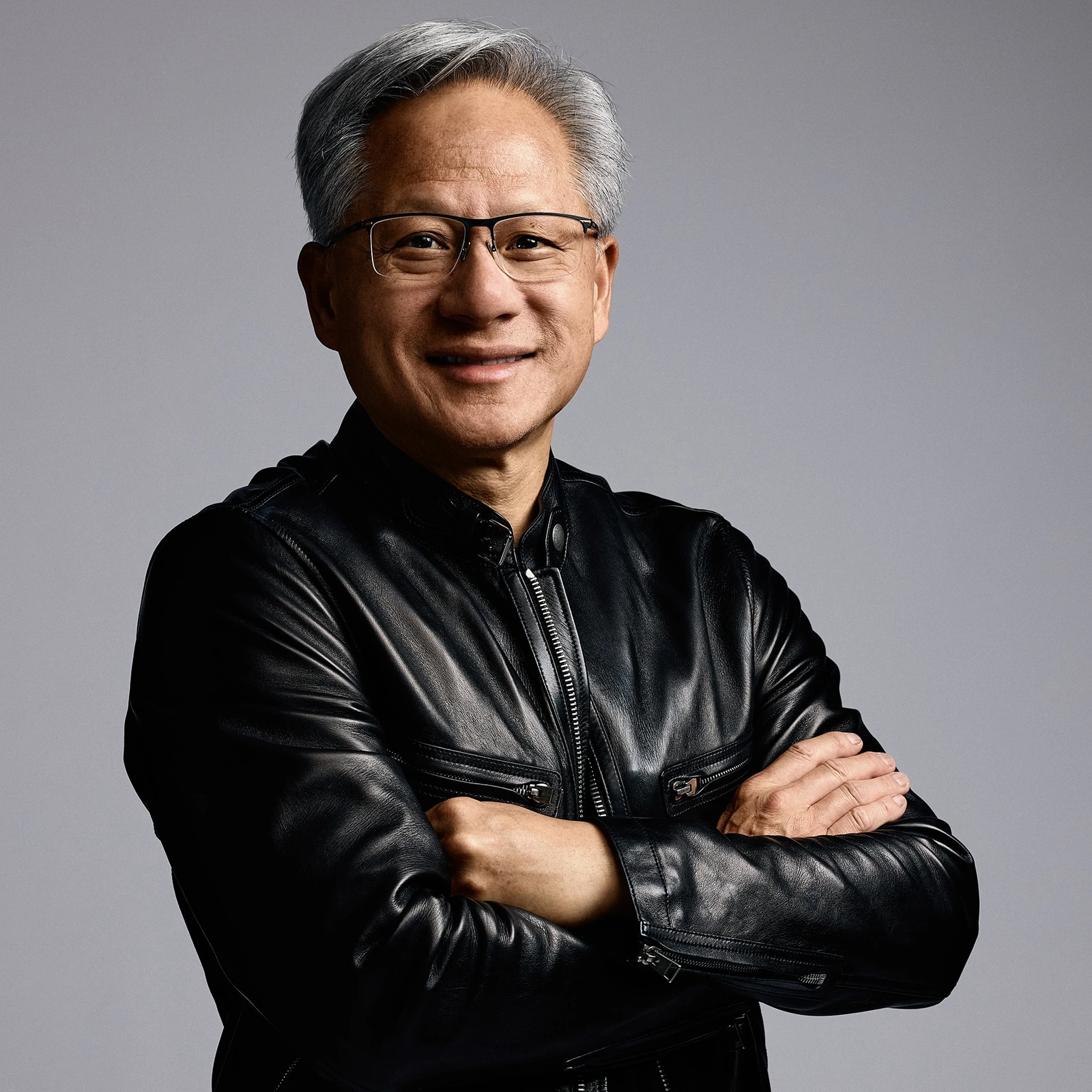
Jensen Huang’s latest sale is larger than a shipment of processors and more consequential than another cloud contract. On 16 July, Nvidia said it would work with Noetra to build a 140-megawatt Vera Rubin AI factory for Japan, supported by the Ministry of Economy, Trade and Industry and leading domestic companies. The installation is planned around 13,750 Vera central processors and 27,500 Rubin graphics processors. It is intended to train open multimodal models for robots, digital twins and industrial agents, giving Japan a shared computing base for sectors in which it still has formidable physical expertise.
The project captures the change Huang is trying to make in Nvidia’s commercial identity. The company built its present dominance by supplying scarce accelerators and the software needed to use them. It now wants to define how an AI factory is designed, connected, simulated, secured and operated. Chips remain the economic engine, but the product has expanded to include rack architecture, networking, storage processors, software libraries, reference designs and operational tools. National governments, not just hyperscale technology companies, are becoming customers for the resulting system.
Japan is an unusually revealing test. It possesses deep manufacturing knowledge, strong robotics groups and valuable industrial data, yet its cloud and frontier-model capacity trails that of the United States and China. Nvidia’s proposition is that an integrated national platform can close part of that gap quickly. The harder question is whether the infrastructure will generate enough useful intelligence, productivity and exportable intellectual property to earn a return on the power, capital and public support committed to it.
Record numbers, a broader definition of the market
Nvidia arrives at this experiment from a position of financial strength without precedent in the semiconductor industry. Revenue for the quarter ended 26 April 2026 reached $81.6 billion, 85 per cent higher than a year earlier. Data-centre revenue was $75.2 billion, up 92 per cent, while the group’s GAAP gross margin stood at 74.9 per cent. Management guided to $91 billion of revenue for the following quarter even while assuming no data-centre compute revenue from China.
Those figures give Huang room to invest through an annual product cycle that would exhaust a less profitable supplier. They also show how concentrated Nvidia has become. More than nine dollars in every ten of quarterly revenue came from the data-centre business. A pause by a handful of major buyers, a delay in a new architecture or a material change in model economics would therefore travel rapidly through the income statement. The scale of current demand reduces short-term anxiety, but it raises the standard of execution.
Nvidia’s response is to enlarge the market it describes. From the current fiscal year, the company is organising its reporting around two platforms: Data Centre and Edge Computing. Within the former, it will distinguish hyperscalers from AI clouds, industrial customers and enterprises. Edge will encompass personal computers, vehicles, robotics, telecommunications and other systems that process data outside central facilities. The categories make a strategic argument. They suggest that accelerated computing will not be confined to a few giant training clusters, but will spread through national economies and physical industries.
Huang has backed that claim with capital returns as well as investment. Nvidia returned roughly $20 billion to shareholders in its latest quarter. Its board added $80 billion to the repurchase authorisation and lifted the quarterly dividend from one cent to 25 cents a share. The distribution signals confidence that the cash-generating core can fund both product development and a much larger payout. It also creates a discipline: the company must maintain exceptional margins while financing a supply chain and software stack that grows more complex with every generation.
The factory becomes the product
Vera Rubin illustrates the scope of the undertaking. Nvidia no longer presents the accelerator as an isolated component. The platform coordinates a Vera processor, Rubin GPUs, NVLink switching, network interfaces, data-processing units and Ethernet systems. Its DSX reference architecture extends that co-design to data-centre layout and operation, with software intended to improve token output per megawatt and shorten the time between equipment delivery and billable production.
That is commercially important because customers increasingly care about the cost of a useful answer, not the benchmark speed of one chip. Inference for long-running agents can involve repeated reasoning, retrieval and tool use. Memory movement, networking, storage and power management may determine the bill as much as raw arithmetic. By controlling more of those layers, Nvidia can defend its economics even if individual accelerators become easier to substitute.
The same expansion exposes the company to responsibilities usually carried by infrastructure integrators. A national AI factory must obtain power, meet construction schedules, operate reliably and accommodate models that change faster than buildings. It must satisfy local rules on data, security and procurement. Nvidia can provide a technical blueprint, but much of the return depends on partners and users over which it has limited control. A beautifully engineered cluster with weak software adoption is still an underutilised asset.
Japan’s FRONTia programme is designed to avoid that outcome by connecting the new capacity to industrial model development. The country has set an ambition to secure more than 30 per cent of the global AI-robotics market by 2040. Domestic manufacturers and research groups are expected to combine operational knowledge with Nvidia’s Cosmos, Isaac, Nemotron and related tools. If that produces reliable robots for factories, logistics and healthcare, the national installation could become a model for other economies seeking sovereign capacity without recreating a complete chip ecosystem.
There is an unresolved tension inside the word sovereign. Japan will gain domestic computing access and models adapted to local needs, but the technical base remains dependent on an American platform and a highly international production network. Sovereignty in this arrangement means control over workloads, data and deployment more than independence from foreign technology. Governments may accept that bargain for speed, yet they will expect continuity of supply and freedom to operate through future political disputes.
Asia supplies the ambition and the vulnerability
Huang’s strategy is inseparable from Asia. Vera Rubin entered full production with an ecosystem that Nvidia says includes 150 partners in Taiwan alone and more than 350 factories across 30 countries. Taiwanese server makers, foundries, packaging specialists and component suppliers turn Nvidia’s designs into rack-scale systems. Korean memory producers provide the high-bandwidth memory that feeds them. Japanese groups contribute materials, equipment and industrial customers. The network is a competitive advantage accumulated over decades.
It is also a concentration risk. Advanced logic fabrication and packaging capacity cannot be relocated on a software timetable. Earthquakes, power constraints, trade controls or a security crisis around Taiwan could interrupt output just as national customers are building critical programmes around it. Nvidia has encouraged broader manufacturing and works with partners across several countries, but diversification at the leading edge is slow and expensive. The company’s system-level reach therefore rests on an Asian production base that customers increasingly treat as strategically sensitive.
China presents the other side of the regional problem. Nvidia assumed no Chinese data-centre compute revenue in its latest quarterly outlook, a striking exclusion for a country with enormous AI demand. Export controls have repeatedly forced product changes and inventory charges while encouraging Chinese developers to reduce their reliance on American hardware. The immediate revenue effect is cushioned by demand elsewhere. The longer-term cost could be the creation of a parallel software and accelerator ecosystem in one of the world’s largest markets.
Japan and Korea offer Huang a different Asian route: sovereign projects built with allied governments and domestic industrial champions. Nvidia is also working with Naver on Korean AI factories and with Japanese enterprises on local-language models and physical AI. These deployments diversify the customer base beyond US hyperscalers. They also move the company closer to economic-policy decisions, where purchasing can be influenced by security alliances, local-content demands and public accountability as much as technical performance.
The challenge from customers that want an alternative
Nvidia’s greatest customers are simultaneously its most credible competitors. Google, Amazon, Microsoft, Meta and frontier laboratories are developing or commissioning custom processors to reduce unit costs and gain control over supply. Broadcom’s custom accelerators and networking revenue is rising rapidly. AMD has secured multi-gigawatt commitments for its MI450 generation and is presenting Helios as an open rack-scale alternative. None has yet displaced Nvidia’s combination of hardware availability, CUDA software and developer familiarity, but the incentive to try grows with every dollar of infrastructure spending.
The annual architecture cadence is meant to keep that gap open. It can also create transition risk. Customers purchasing facilities with multi-decade lives must absorb new racks, cooling requirements and network designs every year. Suppliers must ramp advanced packaging and memory without stranding the previous generation. Software teams need performance gains large enough to make migration worthwhile. Nvidia’s first-quarter numbers show that Blackwell scaled successfully; Rubin now has to repeat the feat at far greater system complexity.
There is also a demand question hidden by the present shortage. AI laboratories and cloud groups are spending ahead of expected usage, while governments are financing capacity for strategic reasons. The resulting orders are real, but future utilisation is not guaranteed. Agents may become more efficient, model architectures may change, or enterprises may adopt more slowly than builders anticipate. Nvidia’s emphasis on token economics recognises this risk. Lower cost per output can stimulate demand, yet it can also reduce the hardware needed for a fixed workload.
Huang has already proved that a graphics-chip company can become the essential supplier to a new computing era. The next proof is broader and less controllable. Japan’s national platform must produce models and machines that improve factories, hospitals and logistics rather than simply add an impressive cluster to the balance sheet. If useful physical AI emerges at scale, Nvidia will have established the AI factory as an exportable unit of industrial policy. If utilisation lags, governments will discover that sovereign compute is easier to purchase than sovereign capability.