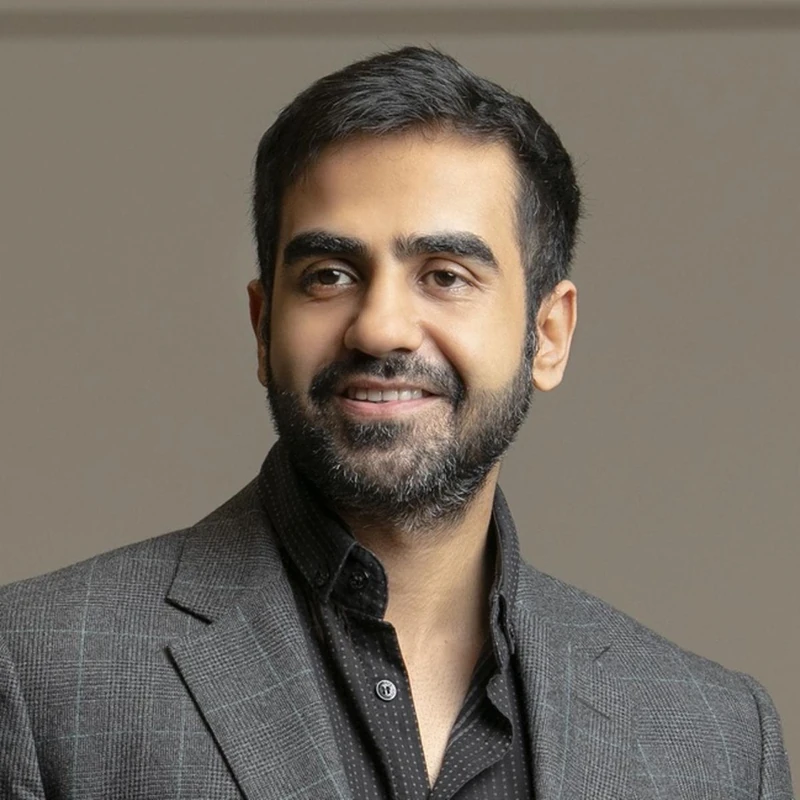

Singapore began 2026 by publishing a governance framework for agentic AI and then moved to a national programme intended to spread practical AI capability across companies and workers. That is the point at which Josephine Teo's record becomes more than a question of visibility or title. The relevant judgement is whether the decision changes the institution's operating capacity. Within Government of Singapore, the opportunity is digital public infrastructure, model governance, skills programmes, cloud capacity and a policy regime designed to attract international technology investment. The harder part is to make that opportunity repeatable, financially legible and resilient when conditions become less supportive. Authority matters here because her role as Minister for Digital Development and Information makes her more than an advocate for the direction; she is identified with the choices that determine which projects receive attention, money and organisational protection.
AI adoption among Singapore small and medium-sized enterprises rose to 14.5% in 2024 from 4.2% a year earlier, a rapid increase that still leaves most smaller firms outside the technology's productive core. These figures are a starting point, not a verdict. They indicate what the organisation can fund and how much tolerance it has for error, but they do not distinguish structural improvement from a favourable cycle. Investors, citizens, partners or rights holders—depending on the institution—need to see how the headline result was produced. The most useful questions concern the quality of revenue, the durability of demand, the burden of fixed costs and the risks transferred into future periods. Josephine Teo's next decisions will be judged against that more demanding baseline.
The operating claim
Josephine Teo did not begin with a blank balance sheet or an empty institution. She inherited established systems, previous commitments and expectations that cannot be reset without cost. Her contribution lies in deciding what to preserve and what to redirect. The strategic centre is now digital public infrastructure, model governance, skills programmes, cloud capacity and a policy regime designed to attract international technology investment. That choice narrows the field: resources committed there cannot simultaneously solve every legacy problem. A credible leadership case therefore depends less on announcing breadth than on showing a sequence—what comes first, what is deferred and which operating result will justify the next release of capital.
The economics are shaped by digital public infrastructure, model governance, skills programmes, cloud capacity and a policy regime designed to attract international technology investment, but value will be decided at the margin. Growth that requires proportionately more marketing, compute, inventory, legal work, capital or headcount can enlarge the institution while weakening returns. Josephine Teo needs to show where operating leverage should appear and how quickly. That means separating investment that builds a reusable capability from spending that only supports the current cycle. It also means being candid about activities kept for strategic or public reasons even when their direct financial return is lower. Without that distinction, success becomes impossible to measure and underperformance too easy to excuse.
Where the capital goes
Capital is being directed toward the National AI Impact Programme, Punggol Digital District testbeds, AI-for-science work and regional digital-public-goods cooperation. These commitments should be assessed as a portfolio rather than a collection of announcements. Some will pay back through revenue, others through lower risk, faster execution or access to a strategic market. The discipline is to define that return before expenditure becomes irreversible. Josephine Teo also needs exit criteria: projects that miss adoption, cost or reliability thresholds should be redesigned or stopped. Strong leaders protect ambitious investment from short-term pressure, but they also protect the institution from ambition that has lost its economic basis.
The political and economic trade-off is unusually sharp. Support delivered quickly can protect households and strategic industries, while persistent subsidy can weaken price signals and add to financing pressure. Josephine Teo has to show which interventions are temporary and which build productive capacity. The distinction matters because markets price future obligations before programmes have finished. Fiscal credibility does not require passivity; it requires a believable link between spending today and a larger revenue or productivity base later. Without that link, even popular measures can narrow the room available for the next shock.
Asia is not a decorative part of this strategy. It is expressed through Singapore's effort to become a trusted operating base for AI in Southeast Asia while preparing priorities for its 2027 ASEAN chairmanship. The region offers demand, talent, capital and supply-chain depth, but it is not a single market. Regulation, language, infrastructure and consumer behaviour vary sharply. Josephine Teo therefore needs a model that is locally competent without recreating the entire organisation in every country. Partnerships can accelerate entry, though they also divide economics and control. The strongest Asian strategy will show where central scale matters, where local authority is essential and how risks are prevented from moving unnoticed across borders.
Asia and the competitive field
Execution turns the policy claim into a sequence of contracts, operating changes and measurable outcomes. Josephine Teo needs a delivery system that can coordinate ministries, companies, local authorities or partners without letting responsibility dissolve between them. Milestones should expose delay early, and procurement should reward capability rather than political proximity. The largest danger is that a broad programme produces many individually defensible projects but no cumulative productivity gain. Concentrating authority can accelerate early decisions; publishing clear responsibilities and results is what keeps that authority useful once implementation becomes difficult.
Governance determines whether the strategy can survive disagreement and leadership change. Decision rights should be visible, performance information should reach the board or appropriate oversight body early, and incentives should not reward scale without quality. Josephine Teo's personal authority can accelerate a transition, yet the institution becomes stronger only when capable teams can challenge assumptions and execute without constant intervention. This is especially important where reputation and commercial value are intertwined. Independent review is not an obstacle to speed; it is a way to prevent one weak decision from contaminating the trust on which the wider model depends.
Competitors will not wait for Josephine Teo's programme to mature. Larger incumbents can bundle adjacent services, specialists can focus on the most profitable layer and new entrants can use cheaper technology to attack distribution. The defence cannot rest on reputation alone. The institution led by Josephine Teo needs an advantage embedded in data, trust, supply, rights, relationships or execution speed. Even then, management must decide which battles do not justify the cost. A focused retreat from a low-return activity can strengthen the core; defending every boundary can dissipate capital and senior attention before the central strategy has proved itself.
The risks inside the model
The principal risks are grant dependency, weak return measurement, imported compute, worker displacement, concentrated vendor power and regulation that smaller firms cannot operationalise. They interact rather than arrive neatly one at a time. A market shock can expose operational weakness; an execution delay can turn a manageable financing need into a strategic constraint; a governance lapse can make partners less willing to provide time. Josephine Teo therefore needs buffers as well as targets. Capital, liquidity, rights clearance, safety procedures and succession depth may look inefficient during a benign period, but they preserve choice when events change. The relevant question is not whether risk can be removed. It is whether the institution can absorb a failure without abandoning its strongest long-term proposition.
Measurement should follow the claim. If the strategy promises resilience, results should show lower volatility or faster recovery. If it promises growth, the disclosure should separate volume, price and acquisition. If it promises access or public value, reach and outcomes should be reported rather than activity. Josephine Teo does not need to reveal every commercial detail, but stakeholders require enough information to distinguish progress from narrative. Consistent measures also protect management from reacting to every short-term fluctuation. They create a record against which capital can be increased, redirected or withdrawn with less emotion.
What has to be proved
People are the least substitutable constraint. Expansion requires specialists, but it also asks existing teams to learn unfamiliar work while continuing to deliver the core. Hiring alone does not solve that problem. Josephine Teo must decide which skills belong inside Government of Singapore, how authority moves closer to customers and which measures encourage collaboration rather than internal competition. Culture becomes economically relevant when it affects error rates, retention, product quality and the time needed to integrate new operations. A strategy that depends on permanent exceptional effort is not yet an operating model; it is an extended launch.
Allocation is the most revealing expression of Josephine Teo's strategy. The practical priorities are the National AI Impact Programme, Punggol Digital District testbeds, AI-for-science work and regional digital-public-goods cooperation. Each carries an opportunity cost, and each creates constituencies that will argue for continued funding once established. A useful framework would connect every major commitment to an observable result and a review date. Financial return is one measure, but not the only one; resilience, access, safety and strategic independence may matter. What cannot be accepted is an undefined benefit. When capital is scarce or politically sensitive, precision about expected outcomes becomes part of the licence to keep investing.
The institutional test
The next phase will be judged by measurable productivity outside large companies and cross-border rules that let trusted AI services scale through ASEAN. That result is demanding because it cannot be produced through communication alone and may take longer than the current cycle. Yet it is specific enough to guide decisions now. Josephine Teo's strongest contribution would be to make the institution less dependent on favourable conditions and less dependent on her own presence. If the operating evidence moves in that direction, the current strategy will look like institution building. If it does not, the same ambition may be remembered as a costly expansion undertaken before its economics were ready.