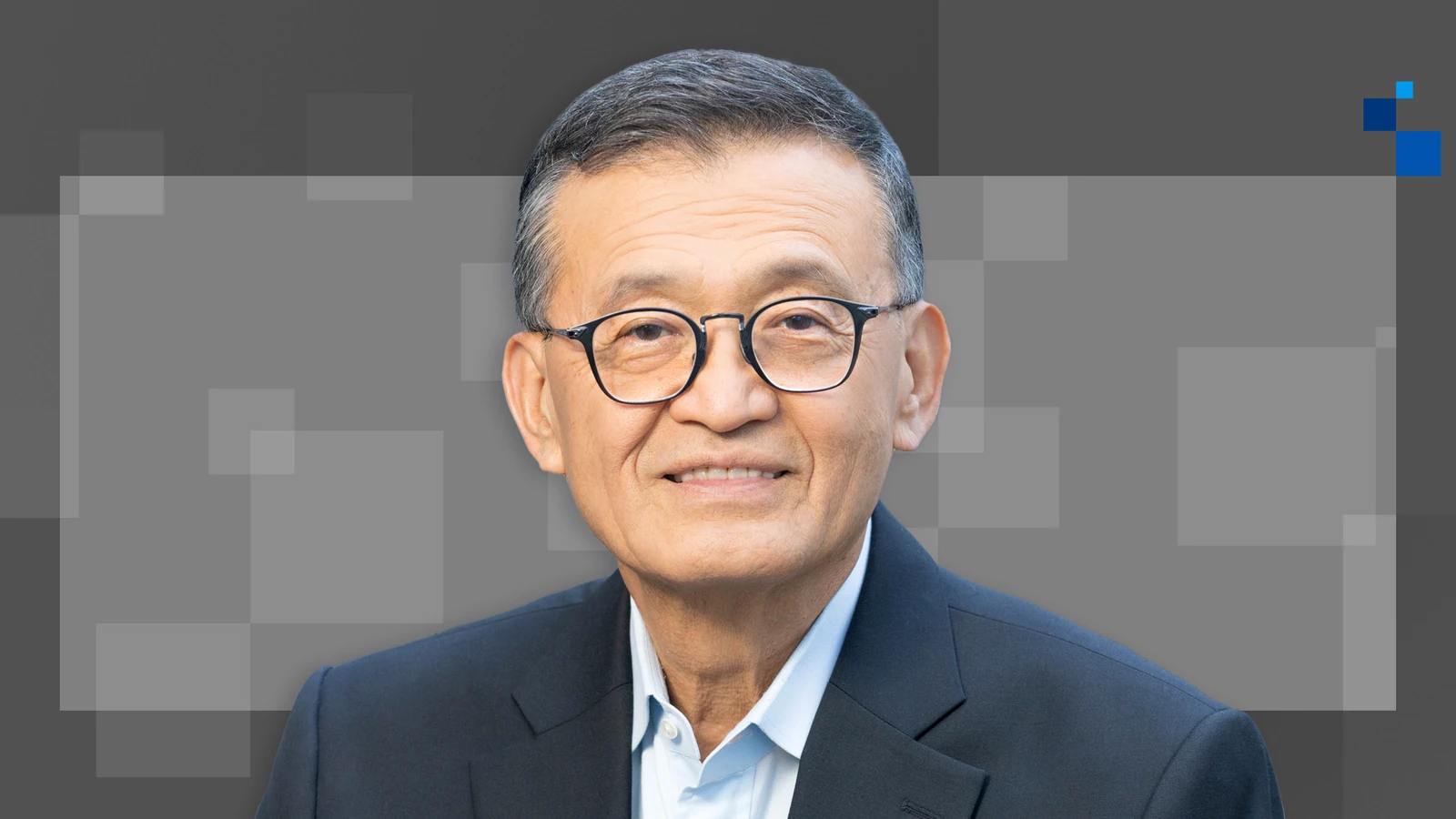
Lip-Bu Tan did not arrive at Intel with the luxury of separating strategy from execution. The company had already spent years explaining how it would recover manufacturing leadership, build a global foundry, regain product momentum and find a consequential position in artificial intelligence. By March 2025, when Tan became chief executive, the market no longer needed another roadmap. It needed evidence that Intel could keep time.
That evidence is beginning to appear. Intel 18A entered high-volume production in 2025. Panther Lake, the company’s first client processor built on the process, reached the market, while Xeon 6+ extended the node into the data centre. Intel 18A-P entered risk production on schedule in June 2026 with improved performance and power characteristics. First-quarter revenue rose 7 per cent to $13.6 billion, the sixth consecutive quarter above the company’s own expectations.
Yet the central problem remains unresolved. Intel Foundry lost $10.3 billion in 2025. Almost all of its revenue still came from manufacturing for Intel’s own product groups. The company acknowledged that it had not secured a significant external customer for its leading-edge nodes and warned that, without one for Intel 14A, it might pause or discontinue the pursuit of subsequent leading-edge technology.
This is the brutal clarity of Tan’s assignment. He can improve engineering discipline, simplify management and make Intel more attentive to customers. He can bring 18A into production and develop a credible successor. But advanced semiconductor manufacturing has become too expensive to sustain on technical achievement alone. The fabs need volume, and the volume must increasingly come from companies willing to entrust their most valuable designs to a competitor.
Tan is trying to rebuild that trust while Intel remains a product company, a manufacturer, a national-security asset and now a company in which the United States government owns roughly 10 per cent. Each identity strengthens the strategic case for Intel. Together they make commercial focus more difficult.
His first year has therefore been less a conventional turnaround than an effort to restore institutional credibility. Engineers have been brought closer to decisions. Management layers have been cut. Capital projects have been slowed or cancelled where demand was uncertain. Customer commitments, not political or internal optimism, are supposed to determine capacity.
The result is a more disciplined Intel. Whether it becomes a competitive one will be decided by a question no chief executive can answer through restructuring: who will design on 14A?
Intel’s real deficit was measured in years
Semiconductor companies can survive a weak product generation. They struggle to survive a broken cadence. Each delay affects architecture, manufacturing, customer planning, developer confidence and the economics of the next node. Time lost at one stage becomes dependency at another.
Intel’s process setbacks allowed Taiwan Semiconductor Manufacturing Company to become the preferred producer of the world’s most advanced chips. AMD used TSMC manufacturing and focused design to gain share in servers and personal computers. Nvidia built the dominant accelerator platform for AI training and turned its software ecosystem into an industry standard. Apple moved its Mac processors away from Intel and designed around Arm.
Intel responded with ambitious schedules, outsourced tiles and the decision to open its manufacturing network to external customers. The logic was sound: internal product volume alone might no longer justify the cost of leading-edge process development, while geopolitical demand for manufacturing outside Asia created an opportunity for a US-based foundry.
The problem was credibility. A customer choosing a foundry commits design teams, intellectual property, software tools and years of product planning. Process performance matters, but predictability matters almost as much. A node that arrives late can destroy the economics of an otherwise excellent chip.
Tan understood this before becoming chief executive. As the longtime leader of Cadence Design Systems and a venture investor across the semiconductor ecosystem, he spent decades serving companies that make such decisions. Electronic-design automation sits between architecture and manufacturing; it reveals how deeply process technology, tools, intellectual property and customer support must work together.
His instinct has been to replace internal proclamation with external proof. Intel must deliver products on its own nodes, publish credible progress, improve design kits and listen to potential customers early enough for their requirements to shape the technology.
That is why 18A matters beyond one generation of chips. Its value is not only the performance of RibbonFET transistors or backside power delivery through PowerVia. It is evidence that Intel can set a technically difficult target and move from development to factory output without another historic delay.
One successful node does not restore a cadence. It creates the possibility of one.
18A has to prove the factory before it proves the foundry
Intel 18A is carrying several burdens at once. It supports the company’s return to leading-edge manufacturing, provides the process for new client and server products, underpins government programmes and serves as the foundation for the external foundry proposition.
Panther Lake is the first large proof point. The processor uses a multi-tile architecture and combines Intel’s process technology with advanced packaging. Its successful ramp demonstrates that the company can manufacture a complex commercial product on 18A at scale. Xeon 6+ extends the node to data-centre workloads, where reliability and yield requirements are unforgiving.
By early 2026, Intel said 18A yields were running ahead of internal projections. The derivative 18A-P process entered risk production in June, offering higher performance or lower power while retaining design-rule compatibility. That compatibility matters because customers can reuse intellectual property and design work rather than begin again.
These are meaningful achievements. They also reveal the sequencing of Intel’s foundry recovery. The company must first prove the technology through its own products. External customers will not risk a major design because Intel presents an attractive process slide. They will watch factory output, defect density, package performance and the experience of Intel’s internal teams.
This makes Intel Products both the foundry’s anchor customer and its demonstration vehicle. The relationship creates volume, learning and economic support. It also creates a conflict that TSMC does not face at the same scale: potential foundry customers compete with Intel’s processors.
Trust therefore requires more than technical separation. Customers need confidence that their designs, schedules and market information will not advantage Intel Products. Foundry capacity must be allocated through transparent commitments. Process decisions must serve external requirements rather than default to the needs of the internal product roadmap.
Tan’s consolidation of technology development, manufacturing and foundry service under clearer leadership should improve accountability. The appointment of dedicated executives for advanced packaging and operating execution signals that the business is being built around customer delivery rather than internal organisational boundaries.
But structure is only the beginning. Foundry trust is earned one tape-out, yield curve and delivery date at a time.
14A is where technical ambition meets economic reality
Intel 14A is the most consequential decision in Tan’s portfolio because it is the first leading-edge node designed from inception for external customers. It is intended to build on 18A with further gains in performance, power and density, potentially using high-numerical-aperture extreme-ultraviolet lithography in high-volume logic production.
The technology is progressing. Intel says 14A maturity, yield and performance are ahead of 18A at a comparable point. Multiple customers are evaluating process-design kits, and the company expects early design commitments to emerge from the second half of 2026 into the first half of 2027. Intel has also moved more of its own future product tiles onto the prospective node.
Yet the company’s annual report contains an unusually direct warning: if Intel cannot secure a significant external foundry customer, it may pause or discontinue 14A and later leading-edge process development. Future Intel products requiring more advanced nodes could then rely increasingly on TSMC or another external manufacturer.
The warning is not evidence of weak conviction. It is evidence that Tan has imposed a commercial threshold on a project that could otherwise consume tens of billions of dollars through institutional momentum. Leading-edge nodes require enormous research spending, specialised equipment, design infrastructure and factory capacity. Without enough wafers, even excellent technology produces poor returns.
This is the decision previous Intel strategies often blurred. Manufacturing leadership was treated as intrinsically necessary, while the foundry business was expected eventually to provide the volume. Tan has made the dependency explicit: no major customer, no unlimited mandate.
The discipline is welcome, but the consequences are severe. Ending at 18A-P would not simply close an investment programme. It would alter Intel’s identity. The company would lose control over the most advanced manufacturing technologies, become more dependent on a supplier that also serves its principal competitors and weaken the industrial-policy case for its global fab network.
That makes customer acquisition strategically urgent and commercially dangerous. Intel cannot win 14A business by pricing below economic value merely to preserve the roadmap. Nor can governments be expected to subsidise indefinitely a node without market demand.
Tan must find a customer large enough to validate the platform and demanding enough to improve it, on terms that demonstrate the foundry can eventually earn its cost of capital. Anything less postpones the reckoning.
The foundry loss is not an accounting abstraction
Intel Foundry reported $17.8 billion of revenue in 2025 and an operating loss of $10.3 billion. The revenue figure can appear substantial until its composition is examined: almost all came from transactions with Intel’s internal product businesses. External revenue remained small.
The loss reflects underutilised capacity, high depreciation, process-development spending, early-node inefficiency and the cost of maintaining a manufacturing network built for future volume. It improved from the previous year, when impairments and accelerated depreciation drove an even larger deficit, but the economics remain unsustainable.
Semiconductor fabs are characterised by extreme fixed costs. Once a facility and process are in place, higher utilisation spreads those costs across more wafers and accelerates learning. Low utilisation does the opposite. A weak demand forecast can turn strategic capacity into a recurring charge against the product business that funds it.
Tan has responded by aligning construction with demand. Intel slowed the timetable for its Ohio site, abandoned planned expansions in Germany and Poland and consolidated some assembly-and-test activity. At the same time, it continues to invest where existing capacity and customer needs provide a clearer path to utilisation, including a new €5 billion programme at its Irish campus announced in July 2026.
This is not retreat from manufacturing so much as a change in sequencing. The old logic was to build capacity in anticipation of customers and policy support. The new logic is to expand against commitments, product ramps and visible demand.
The Irish investment illustrates the distinction. It upgrades existing cleanroom space and supports Xeon production on Intel 3, a process already connected to products and demand. It carries less execution risk than constructing an entirely new leading-edge complex before external foundry volume is secured.
Capital discipline, however, cannot cure structural underutilisation by itself. Intel needs more competitive products, more external customers or a smaller manufacturing footprint. Tan can delay the choice while 18A ramps and 14A engagements mature. He cannot remove it.
AI gives Intel demand without giving it leadership
The AI boom has created an unusual position for Intel. The company is not the dominant supplier of accelerators that train the largest models. Nvidia owns that economics and ecosystem. Yet AI infrastructure still depends heavily on CPUs, networking, memory movement, packaging and inference across data centres, personal computers, factories and edge devices.
Tan’s strategy is to build from those areas of relevance rather than pretend Intel can quickly recreate Nvidia’s position. Xeon remains the control plane for a large part of enterprise computing. AI PCs place local inference into a market where Intel has scale and customer relationships. Physical AI—robots, autonomous systems and intelligent machines—extends client computing into devices that require efficient general-purpose processing.
At Computex 2026, Intel presented a chip-to-rack approach assembled with partners. Xeon processors anchor systems that can incorporate accelerators from other suppliers. The company is working on purpose-built silicon, inference products, networking and advanced packaging while positioning its foundry as a supplier to the wider AI ecosystem.
This is a more realistic strategy than measuring success solely by training-GPU market share. Inference will become more distributed as models move closer to users and enterprises. Many workloads require flexibility, security and compatibility more than maximum accelerator performance. Intel’s installed base and software ecosystem provide a route into those decisions.
The risk is strategic modesty becoming permanent. CPUs may remain essential while capturing a declining share of system value. Partners can use Intel as a host around which the highest-margin silicon belongs to someone else. AI PCs can stimulate replacement demand without creating a durable software advantage.
Tan needs products that do more than participate in AI systems. Intel must own differentiated intellectual property at the points where customers face cost, power and deployment constraints. Custom chiplets, networking, packaging and inference acceleration offer such opportunities, but the roadmap must be coherent enough for customers to build around it.
AI gives Intel a larger market. It does not guarantee a larger role.
Advanced packaging may be the most underappreciated asset
As transistor scaling becomes more expensive, chip design is moving from monolithic processors towards systems assembled from specialised tiles. Compute, memory, networking and accelerator components can be manufactured on different processes and integrated in one package.
This shift increases the strategic importance of advanced packaging. Intel’s EMIB technology connects die side by side; Foveros stacks them vertically. New variants are intended to improve bandwidth, power delivery, thermal performance and manufacturing flexibility.
Packaging offers Tan a route into customer relationships even when Intel does not manufacture every die. A customer may use TSMC for an advanced compute tile and Intel for assembly, interconnect and system integration. That creates foundry revenue, demonstrates manufacturing capability and can lead to broader engagements.
It also changes the definition of process leadership. The most valuable system may not use the single most advanced node for every component. It may use the best combination of processes and packaging at an acceptable cost. Intel’s ability to design, manufacture and integrate across that stack could become a genuine differentiator.
The company said its advanced-packaging backlog increased in early 2026. Dedicated leadership can sharpen the commercial model and prevent packaging from being treated merely as an internal service to Intel Products.
But packaging is not an escape from wafer economics. It requires its own capital, yield management and customer trust. Competitors are investing aggressively, and the ecosystem around TSMC is mature. Intel must offer more than available capacity; it must prove that its integration technology improves the customer’s final system.
Tan’s background at Cadence is useful because advanced packaging collapses the boundary between chip design and system design. Tools, simulation, thermal analysis and manufacturing must work together before silicon arrives. The commercial winner will be the platform that makes that complexity easiest for customers to manage.
The product company has to become a better foundry customer
Intel’s product groups remain the principal source of gross profit and the essential customer for its factories. Their competitiveness therefore determines how much time Tan has to develop the external foundry business.
Client computing still benefits from a vast installed base, relationships with PC manufacturers and the resilience of the x86 software ecosystem. Data-centre CPUs remain critical to enterprise and cloud infrastructure. First-quarter 2026 revenue growth showed that demand and execution were improving.
Yet the product organisation must adapt to a world in which the best manufacturing choice may not always be an Intel node. Recent processors already combine internally and externally manufactured tiles. Tan has maintained that product teams should select suppliers based on performance, cost, yield and time to market.
That flexibility protects the customer. It also imposes discipline on Intel Foundry, which cannot rely on captive business regardless of competitiveness. Internal transfer prices and manufacturing commitments must reveal the real economics rather than conceal them.
The relationship is delicate. If product teams move too much work to TSMC, Intel’s factories lose volume and learning. If they are forced onto an inferior internal process, products lose market share and weaken the cash engine funding the fabs.
Tan must make the two businesses demanding partners rather than protected relatives. Product groups should provide early, high-quality designs that improve process maturity. Foundry should earn internal volume through execution and offer an experience credible enough to show external customers.
This is one reason culture matters. Intel historically took pride in owning the full stack, but integration can become entitlement. A foundry mentality begins when the factory treats Intel Products as a customer whose schedule can be lost.
Engineering first cannot mean people last
Tan has described the new Intel as engineering-led, customer-focused and faster. To create it, the company reduced its core workforce by roughly 15 per cent during 2025 and ended the year near 75,000 employees. Management layers were cut by about half.
Intel needed simplification. Large organisations accumulate reviews, committees and managers whose principal function is coordinating other managers. In semiconductors, where each delay can cost a product cycle, bureaucracy is not merely expensive. It is technically destructive.
Tan’s reputation at Cadence was built on customer intimacy and a culture in which engineering decisions connected more directly to market need. Bringing experienced technical leaders into Intel and centralising horizontal engineering can reduce duplication and improve accountability.
But workforce reduction creates an immediate contradiction. Intel’s recovery depends on scarce process engineers, architects, packaging experts, manufacturing technicians and software developers. Repeated restructuring can cause the strongest employees to leave voluntarily, weaken mentorship and make teams reluctant to surface risks.
Semiconductor expertise is cumulative. A process integration problem may be solved by someone who remembers why a similar experiment failed ten years earlier. Such knowledge does not appear on an organisation chart and cannot be restored quickly after it leaves.
An engineering-first culture therefore cannot be measured by the ratio of engineers to managers alone. Engineers need authority, stable priorities, modern tools and time to solve difficult problems. They also need managers capable of integrating work across design, process, software and manufacturing.
Tan’s task is to remove organisational friction without removing institutional memory. Speed gained through fear is rarely durable. The company must become more candid about delays at the same time it becomes less tolerant of them.
The US government stake changes the corporate bargain
In August 2025, the United States government agreed to invest $8.9 billion in Intel common stock, converting previously awarded semiconductor and defence funding into an equity position of about 9.9 per cent. SoftBank separately agreed to invest $2 billion.
The government transaction recognised an industrial reality: Intel is the only company conducting both leading-edge logic research and high-volume manufacturing in the United States. Its success affects national security, supply-chain resilience and America’s ability to produce advanced computing domestically.
For Intel, the investment strengthens the balance sheet and aligns political support with shareholder value. If the turnaround succeeds, taxpayers participate in the upside. The arrangement also makes the company’s strategic importance unusually explicit.
It complicates governance. The state may value capacity, domestic employment and secure supply even when the near-term return on a fab is weak. Private shareholders expect capital discipline and competitive margins. Customers need confidence that government priorities will not distort allocation or access. International partners may view Intel through a geopolitical lens that narrows commercial flexibility.
Tan must navigate those interests without allowing Intel to become dependent on strategic indispensability. Government support can finance a bridge to competitiveness; it cannot substitute for products customers choose and foundry services they trust.
The scrutiny extends to Tan personally. His decades as an Asian-American venture investor gave him relationships across a semiconductor industry that is intrinsically global. Those ties have also drawn political questions in Washington. Tan has responded by emphasising his forty years in the United States and Intel’s importance to American technology leadership.
The episode illustrates the impossible geography of the modern chip industry. Intel is an American national champion whose customers, suppliers, talent and competitors are distributed across Asia, Europe and the United States. Strategic autonomy does not mean commercial isolation.
Asia remains inside Intel’s American manufacturing strategy
Tan was born in Malaysia, studied physics at Nanyang Technological University in Singapore and built his career in the United States. His professional network spans the design houses, toolmakers, manufacturers and investors that made the semiconductor industry the most integrated production system in the world.
That background matters because Intel’s recovery cannot be understood solely as an American reshoring project. Taiwan remains the centre of advanced foundry production. South Korea leads in memory and is investing in logic. Japan supplies critical materials and equipment. Southeast Asia is essential to assembly, testing and electronics manufacturing. European companies dominate key lithography and industrial technologies.
Intel itself uses external foundries, global suppliers and facilities across multiple continents. Its Irish expansion serves European capacity and global customers. Its products are designed into devices assembled through Asian manufacturing networks. The company presented its 2026 strategy at Computex in Taipei because that is where much of the ecosystem convenes.
Tan’s advantage is an instinctive understanding that customer trust and technical partnership move across political categories more fluidly than policy rhetoric suggests. He can speak to US national-security priorities without mistaking them for a complete supply chain.
The challenge is to use Intel’s geographic diversity as resilience rather than duplication. Capacity should be placed where talent, infrastructure, customer commitments and policy support align. Every location cannot manufacture every node. Regional incentives cannot be allowed to determine a roadmap the market will not support.
Intel will become more strategically American and remain operationally global. Tan must make those facts reinforce rather than contradict each other.
The customer will decide whether Intel remains Intel
Lip-Bu Tan has made tangible progress in his first year. Intel is leaner, its leadership is more technical and its investment plans are more closely tied to demand. The 18A ramp has improved confidence that the company can execute a leading-edge process. Products are reaching market, and first-quarter 2026 performance suggests the core franchise is stabilising.
Those gains create time. They do not resolve the foundry equation.
Intel Foundry still consumes extraordinary capital and produces extraordinary losses. External revenue is immaterial relative to the scale of the manufacturing network. Advanced packaging offers a promising entry point, but wafer volume remains essential. AI expands demand for compute without guaranteeing that Intel captures the most valuable part of it.
Tan’s discipline has made the decisive milestone visible. Intel 14A must win a significant external customer. Not a pilot designed to generate a press release, but a product programme whose economics, engineering teams and market launch depend on Intel delivering.
If that customer arrives, it will validate more than one process. It will show that an integrated product company can become a trusted manufacturer for the wider industry, that government-backed capacity can satisfy commercial discipline and that Intel has regained the right to invest in the next node.
If it does not, Tan will face a choice that earlier management teams postponed: shrink the foundry ambition and accept greater dependence on external manufacturing, or continue spending in the belief that strategic importance will eventually create demand.
His greatest contribution may be refusing to disguise that choice. Intel’s turnaround will not be completed by a better slogan, a cleaner organisation chart or even a successful internal product ramp.
It will be completed when another great chip company entrusts Intel with its future.