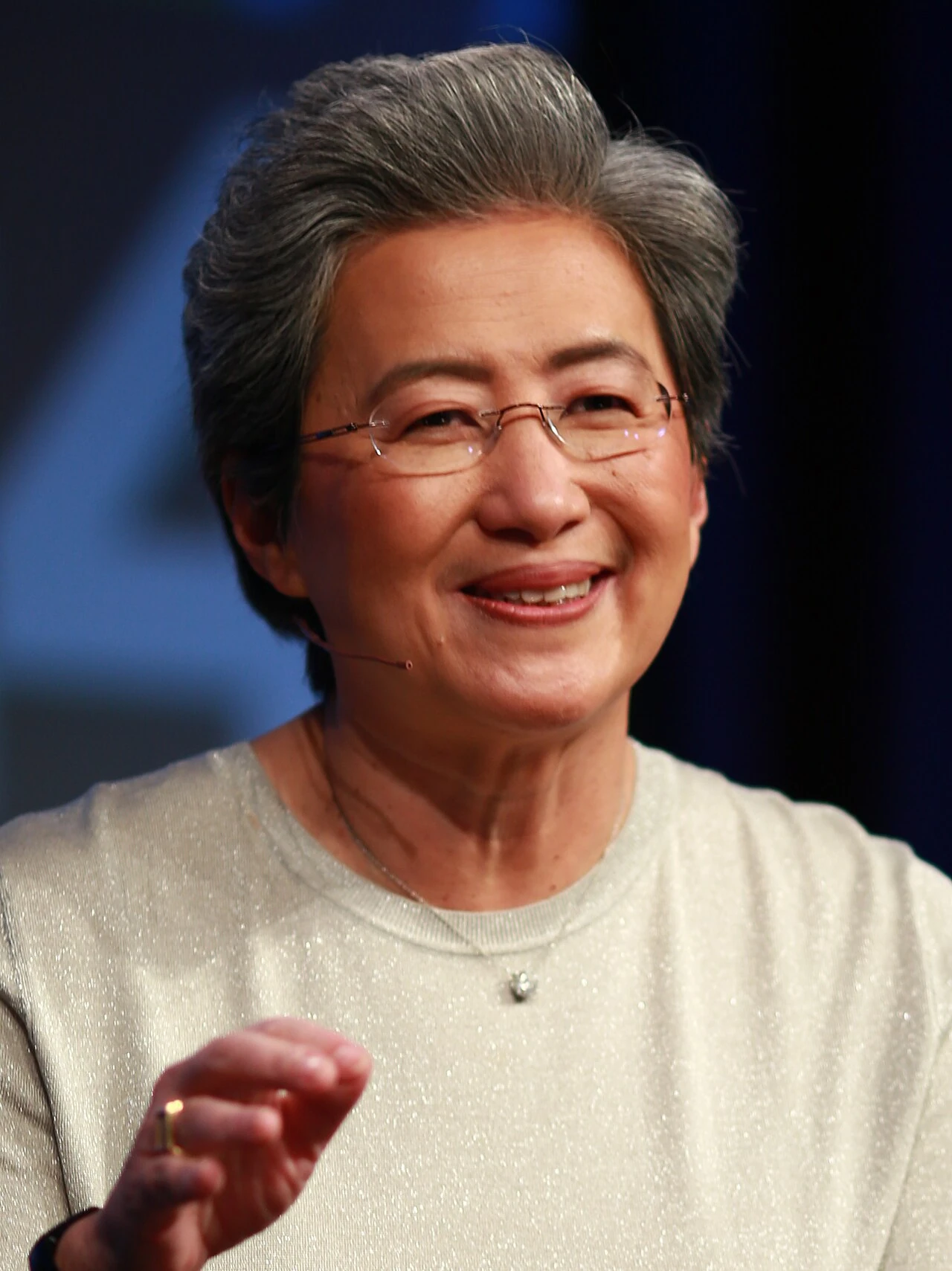
Lisa Su has obtained the kind of customer commitments that Advanced Micro Devices needed before it could claim to be more than a tactical alternative in artificial intelligence. OpenAI and Meta have each agreed to multi-generation plans covering as much as six gigawatts of AMD accelerators. The first one-gigawatt deployments are due to begin in the second half of 2026, built around custom versions of the MI450 architecture and the company’s Helios rack-scale system.
The agreements change the question facing AMD. For several years, it had to prove that its accelerators and ROCm software could attract serious workloads in a market shaped by Nvidia’s hardware, CUDA ecosystem and delivery scale. It now has named customers willing to align processor, system and software road maps over multiple generations. Su must turn that strategic endorsement into functioning clusters, recognised revenue and acceptable margins on a timetable measured in months.
Her answer depends heavily on Asia. In May, AMD committed more than $10 billion to Taiwan’s technology ecosystem to expand advanced packaging, interconnect and manufacturing partnerships for next-generation infrastructure. The investment is both a vote of confidence and an acknowledgement of dependency. MI450 may be designed in the United States, but its commercial credibility will be determined by Taiwanese foundries, packaging specialists and system builders, alongside Korean memory suppliers and a broader regional component network.
Orders large enough to alter the competitive map
Meta’s February agreement is especially important because it combines volume with technical integration. The companies plan to align GPU, central-processor, system and software development. Meta expects the first gigawatt to use a workload-specific MI450 accelerator, sixth-generation EPYC processors and ROCm within the Helios architecture. It has already deployed millions of AMD server processors and earlier Instinct products, giving the relationship an operating history beyond an announcement.
OpenAI reached a similar agreement in October 2025. Its first gigawatt of MI450 systems is also scheduled for the second half of this year, with a pathway to six gigawatts across later generations. The two customers give AMD potential demand at a scale that can support supply reservations, software optimisation and faster learning. They also reduce the risk that one client’s model architecture determines the entire product.
AMD used performance-based warrants to align both relationships. Each customer received rights covering as many as 160 million AMD shares, with tranches tied to shipment, technical and commercial milestones and, in parts of the structure, share-price thresholds. The arrangements can help secure long-term purchasing and co-development, but they are not free. Investors must weigh future revenue and strategic position against possible dilution and the value transferred to customers for achieving the planned scale.
Su is effectively exchanging some equity upside for the chance to establish AMD as the second full-scale AI platform. That can be rational in a market where software familiarity and installed capacity reinforce the leader. A customer committing engineers and future workloads has more incentive to solve early problems than one making opportunistic purchases. The risk is that headline gigawatts arrive slowly, vesting or economics differ from expectations, or customised designs prove less reusable across the rest of the market.
The financial base is strengthening
AMD enters the ramp with a healthier operating position. First-quarter revenue was $10.3 billion, 38 per cent higher than a year earlier. Data-centre revenue rose 57 per cent to $5.8 billion and became the largest segment, supported by EPYC server processors and Instinct accelerators. GAAP net income reached $1.4 billion, while free cash flow was a quarterly record of about $2.6 billion. The company guided to roughly $11.2 billion of second-quarter revenue and a 56 per cent non-GAAP gross margin.
Those figures show that Su has already diversified AMD beyond its older dependence on personal computers and game consoles. They also reveal the gap with Nvidia. Nvidia generated more than $75 billion of data-centre revenue in its latest quarter alone, a level that provides far greater purchasing power, software investment and capacity leverage. AMD does not need to match that scale to create value, but it must show that the multi-gigawatt deals produce a sustained acceleration rather than a temporary comparison benefit.
Margin quality will be closely watched. Rack-scale systems require networking, processors, accelerators, memory, cooling and software to work as one product. Moving up from components can increase the value AMD captures and make its technology easier for customers to deploy. It can also introduce lower-margin elements, warranty exposure and costly support. Custom accelerators may secure volume while giving large buyers negotiating power. Revenue growth without improving cash returns would weaken the strategic case.
Su has prepared for the systems challenge through the acquisition of ZT Systems. AMD completed the $4.4 billion purchase in March 2025, acquiring design and integration expertise for hyperscale infrastructure. It then sold ZT’s manufacturing business to Sanmina, receiving cash and shares while retaining the engineering capabilities it wanted. The structure reflects Su’s preferred model: own the high-value design and customer interface, while relying on specialised manufacturing partners for physical production.
Helios has to make openness operational
Helios is meant to be the proof that AMD can coordinate the whole rack. The platform combines MI450-generation accelerators, EPYC processors, Pensando networking and ROCm software in an open architecture developed with industry partners. AMD argues that customers want modularity and freedom to optimise their own systems rather than accept one closed stack. Meta’s contribution through the Open Compute Project gives that claim substantial validation.
Openness is useful only if deployment is predictable. Nvidia’s advantage is not simply faster silicon; it is the accumulated tooling, libraries, developer knowledge and operational practice surrounding CUDA. ROCm has improved rapidly and AMD says downloads have multiplied, but enterprise buyers care about model compatibility, debugging, cluster stability and time to production. A cheaper accelerator can become an expensive choice if scarce engineers spend months adapting software or chasing reliability problems.
The first MI450 clusters will therefore be reference customers for the wider market. If OpenAI and Meta run large training and inference workloads efficiently, cloud providers and sovereign projects can adopt with less perceived risk. If the launch is delayed or requires extensive bespoke work, competitors will argue that the contracts demonstrate customer bargaining power rather than platform maturity. Su’s technical leadership will be judged as much by software release discipline and systems support as by chip specifications.
Timing magnifies the pressure. Nvidia’s Vera Rubin generation is entering production during the same period, backed by an annual release cadence and a large installed base. Broadcom is expanding custom accelerators for frontier laboratories and hyperscalers. Google, Amazon and Microsoft continue to develop in-house silicon. AMD’s opportunity comes from customers seeking diversification, lower cost and control, but those buyers have more alternatives than they did when the MI300 first gained attention.
Taiwan is advantage and concentration
AMD’s $10 billion Taiwan programme is designed to secure the packaging and interconnect advances required for rack-scale performance. The company is working with ASE, SPIL, Powertech Technology and other suppliers on bridge technologies that connect compute dies and memory with greater bandwidth and efficiency. Helios systems are expected to combine those capabilities with high-bandwidth memory and advanced process nodes, making manufacturing innovation as important as the processor architecture.
The commitment deepens relationships in an ecosystem that helped make AMD’s chiplet strategy viable. It also concentrates execution in a region exposed to earthquakes, power constraints and geopolitical tension. Advanced packaging has become a bottleneck across the AI industry, and capacity commitments made years ahead can determine which supplier ships. Su needs enough reserved production to meet large contracts without paying for capacity that becomes stranded if customer schedules change.
Korea broadens part of the supply network. AMD and Samsung are collaborating on HBM4 memory for future Instinct products, while Naver Cloud and Upstage are deploying AMD technology for Korean AI infrastructure. In India, Tata Consultancy Services is co-developing Helios-based systems for enterprise and sovereign uses. A planned venture with Cisco and Saudi Arabia’s Humain is intended to begin with 100 megawatts and build towards one gigawatt by 2030. These relationships extend the platform beyond two American laboratories.
Regional demand also carries policy conditions. Governments want local data control, domestic workforce development and reliable access through export-policy changes. AMD can position an open system as compatible with sovereign requirements, but it remains subject to US controls and an Asian manufacturing chain. Customers may ask for local assembly, source transparency or multi-vendor support that complicates delivery. Winning the order is only the start of a long institutional negotiation.
The cost of becoming a platform
Su rebuilt AMD by choosing areas where disciplined design and outsourced manufacturing could overcome a far larger rival. The AI opportunity requires the same clarity at a different scale. The company must invest in software, networking, systems engineering and customer support before the associated revenue is fully visible. Research spending and operating expenses are rising, while each product generation requires earlier supply commitments.
There is a danger in expanding the story too widely. AMD also sells personal-computer processors, gaming products, embedded devices and adaptive chips. Those businesses generate cash, relationships and intellectual property, but management attention and capital allocation can become diffuse. Data-centre AI is now the primary growth engine. Su has to protect the rest of the portfolio without allowing slower businesses to obscure accountability for the MI450 ramp.
The clearest proof will arrive through operating measures rather than new contracts. Investors need to see production systems accepted on schedule, ROCm workloads moving into service, data-centre revenue accelerating and gross margins holding as system content increases. Customers need competitive cost per useful token and confidence that later generations will preserve their software investment. Suppliers need forecasts reliable enough to justify scarce capacity.
Lisa Su has secured the demand signal AMD spent years trying to create. The multi-gigawatt commitments can shift bargaining power in AI infrastructure and give buyers a credible second platform. Their value now rests on a chain of execution running through software teams, Taiwanese packaging lines, Korean memory and customer data centres. If that chain holds in the second half of 2026, AMD will have crossed from challenger chip vendor to infrastructure platform. If it breaks, the size of the promises will make the shortfall impossible to disguise.