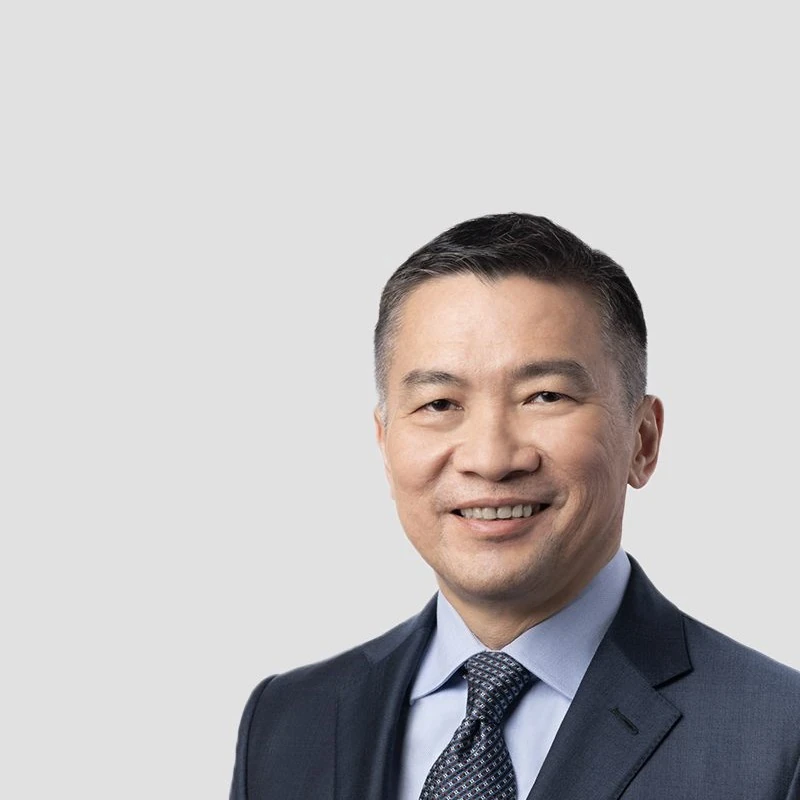
Loh Boon Chye has spent more than a decade making Singapore Exchange less dependent on Singapore shares. The strategy has worked financially. SGX Group now earns across currencies, commodities, equity derivatives, cash securities, data, indices and connectivity. Its products allow global investors to manage exposure to China, India and other Asian markets from a trusted clearing centre. Volatility, rather than threatening the business, often increases demand for its risk-management tools.
The first half of the financial year ending June 2026 delivered the strongest half-year revenue and adjusted profit in the group’s history. Net revenue reached S$695.4 million, up 7.6 per cent, while adjusted net profit rose 11.6 per cent to S$357.1 million. The board lifted the quarterly dividend to 11 Singapore cents. Full-year results were scheduled for August, after this report’s cut-off, but the first-half performance showed that the multi-asset model had entered the year with momentum.
That success does not resolve the most politically and economically important question around the exchange. Singapore’s domestic equity market remains concentrated, with limited new listings and uneven liquidity beyond its largest banks, property groups and state-linked companies. SGX’s 2025 financial year produced only six new equity listings, raising S$25.7 million, even as secondary fundraising reached S$4.3 billion. Loh must now help connect a strong international trading franchise to a broader market for Singapore companies.
Diversification has protected the business
When Loh became chief executive in July 2015, SGX already had important derivatives capabilities. He accelerated the shift towards a global, multi-asset exchange through product development, acquisitions and deeper international connectivity. The Baltic Exchange added freight benchmarks and maritime relationships. BidFX and MaxxTrader expanded foreign-exchange execution. Scientific Beta strengthened the index business. GIFT Connect provided global investors with access to Indian equity derivatives through India’s international financial centre.
The results are visible in the composition of earnings. In the 2025 financial year, fixed income, currencies and commodities represented about a quarter of net revenue, cash equities 30 per cent, equity derivatives 27 per cent, and platform and other activities 18 per cent. Net revenue rose 11.7 per cent to S$1.30 billion and operating profit increased 23 per cent to S$743 million. Net profit reached S$648 million.
Cash equities benefited from stronger trading, but the rest of the portfolio reduced dependence on any one market cycle. Currency and commodity net revenue increased 8.6 per cent in 2025. Over-the-counter foreign-exchange net revenue rose 25 per cent, while currency derivative volumes increased by half. Equity derivative volumes grew 10 per cent, led by contracts linked to China and India.
This diversification is not a retreat from Singapore’s capital market. It gives SGX the earnings and global network to invest in infrastructure and market development. Yet it also changes management incentives. A new international derivatives contract can scale quickly with institutional users, while building a deeper domestic listing ecosystem requires years of co-ordination among issuers, investors, regulators and intermediaries. Loh must ensure the commercially easier growth does not crowd out the harder national-market work.
The domestic market has a supply problem
Singapore has many attributes of an international financial centre: political stability, strong institutions, a large asset-management industry, sophisticated banks and access to Southeast Asia. Its stock market has not consistently converted those advantages into a flow of significant new companies. Some growth businesses have chosen private capital or overseas exchanges, while delistings and takeovers have reduced the available pool.
The problem begins with supply. Investors need companies capable of producing growth, disclosing clearly and maintaining enough freely traded shares. Founders need confidence that a Singapore listing can provide valuation, liquidity and access to follow-on capital. Intermediaries need sufficient transaction flow to invest in research, market-making and distribution. Weakness in any part of that loop reinforces the others.
SGX cannot solve the loop alone. Tax policy, retirement savings, asset-owner mandates, research economics and listing regulation all influence outcomes. The Equities Market Review Group convened by Singapore’s authorities has recommended measures spanning investor demand, enterprise development and a more disclosure-based regulatory approach. SGX Regulation began implementing changes in 2025 and consulted on consolidating parts of the listing review process.
Faster or simpler admission can reduce friction, but standards cannot be weakened to manufacture volume. A poor-quality issuer may add a listing and subtract trust. Singapore’s advantage lies in credible governance; sacrificing it would be especially damaging for a market competing on reliability rather than sheer scale. The objective should be clearer accountability and efficient review, not lower scrutiny.
Liquidity must extend below the benchmark
Trading conditions improved in 2025. Securities daily average value rose 26.5 per cent to S$1.34 billion, and primary-listed turnover velocity increased to 41 per cent from 37 per cent. Cash-equity net revenue grew nearly 19 per cent. Stronger market performance and renewed investor interest helped, as did more active participation in exchange-traded funds and structured products.
Aggregate turnover can hide concentration. Large banks and index constituents attract most institutional attention, while smaller companies may trade infrequently and receive limited analyst coverage. Low liquidity raises the return investors demand, depresses valuations and discourages companies from issuing shares. It also makes market-making less attractive, perpetuating the problem.
Loh’s challenge is to deepen the middle of the market without distorting prices. Research support, market-maker incentives, corporate-engagement programmes and new funds can help, but each needs a route to self-sustaining activity. Subsidised liquidity that disappears when incentives end does not create a durable market. The stronger approach is to expand the base of long-term investors and improve company disclosure so that more securities become investable on their merits.
Secondary fundraising provides evidence that the exchange can serve established issuers. The S$4.3 billion raised in 2025 was more than three times the previous year’s level. The harder task is to ensure that smaller companies can graduate into more liquid, institutionally followed businesses rather than remaining permanently outside the main flow of capital.
Derivatives give SGX global relevance
SGX’s derivatives franchise is the clearest proof of Loh’s ability to build markets beyond the domestic economy. The FTSE China A50 contract offers offshore investors a liquid way to manage exposure to mainland equities. Currency contracts in the offshore renminbi and Indian rupee serve global hedging demand. Iron ore derivatives connect miners, traders and steel producers across physical and financial markets. GIFT Nifty links international investors to India through a cross-border market structure.
These products succeed because liquidity attracts more liquidity. Market participants value continuous pricing, reliable clearing and the ability to transact in size. Once an exchange establishes the leading contract, network effects can be strong. Loh’s responsibility is to defend those positions through technology, product design and relationships with market makers and underlying jurisdictions.
Geopolitics adds complexity. SGX benefits when investors need to hedge trade, currency and commodity risk, but it also depends on cross-border co-operation. Changes in national regulation or market-access policy can redirect activity. The transition of Indian index derivatives to GIFT City demonstrated that partnerships can preserve relevance even when a home market seeks greater control of its products.
Regional links can extend that model. SGX launched a depository-receipt linkage with the Indonesia Stock Exchange in 2025, initially using large Indonesian companies as underlyings. Such programmes allow investors to access regional securities through familiar infrastructure and can improve visibility for issuers. Their value will be measured by sustained trading and participation, not by the number of linkages announced.
Technology must protect trust as well as speed
An exchange is a technology company operating under a public-interest obligation. Trading, clearing, settlement and market data must remain available during periods of stress, when volumes and risk are highest. SGX’s global relevance rests on the belief that positions can be priced and cleared reliably across time zones.
Loh has invested in platforms, connectivity and data, and those activities now represent a meaningful share of revenue. The business has attractive recurring characteristics, but it also expands the attack surface for cyber threats and the consequences of operational failure. Acquired systems must be integrated without creating hidden dependencies. New products must fit within resilient clearing and risk controls.
Artificial intelligence can assist surveillance, operations and customer service, but an exchange must be cautious about opaque automated decisions. Market integrity requires explainable rules, human accountability and strong data governance. The standard is higher than for a consumer application because errors can affect prices, collateral and confidence across institutions.
SGX’s separation of commercial operations and SGX Regulation provides an important governance structure. Commercial pressure to attract listings and volume must not compromise supervision. As listing review functions evolve, the clarity of that separation and the resources available to the regulatory arm will remain central to trust.
Singapore’s position is regional by necessity
Singapore cannot match the domestic company base of the United States, China or India. Its opportunity is to be the neutral market infrastructure through which global investors reach a fragmented and fast-growing region. That requires products rooted in Asian economies, international standards and cross-border distribution.
The model is already visible in currencies, commodities and derivatives. Applying it to equity capital formation is harder because companies retain national identities, disclosure regimes and home-market relationships. SGX can complement rather than replace neighbouring exchanges by building depository receipts, indices, funds and dual-access arrangements. It can also provide a listing venue for companies whose business is regional and whose investor base is international.
Neutrality is valuable only if it is supported by liquidity. An issuer will not choose Singapore solely for regulatory quality if trading and valuation are better elsewhere. Loh needs domestic reforms and regional connectivity to reinforce each other: more investor demand attracts issuers, more issuers deepen products, and broader products bring international users into the ecosystem.
Capital discipline inside a high-margin operator
SGX is strongly cash-generative, with a modest gearing ratio and an operating model that can scale without the balance-sheet intensity of a bank. That allows consistent dividends and targeted investment. The group’s adjusted earnings growth has supported a higher quarterly distribution, but acquisitions and technology spending still need return discipline.
Exchange assets can command high valuations because of network effects. Buying a platform does not guarantee that its users will remain or that its technology will integrate smoothly. Loh’s acquisitions have expanded the multi-asset offering, yet the group must continue to show organic cross-selling and operating leverage rather than relying on a sequence of transactions.
The economic moat ultimately comes from active markets. Data, indices and connectivity derive value from trading and investment activity; clearing depends on contracts that participants use; listing revenue depends on companies choosing the venue. Capital should therefore support products and infrastructure that strengthen those network effects rather than diversify merely for appearance.
What Loh must prove next
Loh has achieved the strategic task he set out to pursue: SGX is a globally relevant multi-asset exchange rather than a domestic stock-market operator. Record first-half performance in 2026 showed the resilience of that design. The company can grow when investors need to manage uncertainty across Asia, and its earnings are no longer hostage to the local initial-public-offering calendar.
The unresolved test is whether SGX can use that strength to improve the market at home. Singapore needs more credible growth issuers, deeper liquidity beyond the largest companies, stronger research economics and a listing process that is efficient without becoming permissive. Success will require policy support, but Loh’s exchange must supply the infrastructure, commercial energy and international investor network.
The coming full-year results will reveal the latest financial progress. The more important outcome will take longer to measure: whether a greater number of companies regard Singapore as a place to raise equity throughout their development, and whether investors can trade those companies with confidence.
Loh has made SGX profitable by connecting the world to Asian risk. His next contribution will be judged by whether he can connect more of Asia’s companies, including Singapore’s own, to the capital needed for growth.