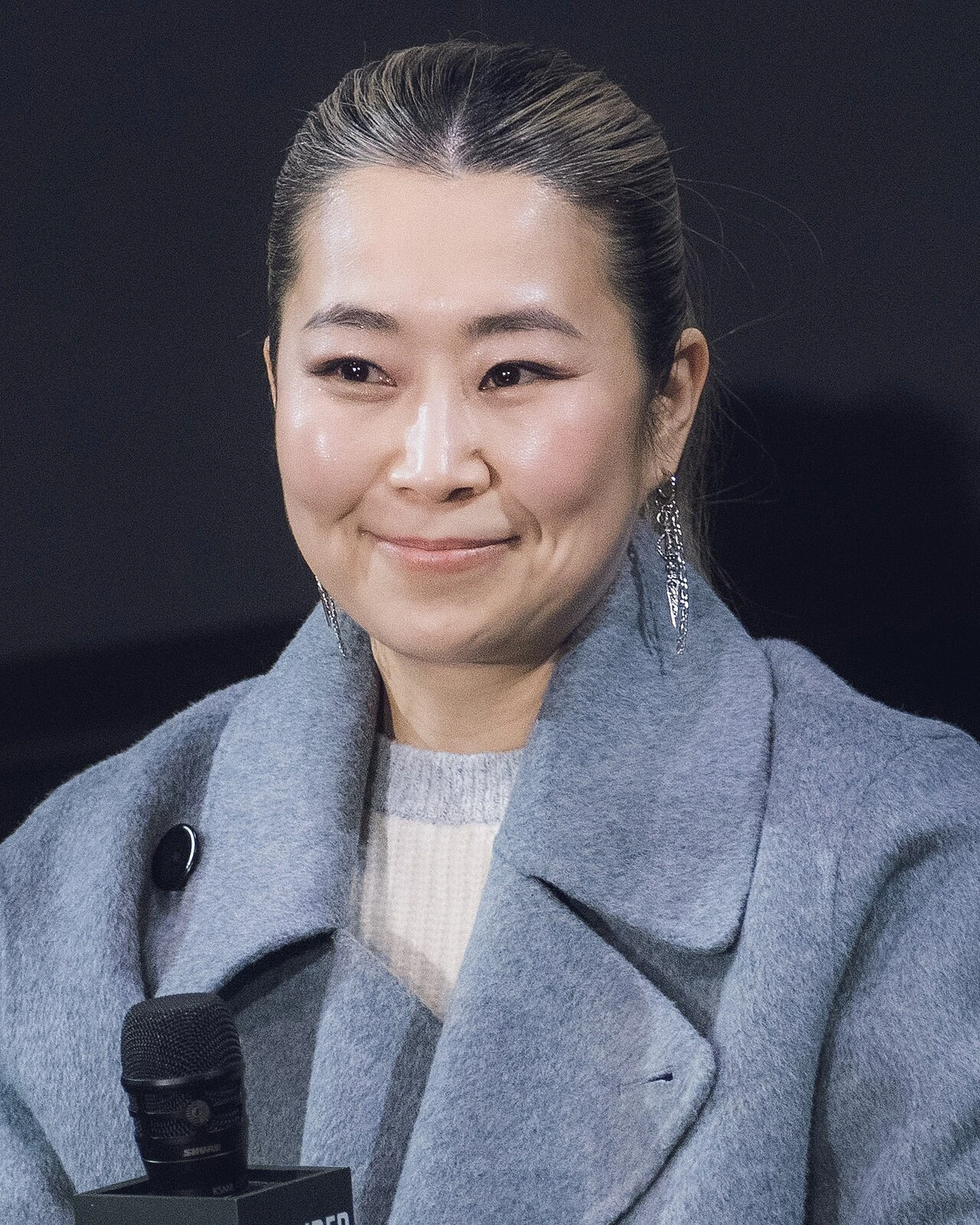
Winning the Academy Award for animated feature in March 2026 settled one question about KPop Demon Hunters: the film was no longer merely a streaming sensation with an unusually powerful soundtrack. It had become a piece of entertainment property with institutional prestige, mass recognition and the potential to support years of commercial activity. For Maggie Kang, the South Korean-Canadian writer and director who built the film around Korean mythology and the industrial language of K-pop, the prize also made the next decision more consequential. A breakthrough can be celebrated as a finished work. A franchise has to be governed.
The scale is difficult to separate from the platform that delivered it. Netflix turned the animated musical into its most-watched film, while the songs escaped the boundaries of the screen and competed in the same charts as the artists the story fictionalised. A limited theatrical sing-along release demonstrated demand beyond the living room. Merchandise, music, fan art and repeat viewing created the signals that studios usually spend years trying to manufacture. The film did not simply attract an audience; it generated a community that wanted to keep using its characters and songs.
That creates an attractive but unstable business proposition. Netflix controls distribution, Sony Pictures Animation supplied the production infrastructure, music rights sit across a separate network of writers, performers and labels, and Kang’s authorship is the element audiences associate with the film’s cultural coherence. Each participant has a different definition of success. A platform values retention and engagement. A studio values production continuity. Music companies value streams, publishing and touring possibilities. A filmmaker must protect the dramatic world from becoming a collection of extensions.
The value of a hit after the hit
Animation economics reward reuse. Once characters, environments and production systems have been designed, a successful property can support sequels, series, games, consumer products, live experiences and music releases. The potential margins become more attractive when awareness no longer has to be purchased from zero. KPop Demon Hunters now has that advantage. Its visual symbols are recognisable, its songs already function as stand-alone products and its premise can accommodate new performers, demons and cultural references.
Yet the very breadth of the opportunity creates the risk of dilution. The original succeeded because its commercial ingredients were disciplined by a specific point of view. Korean folklore was not applied as decorative branding after the story had been designed. Idol training, fandom, public performance and the pressure of maintaining a flawless image were central to the characters’ emotional lives. A sequel that merely enlarges the threat or adds more songs could preserve the surface while losing the system of ideas underneath it.
Kang’s negotiating power is therefore tied to more than a directing credit. She holds the creative memory of why the combination worked. In a conventional studio franchise, that knowledge may be translated into a producer role, a broader development agreement or authority over connected projects. In a platform-led model, the terms are less visible. Netflix has become adept at launching global properties but has also tended to keep audience data and long-term strategic decisions inside the company. The question for Kang is how much influence can be secured before the franchise becomes too valuable to pause.
Korean culture as infrastructure
The film arrived after Korean music, television and cinema had already demonstrated global demand. Its achievement was to combine those markets inside a family-entertainment form that did not require prior knowledge. That matters commercially. Cultural exports usually travel through separate channels: a drama audience may not buy animation merchandise, and a pop fan may not seek out folklore. KPop Demon Hunters created a bridge among them and made the bridge itself entertaining.
For South Korea, this is another stage in the development of soft power as an industry rather than a promotional campaign. The most valuable cultural products are not those that mention a country most often. They are those that create global habits around its creative labour, language and design. The film increased demand for Korean voices and mythic references while being made through a transnational production system. Kang’s diaspora position was an asset: she could translate without flattening, and she could identify which details needed explanation and which became stronger when left intact.
That model will attract imitation. Studios will look for other cultural worlds that can be converted into globally legible animation. Investors will search for music-led properties with built-in fandom. The danger is that executives mistake visible ingredients for the underlying capability. Korean mythology plus pop music is not a formula; it was a set of choices about character, tone and rhythm. The scarce resource is not cultural content in the abstract. It is the judgement required to organise that content for an audience without turning it into a lesson or a souvenir.
Music changed the balance
The soundtrack expanded the film’s commercial life and changed the balance of power around it. Songs can travel faster than an animated feature, appear in short-form video, enter radio programming and produce recurring publishing income. The 2026 Oscar for original song awarded to Golden confirmed that the music could be judged independently of the film. It also highlighted the number of creative contributors behind a single apparent cultural moment.
For future instalments, music cannot be treated as a final-stage marketing tool. Songwriting will influence production schedules, casting, language strategy and release timing. A soundtrack needs enough lead time to become part of the story rather than an album placed beside it. If live performances or touring concepts are considered, contracts must anticipate how fictional groups are represented by real performers. Every additional revenue stream creates another rights negotiation and another opportunity for the creative centre to fragment.
Kang does not need to control every commercial decision. She does need a structure in which those decisions reinforce the story. A franchise council, meaningful producer authority or a clearly defined approval process can sound bureaucratic, but governance becomes creative protection when several large companies share an asset. The alternative is that each partner optimises its own piece: the platform seeks frequency, the label seeks singles, the licensing operation seeks volume and the film loses the patience that made audiences care.
The sequel pressure
A second film would carry expectations the first did not. Production costs are likely to rise, marketing will begin earlier and every casting or music decision will be interpreted through the performance of the original. The audience will arrive with established loyalties. That reduces launch risk but narrows the freedom to surprise. The commercial instinct will be to repeat the most measurable elements. The artistic need may be to move away from them.
There is also a timing problem. Animation takes years. Waiting too long can allow cultural attention to cool; moving too quickly can force a story into production before its dramatic purpose is clear. Streaming companies are accustomed to rapid renewal decisions, but feature animation cannot operate on television’s cycle without sacrificing quality or exhausting teams. Kang’s leverage may be greatest if she can make patience part of the franchise plan rather than an obstacle to it.
The next project will also define her career beyond this property. A director associated with one enormous hit can accept the security of becoming its permanent steward or use the success to build a wider slate. Both choices can be rational. Remaining close to KPop Demon Hunters protects the world she created and gives her access to exceptional resources. Developing unrelated work prevents the market from confusing authorship with ownership of a single brand. The most durable arrangement may allow both.
Who benefits from global animation
The film’s success will be cited in arguments about diversity, diaspora storytelling and the internationalisation of animation. Those arguments become meaningful when they change where money and authority move. More projects with Asian settings are not enough if key decisions remain concentrated elsewhere. The business consequence of Kang’s breakthrough should be greater trust in creators who understand specific cultural systems, supported by budgets large enough to compete globally.
That does not guarantee a wave of similar hits. Animation remains capital intensive, and streaming economics are under pressure to demonstrate profitability rather than subscriber growth at any price. Platforms are more selective, theatrical studios are defending established franchises and music rights can make original properties expensive. The Oscar improves Kang’s access, but it does not remove the need to persuade financiers that cultural specificity can survive at scale.
Her strongest evidence is the audience itself. Viewers did not require the film to disguise where its ideas came from. They responded to a world that was precise enough to feel new and familiar enough to carry emotion. The commercial lesson is not that every Korean-inspired story will travel. It is that a globally financed production can trust a creator to decide what should remain culturally particular.
The authority after recognition
Awards can increase bargaining power without automatically converting it into contractual authority. The Academy recognised Kang alongside her directing and producing collaborators, but the next round of agreements will determine whether recognition changes the production structure. Credit, compensation, approval rights, sequel participation and the ability to develop other work are the practical measures of what the breakthrough created for its filmmaker.
For Netflix and Sony, retaining Kang’s commitment is also a risk-management decision. Replacing the creative centre might accelerate production but could weaken audience trust. Giving her broad authority may slow commercial expansion but preserve the asset’s distinctiveness. The sensible bargain is one that treats authorship as part of the franchise’s value, not as a constraint placed on it.
Kang has already proved that Korean myth, idol culture and Hollywood-scale animation can share one frame without cancelling one another out. The Academy Award enlarged that achievement and made the property more valuable to every company around it. Her next test is less visible than a trophy ceremony. She must help design the rules under which the world expands, decide which opportunities deserve to be refused and ensure that a global franchise remains recognisably the result of creative judgement. The business will want more. Her authority will be measured by whether she can determine what more should mean.